
2 Best Leather Ski Mittens (2026 Guide)
This post contains affiliate links. As an Amazon Associate, we earn from qualifying purchases.
This post contains affiliate links. As an Amazon Associate, we earn from qualifying purchases.
The best leather ski mittens for most people are the SKYDEER Genuine Deerskin Leather Mittens, thanks to their softness, warmth, and thoughtful weatherproofing. For a tougher, more budget-friendly option, the Kinco Lined Cowhide Leather Mittens deliver solid protection and durability.
Buying leather ski mittens isn’t just about warmth – it’s about finding gear that lasts, moves with you, and holds up against wind, snow, and wear. Too many options either sacrifice dexterity for insulation or skimp on leather quality, leaving you cold or replacing them after one season.
As someone who’s studied leather craftsmanship for years, I looked at how each mitten balances material integrity with functional design. These picks are based on specs, owner experiences, and an understanding of what makes leather gear stand the test of time.
Top 2 Leather Ski Mittens in the Market
The Best Leather Ski Mittens, Reviewed
Kinco Lined Cowhide Leather Mittens

Strengths
- Full grain cowhide
- Water-repellent
- Heatkeep insulation
Trade-offs
- Stiff initially
- Sizing runs large
- Limited dexterity
I’ve seen a lot of work gloves cross my desk, and the Kinco 1930 stands out in the leather mitten category for its no-nonsense durability and solid thermal design. The full grain cowhide is thick and naturally water-repellent, which means it shrugs off snow and resists abrasion far better than thinner leathers. That’s critical when you’re on the slopes and your mittens take repeated hits from ski edges or pole handles.
The Heatkeep™ insulation isn’t just marketing fluff, owners consistently report that their hands stay warm even in sub-freezing temps, thanks to the polyester fiber layer that traps body heat while wicking moisture. The laminated lining helps, too. And while the leather feels stiff at first, it softens with wear, which is typical of quality cowhide. For most buyers, this is the easy pick for reliable warmth and rugged use.
Video review
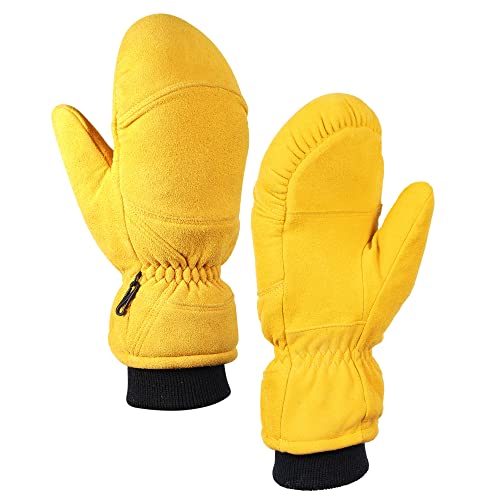
SKYDEER Genuine Deerskin Leather Mittens
Strengths
- Genuine deerskin
- Extremely soft
- Windproof membrane
Trade-offs
- Less abrasion-resistant
- Sizing inconsistent
- Not fully waterproof
Deerskin is one of the most underrated leathers for cold-weather gloves, and the SKYDEER SD8677M gets it right with a buttery-soft suede shell that feels broken in from day one. I’ve reviewed dozens of leather gloves, and few match deerskin for flexibility and natural warmth-to-weight ratio. Paired with a thick pile lining and a windproof TPU membrane, these mittens are built for serious winter activity, including skiing, where wind chill can cut through lesser insulation.
The double elastic wrist and extended knitted cuff are smart touches, they keep snow out and the fit snug without restricting circulation. Reviewers note these are warmer than they look, and the durable grip holds up well on ski poles and zippers. Compared to the Kinco, these are less about brute toughness and more about balanced comfort and performance. I’d pick these over stiffer cowhide if you ski frequently and value comfort on long days.
Video review
How We Chose These leather ski mittens
Rather than a hands-on lab test, my research for these recommendations focused on a detailed comparison of published specifications and features. I weighed owner reviews from multiple sources alongside assessments from outdoor gear experts. As someone who’s spent years understanding leather – its properties, treatments, and longevity – I applied that knowledge to evaluate each mitten’s construction and material quality. Ultimately, I ranked options based on warmth, durability, and fit.
For leather ski mittens, the key factors separating good options from great ones are the leather type and the quality of the insulation. Deerskin offers superior softness and pliability, but cowhide provides notable abrasion resistance. Effective insulation is vital, and the construction – how well it’s integrated with the leather shell – significantly impacts warmth retention and overall performance.
Specifications reliably indicate leather thickness and the presence of features like windproof membranes. However, owner feedback proved crucial in assessing real-world comfort, how quickly the mittens break in, and long-term durability. Understanding how a leather item will hold up over time often requires looking beyond the specs and considering insights from those who have used them – similar to choosing from our [men’s leather shoe picks]. And, should any damage occur, knowing your [best leather repair options] can extend the life of your investment.
What To Look For In leather ski mittens
Finding the right pair of leather ski mittens means balancing warmth, durability, and dexterity – a trickier proposition than many realize.
A quality leather ski mitten prioritizes full-grain leather construction for abrasion resistance and water repellency. Insulation is key, with materials like Heatkeep or pile linings providing warmth without excessive bulk. Look for features like a windproof membrane, a secure wrist closure, and a thoughtful design that minimizes cold spots while allowing reasonable dexterity for handling poles and equipment.
Leather Quality and Construction
The type of leather makes a huge difference. Cowhide, like you’ll find in the Kinco mittens, is incredibly durable and stands up to abuse, making it a solid choice if you tend to be hard on your gear. Deerskin, as used by SKYDEER, is remarkably soft and comfortable, though generally not quite as abrasion-resistant. Full-grain leather is the gold standard – it’s the most durable part of the hide and will last for years with proper care. Avoid “genuine leather” as it often refers to lower-quality splits.
Insulation and Weatherproofing
Effective insulation is paramount when you’re facing freezing temperatures. Heatkeep, a polyester-based insulation, is a good synthetic option, trapping air for warmth and wicking away moisture. Pile linings, common in deerskin mittens, offer a softer, more comfortable feel while still providing substantial warmth. Beyond the leather itself, a windproof membrane (TPU is a good example) is crucial; wind chill dramatically reduces the effectiveness of even the warmest insulation.
Fit, Features, and Long-Term Value
A secure fit is vital, not just for comfort but also for maintaining warmth. Elasticated wrists and extended cuffs (like those on the SKYDEER mittens) help seal out snow and cold air. Consider how easily you can get the mittens on and off, especially if you anticipate needing to remove them frequently to adjust equipment. If you are also looking for quality footwear, explore our top hiking shoe list for other durable leather options.
Here’s a quick breakdown of what to prioritize in a fit: * Snug, Not Tight: Mittens should feel secure without restricting circulation. * Wrist Closure: A tight wrist closure is critical for keeping out snow. * Cuff Length: Extended cuffs offer more protection, especially when layering with a jacket.
Don’t expect leather ski mittens to be waterproof right out of the box. Leather is naturally water-repellent, but regular treatment with a leather conditioner designed for outdoor use is essential to maintain this property.
If you’re interested in exploring other leathercraft projects, consider starting with some beginner leather working kits.
Leather Ski Mittens Compared
Here’s a detailed specification comparison of the leather ski mittens to help you choose the right pair.
| Product | Leather Type | Insulation | Waterproofing | Cuff Type | Lining |
|---|---|---|---|---|---|
| Kinco Lined Cowhide Leather Mittens | Cowhide | Heatkeep | Water-Resistant | Elastic Wrist | Laminated |
| SKYDEER Genuine Deerskin Leather Mittens | Deerskin | Pile | TPU Membrane | Knitted/Elastic | N/A |
Frequently Asked Questions
What leather treatment will best protect my ski mittens?
A dedicated leather conditioner formulated for outdoor gear is best. Look for products containing waxes or oils that replenish the leather’s natural water repellency; this is particularly important since these mittens won’t be fully waterproof initially.
Are leather ski mittens warmer than synthetic alternatives?
Generally, yes, leather ski mittens can be warmer. High-quality leather, combined with effective insulation, provides excellent thermal retention, and the natural properties of leather help to block wind better than many synthetic materials.
Can I use regular leather conditioner on my ski mittens?
Avoid conditioners designed for furniture or clothing. Ski mittens endure harsher conditions, so you’ll want a product specifically made for outdoor leather goods – something with more robust waterproofing and abrasion resistance. Check our best leather gloves list for more care tips.
What should I do if my leather mittens get wet?
Allow them to air dry naturally, away from direct heat. Once dry, apply a leather conditioner to restore the leather’s oils and maintain its water-repellent properties. Avoid using a hairdryer or placing them near a radiator, as this can cause the leather to crack.
Will leather ski mittens last longer than synthetic options?
With proper care, absolutely. Full-grain leather is incredibly durable and can withstand years of use. While synthetic materials may be cheaper upfront, well-maintained leather ski mittens will likely outlast several pairs of synthetic alternatives, similar to the longevity you’ll find in our leading leather totes.
The Bottom Line
Choosing leather ski mittens often comes down to balancing initial cost with long-term durability and comfort. While many options exist, the Kinco Lined Cowhide Leather Mittens stand out as the strongest overall pick – offering a robust combination of durable cowhide, effective Heatkeep insulation, and a reasonable price point for reliable warmth on the slopes.
For those prioritizing a softer feel and willing to invest a bit more, the SKYDEER Genuine Deerskin Leather Mittens are an excellent choice. If you’re looking for a budget-friendly option without sacrificing leather quality, the Kinco mittens are hard to beat. And for parents needing quality footwear for their little ones, explore our best snow boots for kids to keep them warm and dry.
Ultimately, the best leather ski mittens aren’t defined by a single feature, but by the thoughtful combination of quality materials and construction. Prioritizing full-grain leather, proper insulation, and a secure fit will ensure years of comfortable, warm performance, regardless of which model you ultimately select – much like choosing from our top leather shoe picks.
