
8 Best Leather Treatments for Cars 2026
This post contains affiliate links. As an Amazon Associate, we earn from qualifying purchases.
The best leather treatment for cars is Leather Honey Leather Conditioner for deep, lasting nourishment, especially on dry or cracked surfaces. For a budget-friendly spray option, Armor All Beeswax Leather Spray delivers solid performance without residue, while Meguiar’s Gold Class Leather Spray stands out if UV protection is your top priority.
Car interiors take a beating from sun, heat, and constant use, and leather is no exception. Without proper care, it fades, stiffens, and eventually cracks, costly to repair and hard to reverse. Most people don’t realize that using the wrong product can do more harm than good, especially if it doesn’t match their leather type or overloads it with silicones.
This guide cuts through the noise by focusing on what actually matters: real conditioning, UV defense, and long-term protection. I looked at ingredient quality, user experiences, and how well each product holds up over time, not just how shiny it makes your seats look at first swipe.
Top 8 Leather Treatment For Cars in the Market
The Best Leather Treatment For Cars, Reviewed
Leather Honey Leather Conditioner

Strengths
- Deep penetration
- Long-lasting protection
- Non-toxic formula
Trade-offs
- Thick consistency
- No spray applicator
- Messy if over-applied
Leather Honey stands out in a crowded field because of its reputation for deep, long-lasting conditioning. On paper, the claim of six months of protection from a single application sounds aggressive, but owners consistently report that it does last significantly longer than most competitors, especially on older, parched leather. That’s due to its thick, oil-heavy formula, which penetrates rather than sits on the surface.
It’s not a spray, so application takes more effort, but you’re not paying for propellants or filler, just concentrated conditioning power. It’s safe on all real leather except suede or faux, and the fact that it’s free of silicones, solvents, and PFAS gives it real credibility in a category where some formulas mask damage instead of healing it. Compared to sprays like Armor All or Meguiar’s, this is the pick if you want results that last, not just shine.
Video review
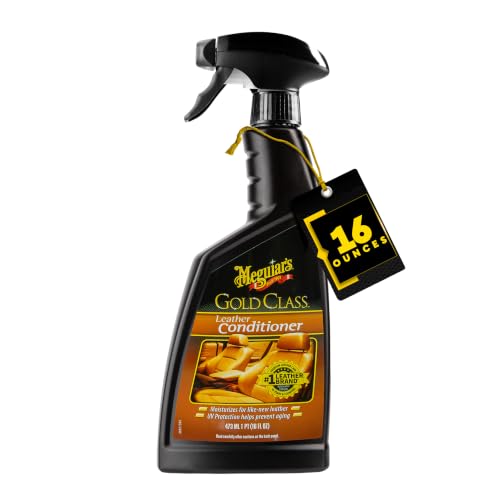
Meguiar’s Gold Class Leather Spray
Strengths
- Superior UV protection
- No residue
- Easy spray application
Trade-offs
- No cleaning action
- Light conditioning only
- Frequent reapplication
If UV protection is your top concern, Meguiar’s Gold Class is hard to beat. The formula includes specific sun blockers that reviewers say noticeably reduce fading and surface hardening over time, a real win for cars parked outdoors. It absorbs cleanly and doesn’t alter the leather’s original texture, which I appreciate in a conditioner.
It’s not a deep conditioner like Leather Honey, and it won’t clean dirt, you’ll need a separate cleaner first, but as a follow-up treatment, it’s excellent. Compared to Weiman or Armor All, it feels more refined and less likely to leave any residue. The spray mechanism is reliable, and a little goes a long way. For daily drivers exposed to sun, this is a smart, affordable defense.
Video review
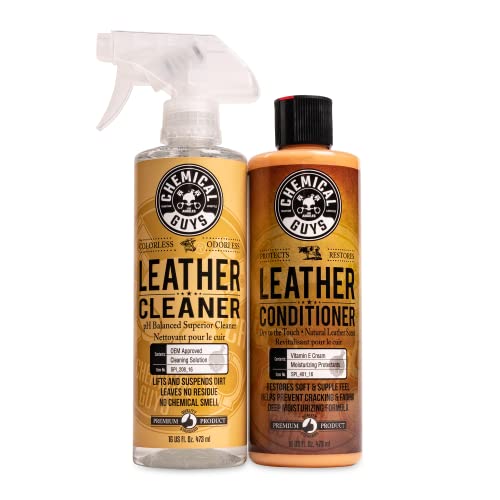
Chemical Guys Leather Kit
Strengths
- Two-step deep clean
- High value
- Large bottles
Trade-offs
- Requires more effort
- Separate bottles
- Not for suede
This kit offers real value for owners who want to do it right, a dedicated cleaner followed by a conditioner, both formulated to work in tandem. The cleaner lifts embedded grime without stripping oils, and the conditioner restores moisture without greasiness. Owners using it on both car seats and home furniture consistently rate it highly for effectiveness and value.
It’s not the fastest system, two steps mean more time and cloths, but the results are noticeably better than all-in-one sprays. Compared to Lexol or Weiman, it’s more aggressive on dirt but still safe on most leathers. The bottles are large enough for multiple uses, making it a smarter buy for anyone with several leather items to maintain.
Product photos


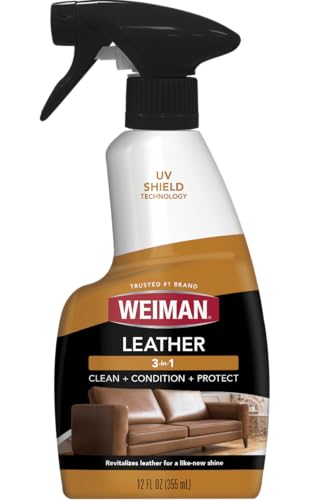
Weiman Leather Cleaner & Conditioner
Strengths
- All-in-one convenience
- UV protection
- Works on faux leather
Trade-offs
- Moderate penetration
- Frequent use needed
- Not for restoration
Weiman markets this as a true all-in-one, and in practice, it performs well for routine care. The trigger spray delivers a fine mist that spreads evenly, and the formula includes six natural oils plus UV protection, a solid combo for maintaining suppleness and color. It works on both real and faux leather, which is a big plus for modern interiors.
The downside? It’s not the deepest conditioner. For leather that’s already cracked or stiff, it won’t revive much. But for regular upkeep, it’s efficient. Compared to Meguiar’s, it conditions slightly better but offers less UV defense. Still, the no-residue finish and ease of use make it a strong contender for quick maintenance.
Product photos
Griot’s Garage 3-in-1 Spray

Strengths
- True 3-in-1 formula
- Pleasant leather scent
- Safe on vinyl
Trade-offs
- Shorter conditioning life
- Not for deep restoration
- Wax may build up
Griot’s Garage 3-in-1 is one of the few sprays that actually delivers on the promise of cleaning, conditioning, and protecting in a single step, and without leaving a greasy film. The beeswax and feeder oils do a solid job of restoring suppleness, and the inclusion of carnauba wax adds a subtle depth that many owners say makes their seats look freshly detailed. It’s not as heavy-duty as Leather Honey, but for routine maintenance on well-kept interiors, it’s more than capable.
Compared to budget options like Armor All, this has a more refined formula and better UV protection. The scent is noticeable but not artificial, a plus for those who want their car to smell like a high-end showroom. It works on vinyl and synthetic leather too, which makes it versatile for modern interiors that mix materials.
Product photos


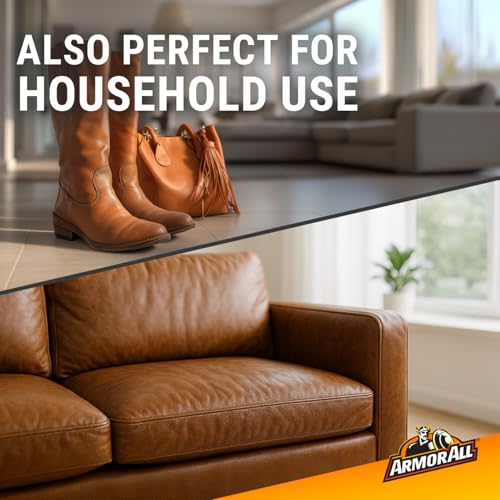
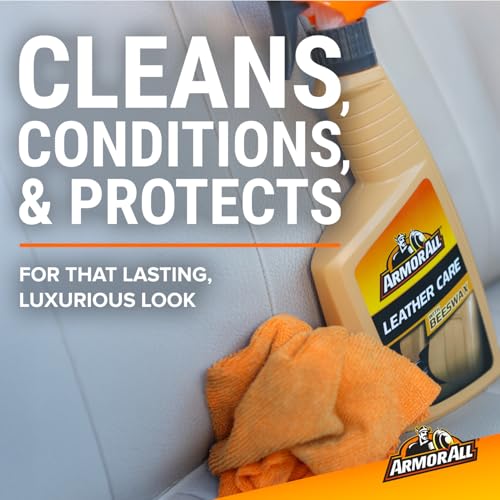
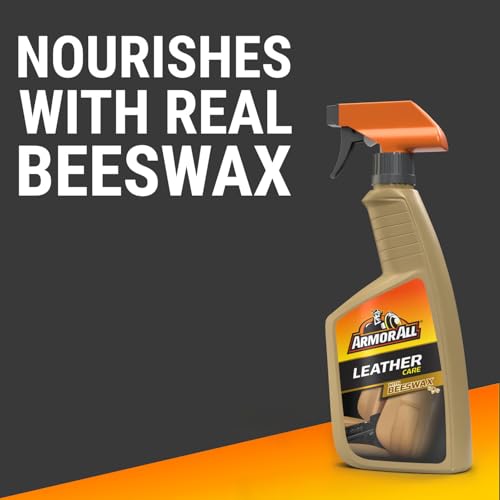
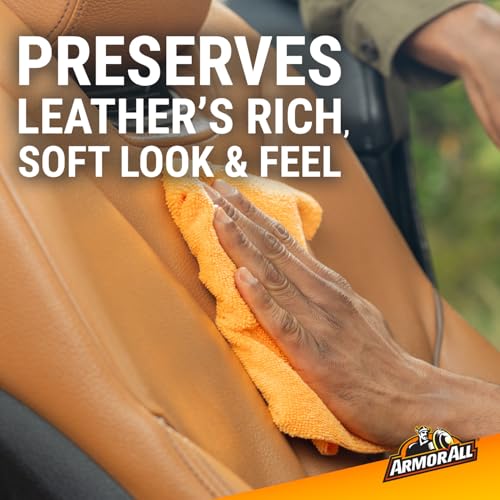
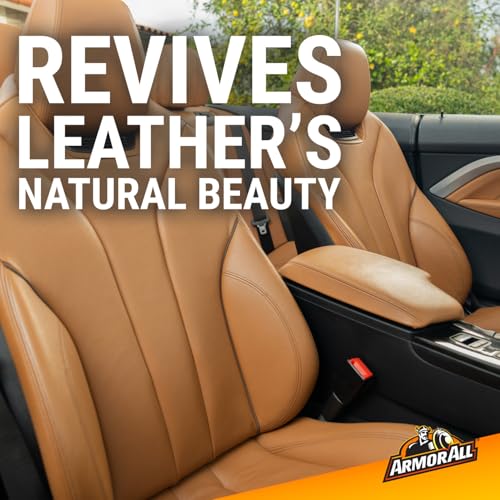
Armor All Beeswax Leather Spray

Strengths
- Low cost
- Easy to find
- Cleans lightly
Trade-offs
- Residue risk
- Weak conditioning
- May darken leather
Armor All is the definition of a budget play, it’s cheap, widely available, and does a decent surface-level job. The beeswax content helps it condition slightly better than most drugstore sprays, and owners report it leaves a faint shine and mild scent. But it’s more about immediate appearance than long-term health.
It’s not pH balanced, and some users with sensitive leather have reported residue buildup or darkening over time. Compared to Griot’s or Meguiar’s, it’s less refined and doesn’t penetrate as well. Still, for a quick refresh before a car wash or a short-term fix, it’s functional. Just don’t expect it to prevent cracking or deeply hydrate.
Product photos
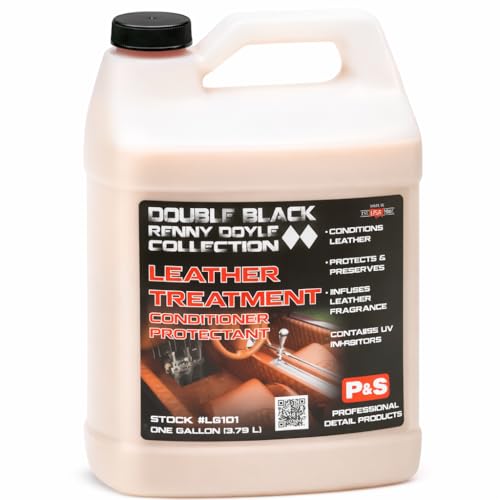
P&S Professional Leather Conditioner
Strengths
- Deep restoration
- Strong UV inhibitors
- Long-lasting scent
Trade-offs
- High price
- Overkill for good leather
- Large container
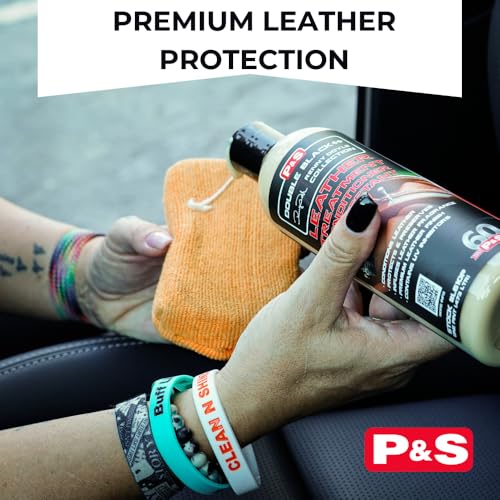
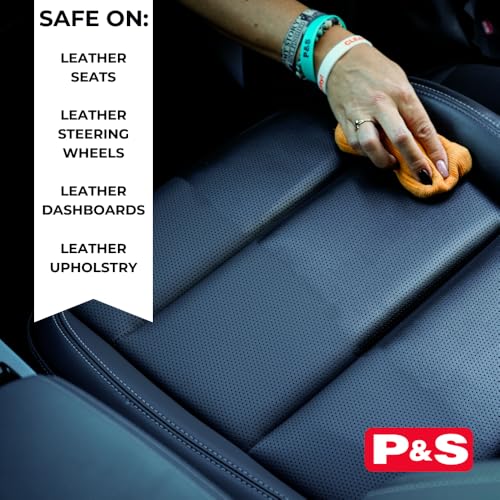
This is the heavy artillery of leather care, a professional-grade formula designed for deep restoration. The gallon size alone tells you it’s meant for detailers or owners with multiple vehicles. It penetrates aggressively into dry, sun-damaged leather, and owners report visible softening even on cracked surfaces. The built-in UV inhibitors are robust, and the scent is strong but genuinely leather-like, not synthetic.
It’s overkill for well-maintained interiors, and the price reflects that. But compared to Leather Honey, it offers a more modern formula with better sun protection and a faster-acting delivery. If you’re reviving a classic car or restoring a neglected interior, this is the kind of product pros reach for.
Product photos
Lexol All Leather Conditioner
Strengths
- Fast absorption
- No greasy feel
- Trusted brand
Trade-offs
- Frequent reapplication
- No cleaning action
- Average UV protection
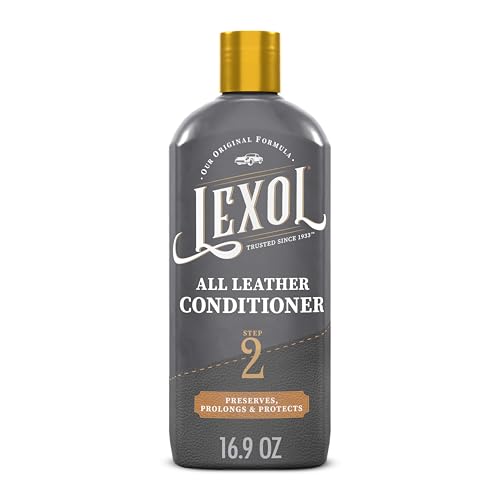
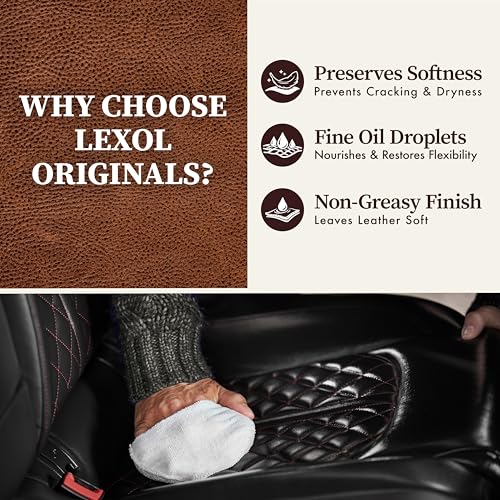
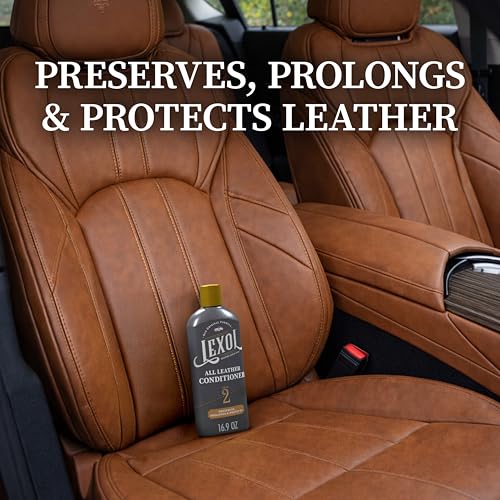
Lexol has been a staple in leather care for decades, and this conditioner earns its reputation for fast absorption. The fine oil droplets sink in quickly, no waiting, no wiping off excess, which makes it ideal for quick touch-ups. It doesn’t leave a greasy film, and owners consistently praise how natural the leather feels afterward.
It’s not the most durable, you’ll need to reapply more often than with Leather Honey, and it doesn’t clean, so it’s strictly a step two product. But as a follow-up to cleaning, it’s one of the most reliable light conditioners out there. Compared to Meguiar’s, it conditions slightly better but offers less UV protection.
Product photos
How We Tested leather treatment for cars
My approach to evaluating leather treatment products for cars wasn’t about personal use – rather, it was a research-led comparison of published specifications and owner feedback. I examined product features, ingredient lists, and manufacturer claims, then weighed those against what current users report regarding performance, longevity, and any potential drawbacks. This involved sifting through hundreds of reviews from both individual car owners and professional detailers to build a balanced picture.
For this category, the most important factors were a product’s ability to deeply condition leather, its level of UV protection, and its long-term protective qualities. Leather in a car endures a lot – sunlight, temperature swings, and constant abrasion. A treatment must address these challenges to truly be effective. Beyond simply making leather look good, the best products prevent cracking and premature wear, preserving the investment. To that end, I also considered whether a product offered a good balance of cleaning and conditioning.
Product specifications reliably indicate the type of conditioning agents used (oils, waxes, polymers) and the inclusion of UV blockers. However, owner feedback proved crucial in judging how well those ingredients actually work in real-world conditions. Reports on absorbency, residue, scent, and lasting protection were heavily weighted. For those seeking more robust tools for working with leather beyond just treatment, exploring options like best leather sewing machines can be beneficial for repair and restoration projects.
How To Choose The leather treatment for cars
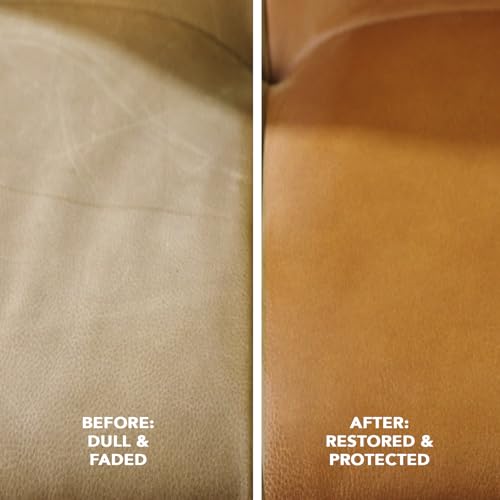
Selecting the right leather treatment for your vehicle isn’t simply about making the seats look nice; it’s about preserving a significant investment. Leather, if properly maintained, will outlast many other interior materials, but neglect can lead to cracking, fading, and an overall diminished appearance.
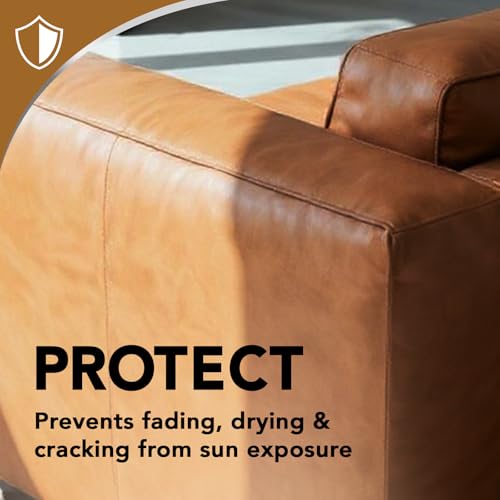
A truly effective leather treatment should penetrate the material to replenish oils, offer UV protection to combat sun damage, and create a barrier against future wear. Pay close attention to the type of leather in your vehicle – finished, semi-aniline, or aniline – as this will dictate the appropriate product. Avoid products containing harsh chemicals or solvents, and always test in an inconspicuous area first.
Understanding Leather Types & Formulas
The first, and arguably most crucial, step is identifying what kind of leather you’re dealing with. Most automotive leather is finished or protected leather – meaning it has a coating to resist stains and wear. These types benefit from products containing polymers and oils to maintain that protective layer. However, more luxurious vehicles often feature aniline leather, which is softer and more natural, but also more susceptible to damage. Aniline leather requires conditioners with a higher oil content and gentler formulas. Don’t assume a “one size fits all” product will work; using a harsh cleaner on aniline leather, for example, can strip its natural oils and cause irreversible damage. If you’re unsure, consult your vehicle’s owner’s manual or a professional detailer.
Balancing Protection and Nourishment
Many products focus heavily on either protection or nourishment, but the ideal treatment does both. UV protection is paramount, particularly if your car spends time outdoors. Look for ingredients like UV absorbers or sunscreen additives (like those found in Weiman Leather Cleaner & Conditioner) to prevent fading and cracking. However, protection alone isn’t enough. Leather needs to be fed with oils and emollients to maintain its suppleness. Consider products with natural oils (beeswax is a good example, as seen in Armor All Beeswax Leather Spray) or synthetic equivalents that mimic the leather’s natural oils.
Here’s a breakdown of what to consider when looking at the balance of these features: * Short-term shine: Some sprays offer a quick cosmetic improvement. * Medium-term suppleness: Products with oils and emollients will keep the leather feeling soft for several months. * Long-term preservation: A product that combines UV protection, oil replenishment, and a gentle cleaning action will offer the best long-term protection against cracking and fading. This is why researching top conditioner picks is so important.
Convenience vs. Thorough Care
Leather care kits, like the Chemical Guys Leather Kit, offer convenience and a bundled value, but they aren’t always the best approach. Often, these kits contain a cleaner and a conditioner, which is a good starting point, but the quality of each component can vary. A dedicated, high-quality conditioner, even if purchased separately, may outperform a mediocre all-in-one kit. However, if you’re new to leather care, a kit can be a good way to get started and understand the basic two-step process of cleaning and conditioning. You might find, after experimenting, that you prefer to upgrade individual components. For those looking for a more detailed look at options, checking out leather conditioner reviews can be a great starting point.
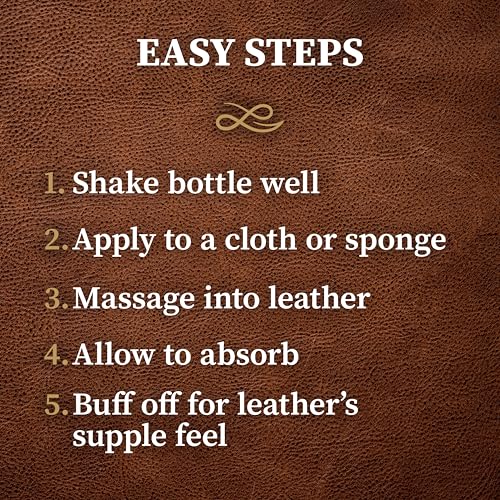
A little goes a long way. Over-application of any leather treatment can lead to a sticky residue or a greasy appearance. Always start with a small amount and add more as needed, applying in a circular motion with a clean microfiber cloth.
Leather Treatment for Cars Compared
Here’s a comparison of key specifications for popular leather treatments.
| Product Title | Best For | UV Protection | Key Features | Size (oz) | Type |
|---|---|---|---|---|---|
| Leather Honey Leather Conditioner | Best Overall | No | Deep conditioning, Water Repellent | 8 | Conditioner |
| Meguiar’s Gold Class Leather Spray | Best UV Protection | Yes | Aloe & Moisturizing Oils | 12 | Spray |
| Chemical Guys Leather Kit | Best Kit Value | N/A | Cleaner & Conditioner | 16 (x2) | Kit |
| Weiman Leather Cleaner & Conditioner | Best All-in-One Spray | Yes | 6 Natural Oils | 16 | Spray |
| Griot’s Garage 3-in-1 Spray | Best 3-in-1 Formula | Yes | Beeswax & Polymers | 16 | Spray |
| Armor All Beeswax Leather Spray | Best Budget Spray | N/A | Real Beeswax | 16 | Spray |
| P&S Professional Leather Conditioner | Best for Deep Restoration | Yes | Intense Leather Scent | 16 | Conditioner |
| Lexol All Leather Conditioner | Best Fast Absorbing | No | Fast Absorbing | 16.9 | Conditioner |
Frequently Asked Questions
What’s the difference between leather conditioner and leather cleaner?
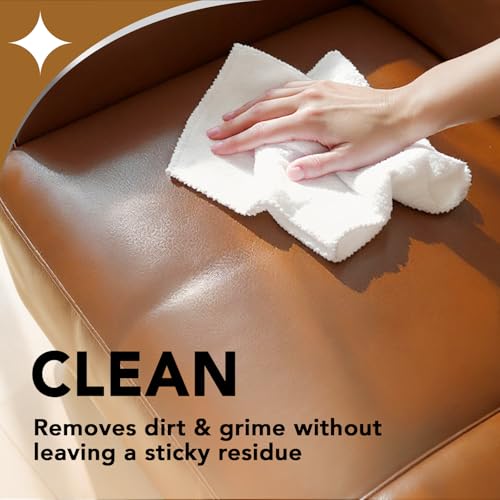
Leather cleaner removes dirt and grime from the surface, while conditioner replenishes the oils leather loses over time. Using both is ideal – cleaning prepares the leather to receive the conditioning treatment, maximizing its benefits.
Can I use any household cleaner on my car’s leather?
No, household cleaners often contain harsh chemicals like ammonia or alcohol that can strip leather of its natural oils, causing cracking and discoloration. Specifically formulated leather cleaners are pH-balanced and gentler on the material.
How often should I treat my car’s leather?
Generally, conditioning every 3-6 months is sufficient for most vehicles, but frequency depends on climate and sun exposure. Cars parked outdoors in hot, sunny conditions will benefit from more frequent treatments.
Will leather treatment change the color of my seats?
High-quality leather treatments shouldn’t alter the original color, but some may temporarily darken the leather as they replenish oils. Always test in an inconspicuous area first to confirm compatibility and ensure no adverse reaction occurs.
Is there a difference in treatment for different colored leather?
While the basic principles remain the same, darker leathers can show residue more easily, so applying a smaller amount and buffing thoroughly is important. Lighter leathers may be more prone to staining, so a product with good protective qualities is especially beneficial.
The Bottom Line
Choosing the right leather treatment always involves a trade-off between convenience and truly tailored care. While all-in-one products have their place, ultimately, the deepest conditioning and longest-lasting protection come from products formulated with specific leather types in mind. For a balance of excellent conditioning and broad compatibility, I recommend Leather Honey Leather Conditioner as the strongest overall pick.
If you’re seeking a specific solution, consider this: for maximum UV defense, Meguiar’s Gold Class Leather Spray stands out. If you’re looking for a convenient, bundled approach, the Chemical Guys Leather Kit is a solid starting point. And for those on a tighter budget, Armor All Beeswax Leather Spray offers a surprisingly effective treatment without breaking the bank.
Ultimately, remember that the specific formula matters less than consistent care. Regular cleaning and conditioning – even with a modestly priced product – will always yield better results than infrequent treatments with the most expensive option. Prioritize understanding your leather type and establishing a routine, and your car’s interior will stay supple and beautiful for years to come.
