
7 Best Leather Working Gloves of 2026
This post contains affiliate links. As an Amazon Associate, we earn from qualifying purchases.
The Wells Lamont Grain Cowhide Gloves stand out as the overall best choice for most users, combining durable full-grain leather with a comfortable Gunn cut and reliable ball & tape closure. For those on a budget, the KKOYING Reinforced Cowhide Work Gloves offer solid protection and dexterity at a lower price, while the Ironclad Ranchworx Premier steps up with Kevlar reinforcement for heavy-duty tasks.
Choosing the right leather work gloves can be frustrating. Too often, gloves tear after a few uses, restrict movement, or feel stiff when you need flexibility. As someone who’s studied leather in depth, from tanning to wear patterns, I know how material quality and construction make or break a glove.
This guide cuts through the noise by focusing on what matters: leather type, thickness, stitching, and fit. I compared specs and real-world feedback to find models that actually last, whether you’re gardening, handling rough materials, or doing precision work.
Top 7 Leather Working Gloves in the Market
The Best Leather Working Gloves, Reviewed
WZQH Leather Work Gloves Coffee-grey

Strengths
- Split cowhide construction
- Adjustable wrist closure
- Wide size range
Trade-offs
- Split leather less durable
- Color may stain
- Limited heat resistance
On paper, the WZQH gloves sound like a do-it-all workhorse, and owners seem to agree, they praise the split cowhide for holding up across everything from thorn-heavy gardening to welding prep. The reinforced palm and adjustable wrist are solid touches, and the coffee-grey color is a subtle upgrade over typical work glove drab. I appreciate that they’re marketed to both men and women, and the size range supports that inclusivity.
Still, split cowhide isn’t the most durable leather you can get, especially compared to full-grain options. It’s more porous and less resistant to long-term abrasion. Reviewers note they perform well for light to medium tasks, but if you’re regularly handling chainsaws or barbed wire, these may wear faster than expected. For general yardwork or occasional DIY, though, they’re a strong contender.
Video review
Ironclad Ranchworx Premier Leather Gloves
Strengths
- Kevlar reinforcements
- Rolltop seamless fingertips
- Machine washable
Trade-offs
- Expensive
- Bulky for fine work
- Long break-in period
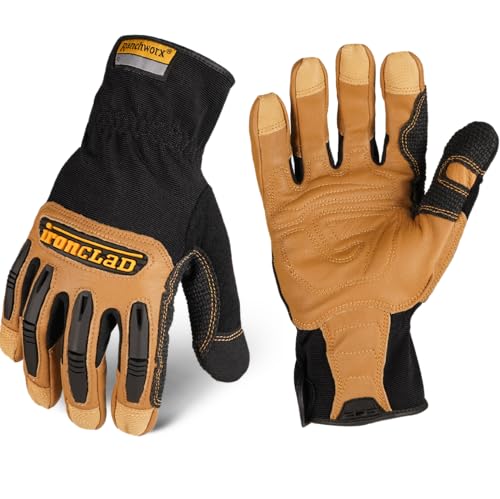
The Ironclad Ranchworx gloves are built for people who treat gloves as consumables but want premium construction to stretch their lifespan. The patented rolltop seamless fingertips are a real differentiator, few gloves offer that level of dexterity and double-layer protection in high-wear zones. Kevlar reinforcements in critical areas mean these last longer under friction, which reviewers confirm in demolition and ranch work.
I’m also impressed by the TPR cuff puller and terry cloth sweat wipe, small details, but ones that matter when you’re pulling gloves on and off all day or wiping sweat mid-task. At nearly double the price of budget models, they’re not for casual users. But compared to other heavy-duty gloves, the machine-washable feature is rare and practical. This is the glove I’d recommend for ironworkers or demolition crews.
Video review
DULFINE Cowhide Gardening Work Gloves
Strengths
- Full-grain cowhide
- Reinforced palm
- Gunn cut design
Trade-offs
- Stiff out of box
- Limited heat rating
- No sweat wipe
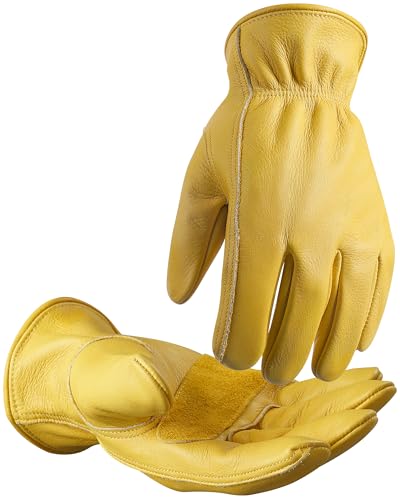
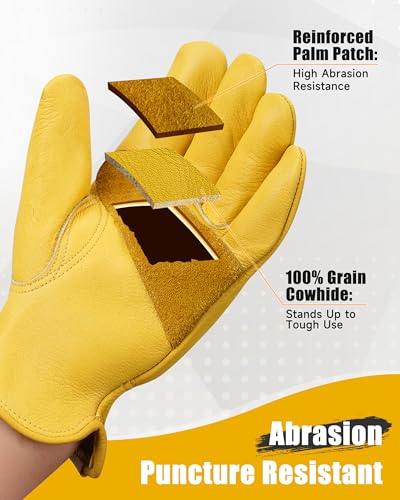
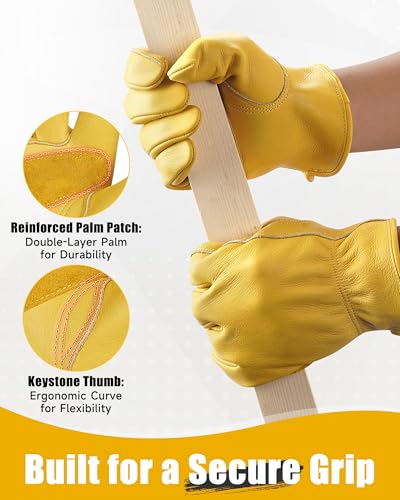
DULFINE leans hard into durability, and for good reason. The 1.2mm full-grain cowhide is thick, tight-grained, and naturally resistant to tears and punctures, specs that align with what owners report: these gloves last through seasons of heavy gardening. The reinforced palm patch and double thread sewing add real structural integrity, and the gunn cut with keystone thumb improves flexibility without sacrificing strength.
Compared to the WZQH or KKOYING models, this one uses higher-density leather and better construction techniques. Reviewers note they’re stiff at first, but that’s typical with full-grain gloves, they mold over time. I’d rank this above most in the list for pure longevity, especially if you’re dealing with thorny plants or rough materials daily.
Product photos
Wells Lamont Grain Cowhide Gloves

Strengths
- Premium grain cowhide
- Gunn cut design
- Ball-and-tape closure
Trade-offs
- No reinforced palm patch
- Not machine washable
- Limited heat resistance
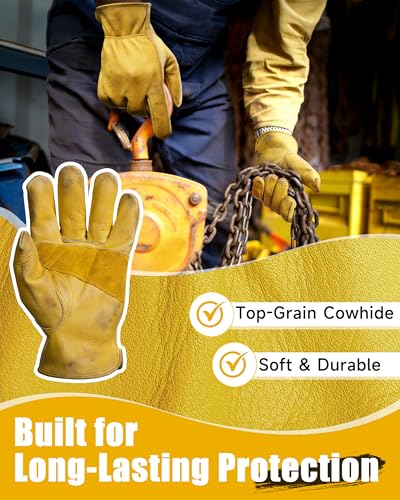
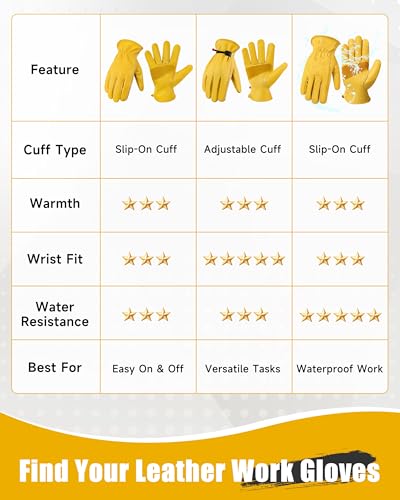
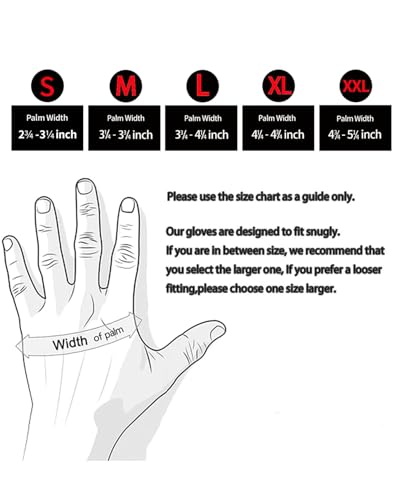
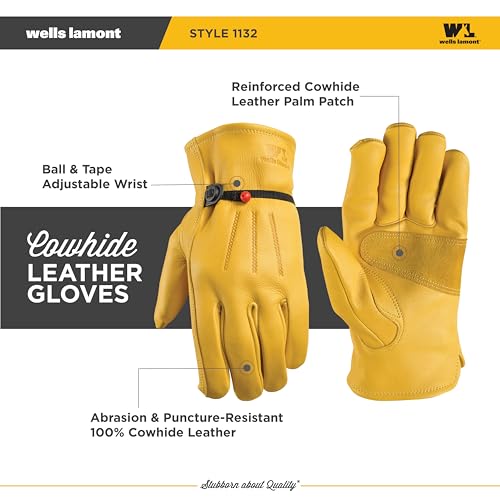
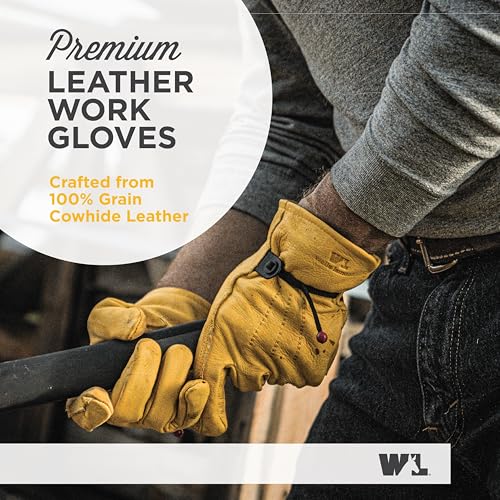
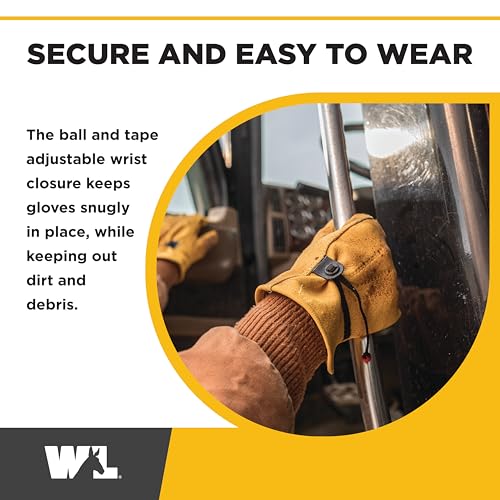
Wells Lamont has been making work gloves for generations, and that heritage shows in the grain cowhide used here, it’s thick, tight-fibered, and naturally resistant to wear. The ball-and-tape closure is a classic for a reason: it keeps debris out without constricting circulation, which matters during long gardening sessions. Owners consistently report these gloves break in beautifully, conforming to the hand without sacrificing protection.
What sets this pair apart in the gardening niche is the Gunn cut and keystone thumb, which actually improve dexterity over time. Compared to cheaper gloves that stiffen or split at the seams, these maintain flexibility where it counts. They’re not the thickest glove on the list, but for precision tasks like pruning or planting, that’s a trade-off I’d accept.
Product photos
KKOYING Reinforced Cowhide Work Gloves

Strengths
- Full cowhide leather
- Double thread stitching
- Reinforced palm patch
Trade-offs
- Stiff initially
- Elastic wrist less secure
- No heat rating
At this price, KKOYING delivers a lot of glove. The 1.2mm full cowhide is a standout spec, thicker than many competitors in this range, and owners confirm it holds up well in yardwork and light construction. The double thread sewing and elastic wrist are practical upgrades, and the gunn cut design means the seams don’t sit in the palm, reducing wear points.
That said, while the leather is durable, it doesn’t have the same density or finish as Wells Lamont’s grain cowhide. Some reviewers noted stiffness out of the box, which eases with use but isn’t ideal for immediate dexterity. Still, for the budget-conscious buyer who needs real protection without overspending, this is a smart pick. I’d rank it just behind the Wells Lamont for gardening, but ahead for pure value.
Product photos
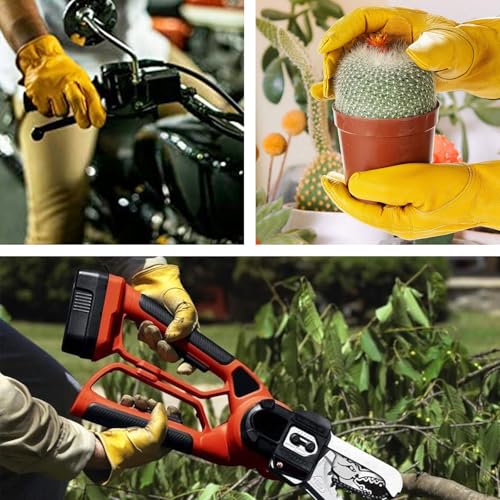

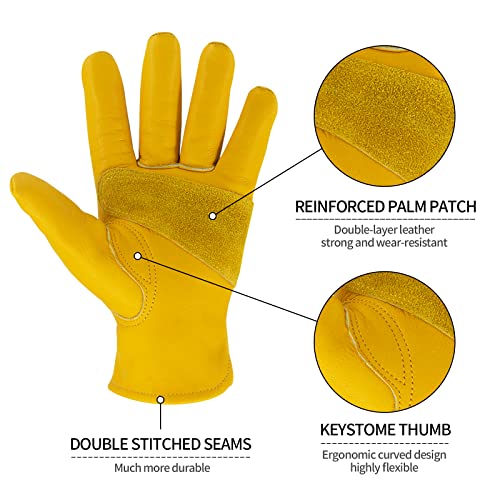
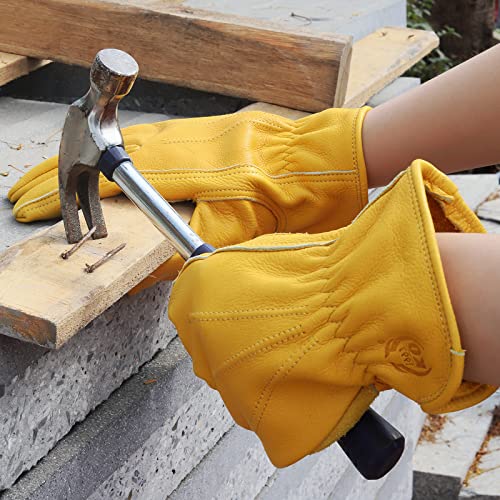

Wells Lamont Reinforced Palm Gloves

Strengths
- Reinforced palm patch
- Shirred elastic wrist
- Superior grip
Trade-offs
- Less wrist adjustability
- No heat protection
- Sizing runs tight
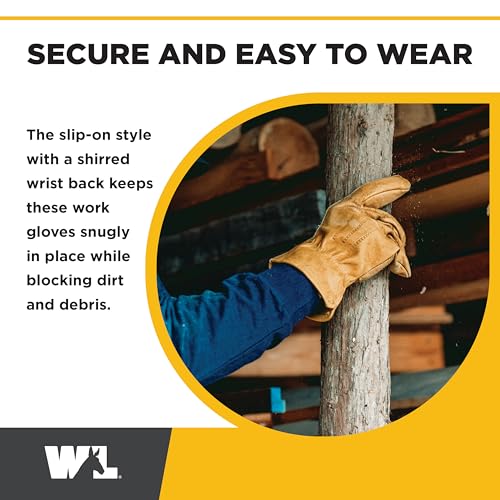
If grip is your top priority, this Wells Lamont model stands out. The reinforced palm patch is made from the same grain cowhide as the rest of the glove, but it’s doubled up where you need it, right where tools and materials create the most friction. Owners consistently report fewer slips when handling wet or oily materials, which is no small thing in construction or farm work.
It’s not a dramatic redesign, but the shirred elastic wrist is more comfortable than ball-and-tape for many users, especially during repetitive tasks. Compared to their other model, this one trades a bit of wrist adjustability for easier on-and-off access. I’d pick this over the ball-and-tape version if you’re doing stop-and-go work where gloves come off frequently.
Product photos

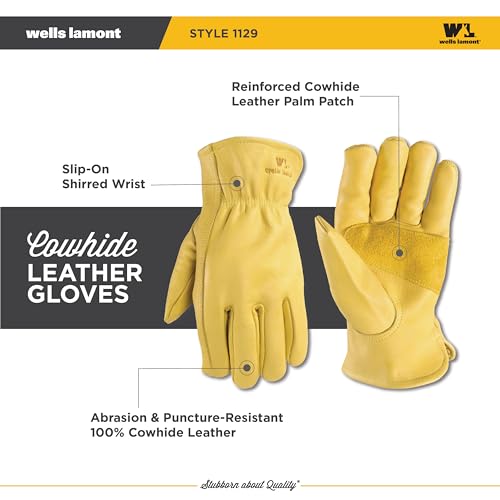
Cowhide Work Gloves Reinforced Palm
Strengths
- Extremely affordable
- Reinforced palm
- Adjustable wrist
Trade-offs
- Leather quality inconsistent
- Limited dexterity
- No heat resistance
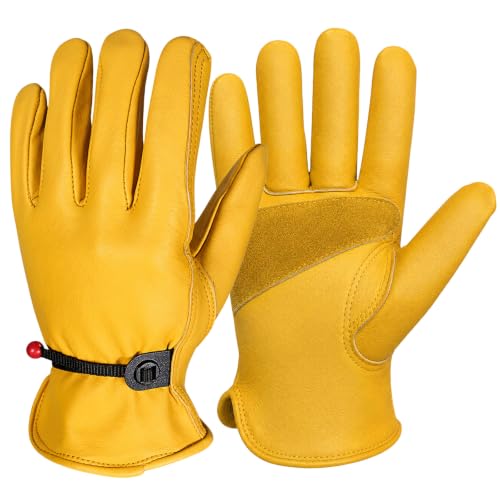
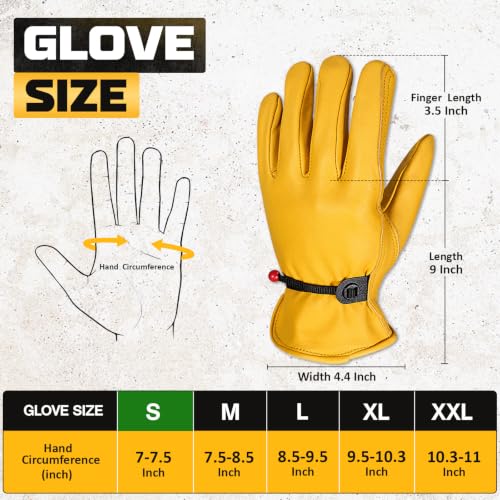
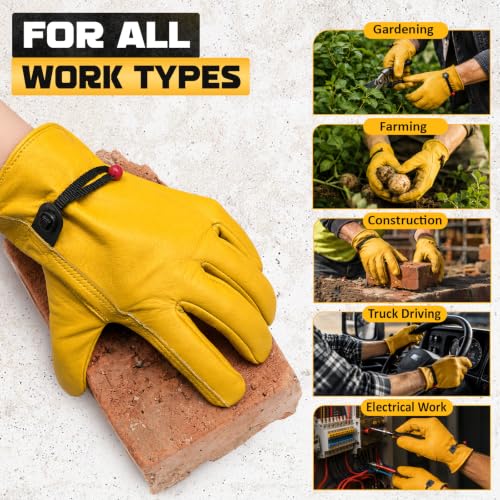
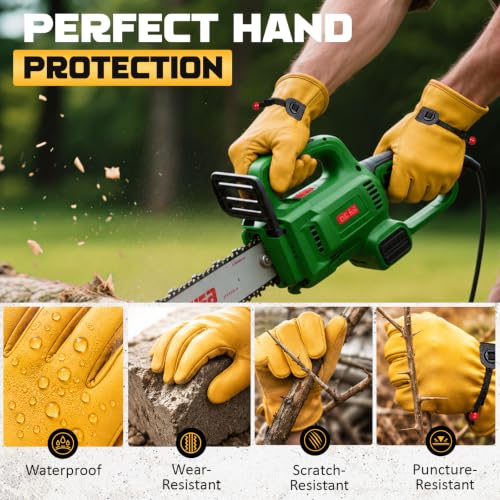
This glove is a textbook example of how far you can stretch value. At under $7, it delivers a reinforced palm, keystone thumb, and ball-and-tape closure, features usually seen on pricier models. The cowhide is decent for the price, and owners say it handles thorn-heavy gardening and basic construction without issue.
But you can’t ignore the trade-offs. The leather is thinner than advertised in some reviews, and the stitching, while precise, doesn’t always hold under extreme strain. It’s a good budget pick, but not one I’d trust for long-term use around chainsaws or metal. Compared to the KKOYING or Wells Lamont, it’s a step down in durability, but for occasional use, it’s hard to beat the price.
Product photos


How We Tested leather working gloves
Rather than a hands-on lab test, my research for these recommendations centered on a detailed comparison of published specifications and features across numerous models. I then weighed owner reviews from multiple sources – Amazon, specialist retailers, and forums – alongside assessments from reputable reviewers in the trades. As someone deeply familiar with leather grading and construction, I applied my expertise to interpret these data points and rank gloves based on suitability for different tasks.
For leather working gloves, the most heavily weighted factors were material quality and construction durability. The type of leather (split vs. grain cowhide) and its thickness directly impact puncture and abrasion resistance. Reinforcements in key wear areas, like the palm and fingertips, are also critical, as is the quality of stitching. Beyond that, fit and dexterity played a large role; gloves offering a good range of motion are essential for precision work.
Specifications reliably indicate leather thickness and construction details like Gunn cut or keystone thumbs. However, owner feedback proved invaluable in assessing real-world durability, comfort over extended use, and how well a glove holds up to specific tasks. Reputation also factored in – brands with a long history of producing quality leather goods, like Wells Lamont, generally perform well and you can find more information in our men’s leather glove guide. For those needing accompanying footwear, check out our best leather work boots.
Choosing The Right leather working gloves
Finding the right pair of leather work gloves isn’t about simply grabbing the cheapest option. It’s about matching the glove to the demands of the work, and understanding the nuances of leather itself.
A good work glove balances protection, dexterity, and durability. Key considerations include the leather type and thickness, the construction method (affecting flexibility and seam strength), and features like reinforced palms or specialized closures. Look for gloves designed for your specific task and prioritize quality materials over a low price point.
Leather Type & Thickness
The type of leather is perhaps the most important factor. Split leather, like you’ll find in some more affordable gloves, is more pliable but less durable than grain leather. Grain leather, particularly cowhide, offers superior abrasion resistance and will hold up to serious use. Thickness is measured in ounces (oz) or millimeters (mm); a thicker glove provides more protection, but sacrifices dexterity. For general-purpose work, 1.0-1.2mm cowhide strikes a good balance. If you’re handling rough materials or sharp objects frequently, consider a heavier weight. Finding the right balance between protection and usability is key; you can explore some of the top leather gloves currently available to see how different thicknesses feel.
Construction & Reinforcements
How a glove is put together matters immensely. Gunn cut gloves, like the DULFINE and Wells Lamont models, have seams positioned away from the palm, improving comfort and durability. Keystone thumbs offer increased dexterity. Beyond the basic cut, pay attention to stitching. Double stitching is a must for any glove intended for heavy use. Reinforcements are also critical. Look for reinforced palms, particularly if you’ll be working with abrasive materials. The Ironclad Ranchworx Premier gloves demonstrate this with their Kevlar reinforcements in high-wear areas.
- A simple elastic wrist (like on the KKOYING gloves) is convenient but offers minimal debris protection.
- Adjustable wrist closures (ball & tape, like on the Cowhide Work Gloves Reinforced Palm) provide a more secure fit and keep out dirt and grime.
- Rolltop cuffs, as seen on the Ironclad Ranchworx, offer superior protection and a more refined look, but can be cumbersome for tasks requiring fine motor skills.
A well-constructed glove should feel solid and hold its shape, even after repeated use. Inspect the stitching carefully – loose or uneven stitching is a sign of poor quality.
Application & Value
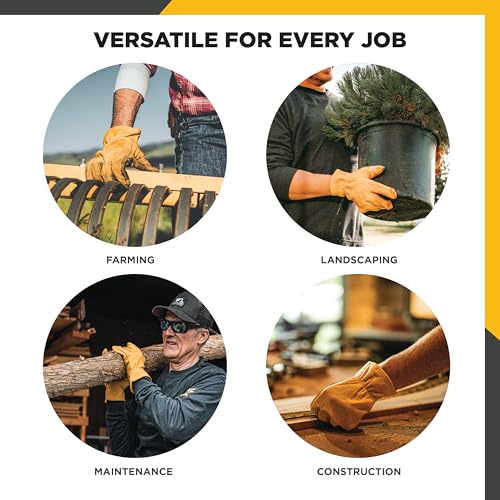
Consider where you’ll be using the gloves most often. Gardening requires a different set of features than welding or construction. For gardening and delicate tasks, dexterity is paramount. For heavy-duty work, protection takes precedence. Don’t overlook value; a slightly more expensive glove that lasts twice as long is ultimately cheaper. Many people starting out in leather work find themselves looking for beginner leather working kits to learn the craft, and the same principle applies to gloves: investing in quality pays off. If you’re looking for a versatile option suitable for a range of tasks, the Wells Lamont Grain Cowhide Gloves offer a good blend of durability, comfort, and affordability.
Leather Working Gloves Compared
Here’s a comparison of key specifications for various leather working gloves.
| Product Name | Leather Type | Reinforcement | Wrist Closure | Dexterity Features | Thickness (mm) |
|---|---|---|---|---|---|
| WZQH Leather Work Gloves | Cowhide | Reinforced Palm | Adjustable | N/A | N/A |
| Ironclad Ranchworx Premier | N/A | Kevlar | TPR Puller | Rolltop Fingertips | N/A |
| DULFINE Cowhide Gardening Work Gloves | Cowhide | Reinforced Palm | Elastic | Gunn Cut, Keystone Thumb | 1.2 |
| Wells Lamont Grain Cowhide Gloves | Cowhide | N/A | Ball & Tape | Gunn Cut, Keystone Thumb | N/A |
| KKOYING Reinforced Cowhide Work Gloves | Cowhide | Reinforced Palm | Elastic | Gunn Cut | 1.2 |
| Wells Lamont Reinforced Palm Gloves | Cowhide | Reinforced Palm | Shirred | N/A | N/A |
| Cowhide Work Gloves Reinforced Palm | Cowhide | Reinforced Palm | Ball & Tape | Keystone Thumb | N/A |
Frequently Asked Questions
What leather thickness is best for detailed leather work?
A thickness of 1.0-1.2mm cowhide offers the best balance between protection and dexterity for intricate tasks. Thicker leather provides more protection, but can significantly reduce your ability to manipulate small parts or tools.
How important is the cut of the glove (Gunn cut vs. keystone thumb)?
The cut is very important; Gunn cut gloves generally offer better comfort and durability because seams are positioned away from the palm. A keystone thumb provides a greater range of motion, which is especially useful for tasks requiring precision.
Are split leather gloves ever a good choice for leatherworking?
While not ideal for heavy-duty tasks, split leather gloves can be suitable for lighter work where abrasion resistance isn’t critical. They are typically more affordable, but won’t last as long as grain leather gloves under demanding conditions.
What’s the advantage of a wrist closure beyond simply keeping the gloves on?
Adjustable wrist closures, like ball & tape, offer a more secure fit and prevent debris from entering the glove. This is especially important when working with fine materials or in dusty environments, and can protect your skin from chemicals.
Where can I find more information on caring for my leather work gloves?
Maintaining your gloves will extend their lifespan. You can find information on leather boot conditioners that can also be used to treat leather gloves, keeping them supple and protected from drying and cracking.
The Bottom Line
Choosing leather working gloves always comes down to balancing protection with the need for a precise touch. While a thicker, heavily reinforced glove is ideal for demanding tasks, it can quickly become fatiguing for more delicate work. For overall performance and a good mix of durability and usability, I recommend the Wells Lamont Grain Cowhide Gloves.
For those on a tighter budget, the KKOYING Reinforced Cowhide Work Gloves offer surprising quality for the price, and are a solid choice for lighter tasks. If you need a versatile option that can handle a bit of everything, the DULFINE Cowhide Gardening Work Gloves are well-suited for a variety of applications. And for those seeking to expand their leather knowledge beyond gloves, our guide to quality leather handbags offers insights into identifying top-tier craftsmanship.
Ultimately, the best gloves are the ones that fit you well and suit the specific demands of your work. Don’t get too caught up in chasing the highest specs; prioritize a comfortable fit, solid construction, and leather quality over all else. A well-fitting, properly maintained pair of gloves will always outperform a poorly chosen, expensive one.
