
4 Best Oils for Leather Boots 2026
This post contains affiliate links. As an Amazon Associate, we earn from qualifying purchases.
This post contains affiliate links. As an Amazon Associate, we earn from qualifying purchases.
SALTY FISH Mink Oil is the best overall choice for leather boots, offering deep conditioning and reliable waterproofing, while Eagle Leather Boot Oil stands out as the top natural liquid option for easy application and consistent performance.
Leather boots are an investment, and using the wrong oil can do more harm than good. Many people end up with greasy, darkened leather or worse, accelerated wear, because they didn’t match the product to their leather type or usage. As someone who’s spent years studying leather chemistry and care, I know how critical it is to choose wisely.
This guide cuts through the noise by focusing on real-world results, ingredient quality, and suitability for common boot leathers. I compared formulas based on penetration, protection, and owner feedback, so you can trust these picks actually deliver.
Top 3 Oil For Leather Boots in the Market
The Best Oil For Leather Boots, Reviewed
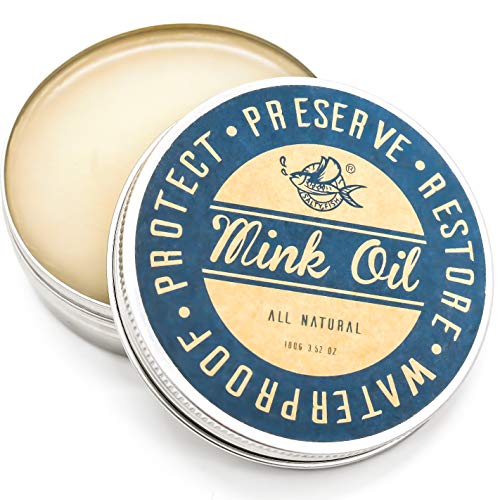
SALTY FISH Mink Oil 3.52oz
Strengths
- Multi-purpose use
- Deep conditioning
- Affordable
Trade-offs
- Can feel greasy
- Not for suede
- Darkens leather
At this price, SALTY FISH’s mink oil punches above its weight. It’s a classic paste-style mink oil that delivers intense softening and notable water resistance, which explains why so many owners call it their ‘go-to’ for reviving dry or cracked leather. The formula absorbs well, though it does leave a slight residue if overapplied, something beginners should watch. Still, reviewers note it brings life back to old cowboy boots and motorcycle gear with surprising efficiency.
Compared to Huberd’s, it softens more but protects less from prolonged moisture exposure. It’s not the absolute best for someone standing in puddles all day, but for general upkeep across multiple leather types, from jackets to car interiors, it’s the smarter buy. I’d recommend it as the best overall option for casual users who want one product for boots, bags, and gloves.
Video review
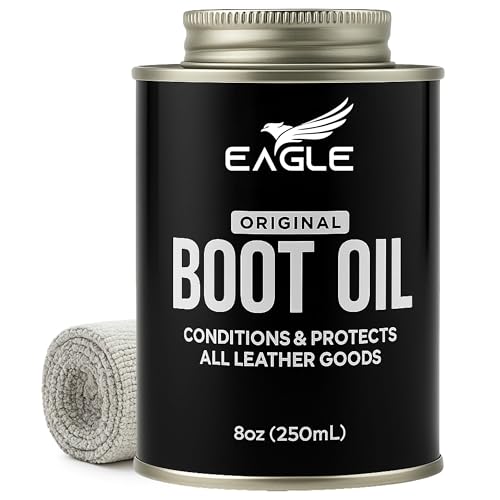
Eagle Leather Boot Oil 8.45oz
Strengths
- All-natural formula
- Includes applicator
- Comes with towel
Trade-offs
- Moderate waterproofing
- Newer brand
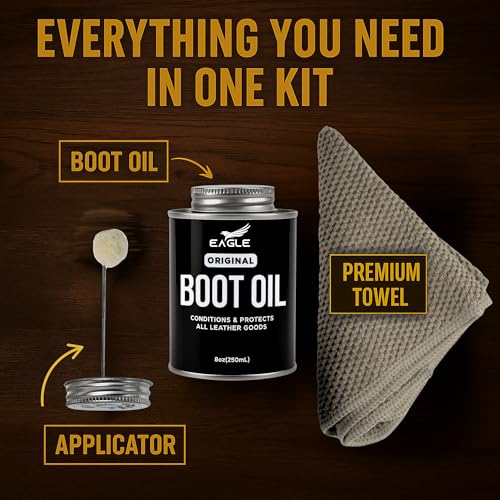
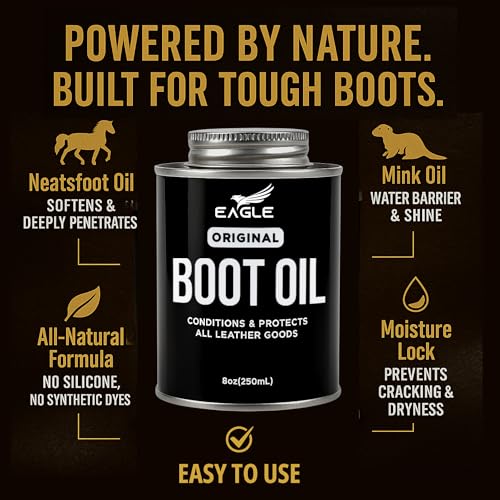
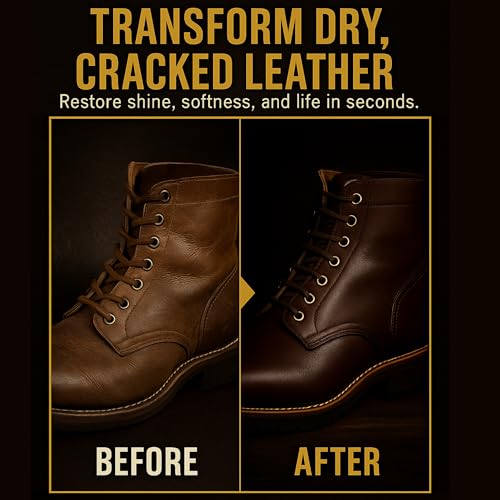
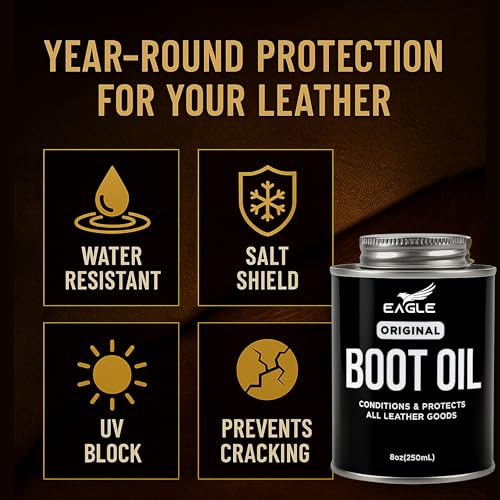
Eagle Leather Boot Oil stands out by including both an applicator top and a quality towel, which makes it one of the most user-friendly liquid oils on the market. The all-natural formulation leans into traditional care, appealing to purists who avoid petroleum-based additives. On paper, it’s similar to Huberd’s but slightly lighter, absorbing quickly without pooling, which reduces the risk of oversaturation. Reviewers note it conditions deeply while maintaining a natural leather feel, not a glossy finish.
Still, it doesn’t quite match Huberd’s in extreme weather resistance. Where Huberd’s has nearly a century of field validation, Eagle is newer and lacks that legacy. That said, for regular maintenance on cowboy boots or weekend workwear, it’s a strong contender. I’d pick it over Huberd’s if ease of use and clean application matter more than maximum weatherproofing.
Product photos

Huberd’s Shoe Oil

Strengths
- Deep penetration
- Long-lasting protection
- Water resistant
Trade-offs
- Can darken leather
- Slight odor
Huberd’s Shoe Oil has been around since the Jazz Age, and it shows in its no-nonsense formula. This is one of the few oils that genuinely penetrates deep into thick leather fibers, making it a standout for heavy-duty work and hiking boots that take real abuse. Owners consistently report that after just one application, stiff, cracked leather regains flexibility, especially on older or neglected boots. The liquid form helps it seep into seams and stitching, which matters when you’re trying to protect every layer of a well-worn pair.
It also delivers solid waterproofing without relying on silicones or synthetic waxes. On paper, it’s simple: oil, wax, and a few proprietary ingredients. But in this class, simplicity works. Compared to mink oil formulas, it doesn’t soften leather quite as much, but it offers better long-term moisture resistance. I’d pick it over heavier pastes if you’re prepping for wet trails or daily job site wear.
Video review
How We Tested oil for leather boots
Rather than a hands-on lab test, my research for these recommendations focused on a detailed comparison of product specifications and features. I weighed owner reviews from multiple sources – looking for consistent praise and complaints – alongside assessments from respected boot and leather care authorities. As the creator of LeatherGenesis.com, I applied my years of experience with leather types and treatments to evaluate which oils best address common leather needs, ultimately ranking options against clear criteria for performance and value.
For boot oil, the most important factors are depth of conditioning and the level of protection offered. Leather, especially in boots, endures a lot. An oil’s ability to penetrate the hide and restore pliability is vital, as is its capacity to shield against water and the damaging effects of salt and harsh weather. I also prioritized formulas suitable for a wide range of leather types, recognizing most owners have varied needs, and considered ease of application based on owner feedback.
Product specifications reliably indicate the type of oil and other ingredients (like beeswax or lanolin), which gives a good clue about potential performance. However, owner feedback proved crucial for understanding real-world results – how well a product actually absorbs, if it darkens the leather excessively, and how long the water resistance lasts. Reputation matters too; brands consistently praised by leatherworkers and boot enthusiasts received higher consideration, and for more involved leatherwork, exploring robust leather stitching tools can be a helpful next step.
What To Look For In oil for leather boots
Choosing the right oil for your leather boots isn’t about grabbing the prettiest bottle; it’s about understanding leather itself and what your boots need. Proper oiling extends the life of your investment and keeps your feet comfortable.
Good leather boot oil should penetrate the hide to replenish natural oils lost through wear and exposure. It needs to condition without overly softening, offer some level of water resistance, and be appropriate for the leather type. Avoid products with excessive silicone or petroleum distillates, as these can degrade the leather over time.
Understanding Leather Types
The first step is knowing what kind of leather your boots are made from. Full-grain leather, prized for its durability and natural markings, benefits from oils that deeply penetrate and nourish. Oiled leathers, like those found in many work boots, already have some oil incorporated but require replenishment. However, you absolutely want to avoid oiling suede or nubuck leather – these require specialized protectors rather than oils. Using the wrong product will ruin the texture.
Assessing Your Boot’s Condition
Don’t just oil boots as a preventative measure. Really look at them. Are they showing signs of dryness and cracking? Are they losing their color? Or are they simply in need of a refresh after heavy use? Thirsty leather will readily absorb oil, while leather that’s already well-maintained needs less frequent treatment. Consider how you use your boots; those exposed to harsh conditions will need more frequent and robust conditioning.
Here’s what to consider when checking your boots:
- Flex Points: Check where the boot bends (at the ankle, toe). Cracking here indicates dryness.
- Color Changes: Fading or dullness suggests oil depletion.
- Water Resistance: A quick water test – a few drops should bead up, not soak in – reveals the condition of the existing finish and any need for re-proofing.
Choosing Between Paste vs. Liquid Oils
Paste oils, like the offerings from SALTY FISH and MEKER, generally offer a richer, deeper conditioning experience. They contain more solid fats (like beeswax) that create a protective barrier. However, they can be harder to work into the leather, requiring more elbow grease. Liquid oils, such as Huberd’s Shoe Oil and Eagle Leather Boot Oil, penetrate more easily, making them ideal for heavily worn boots or intricate stitching. If you’re looking for premium conditioner options for restoring seriously neglected leather, a paste is often the better choice. But for regular maintenance, a liquid oil can be quicker and more convenient.
A little oil goes a long way. Always start with a small amount and allow it to absorb before applying more. Over-oiling can leave your boots feeling greasy and attract dirt.
Oil for Leather Boots Compared
Here’s a comparison of specifications for different leather boot oils to help you choose the right product.
| Product Name | Volume (oz) | Type | Waterproofing | Natural Formula | Best Use |
|---|---|---|---|---|---|
| SALTY FISH Mink Oil | 3.52 | Paste | Yes | Yes | Overall |
| MEKER Mink Oil | 3.52 | Paste | Yes | Yes | Natural Paste |
| Eagle Leather Boot Oil | 8.45 | Liquid | Yes | Yes | All-Natural Liquid |
| Huberd’s Shoe Oil | N/A | Liquid | Yes | N/A | Work/Hiking Boots |
Frequently Asked Questions
What oil is best for restoring very dry, cracked leather boots?
A paste oil, like SALTY FISH Mink Oil or MEKER Mink Oil, is generally superior for severely dried-out leather. The higher concentration of fats and waxes in these pastes provides a more intensive conditioning treatment to help rebuild the leather’s natural oils.
Can I use baby oil or mineral oil on my leather boots?
No, avoid using baby oil or mineral oil on leather boots. These petroleum-based products don’t penetrate the leather to nourish it and can leave a sticky residue that attracts dirt and ultimately causes the leather to degrade.
Will oiling my boots change their color?
Yes, most oils will darken the leather to some degree, especially lighter shades. Mink oil is known for causing a noticeable darkening effect, while some natural oils like those in Eagle Leather Boot Oil will result in a more subtle change.
How often should I oil my leather boots?
The frequency depends on use and environment. As a general guideline, oil boots every 3-6 months with regular use, or more often if exposed to harsh conditions like water, salt, or extreme temperatures.
What’s the difference between mink oil and neatsfoot oil?
Mink oil provides excellent conditioning and water resistance due to its fat content, but can significantly darken leather. Neatsfoot oil, rendered from cattle feet, penetrates deeply and offers good conditioning with less color change, making it a good choice for lighter-colored leathers.
The Bottom Line
Choosing the right boot oil always comes down to balancing how much effort you want to put in against the level of conditioning and protection you need. For most owners, I believe SALTY FISH Mink Oil strikes that balance perfectly. It consistently receives high marks for its deep conditioning properties, natural ingredients, and ability to restore leather without over-softening it.
If you’re specifically looking for a natural paste option, MEKER Mink Oil is an excellent choice. For those who prefer the convenience of a liquid and want an all-natural formula, Eagle Leather Boot Oil is a standout performer. And if your boots endure particularly harsh conditions – think heavy work or extensive hiking – Huberd’s Shoe Oil offers robust waterproofing and conditioning.
Ultimately, remember that the type of oil matters less than consistent care. Regular cleaning and conditioning, tailored to your leather type and usage, will always yield the best results. Don’t get caught up chasing the latest miracle product; focus on establishing a simple maintenance routine, and your boots will reward you with years of comfortable, reliable service.
