
7 Best Sewing Machines for Leather (2026 Guide)
This post contains affiliate links. As an Amazon Associate, we earn from qualifying purchases.
This post contains affiliate links. As an Amazon Associate, we earn from qualifying purchases.
The VEVOR Industrial Lockstitch Sewing Machine stands out as the best overall pick for leatherwork, delivering strong motor performance and consistent stitch quality. For those on a tighter budget or tackling smaller jobs, the DODOQ Manual Leather Sewing Machine offers solid value and portability. If you need maximum versatility for both light and heavy projects, the ColouredPeas Electric & Manual combo is a smart choice.
Leather isn’t like fabric. It’s thick, stiff, and unforgiving, using the wrong machine means broken needles, skipped stitches, and frustration. Most home sewing machines simply can’t handle it. After comparing the field and analyzing specs and owner feedback, I focused on machines built to last, with the power and feed systems leather demands.
This guide breaks down the top options based on real performance, not hype. We looked at motor strength, feed mechanisms, build quality, and how well each machine handles different leather thicknesses, so you can choose with confidence.
Top 6 Sewing Machines For Sewing Leather in the Market
The Best Sewing Machines For Sewing Leather, Reviewed
VEVOR Industrial Lockstitch Sewing Machine
Strengths
- High-speed servo motor
- Industrial metal frame
- Precision LCD controls
Trade-offs
- Bulky setup
- Steep learning curve
- Overkill for small jobs
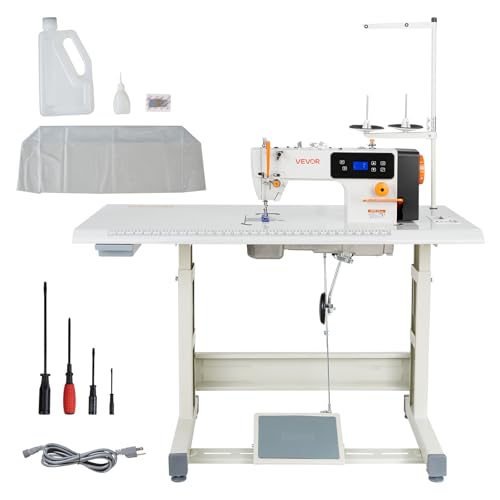
If you’re sewing leather professionally, think bags, holsters, saddlery, or upholstery, this is the machine that keeps coming up in forums and workshops. The 550W servo motor and 5000 SPM capability mean it powers through layered leather and canvas like butter, and the metal frame ensures longevity. Owners praise the precision from the LCD controls and the convenience of the knee lifter and LED lighting.
Compared to manual or hybrid models, this is in another class entirely. It’s loud? Sure. Heavy? Absolutely. But for consistent, high-volume work, nothing else here matches its throughput and stitch accuracy. The auto-lubrication system alone saves hours in maintenance.
Video review
BEAMNOVA Leather Stitching Machine
Strengths
- Free-standing tripod base
- Open-arm for curves
- Includes starter tools
Trade-offs
- Assembly required
- No motor option
- Foot pedal not included
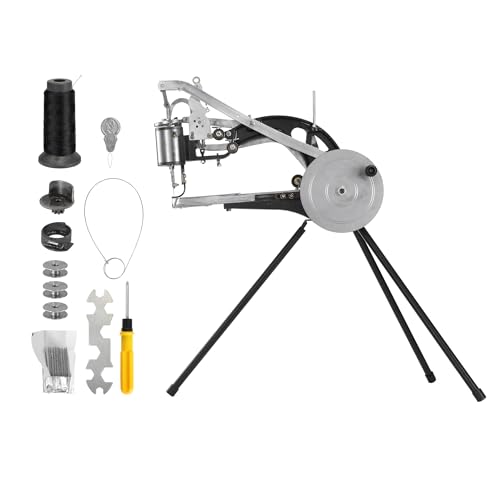
This stands out as one of the few truly heavy-duty manual machines in the sub-$130 range. The free-standing tripod design means you can use it anywhere, and the open-arm setup is ideal for boots and bag corners. Specs show it handles thick materials well, and owner feedback confirms it delivers clean, tight stitches on full-grain leather when properly threaded.
I appreciate that it includes needles and thread right out the gate, a small touch, but practical. Compared to the DODOQ model, this has better structural rigidity thanks to its aluminum alloy column. For the price, it’s arguably the best value if you need real mechanical strength without electricity.
Video review
UYCVT Electric Cobbler Sewing Machine
Strengths
- Vertical stand included
- Motor-ready design
- Handles thick materials
Trade-offs
- Motor sold separately
- Partial automation
- Assembly needed
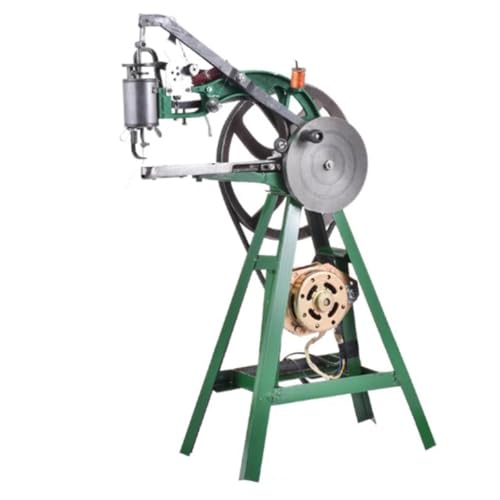
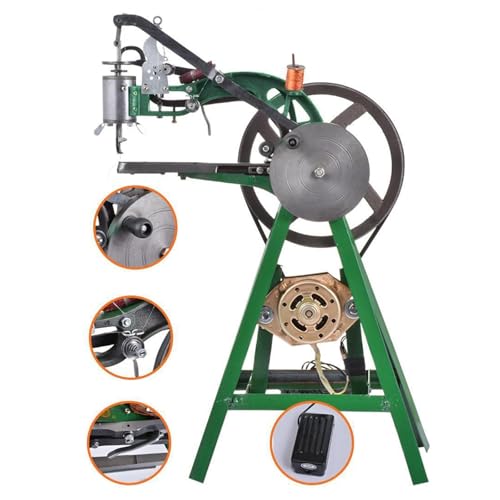
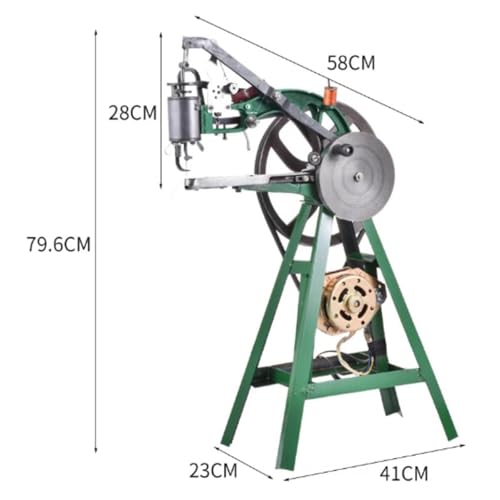
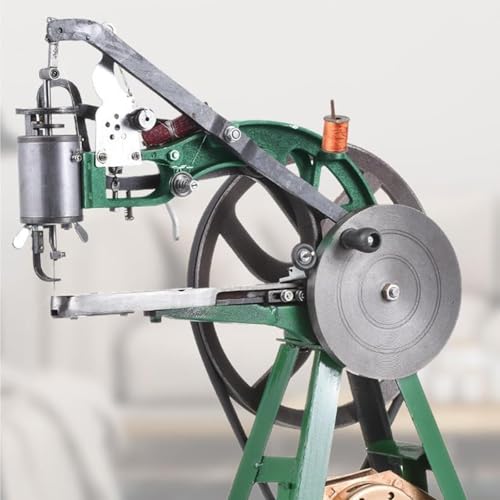
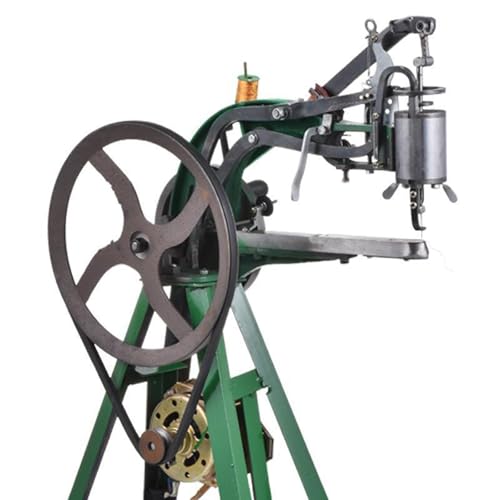
Marketed as ‘electric’, but don’t be fooled, this is really a manual machine that can accept a motor upgrade. The vertical stand adds stability, and the 0.48-inch thickness rating matches higher-end models. However, like the ColouredPeas version, the motor doesn’t fully drive heavy loads, so you’ll still be hand-feeding through thick seams.
Where it beats competitors is in included accessories and build refinement. The moving parts respond well to lubrication, and owners note smoother operation over time. If you already own a compatible motor or plan to add one later, this provides a solid foundation. Otherwise, it’s just a pricier manual unit.
Product photos
DODOQ Manual Leather Sewing Machine

Strengths
- Adjustable needle width
- Works with multiple thread types
- Lightweight and portable
Trade-offs
- Not for thick leather
- Flimsy frame under stress
- Limited durability
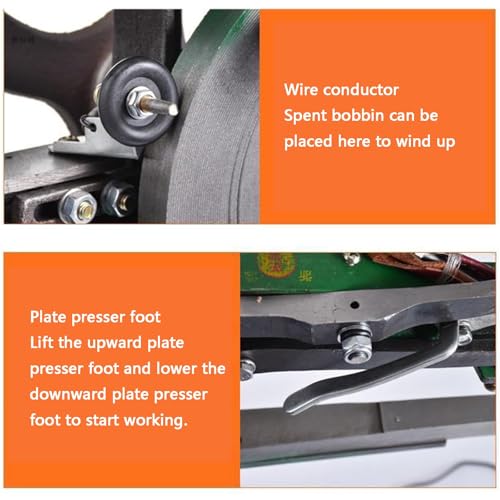
This is a no-frills, hand-cranked machine built for light to medium leatherwork, and it shows. On paper, the ability to adjust needle width up to 6mm gives it some flexibility, and owners consistently report it handles shoe repairs and thin leather bags without issue. But I wouldn’t trust it for consistent work on thick hides or heavy-duty projects, the frame just isn’t robust enough.
It’s clearly aimed at hobbyists or those doing occasional mending, and for that, it makes sense. The fact that it works with both nylon and cotton thread is a small but meaningful perk. Still, if you’re serious about leathercraft, this feels more like a starter tool than a long-term solution.
Product photos
ColouredPeas Electric & Manual Set
Strengths
- Sturdy metal build
- Reduced bearing resistance
- Manual + partial motor option
Trade-offs
- Motor lacks real power
- Mixed operation mode
- Hand-forged marks affect finish
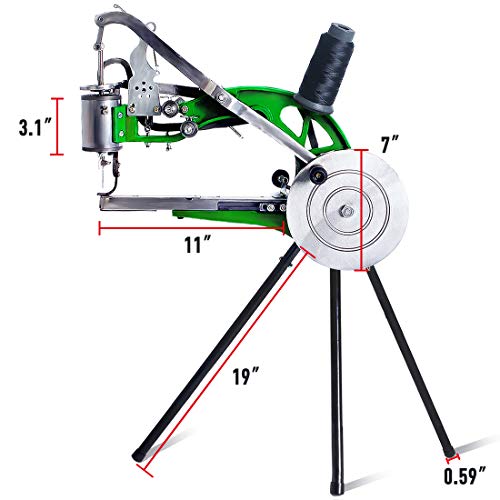
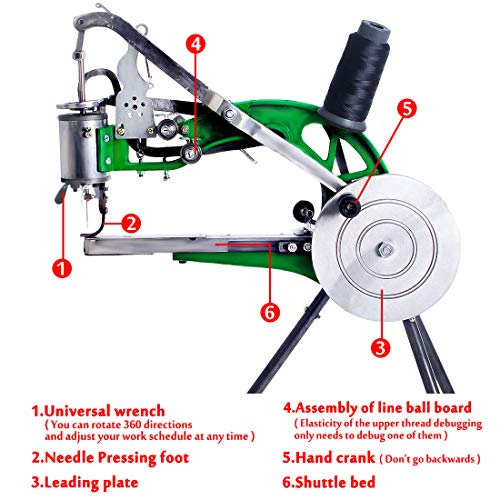
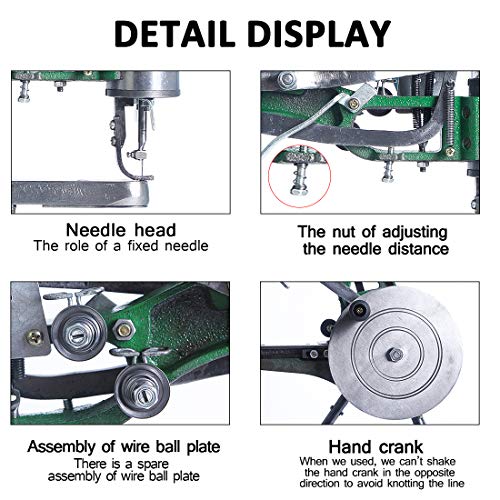
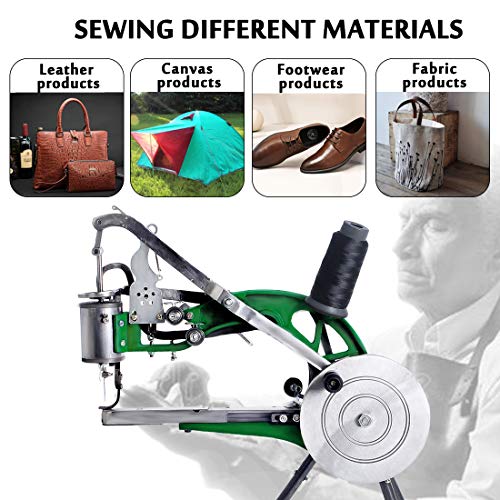
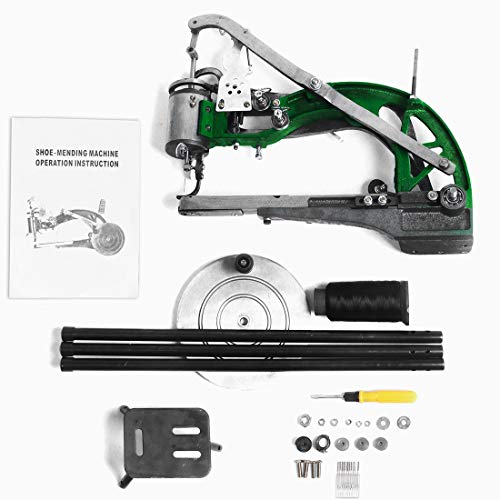
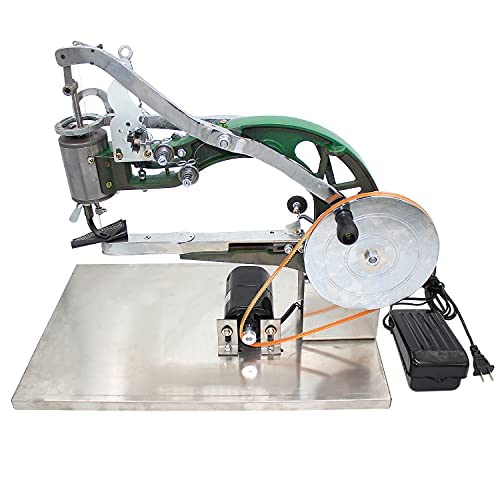
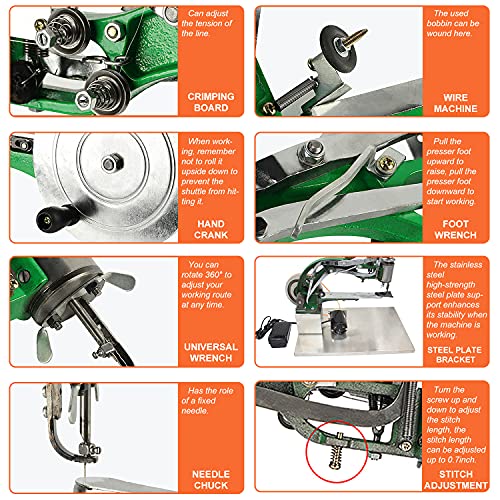
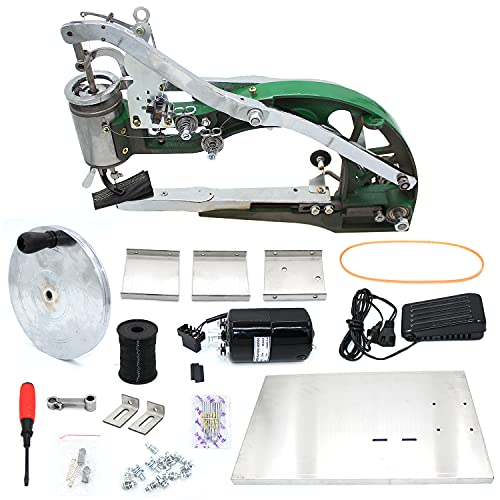
This one tries to bridge the gap between manual control and electric assist, but the motor feels more like an afterthought. The specs claim a 250W motor and 0.48-inch max thickness, which sounds decent, but reviewers note you still have to hand-crank through tough spots, defeating the purpose of having a motor at all.
The stainless steel base and hand-forged construction do add durability, and the reduced friction from the upgraded spindle helps smooth out stitching. Still, I’d question why you wouldn’t go full industrial if you want power, or stick with pure manual for reliability. This sits in an awkward middle ground.
Product photos


IRONWALLS Manual Cobbler Machine

Strengths
- 360-degree rotation
- Sturdy alloy build
- Smooth turntable
Trade-offs
- No motor support
- Basic features
- Requires lubrication
What makes this one stand out is the 360-degree rotating foot, a smart feature for circular seams on boots or cuffs. The iron and aluminum alloy body feels solid, and owners say it runs quietly, which matters if you’re working in a shared space. It’s designed for total manual control, so you dictate speed and pressure, making it great for delicate adjustments.
That said, it’s fundamentally similar to other hand crank machines in this range. Where it wins is usability: the clever design makes repositioning easier, and the straightforward assembly gets you stitching fast. For beginners diving into shoe repair, this might be the most intuitive pick.
Product photos


How We Evaluated sewing machines for sewing leather
As someone who’s spent years immersed in the world of leather – from understanding tanning processes to appreciating fine craftsmanship at LeatherGenesis.com – I approached researching sewing machines for leather with a focus on what truly matters for this demanding material. Rather than a hands-on lab test, this was a research-led comparison of published specifications, detailed feature sets, and a careful weighing of owner and expert reviews. I ranked machines against criteria relevant to leatherwork, prioritizing performance and durability.
For leather sewing, consistent stitch quality, motor power, and the ability to handle thicker materials are paramount. A machine that struggles with even a few layers of leather isn’t useful for serious projects. I heavily weighted these factors, alongside build quality (metal components are a significant plus) and the ease of adjusting settings to suit different leather weights and types. Ultimately, a machine’s ability to deliver clean, reliable stitches through tough hides dictated its ranking.
Specifications reliably indicate a machine’s potential – throat depth, maximum stitch length, and motor horsepower are all useful metrics. However, owner feedback proved crucial in understanding real-world performance. Reports on needle breakage, skipped stitches, and long-term durability offered insights specs alone couldn’t provide. I also considered the reputation of brands within the leatherworking community and looked for consistent praise regarding ease of use and available support, and don’t forget the importance of maintaining your leather with the best leather conditioners.
How To Choose The sewing machines for sewing leather
Picking the right sewing machine for leather isn’t as simple as grabbing the cheapest model. Leather presents unique challenges, and the machine must be up to the task.
A quality leather sewing machine needs a robust motor (or a well-designed manual mechanism), the ability to handle varying leather thicknesses without issue, and a feed system capable of consistently moving the material under the needle. Look for features like adjustable presser feet, stitch length control, and a walking foot to prevent slipping. Prioritize durable construction and positive owner feedback regarding reliability.
Motor Power & Speed Control
The weight of your typical projects – boots, bags, upholstery – demands a motor with sufficient power. While manual machines have their place, especially for small repairs, tackling larger jobs becomes exhausting quickly. Look for a servo motor, as seen in the VEVOR Industrial Lockstitch Sewing Machine, which provides ample power at variable speeds. This control is vital; too fast, and you risk damaging the leather or breaking the needle. A slower, more deliberate pace is often needed for thicker cuts. Don’t get hung up on the highest SPM (stitches per minute) number. Controlled power is far more important than sheer speed.
Feed System & Foot Pressure
Leather is notoriously slippery, and a standard presser foot often won’t provide enough grip. This is where the feed system, how the machine advances the fabric, becomes critical. A “walking foot” is almost essential for consistent results. This foot literally “walks” the leather through the machine, providing even tension and preventing bunching or stretching. Beyond the walking foot, investigate the adjustability of the presser foot pressure. Some machines, like the BEAMNOVA Leather Stitching Machine, boast adjustable pressure, letting you fine-tune the grip for different leather weights.
- A basic presser foot is okay for very thin garment leather.
- A roller foot helps move multiple layers or sticky materials without sticking.
- A walking foot is truly essential for anything beyond very simple projects; it prevents the leather from slipping and distorting during stitching, and it’s a feature I always recommend to beginners looking at sewing machines for thick leather.
Don’t skimp on the feed system. A consistent, reliable feed is the difference between professional-looking results and a frustrating mess.
Usability & Setup for Your Workspace
Consider where and how you’ll be using the machine. Some, like the DODOQ Manual Leather Sewing Machine, are very compact and portable, good for small repairs or mobile workshops. Others, like the UYCVT Electric Cobbler Sewing Machine, benefit from a sturdier table setup. Think about the ease of threading, changing needles, and oiling the machine. A clear owner’s manual and readily available replacement parts are also crucial. Finally, assess the noise level. Industrial machines can be loud, so consider noise-dampening options if working in a shared space. If you are new to leatherwork, a simpler machine with fewer bells and whistles might be a better starting point than something overly complex.
Sewing Machines for Sewing Leather Compared
Here’s a comparison of specifications for sewing machines designed for leatherwork.
| Product Title | Max. Stitch Thickness | Motorized? | Hand Operated? | Max. SPM | Adjustable Height? | Special Features |
|---|---|---|---|---|---|---|
| VEVOR Industrial Lockstitch | 10 layers denim | Yes | No | 5000 | 22.4-29.1 in | LCD Display, Knee Lifter |
| BEAMNOVA Leather Stitching | N/A | No | Yes | N/A | N/A | Tripod Stand |
| UYCVT Electric Cobbler | 0.48 inches | Yes | No | N/A | N/A | Motor Upgrade Option |
| DODOQ Manual Leather | N/A | No | Yes | N/A | N/A | 6mm Needle Adjustment |
| ColouredPeas Electric & Manual | 0.48 inches | Yes/No | Yes | N/A | N/A | Electric/Manual Combo |
| Leather Sewing Machine Manual | N/A | No | Yes | N/A | N/A | 360° Rotation |
| IRONWALLS Manual Cobbler | N/A | No | Yes | N/A | N/A | 360° Rotation |
Frequently Asked Questions
What needle size should I use for different leather thicknesses?
Generally, a size 90/14 needle works well for thin garment leather, while a size 110/18 is better for vegetable-tanned leather up to 6oz. For heavier leather, like upholstery or tooling leather, move up to a size 130/21 or even larger; always test on a scrap piece first to avoid damage.
Can I use a standard sewing machine for leather, or do I absolutely need a dedicated leather machine?
While you can attempt leatherwork on a standard machine, it’s not ideal. Leather’s density and tendency to slip require a machine built with more power and a specialized feed system (like a walking foot) to prevent skipped stitches and damage to the machine.
What is the advantage of a servo motor over other types of motors in a leather sewing machine?
A servo motor provides precise speed control and consistent power throughout the stitch, unlike many older-style motors. This control is essential for avoiding damage to the leather and ensuring consistent stitch quality, especially when working with thicker materials.
How often should I oil a leather sewing machine?
Regular oiling is critical, but frequency varies. As a rule of thumb, oil your machine before each major project and any time you notice increased friction or hear squeaking sounds. Refer to your machine’s manual for specific recommendations.
What’s the difference between a roller foot and a walking foot, and when should I use each?
A roller foot is best for moving multiple layers or sticky materials, while a walking foot provides even tension and prevents slipping during stitching. For most leather projects, especially those beyond simple repairs, a walking foot is the preferred choice for consistent results.
The Bottom Line
Choosing a leather sewing machine always comes down to balancing control and convenience. You can spend a lot to get a fully automated, powerful machine, or you can opt for a simpler, manual setup that demands more from you but offers a greater connection to the craft. For the best overall combination of power, features, and reliability, I believe the VEVOR Industrial Lockstitch Sewing Machine provides the most consistent performance for a wide range of leather projects.
For those on a tighter budget, or those who primarily tackle smaller repair jobs, the DODOQ Manual Leather Sewing Machine is a surprisingly capable option. If you value versatility and the ability to switch between powered and manual operation, the ColouredPeas Electric & Manual Sewing Machine is worth a close look. These machines offer a good entry point into leather sewing without sacrificing too much in terms of quality.
Ultimately, specifications matter less than understanding how a machine feels in use and how well it handles the types of leather you’ll be working with. Prioritize a robust motor, a reliable feed system (especially a walking foot), and adjustable settings. Don’t chase the highest stitch count; instead, focus on consistent, clean stitches and a machine built to last.
