
How to Break in New Leather Shoes Quickly Without Damage
This post contains affiliate links. As an Amazon Associate, we earn from qualifying purchases.
To break in new leather shoes, you match three things: wear duration, mechanical softening, and minimal, targeted conditioning. Start by wearing them for 30–60 minutes indoors for a week, manually flexing the leather daily. Expect three to six weeks for full-grain leather boots, less for softer sneakers or suede. Never soak them or use heat.
The timeline is the leather’s collagen fibers slowly realigning under pressure. Force the process with water or a hairdryer, and you strip oils, weaken the hide, and invite cracks that never heal.
What follows is the mechanical approach: the safe, phased method that works for any quality leather, the tools that help without harm, and the one “quick fix” you should ignore every time.
Key Takeaways
- The full break-in for quality leather boots takes 3–6 weeks of regular wear. Sneakers or softer leathers may need just 1–2 weeks.
- Manually flexing the shoe by hand for a minute each day does more than a week of passive wear for initial softening.
- Use a conditioner like Bickmore Bick 4 only on specific, stiff areas like the heel counter, not the entire shoe.
- Never use water, heat, or olive oil to speed up the process. They damage the leather’s structure and finish.
- If the shoe is painfully tight in the toe box or heel from day one, it’s too small. Leather stretches width-wise, not length-wise.
Why New Leather Shoes Feel Like Cardboard (And Why That’s Good)
New leather is stiff because its collagen fibers are tightly woven and set during the tanning and lasting process. That stiffness is a sign of structure, not a defect. Your job isn’t to defeat the leather but to guide it. The break-in is the leather physically adapting, the fibers loosening and forming micro-creases at your foot’s flex points.
A break-in period of 20-30 hours of wear creates a custom fit without compromising the shoe’s integrity. A bad one, often rushed, creates deep, unsightly creases in the wrong places and can permanently stress the seams.
The break-in is effectively the process of the leather starting to adapt to the person that’s wearing it. It’s more than just the leather getting softer. From a fiber level, it’s actually starting to mold and flex to somebody’s foot. – Brett Viberg, bootmaker, quoted in GQ
This is why patience isn’t just advice; it’s mechanics. You’re asking a dense, organic material to reshape itself.
The 3-Phase Break-In Timeline (and the Single Biggest Mistake)
Forget vague promises. The break-in follows observable phases, confirmed by shoemakers like Cheaney. The timeline varies wildly by leather type and construction.
| Leather & Construction Type | Estimated Full Break-In Time | Key Factor |
|---|---|---|
| Sneakers / Soft Suede | 1–2 weeks | Material is inherently more pliable. |
| Goodyear-Welted Dress Shoes | 3–4 weeks | Must soften upper and compress cork filler. |
| Full-Grain Leather Boots | 3–6 weeks | Thick hide and often a rigid sole. |
Phase 1: Initial Yield (Days 1-7)
Wear the shoes indoors for 30–60 minutes daily. You’ll feel the leather begin to warm and flex, but significant stiffness remains. This is when most people give up or do something drastic. Don’t. The sensation is the upper starting to separate from the stiffener around the heel.
Phase 2: Noticeable Softening (Weeks 1-2)
The leather softens considerably. It will feel more flexible when you put it on. You might still get a hot spot at the heel or the vamp, but it should fade faster. This is when the cork footbed in welted shoes begins to compress.
Phase 3: Molded Fit (Weeks 3-6)
The shoe has largely molded to your foot. It should feel secure but not constricting, with creases forming naturally at the flex points. This is the “like a slipper” stage Dr. Martens designer Charlie O’Byrne describes.
The single biggest mistake is trying to jump from Phase 1 to Phase 3 in a day. The internet is full of folk remedies promising this.
Where this goes sideways: Soaking leather boots or hitting them with a hairdryer. The CHARLES & KEITH guide strongly discourages this, noting heat strips natural oils, leaving leather dry and brittle, and can melt the glue holding the sole. Water compromises structural integrity and can lead to mold.
I see people recommend olive oil as a cheap conditioner. Here’s some straightforward advice: don’t. In my experience, food-based oils can eventually go rancid, attracting dust and pests. It’s a short-term soften for a long-term problem.
Your Day-One Action Plan: The First 7 Wears
This isn’t a passive wait. Your first week sets the foundation.
- Inspect the Fit. Before anything, ensure the shoe fits. Your toes should not jam the front. The ball of your foot should align with the shoe’s widest part. If it’s painfully tight in reinforced areas (toe box, heel), it’s too small. Return it.
- Hand-Flex First. Before your first wear, bend the shoe at its natural flex point (the vamp) 10-15 times. Hear the gentle creak? That’s the fibers starting to move. Do this for a minute daily.
- The 30-Minute Rule. Wear the shoes with your intended socks for 30 minutes on day one. Do chores, work at a desk. Then take them off.
- Increase Gradually. Add 15-30 minutes each subsequent day over the first week. Listen to your feet. A hot spot is a warning; a blister is a sign you moved too fast.
- Use a Shoe Tree. After each wear, insert a cedar shoe tree. It absorbs moisture, holds the shape, and applies gentle outward pressure that continues the stretching process overnight. No trees? Use balled-up socks.
- Spot-Check for Pressure. After the third wear, identify any persistent tight spots. This is where targeted conditioning later will help, not now.
- Assess. After a week of indoor wear, you should be able to walk a full hour without sharp pain. If not, revisit the fit.
Skipping the gradual break-in will blow out the seams at the quarter panel by week three.
Tools & Products That Actually Help (And One That Doesn’t)
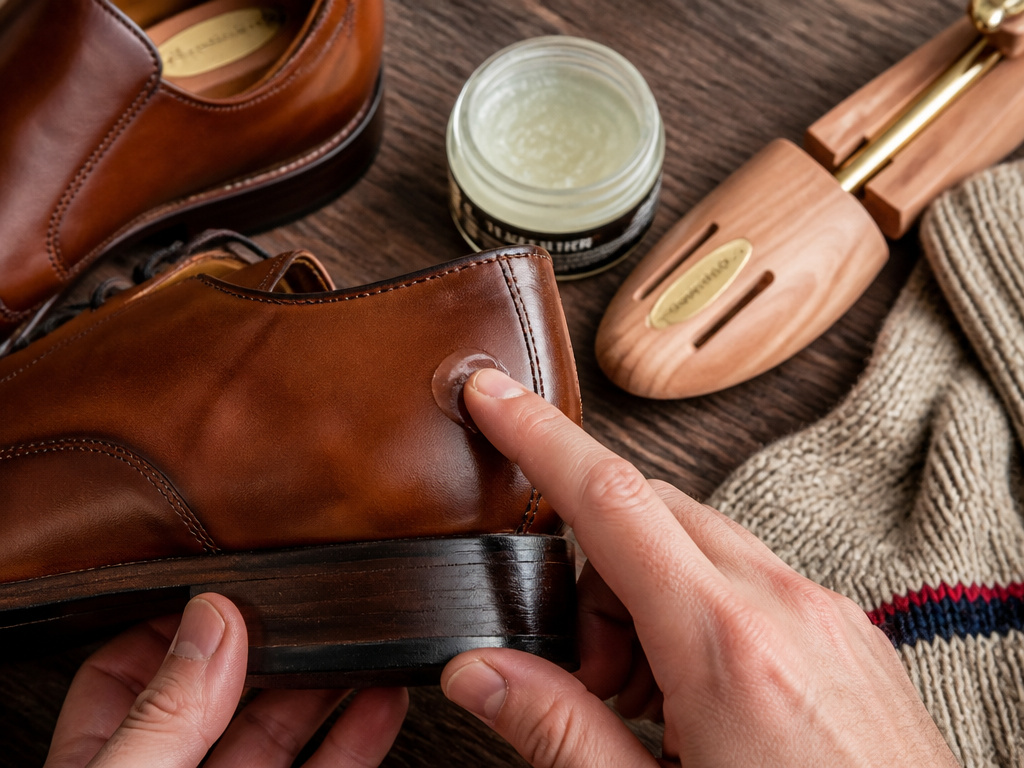
You don’t need much. In fact, the best tool is your hands. But a few specific items can aid the process without risk.
The Helpers:
- Cedar Shoe Trees: Essential. They maintain shape, wick sweat, and gently stretch the shoe. Use them every time you take the shoes off.
- Thick Socks: Wear them during your indoor sessions. The extra volume applies even, firm pressure to stretch the width. Dr. Martens even sells “Double Doc Socks” for this.
- Targeted Conditioner: Not for the whole shoe. Once you’ve identified a stiff spot (often the outer heel counter), apply a tiny dab of a quality, non-darkening conditioner like Bickmore Bick 4 or Lexol Leather Conditioner. Massage it in just at that spot to soften the specific fibers.
- Shoe Stretcher: For a persistent, localized tight area, a simple two-way shoe stretcher can help. Use it gently, expanding it over 24-48 hours, not overnight.
The One That Doesn’t: “Break-In” Sprays & Oils
Be wary of miracle sprays. While products like Angelus Professional Shoe Stretch exist for use with stretching devices, they’re a cobbler’s tool. Brett Viberg warns against “dousing boots with conditioner to speed softening,” which can saturate and damage the leather. These are for solving a specific problem, not for general break-in.
The goal is controlled adaptation, not chemical breakdown.
Conditioning During Break-In: The When & Where
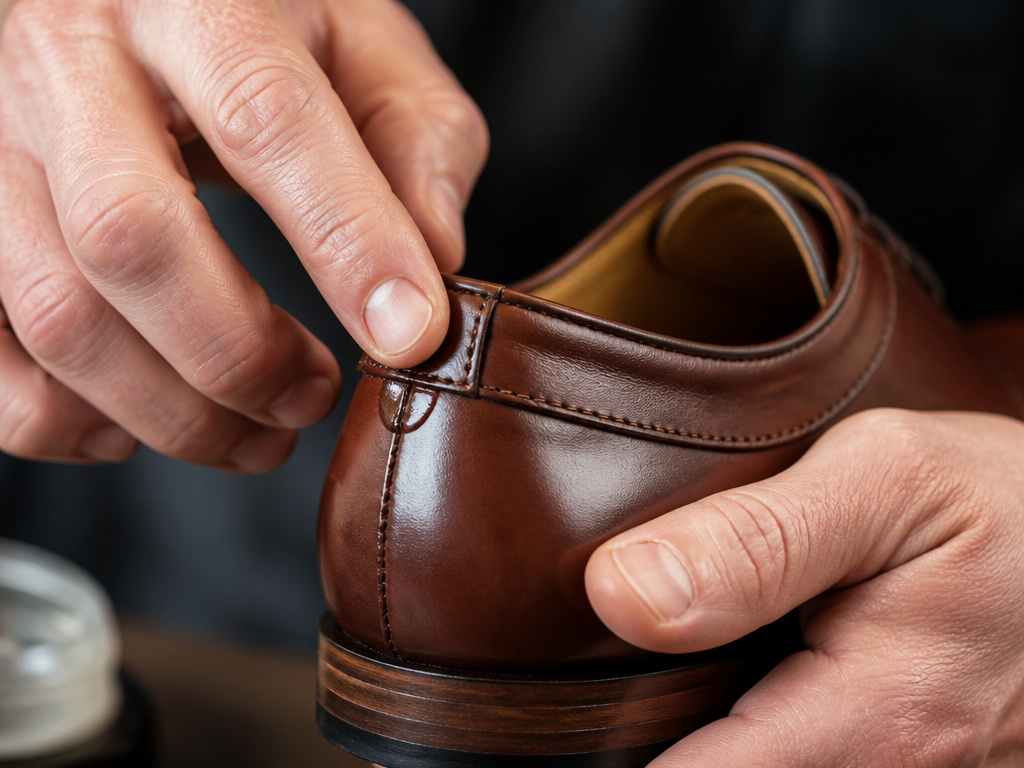
Conditioner is not a break-in accelerator. Its role is supportive.
- When: Only after the first 5-7 wears, and only if a specific area remains stubbornly stiff.
- Where: Apply solely to the problem area, the back of the heel, the pinch point over your little toe. Never slather the entire shoe.
- Why: Leather needs its natural oils to remain flexible. Over-conditioning clogs the pores, can oversoften the leather (leading to loss of support), and often darkens it dramatically. A thin coat on a pressure point reduces friction and keeps those local fibers pliable.
Think of it like a hand-rubbed oil finish on wood. You apply thin, even coats, letting each fully absorb. You don’t flood the surface.
What About Professional Stretching or a Cobbler?
Sometimes, you need a pro. If you have a perfect-fitting shoe except for one brutal pinch point, a cobbler can help.
A skilled cobbler with professional stretching tools can gain you perhaps a quarter- to a half-size in width. Length is mostly fixed. This is a great option for expensive dress shoes or boots where you’re confident in the fit otherwise. They can target a single metatarsal head or the instep with precision you can’t achieve at home.
It’s a repair, not a standard step. For most break-ins, you are the best tool.
Frequently Asked Questions
How long does it take to break in leather shoes?
For full-grain leather shoes or boots with Goodyear welting, expect 3 to 6 weeks of regular, gradual wear. Softer leathers or sneakers may only take 1 to 2 weeks. The break-in time is dictated by thickness and construction.
Can I use a hairdryer to break in shoes faster?
No. Applying heat is one of the fastest ways to damage leather. It strips the natural oils, leaving the hide dry, brittle, and prone to cracking. It can also melt glues used in the construction.
My heels are blistering. What should I do?
Stop wearing the shoes for a day or two to let the skin heal. When you resume, use a thicker sock and a dedicated blister prevention pad or moleskin on the hot spot. Ensure your heel isn’t slipping excessively, a little movement is normal at first, but a lot indicates a poor fit. It is less than ideal to wear new leather shoes in the rain during the initial break-in phase.Water can cause the leather to stretch unevenly and rapidly, potentially misshaping the shoe. Once broken in, occasional rain is fine if you dry the shoes properly (with trees, away from heat) afterward.
Should I condition my shoes before breaking them in?
Generally, no. Wear them first to let the leather naturally flex and identify the true tight spots. Premature conditioning can oversoften areas that don’t need it. The best leather shoe care starts with understanding the shoe’s behavior on your foot.
The Bottom Line
Break-in is a conversation between your foot and the leather. You provide consistent, gentle pressure; the leather responds by molding to you. Rushing it with water, heat, or heavy oils is like shouting in that conversation, you might get a faster response, but you damage the relationship.
If you remember one thing, let it be this: after the first week of short wears, if the shoe still feels like a vise in the toe box, it’s the wrong size. No amount of breaking in will fix that. Leather stretches width-wise, not length-wise.
Start with 30 minutes. Use your hands. Be patient. The reward is a pair of shoes that fit you, and only you, for years.
