
Your Guide on How to Care for Leather Shoes for Longevity
This post contains affiliate links. As an Amazon Associate, we earn from qualifying purchases.
To care for leather shoes, follow a strict sequence: clean with a pH-neutral product, condition with a wax-based cream, and protect only if necessary for your climate. The goal is to maintain the leather’s breathability while preventing material fatigue, which one manufacturer estimates begins after about 3,000 hours of wear. Skipping rotation or using heat to dry shoes accelerates failure.
That 3,000-hour figure comes from a manufacturer’s manual, and it reframes the entire conversation. This process is about managing a finite material lifecycle for shoes.Every step you take either adds to that clock or subtracts from it.
What follows is the sequence that actually works, pulled from half a dozen manufacturer guides. We’ll also cover where those guides openly contradict each other, the one cleaning product you should almost never use, and how to handle the leathers that break all the standard rules.
Key Takeaways
- Leather has a finite wear life; one high-end manufacturer states material fatigue starts around 3,000 hours of use, even with perfect care.
- Never use saddle soap on modern, finished leather goods, its alkaline pH can strip natural oils and reverse the tanning process, leading to cracks.
- Always follow the clean → condition → protect order. Applying a wax sealant over dirty or dry leather locks in damage.
- Manufacturers fundamentally disagree on resoling; Manolo Blahnik advises against it, while Ludwig Reiter designs shoes for it. Your shoe’s construction decides which path is correct.
- Let shoes dry at room temperature for at least 24 hours between wears. Heat from radiators or dryers causes irreversible stiffening and deformation.
The Core Sequence: Clean, Condition, Protect
Get this order wrong and you’re working against the material. Conditioning a dirty surface seals in grime. Waterproofing a parched hide guarantees it stays dry and brittle. The sequence exists because each step prepares the leather for the next.
Start by removing the laces. This seems minor, but it lets you clean the tongue and eyelet areas thoroughly, places where salt and sweat concentrate. Insert shoe trees. A cedar shoe tree with a full toe and heel block does three jobs: it absorbs moisture, holds the shape to prevent creasing, and makes the surface taut for easier cleaning.
Begin by brushing the entire shoe with a horsehair brush to lift dust and dried mud from the grain. For smooth leather, use a damp cloth (not wet) with a drop of pH-neutral soap for spot cleaning. Condition with a product like Saphir Crème 1925, applying in small circles and letting it absorb fully before buffing.
Step 1: The Right Clean for the Right Leather
Your first tool is always a horsehair brush. A few firm strokes remove abrasive dust from the grain before you ever touch a liquid. For general grime, a slightly damp microfiber cloth is enough. For stubborn stains, you need a dedicated leather cleaner.
Here’s where most advice goes off the rails. The default recommendation for decades has been saddle soap. Let’s be clear about this: saddle soap is for saddles, thick, oil-rich, unfinished leather that gets covered in horse sweat and mud. On a modern calfskin dress shoe or a finished boot, its alkaline pH is too harsh. It strips away the factory-applied finishes and the hide’s natural oils, leaving a dry, thirsty surface. I learned this the hard way with a lambskin jacket; the soap left the leather stiff and dull, requiring a deep conditioning rescue that took weeks.
For most shoes, a dedicated, pH-neutral leather cleaner is the only safe choice. Brands like Saphir make specific solutions, such as their RENO CLEANER, for removing embedded dirt or old polish without damaging the hide.
Step 2: Conditioning is Not Optional
Leather is skin. It loses oils through wear, exposure, and yes, cleaning. Conditioning replenishes those oils, maintaining flexibility and preventing cracks. The timing cue is feel. If the leather feels stiff, looks dry, or has lost its subtle sheen, it’s time.
Apply conditioner sparingly. Think of it like a hand-rubbed oil finish on wood, thin, even coats, fully absorbed. Use a dedicated applicator or a clean cloth, work it in with circular motions, and then walk away. Let it absorb for at least an hour, preferably overnight. Buff off any residue with a clean brush or cloth. A product like Saphir Crème 1925 or a neutral beeswax-based cream, as recommended by Giuseppe Zanotti, does this job well.
Step 3: The Protection Compromise
This is the divisive step. A true protector, like a heavy wax (Obenauf’s Heavy Duty LP) or a silicone spray, works by creating a barrier on the leather’s surface. This keeps water out, but it also seals the pores, making future conditioning less effective. It’s a trade-off: maximum weather resistance for reduced breathability and long-term nourishment.
Where this goes sideways: Applying a wax-based waterproofing sealant over a dirty or unconditioned surface. You permanently lock in the dirt and the dryness, guaranteeing the leather will crack from the inside out.
If you need protection, apply it after conditioning, once the conditioner is fully dry. Spray protectors should be used in a well-ventilated area, and waxes should be rubbed in thin layers and gently melted with a hair dryer for penetration. Reapply only as needed, after a season of heavy rain or snow, not every month.
Where Standard Advice Gets Contradicted
If you read enough manufacturer care guides, you’ll find they don’t agree. These aren’t oversights; they’re philosophical differences based on construction and intended use.
The most glaring conflict is over resoling. Manolo Blahnik’s care guide states plainly, “We do not recommend replacing the soles as this may alter the structure of the shoes.” Conversely, a brand like Ludwig Reiter designs its welted shoes to be disassembled, with modular soles and heels meant for renewal. One views the shoe as a finished sculpture; the other sees it as a repairable tool. Your shoe’s construction, cemented vs. Welted, tells you which manufacturer’s advice to follow.
| Point of Contention | Common Advice / One Brand’s Stance | Contradictory Manufacturer View |
|---|---|---|
| Resoling | Regular resoling extends life. (Ludwig Reiter) | Resoling may alter structure; not recommended. (Manolo Blahnik) |
| Saddle Soap | Traditional go-to cleaner for all leather. | Use pH-neutral cleaners only; avoid on finished leathers. (Multiple modern guides) |
| Drying Method | Dry quickly after getting wet. | Air dry at room temp only; heat causes irreversible damage. (KarolShoes, Ludwig Reiter) |
| Polish Purpose | For shine and color. | For nourishment, protection, and shine. (Saphir) |
The other major contradiction is in drying. The instinct to place wet shoes by a heater is catastrophic. Direct heat dries the leather too quickly, causing it to contract, become brittle, and often warp. Every credible guide mandates air-drying at room temperature, stuffed with paper or trees to hold shape. This takes patience, sometimes a full 48 hours for a soaked boot.
Handling the Exceptions: Suede, Exotics, and Patent
Suede, nubuck, and exotic leathers follow different rules. They’re not harder to care for, but they are less forgiving of mistakes.
Suede care is about managing the nap. Your primary tool is a suede brush, a rubber or brass-bristled brush used to lift the pile and erase scuff marks. For stains, a dedicated suede eraser is your first line of defense. Never apply standard leather conditioner to suede; it will darken and mat the surface. If you must protect it, use a spray protector formulated specifically for suede or nubuck, applied before first wear.
Exotic leathers like crocodile or python are sensitive to humidity. Giuseppe Zanotti advises storing them in a dry, ventilated place. Clean only with a dry, soft cloth. The scales on these leathers can lift if they absorb too much moisture and then dry unevenly.
Patent leather is about protecting the finish. Use a soft, dry cloth for dust. For fingerprints or smudges, a tiny amount of water on a cloth can work, but commercial patent leather cleaners are safer. Store patent shoes in their dust bags to prevent color transfer from other items.
The Silent Killers: Perspiration and Fatigue
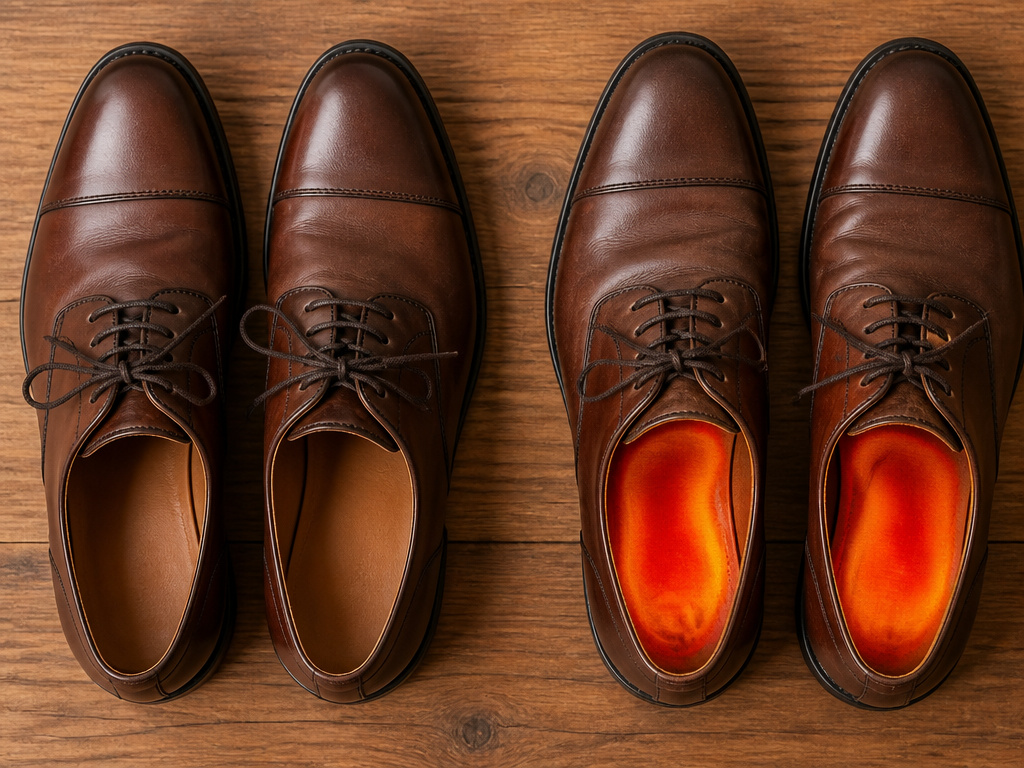 You can avoid rain and mud, but you can’t avoid your own feet. Perspiration is aggressively alkaline and, according to Ludwig Reiter, can actually reverse the tanning process over time, leading to cracks and tears in the lining and insole.
This is why rotation is essential. Wearing the same pair two days in a row doesn’t give the interior enough time to fully dry. The moisture stays trapped, breaking down the leather from the inside. The rule of thumb is to let shoes rest for at least 24 hours between wears, longer if they were worn all day.
This ties directly to material fatigue. That 3,000-hour figure is a warning. It marks the point at which the leather fibers, despite excellent care and timely repairs like heel taps and shoe restoration, will begin to lose their structural integrity from repeated flexing.It’s a reminder that leather shoes are a consumable product, not a permanent heirloom. Your care routine directly influences how gracefully they reach that point.
Storage: The Final, Critical Step
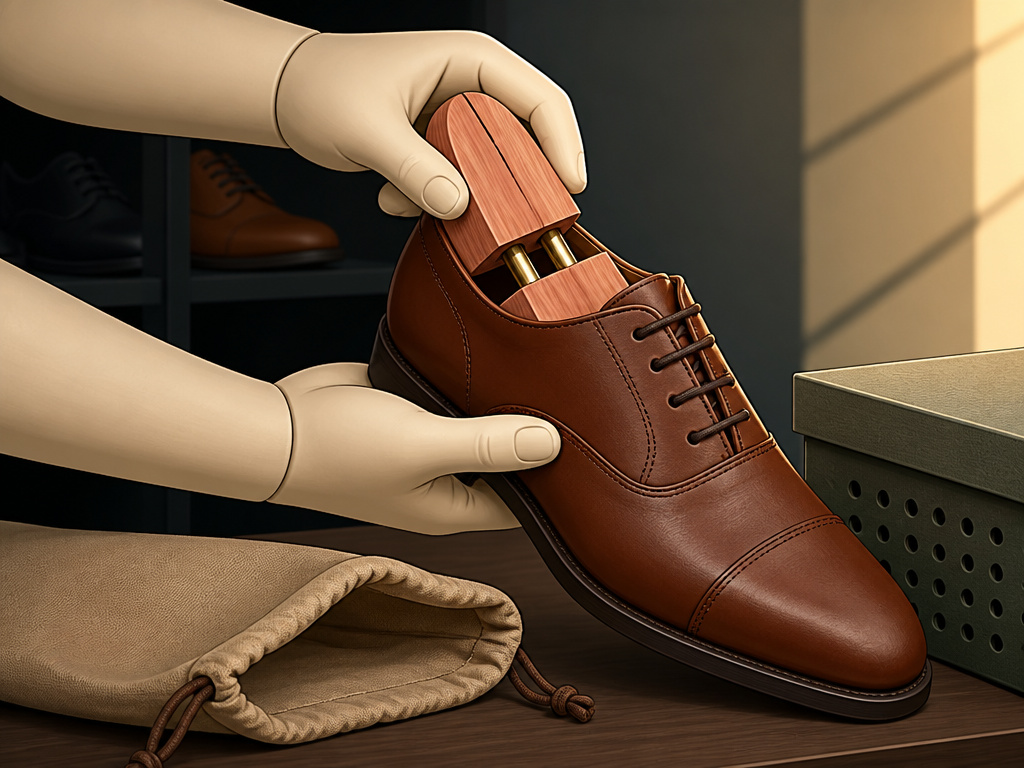 Improper storage undoes all your careful cleaning. The enemies are dust, sunlight, moisture, and misshaping.
Always use shoe trees. Cedar is ideal because it absorbs moisture and odors. Store shoes in a cool, dry place, away from direct sunlight which fades color. Use the provided dust bags for added protection against scratches, especially for shoes with delicate finishes or hardware. For long-term storage, a breathable shoe box is better than a sealed plastic container, which can trap humidity and promote mold.
If shoes get wet, stuff them with newspaper or paper towels to absorb moisture and help retain shape as they air dry. Then, once fully dry, insert the proper shoe trees.
Frequently Asked Questions
Can you use Vaseline on leather shoes?
Do not use Vaseline. It’s a petroleum jelly that doesn’t nourish leather, it sits on the surface, attracts dirt, and can degrade some leather finishes over time. It also creates a sticky barrier that prevents the leather from breathing. Use a conditioner like Bickmore Bick 4 instead.
How often should you condition leather shoes?
There’s no fixed schedule. Condition when the leather feels dry or stiff, or every 4-6 months with regular wear. Shoes worn in harsh conditions (rain, snow, extreme heat) may need it more often. Over-conditioning can saturate and weaken the leather, so let the material’s condition be your guide.
What’s the best way to dry wet leather shoes?
Remove the laces and insoles if possible. Stuff the shoes tightly with newspaper or paper towels, replacing them every few hours as they soak up moisture. Let the shoes air-dry at room temperature, away from direct heat sources like radiators, heaters, or sunlight. This process can take 24-48 hours. Never use a hair dryer.
Are leather shoes waterproof?
Most are not inherently waterproof. The waterproofing treatment for leather is an added step that involves applying a wax-based product (like Obenauf’s) or a specialty spray (like Nikwax). This adds protection but changes the leather’s breathability and feel.
Can cracked leather shoes be repaired?
Superficial cracks in the finish can sometimes be minimized with heavy conditioning and polishing. Deep structural cracks that go through the leather grain are usually not repairable. The leather has split. A cobbler might be able to patch the area, but the shoe’s integrity is compromised. Prevention through regular conditioning your shoes is the only real solution.
The Bottom Line
Leather shoe care is a predictable sequence of cleaning, nourishing, and protecting a natural material with known limits. That 3,000-hour wear benchmark is the most honest piece of data in this whole conversation, it frames care as lifecycle management, not alchemy.
So focus on the fundamentals. Brush them. Clean them gently. Apply leather conditioner when they’re dry. Let them rest. And understand that the most common point of failure isn’t the upper leather you pamper, but the moisture and salt from your own feet that you can’t see. That’s where rotation matters more than any fancy product. A simple cedar shoe tree and an extra day in the closet will do more for your shoe’s lifespan than chasing a miracle in a bottle.
