
The Complete Guide on How to Care for Leather Car Seats
This post contains affiliate links. As an Amazon Associate, we earn from qualifying purchases.
This post contains affiliate links. As an Amazon Associate, we earn from qualifying purchases.
To care for leather car seats, you must protect the polyurethane or acrylic finish coating the leather. This means using pH-neutral cleaners applied to a microfiber cloth first, never the seat, conditioning only 1-2 times a year with water-based products, and religiously avoiding anything containing oil, petroleum, solvents, or alcohol.
That coating is the whole game. It’s what makes automotive leather stain-resistant, durable, and easy to clean, unlike your leather sofa or jacket. The biggest mistake you can make is to treat your seats like those other leathers. They aren’t the same animal.
What follows: a breakdown of the single most important rule, the exact tools that work, the mistakes that will void your warranty, and a straightforward routine to keep your seats looking new for a decade.
Key Takeaways
- Your seats are coated. Using oils or heavy conditioners meant for furniture leather will create a greasy, sticky film on top of that coating without nourishing the hide underneath.
- Every manufacturer explicitly warns against household cleaners, solvents, and alcohol-based products. Using them can strip the finish and void warranty coverage for seat replacement.
- The number one tool is a clean, high-quality microfiber cloth. Terry cloth towels and paper towels will scratch the finish over time.
- Conditioning is preventative, not restorative. Do it 1-2 times per year max; over-conditioning does more harm than good. Immediate blotting of spills is essential. Dyes from jeans and ink can transfer permanently in under an hour if not treated.
The Main Rule for All Leather Car Seats
Automotive leather is almost always coated. Think of it as a thin, flexible sheet of plastic, usually polyurethane or acrylic, bonded to the top grain of the leather. This factory-applied coating is what gives your seats their uniform color, makes them resistant to spills, and allows for easy wiping.
If you treat this coated leather like you would a baseball mitt or an uncoated sofa, you’ll ruin it. A mink oil conditioner can’t penetrate the plastic-like barrier. It just sits on top, attracting dust and eventually turning gummy. Saddle soap can dry out the leather underneath the coating over decades, while doing nothing to clean the surface you actually touch.
The leather will tell you what it needs. If a clean, damp microfiber cloth glides smoothly and picks up dirt, the coating is intact and doing its job. If your cloth drags, feels sticky, or the color comes off on it, the coating has been damaged, often by the wrong cleaner.
What Most People Get Wrong About Cleaning
You don’t clean the leather. You clean the coating on top of the leather. That changes everything.
Most of us grab the nearest spray bottle and spritz the seat directly. Stop that. Every service bulletin from Toyota, Ford, and Mercedes-Benz I’ve read says the same thing: apply your cleaner to the cloth first, not the seat. Why? Direct application can cause the cleaning solution to pool in seams and stitching, where it’s nearly impossible to rinse out. Over time, those concentrated chemicals break down both the thread and the coating.
Common mistake: Spraying cleaner directly onto the seat. The solution soaks into seams and stitching, degrading the materials from the inside out. You won’t see the damage until the thread fails or the leather beside it cracks.
A soft, damp cloth with water is your first line of defense. For routine dust and light soil, it’s all you need. When you need soap, make it a drop of clear, dye-free dish soap like Dawn in a bowl of water. This creates a mild, neutral detergent solution.
The motion matters. Use gentle, overlapping circles with light pressure. Scrubbing back and forth with force can create microscopic scratches that dull the finish. Think of it as wiping a pair of eyeglasses, not scouring a pan.
The Tools That Actually Work (And Two You Should Skip)
Your toolkit should be simple. Complicate this and you’ll buy products that cause problems.
The non-negotiable item is a pack of high-quality, lint-free microfiber cloths. You’ll need at least three for any cleaning job: one damp for applying solution, one damp for rinsing, and one dry for buffing. The plush weave traps dirt particles without grinding them into the surface. A terry cloth towel, by contrast, is like using fine sandpaper.
For tougher grime or dye transfer, you need a dedicated automotive leather cleaner. I look for brands that are pH-neutral and free of solvents, silicone, and oils. A product like Motorcraft Premium Leather and Vinyl Cleaner is formulated specifically for Ford’s coated leathers, which tells you it’s designed to work with a factory finish.
Here’s where your money should and shouldn’t go:
| Tool | Why It Works | What Happens If You Skip It |
|---|---|---|
| Microfiber Cloths | Lint-free, soft weave lifts dirt without abrasion. | Terry cloth leaves lint and micro-scratches; paper towels will scratch the finish within a dozen uses. |
| pH-Neutral Leather Cleaner | Formulated for automotive coatings, not furniture. | Household cleaners or all-purpose sprays contain alcohols or solvents that break down the coating, leading to fading and stickiness. |
| Soft Bristle Brush | Gently aggrates dirt in perforations or textured grains. | Stiff brushes or scrub pads will scuff the finish, creating permanent dull spots. |
| Mild Soap Solution | Simple, controllable, and non-toxic for light cleaning. | Using “natural” cleaners like vinegar or undiluted castile soap can damage the coating due to acidity or residue. |
Now for the skips. Avoid any “2-in-1” cleaner and conditioner combos. They are the worst of both worlds: not strong enough to clean properly, and they deposit a superficial conditioner that can’t penetrate. Also, skip the aerosol foam cleaners. The propellants can be harsh on the coating, and you can’t control the application.
How to Condition Without Making a Greasy Mess
Conditioning is the most misunderstood part of leather car seat care. You are not “moisturizing” the leather in the way you think.
The leather hide underneath the coating can still dry out over years, especially with heat cycling. The goal of conditioning is to replenish the natural oils that keep the leather fibers supple, preventing them from shrinking and cracking the coating from below. But because of the top coat, you can’t slather on thick oils.
I learned this the hard way early on. I used a rich, oil-based conditioner on a car seat, thinking more was better. The result was a surface that felt slick and greasy for weeks, attracting every piece of dust and denim dye. It never absorbed, because the coating wouldn’t let it.
You need a water-based, emulsion-type leather conditioner. These products are designed to be absorbed slowly through micro-pores in the coating. Brands like Leather Honey Conditioner or Chemical Guys Leather Serum are formulated for this. Apply a pea-sized amount to a microfiber applicator pad and work it in with light, circular motions over an entire panel, don’t just spot-treat.
Frequency is key. For most climates and cars used daily, once or twice a year is ample. Over-conditioning is real; it can oversaturate the leather, weaken stitching, and create a residue on the coating. If your seats don’t look dry or feel stiff, you can probably wait another season.
Protecting Your Seats From Sun and Stains
Prevention is infinitely easier than repair. The two biggest threats are UV radiation and dye transfer.
UV protection is about managing heat and light, not just slapping on a sealant. A windshield sun shade is your single most effective tool. It dramatically reduces the cabin temperature, which slows the breakdown of both the coating and the leather underneath. For the leather itself, a product with UV inhibitors can be applied after a thorough cleaning. 303 Automotive Protectantamazon.com/dp/B0185PU38A?linkCode=osi&th=1&psc=1&tag=test-20)** that is designed for vinyl and leather.
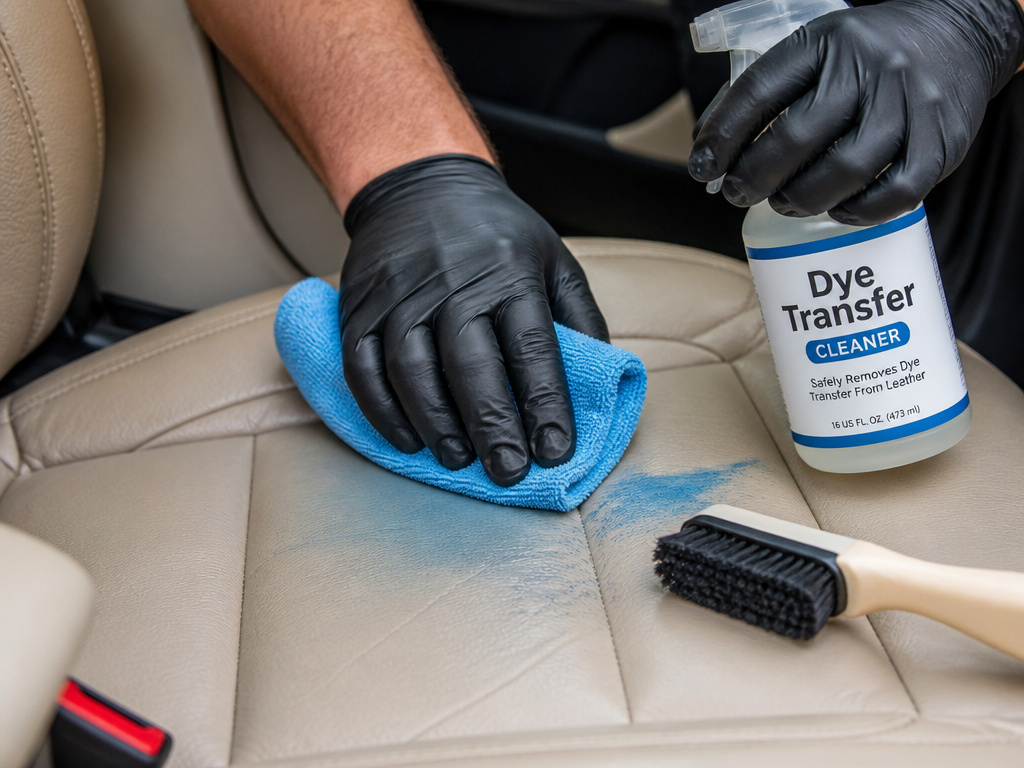
Dye transfer from blue jeans or new colored clothing is a silent killer. It doesn’t look like a spill, so it goes unnoticed until it’s set. The dyes literally bond to the coating under heat and pressure from sitting.
Where this goes sideways: Ignoring a faint blue tint on light-colored seats. Once the dye bonds to the coating after a few days of heat cycles, it requires a dedicated dye remover and aggressive cleaning that can damage the finish.
The fix is immediate action. The moment you see a discoloration, use a cleaner specifically formulated for dye transfer on the spot. Let it dwell for a minute, then gently agitate with a soft brush before wiping away.
The Factory Service Bulletins You Should Know About
Your car’s warranty is a contract, and it has fine print about maintenance. Manufacturers publish technical service bulletins (TSBs) that detail approved care procedures, and spell out what voids your coverage.
For example, a Toyota T-SB from 2018 explicitly states that leather seats replaced for dye transfer or soiling are not eligible for warranty replacement, as it’s considered owner negligence. More critically, it says damage from unapproved cleaning methods is also not covered. They call out that “many commercial cleaners damage factory coatings… By using solvents and propellants.”
Another, from Mercedes-Benz, is even more direct. It says damage from the use of “other cleaning products” cannot be covered by warranty or goodwill channels.
This isn’t scare talk. It’s the predictable outcome when you use a generic cleaner that dissolves the protective top coat. The moment that coating is compromised, the leather is exposed to spills, UV, and abrasion. The manufacturer can legitimately point to your bottle of all-purpose cleaner as the cause.
You can find this information in the owner’s manual, but the full detail is in the NHTSA leather care technical bulletin archives. It’s the difference between following best practices and guessing.
Frequently Asked Questions
Can I use baby wipes on leather car seats?
No. Most baby wipes contain alcohol, moisturizers, or fragrances that can leave a residue or dry out the leather over time. They are not formulated for the polyurethane coatings on automotive leather. Use a microfiber cloth dampened with water instead.
How often should I clean my leather seats?
For a daily driver, a quick wipe-down with a dry microfiber cloth once a week removes abrasive dust. A deeper clean with a damp cloth and mild solution should be done every 1-2 months, or whenever you notice visible soil or stickiness.
Will olive oil or coconut oil condition my seats?
Absolutely not. These are food-grade oils that will go rancid, create a permanent greasy film on the coating, and attract dirt. They cannot penetrate the factory finish and will only damage the surface and cause odors.
Why do my seats feel sticky even after cleaning?
Sticky feel is almost always a sign of product buildup, either from a silicone-based protectant or an oil-based conditioner sitting on the coating. It can also mean the coating itself is breaking down. Lexol
Are leather seat covers a good idea?
Yes, but you must choose carefully. Breathable, fabric-backed neoprene or custom-fit cloth covers are excellent for physical protection from pets, tools, or spills. Avoid non-breathable plastic or vinyl covers that trap moisture against the leather, as this can promote mold and cause the leather to dry out.
The Bottom Line
Here’s the practical takeaway: your leather seats have a plastic-like skin. Feed that skin water-based conditioner once a year, clean it with pH-neutral soap, and protect it from the sun. That’s the entire regimen.
Ignore the marketing for miracle oils, 10-in-1 wipes, and heavy perfumed conditioners. They solve problems you don’t have and create ones you do. If you remember one thing, let it be this: when in doubt, use less product, not more. A damp microfiber cloth is more powerful than any spray in a bottle when used consistently.
Your seats will last the life of the car.
