
How to Clean a Leather Wallet | The One Part Nobody Rinses
This post contains affiliate links. As an Amazon Associate, we earn from qualifying purchases.
This post contains affiliate links. As an Amazon Associate, we earn from qualifying purchases.
To clean a leather wallet, you need a white cloth, mild soap, and leather conditioner. Wipe away surface dust, then use a damp cloth with a 1:10 soap-to-water solution for stains. Work in gentle circles, rinse the soap off completely with a clean damp cloth, this is the step most people skip, then let it air dry away from heat before applying a thin coat of conditioner.
The “white cloth” isn’t a suggestion. A colored cloth can transfer dye, and a paper towel can leave lint that grinds into the grain. This is about controlling what touches the leather while it’s vulnerable.
What follows: the exact tools that matter, a four-step deep clean for when a wipe-down isn’t enough, how to handle specific stains and leather types, and the conditioning step that locks in your work. By the end, you’ll know how to rescue a wallet from pocket grime without the common mistakes that dry it out or leave a sticky film.
Key Takeaways
- Always use a white cloth for cleaning and drying to prevent dye transfer and lint residue.
- Rinse thoroughly after using soap. Un-rinsed soap residue is the #1 cause of dried-out, stiff leather.
- Air dry only, away from direct heat or sunlight. A hairdryer or radiator will bake and crack the leather.
- Condition immediately after cleaning while the leather is still slightly supple to restore lost oils.
- Skip saddle soap for modern wallets; it’s for heavy-duty, oil-rich work leather, not fine garment or vegetable-tanned leathers.
What You’ll Need (And Why The White Cloth Is Non-Negotiable)
Gather four things before you start. Missing one usually means cutting a corner that shows up as a problem later.
First, a soft-bristle brush. A horsehair shoe brush or a clean, dry paintbrush works. This is for dry debris, sand, dust, dried mud. Brushing first keeps you from grinding that grit into the leather with a wet cloth later. You’ll hear a faint scratching sound if you’re brushing off something gritty. If you don’t, you’re just moving dust.
Second, at least two clean, white, lint-free cloths. Cotton t-shirt material is perfect. The white part is critical. I’ve seen a dark blue cloth leave a faint grey smudge on a tan wallet that never fully came out. The dye transfers when the cloth gets damp. A colored cloth turns a cleaning session into a dyeing session.
Third, a mild, neutral soap. Castile soap, saddle soap (with caveats), or a dedicated leather cleaner like Lexol Leather Cleaner. “Mild” means no detergents, degreasers, or additives. Tiffany & Co.’s care guide specifies a mild solution of one part soap to ten parts water. That ratio is your guardrail, more soap doesn’t clean better, it just makes rinsing harder.
Fourth, a quality leather conditioner. Bickmore Bick 4 or Chamberlain’s Leather Milk are reliable. Conditioner is not optional. Cleaning strips natural oils; conditioner puts protection back. Think of it like washing your hands, you wouldn’t skip the moisturizer after, or your skin cracks.
The 4-Step Deep Clean (For Grime & Stains)
This is for a wallet that’s seen better days, stained, sticky, or just generally grimy. If it’s just dusty, a brush and a dry cloth will do.
Step 1: Dry Brush. Empty the wallet completely. Use the soft brush to sweep away all loose dirt and dust. Brush in the direction of the grain (the natural lines in the leather). Do this over a trash can or sink. If you see a cloud of dust, you needed this step.
Step 2: Spot Test. Mix your soap solution. Dip a corner of a white cloth into the mix and wring it out until it’s just damp, not dripping. Find a hidden spot, inside a cash slot flap or behind a card slot. Gently rub the area. Wait a few minutes. Check for any color transfer onto the cloth or any change in the leather’s texture. If nothing happens, you’re clear.
Common mistake: Skipping the spot test because “it’s just soap.” Soap can react with unknown factory finishes or dyes. A two-minute test beats a permanent stain.
Step 3: Clean & Rinse. Dampen your cloth with the soapy solution and wring it well. Wipe the entire wallet using small, gentle circular motions. Don’t soak it. For seams and edges, use a cotton swab. You’ll feel the cloth glide easier on areas with a factory finish and drag slightly on more porous, unfinished leather. Now, rinse. This is the part everyone forgets. Take your second clean, white cloth, dampen it with plain lukewarm water, and wring it out. Wipe over the entire wallet again to remove all soap residue. Soap left in the leather will dry it out from the inside. Do a final pass with a dry section of the cloth to blot up excess moisture.
Step 4: Dry & Condition. Do not speed this up. Set the wallet on a clean towel, shaped normally (don’t bend it open), in a room-temperature spot out of direct sunlight. A fan can circulate air, but don’t point it directly at the leather. This takes 6-24 hours depending on thickness. It’s dry when it feels cool to the touch, not cold. Once dry, apply a pea-sized amount of conditioner to a clean cloth. Rub it into the leather in a thin, even coat. Let it absorb for 15 minutes, then buff gently with a dry cloth. The leather should look nourished, not greasy.
| Step | Tool | The Why-Layer | Risk If Skipped |
|---|---|---|---|
| Dry Brush | Soft-bristle brush | Removes abrasive particles that would act like sandpaper during wet cleaning. | Grinds dirt into the grain, creating micro-scratches that hold future stains. |
| Spot Test | Soap solution on hidden area | Tests chemical compatibility with dyes and topcoats applied during manufacturing. | Can cause dye to run or finish to become sticky or discolored across the whole piece. |
| Rinse | Clean water-dampened cloth | Removes soap surfactants that remain in the leather’s pores after cleaning. | Soap residue draws moisture out of the hide as it dries, leading to stiffness and cracking. |
| Air Dry | Time, air circulation | Allows moisture to evaporate slowly, letting leather fibers contract evenly. | Heat causes rapid, uneven drying that shrinks and warps the leather, often irreversibly. |
Handling Stains, Spills & Special Leather Types
Not all grime is created equal, and neither is all leather. Your approach needs to match the problem.
Ink or Dye Stains: Blot immediately with a dry white cloth. Do not rub, rubbing spreads it. For a fresh stain, sometimes the blotting pulls most of it out. For a set stain, you’re likely looking at a permanent mark. Leather is skin; it absorbs. I learned this the hard way with a dye that wasn’t fully fixed on a small project, it stained everything it touched for days. That’s the nature of the material.
Oil or Grease: This is counterintuitive: do not add water. Blot with a dry cloth to absorb as much as possible. The oil will often dissipate into the leather over a few days, leaving a slightly darker spot that blends into the patina. Applying water can set the stain.
Patent Leather: This is a coated leather. Wipe with a damp white cloth and a tiny bit of mild soap. Dry immediately. Tiffany & Co. Specifically warns to not store patent leather items touching each other, as the glossy coatings can transfer color.
Suede or Rough-Out: Suede is a sanded surface. Use a dedicated suede brush or a clean pencil eraser for dry stains. For wet stains, blot with a paper towel and let it dry completely before brushing. Never use a standard leather conditioner on suede; it will darken and mat the nap. Use a spray-on suede protector instead.
Where this goes sideways: Using a “one-size-fits-all” cleaner. A product meant for finished calfskin can ruin suede. Always identify your leather type first.
What NOT to Do: The Quick-Ruin Checklist
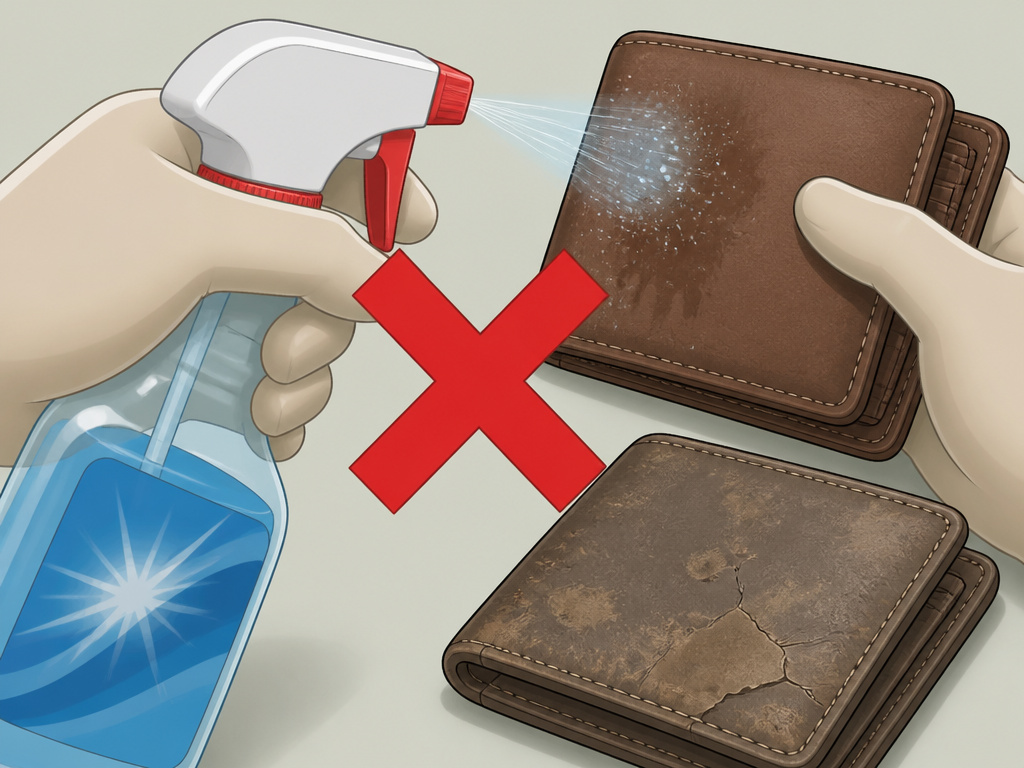 Good intentions with the wrong tools will wreck a wallet faster than neglect. Here’s the shortlist of banned moves.
- Don’t use household cleaners. Windex, dish soap, alcohol wipes, or furniture polish are far too harsh. They strip far more than dirt, often taking the dye and natural oils with them.
- Don’t use a hairdryer, oven, or radiator to dry. Leather that dries too fast becomes brittle. The fibers contract under stress and lose their flexibility. You’ll hear a faint creaking when you bend it if this has happened.
- Don’t overstuff a damp wallet. While drying, and especially after conditioning, let the wallet rest empty. Putting cards and cash in while it’s still pliable can permanently stretch the slots out of shape.
- Don’t skip the conditioner. Cleaning is inherently drying. If you clean without conditioning, you’ve left the leather defenseless. It will start to crack at the stress points (like the fold line) within a few months.
Think of it this way: you’re not cleaning a plastic item. You’re caring for a porous, organic material. Force and chemicals lose every time.
How Often Should You Clean Your Leather Wallet?
 There’s no fixed schedule, only triggers. Wipe it down with a dry microfiber cloth every couple of weeks if you carry it daily. A full deep clean like the one above should be rare, only when it’s visibly soiled or sticky.
Consider a light cleaning every month and a thorough clean every 3-6 months if you’re hard on your gear. The real metric is feel. If the surface feels gritty to the touch, it’s time for a brush. If it looks stained or has lost its luster, it’s time for the full process.
Frequent, gentle cleaning is always better than letting grime build up to a point where you need aggressive measures. It’s the same principle as wallet care in general, consistent, minor attention prevents major repairs.
Frequently Asked Questions
Can I use baby wipes to clean my leather wallet?
No. Most baby wipes contain alcohols, mild detergents, and fragrances that can dry out leather or interact poorly with its dyes. They also leave behind a moisture film that’s difficult to fully remove. Stick to a water-dampened white cloth.
How do I clean the inside of a leather wallet?
Use a dry, soft-bristled brush (like a clean makeup brush) to dislodge dust and lint from the seams and pockets. For fabric linings, gentle vacuuming with a brush attachment can work. Avoid getting the lining wet, as it can shrink or separate from the leather.
Will cleaning remove scratches from my leather wallet?
No. Cleaning removes surface dirt, which can sometimes make shallow scuffs less visible, but it will not remove scratches or cuts in the leather grain. Those are part of the material’s character and patina. Attempting to scrub them out will only thin and damage the surrounding leather.
Can I use olive oil or coconut oil to condition my wallet after cleaning?
Do not use cooking oils. They can go rancid over time, producing an unpleasant odor and potentially degrading the leather fibers. They also don’t penetrate well and can leave a sticky, greasy surface that attracts more dirt. Use a product formulated for leather, like Chamberlain’s Leather Milk.
Is it okay to clean a designer leather wallet this way?
Yes, but with extra caution. Always check the brand’s official care guide first (like the ones from Tiffany & Co. or Montblanc). Designer items may have special dyes, finishes, or construction that require specific care. The spot test is doubly important.
The Bottom Line
Cleaning a leather wallet isn’t about making it look new. It’s about preserving the story it’s telling without letting dirt end the chapter early. The goal is to remove the harmful grime while respecting the material’s limits.
Remember the white cloth. Remember to rinse the soap out. Remember that patience during drying isn’t a virtue, it’s the mechanism. If your wallet is a precious heirloom or a high-fashion piece, the calculus shifts toward professional care. But for the daily companion that lives in your pocket, this method will keep it supple and presentable for years. The patina it earns should come from your hands and your use, not from a buildup of things you never intended to leave behind.
If you’re still choosing a wallet or thinking about the leather for wallets, remember that a simpler design with quality full-grain leather will always be easier to maintain than something with complex treatments or delicate inlays.
