
How to Condition Your Leather Couch to Prevent Damage & Dryness
This post contains affiliate links. As an Amazon Associate, we earn from qualifying purchases.
This post contains affiliate links. As an Amazon Associate, we earn from qualifying purchases.
To condition a leather couch correctly, you match a specific cleaner and conditioner to your couch’s leather type, aniline, pigmented, or nubuck, and apply them only when the leather feels dry and stiff, not because the calendar says so. The universal sequence is clean with a pH-balanced leather cleaner, apply a thin layer of a compatible conditioner in a circular motion, and then buff with a dry cloth. The biggest mistake is using a heavy oil like mink oil on a delicate aniline couch; it will darken permanently and leave a greasy residue.
Let’s be clear about one thing: your couch isn’t a car that needs an oil change every 5,000 miles. Leather tells you what it needs through touch and look. This guide strips away the generic advice and walks you through the manufacturer-tested process, the product chemistry that matters, and the one test that shows you when you’ve waited too long.
What follows: the exact three-step process from an OEM manual, the five products I keep on my shelf, a breakdown of when the “six-month rule” is wrong, and the simple feel test that prevents 90% of conditioning mistakes.
Key Takeaways
- Condition based on a dry feel and dull appearance, not a set schedule. A stable, low-humidity room might mean conditioning only once every few years.
- Always clean first. Dirt acts as sandpaper under conditioner, grinding into the finish. Use a pH-balanced leather cleaner, not soap.
- Match the conditioner to the leather type. A heavy oil like Obenauf’s is for rugged veg-tan; a light cream like Bickmore Bick 4 is for aniline couches.
- Test on a hidden spot every single time, especially with a new product. Wait 48 hours to check for darkening or texture change.
- Over-conditioning is worse than under-conditioning. It clogs the leather’s pores, weakens fibers, and creates a greasy surface that attracts dirt.
Why the “Condition Every Six Months” Rule is Nonsense
I had a top-grain leather couch in a living room with consistent, low humidity. It sat away from direct sun and saw moderate use. For five years, the leather stayed supple, rich, and showed no signs of drying. I followed the feel, not the calendar, and only conditioned it once. The “condition every six months” advice would have had me applying product ten times over that period.
That schedule is a guess that assumes your home is a desert next to a fireplace. Leather’s need for conditioner is driven by three things: the humidity of your air, the leather’s exposure to heat and sun, and the natural oils left in the hide from its tannage and finishing. A couch in a Florida sunroom needs care quarterly. The same couch in a controlled, shaded basement might go years.
The leather will tell you what it needs. Run your hand across it. Does it feel soft, warm, and slightly resilient? Leave it alone. Does it feel cool, stiff, and look a little dull or pale? That’s the call for conditioner. This is the only schedule that matters.
The One Test That Shows You’ve Waited Too Long
Ignore the marketing copy about “replenishing oils.” You’re not anointing a king. You’re maintaining a balance. The test for critical dryness is a combination of sight and feel, not dramatic cracking which is the end stage. Visually, the leather loses its depth of color and takes on a flat, chalky or pale look, especially in high-wear areas like seat edges.To the touch, it no longer yields gently under your thumb. It feels cool, almost papery, and lacks that slight spring-back.
If you see that, you’re on the clock. It doesn’t mean the couch is ruined, but it means the next round of UV rays or dry heat will start pulling moisture from the deeper fibers, and that’s when micro-cracks begin in the finish. Condition now.
Where this goes sideways: Conditioning a dirty couch. You’re essentially grinding the dirt into the grain with a layer of oil as lubricant. Within a year, that embedded grit will abrade the surface finish, creating a permanent, cloudy haze no conditioner can fix.
Matching Your Conditioner to Your Couch’s Leather Type
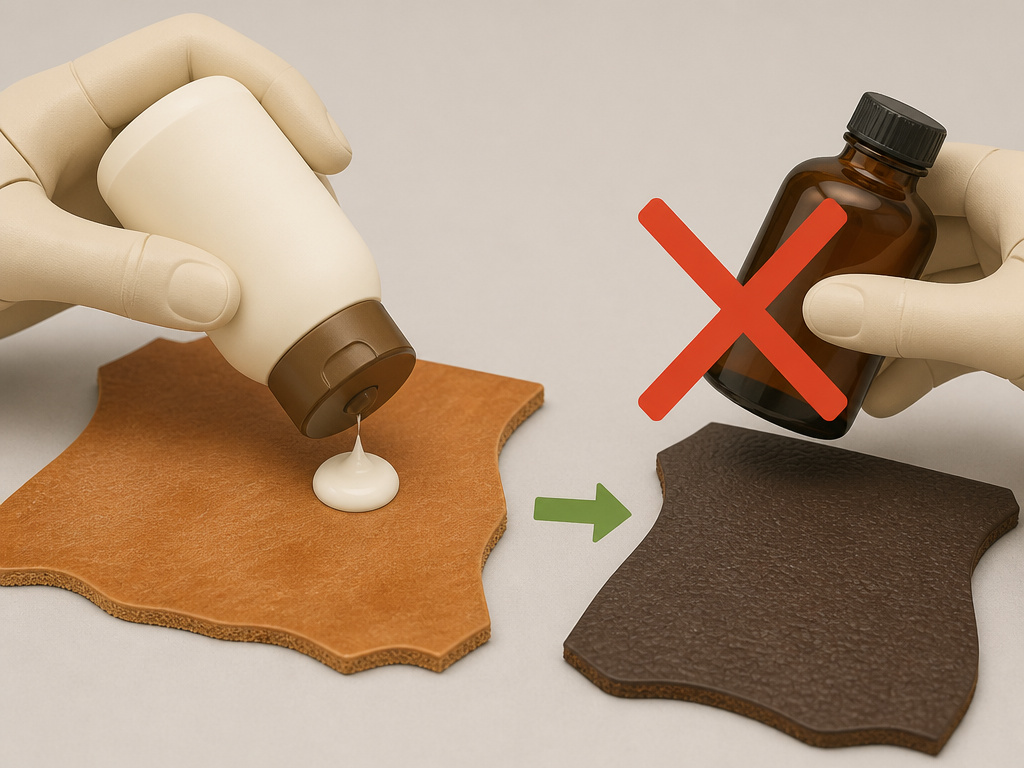
This isn’t a one-product-fits-all situation. Using mink oil on a delicate aniline leather is like using a firehose to water a bonsai tree. I tried a similar heavy balm on a vintage jacket years ago. It darkened the leather permanently and left a greasy, waxy film that never fully absorbed.
Your couch’s leather type dictates the product chemistry. Here’s the breakdown:
| Leather Type | Feels/Looks Like | Conditioner Type | What Happens if You Mismatch |
|---|---|---|---|
| Aniline (Full-Grain) | Soft, natural, shows imperfections. Absorbs liquids. | Light, absorbing cream (e.g., Bickmore Bick 4). | Heavy oils darken permanently and can feel tacky. |
| Pigmented (Corrected-Grain) | Uniform color, slightly plastic feel. Common on family sofas. | General-purpose leather conditioner or cream. | Less risk, but silicone-heavy products create a superficial shine that flakes. |
| Nubuck / Suede | Velvety, brushed surface. | Specialty spray conditioner for nubuck only. | Liquid creams will mat the nap, creating dark, stiff spots. |
| Vegetable-Tanned | Stiff, natural, ages to a rich patina. Often on rustic furniture. | Pure oil or heavy-duty conditioner (e.g., Obenauf’s Leather Oil). | Light creams won’t penetrate deeply enough to nourish. |
For most modern living room couches, you’re dealing with pigmented or a semi-aniline finish. My default pick for these is a product like Bickmore Bick 4. It’s a light, non-darkening cream that absorbs well and doesn’t leave a greasy residue. It’s the workhorse.
The 3-Step Cleaner, Conditioner, and Protect Sequence

Manufacturer guides from brands like Arizona Leather and Uniters don’t just say “condition.” They prescribe a sequence: clean, condition, protect. Skipping a step or rearranging them reduces effectiveness and can cause damage.
Step 1: Deep Clean (The Non-Negotiable First Move)
Never condition over dirt, body oils, or dust. Your goal is a perfectly clean, dry surface. 1. Vacuum the couch thoroughly with a soft brush attachment. This lifts loose grit. 2. Apply a pH-balanced leather cleaner like Leather Soft Cleaner to a soft, white microfiber cloth. Never spray directly onto the leather. 3. Wipe in small, overlapping circular sections, rinsing and wringing your cloth frequently. Dirt should transfer to the cloth, not smear. 4. Let the couch dry completely. This takes at least an hour, sometimes two. Conditioning onto damp leather traps moisture and can cause mildew.
Step 2: Apply Conditioner (Less Is More)
This is where patience pays. Think of it like building a roux, you need a low, patient heat and the right fat to build a stable foundation without it turning gummy. 1. Shake your conditioner bottle well. Pour a quarter-sized amount onto a second clean, dry microfiber cloth. 2. Apply in a thin, even layer using the same small circular motions, working one cushion at a time. Your goal is to let the leather drink it in, not swim in it. 3. Let it absorb. Most quality conditioners need 30 minutes to an hour to fully penetrate. The surface should look matte, not wet, after this time. 4. If the leather still feels dry after 30 minutes in a high-wear spot, apply a second very thin layer.
Step 3: Buff to a Sheen (The Final Polish)
After the absorption time, take a third, clean, dry microfiber cloth and buff the entire surface with firm, straight strokes. This removes any excess product, evens out the application, and brings up the leather’s natural luster. You’re done.
I won’t recommend a “protect” spray for most home couches. Many leave a synthetic film that alters the hand-feel. For high-spill areas, a product like Plush Shield® can be used, but test it on a hidden area first, some can make leather feel slightly slippery.
The Tools and Products You Actually Need
You don’t need a salon’s worth of gear. These four items cover every scenario:
- Soft-Bristle Vacuum Brush Attachment: For weekly dusting and pre-cleaning. The brush is key, a plastic nozzle can scratch.
- Pack of White Microfiber Cloths: Use a fresh one for each step (clean, condition, buff). Color can transfer, and reusing a dirty cloth ruins the process.
- pH-Balanced Leather Cleaner: A dedicated cleaner like Uniters Leather Soft Cleaner or Lexol Leather Cleaner. Dish soap is too alkaline and strips natural oils.
- Your Matched Conditioner: Have two on hand if your home has different leather types. My shelf holds Bickmore Bick 4 for the couch and Obenauf’s Leather Oil for any vegetable-tanned items.
The entire job for a three-seater couch takes about an hour of hands-on time, plus drying and absorption time. Block out a quiet afternoon.
How to Condition Specific Problem Areas
Couches don’t wear evenly. The driver’s seat of your sofa needs a different approach than the untouched corner.
- Armrests & Headrests: These get constant contact with skin oils. They often need a second, sparing application of conditioner during your main session. If they feel slick or sticky after buffing, you used too much.
- Seat Cushions (High-Impact Zones): Check these first during your dry-feel test. They compress constantly, which stresses the fibers and dries them out faster. Pay extra attention here.
- Backs & Sides (Low-Impact Zones): Often, a single pass during your conditioning session is plenty. Over-applying here is a waste of product and can lead to a uneven appearance.
- Stitched Seams & Tufting: Apply conditioner gently around these areas with a nearly-dry cloth. Don’t glob product into the crevices, as it can attract dirt and be difficult to buff out.
If you’re dealing with existing damage like a scratched leather couch, the process changes. You often need a color-matched leather filler before conditioning becomes effective again.
Frequently Asked Questions
Can I use olive oil or coconut oil to condition my leather couch?
No. Food oils go rancid. They will eventually smell sour and attract pests. They also darken leather unpredictably and can become sticky. Use a product formulated for leather preservation.
How do I know if my leather couch is aniline or pigmented?
Find a hidden spot (under a cushion, behind the back). Put a single drop of water on it. If it darkens quickly and absorbs within a minute, it’s likely aniline or semi-aniline. If the bead sits on top and doesn’t absorb, it’s a pigmented, sealed finish.
Will conditioner remove scratches from my leather couch?
No. Conditioner nourishes the leather to prevent future drying and cracking, which can make minor scuffs less visible. For existing scratches on a leather couch, you need a different repair process involving fillers and dyes.
Can I condition my leather couch too often?
Absolutely. Over-conditioning clogs the leather’s pores, preventing it from breathing. This can actually weaken the fibers over time and create a greasy surface that attracts more dirt. Let the dry-feel test be your guide, not a reminder on your phone.
Is it better to use a leather couch conditioner or a cleaner-conditioner combo?
Use separate products. Combo products are compromises. They don’t clean as well as a dedicated cleaner, and they don’t condition as effectively as a dedicated conditioner. For a task you only do once or twice a year, rent a tool from a brand like Hilti or Milwaukee.
Before You Go
The single biggest lever you have is your environment, not the brand of conditioner. If your couch sits in a sunbeam for six hours a day, all the Bick 4 in the world is a losing battle.Use blinds. Run a humidifier in the winter if your air gets desert-dry. This does more for your leather’s lifespan than any product.
When you do condition, make the first pass on a place no one sees. The inside of a seat cushion flap, the back of a backrest. Apply your chosen product, let it dry, and check it the next day. Does the color match? Does it feel right? This 24-hour test costs you nothing but prevents a world of regret.
Finally, understand that a well-maintained leather couch is a record, not just furniture. The gentle darkening of the armrests, the soft sheen on the seat, that’s a patina.It’s the story of your home written into the hide. Your job isn’t to stop that story, but to keep the pages from crumbling. Clean when it’s dirty, condition when it’s dry, and otherwise, just live on it.
