
How to Protect Leather Boots for Longevity & Daily Wear
This post contains affiliate links. As an Amazon Associate, we earn from qualifying purchases.
To protect leather boots, you must follow a consistent cycle of cleaning, conditioning, and waterproofing. The core sequence is: clean with a soft brush and mild soap, condition with a product suited to your leather type while the boots are slightly damp, and then apply a waterproofing treatment. Reapply waterproofing every 3–4 months, or when water stops beading on the surface.
That 3–4 month guideline isn’t a guess. It’s the manufacturer-recommended cadence for maintaining a boot’s water-repellent finish before it fully wears off. Ignoring it means the leather slowly soaks up water instead of shedding it, which leads to saturated fibers, stiffness, and cracks you can’t fix.
What follows is a breakdown of that cycle, the specific products that work, and the critical warnings, like which treatments can void a Gore-Tex warranty or ruin your chance at a resole. By the end, you’ll know exactly what to do, when to do it, and why each step matters for the long haul.
Key Takeaways
- Reapply waterproofing every 3–4 months, not “once a year.” Watch for when water stops beading on the leather.
- Never use wax-based waterproofers if you ever want to resole your boots; the residue prevents new adhesive from bonding.
- For Gore-Tex lined boots, only use conditioners and sprays approved for the membrane, like Nikwax or Zamberlan Hydrobloc.
- Always apply conditioner and waterproofing to clean, slightly damp leather, it helps the products absorb deeply.
- Store boots with acid-free tissue paper, not newspaper, to maintain shape without risking dye transfer or trapped moisture.
The Core Process: Clean, Condition, Protect
Think of boot care like maintaining a wood finish. You don’t just slap on a new coat of oil; you clean the surface first, let it dry to the right state, then work in thin, even layers. The same principle applies here, with one twist: leather should be slightly damp for the conditioning step.
Start by removing the laces and insoles. Brush off all loose dirt with a soft-bristled brush, a horsehair brush works perfectly. For stubborn grime, use a damp cloth with a drop of mild soap like castile or a dedicated leather cleaner. Rinse the cloth and wipe away any soap residue. Let the boots air-dry away from direct heat until they are just damp to the touch, not soaking wet.
Applying leather conditioner or waterproofing to clean, damp leather allows the treatment to penetrate the fibers more effectively than applying it to bone-dry hide. The moisture helps draw the product in.
Now, apply a conditioner suited to your leather. For full-grain leather, a product like Chamberlain’s Leather Milk or Saphir Médaille d’Or nourishes without clogging pores. Use your fingers or a cloth to work a thin coat over the entire surface, paying extra attention to dry, scuffed areas. Let it absorb for at least 20 minutes, then buff off any excess with a clean cloth.
The final step is waterproofing. For most boots, a spray like Nikwax Fabric & Leather Proof is a safe bet. If your boots have a Gore-Tex liner, you must use a membrane-approved product like Zamberlan Hydrobloc Spray. Hold the can about 6 inches away and apply an even coat. Let the boots dry fully for 24 hours before wearing them.
How Often Should You Protect Leather Boots?
Throw out the “once a year” rule. Your boot care schedule should be driven by use and observation, not the calendar. The single best indicator is the beading test. Sprinkle a few drops of water on the boot’s upper. If the water beads up and rolls off, the waterproofing is still active. If it soaks in and darkens the leather immediately, it’s time for a fresh coat.
Manufacturers like Lowa specify reapplying waterproofing every 3–4 months with regular use. That’s the schedule to keep water repellency from fully degrading. For conditioning, let the leather itself tell you. Pinch a spot on the vamp (the top of the foot). If the leather feels stiff, dry, or shows tiny white creases when flexed, it needs conditioner.
| Boot Activity Level | Waterproofing Re-application | Conditioning Check |
|---|---|---|
| Daily Wear (Urban) | Every 4–6 months | Every 6 months |
| Weekly Hiking/Outdoors | Every 3–4 months | Every 3–4 months |
| Heavy/Seasonal Use | Every 1–2 months | Before & after season |
| Storage | Once before storing | Condition if dry |
This isn’t busywork. Salty sweat and repeated wet-dry cycles pull natural oils from the leather. Let that go too long, and the fibers become brittle. A stiff boot cracks on the next flex, usually across the ball of the foot, and that’s a repair, not routine care.
Choosing the Right Products for Your Boots
All leather is not the same, and using the wrong product is how you permanently alter, or ruin, a boot’s finish. The first split is between smooth, full-grain leather and rough-out leathers like suede and nubuck.
For full-grain leather, you need a conditioner and a separate waterproofing spray. Conditioners restore oils; waterproofers add a water-repellent top layer. Look for brands that disclose their ingredients. A simple blend of natural oils and waxes is often more effective than a mysterious “proprietary formula.”
Common mistake: Using a standard leather cream on suede or nubuck. The cream will mat the nap and create dark, greasy stains that are nearly impossible to remove.
I learned this one firsthand. A suede jacket I owned years back ended up with permanent blotches from a well-meaning but misguided application of a general leather conditioner. Suede and nubuck need specific, gentle cleaners and waterproofing sprays designed not to alter their texture. For these, a product like Saphir Omninettoyant Suede Cleaner and a spray protector are your only tools.
The most critical filter is your boot’s lining. If it has a Gore-Tex or similar waterproof membrane, you must use treatments approved for it. Silicone-based products can clog the microscopic pores in the membrane, making it non-breathable and voiding the manufacturer’s warranty. Zamberlan explicitly recommends its Hydrobloc Spray or Hydrobloc Cream for this reason.
Common Boot Protection Mistakes (And How to Avoid Them)
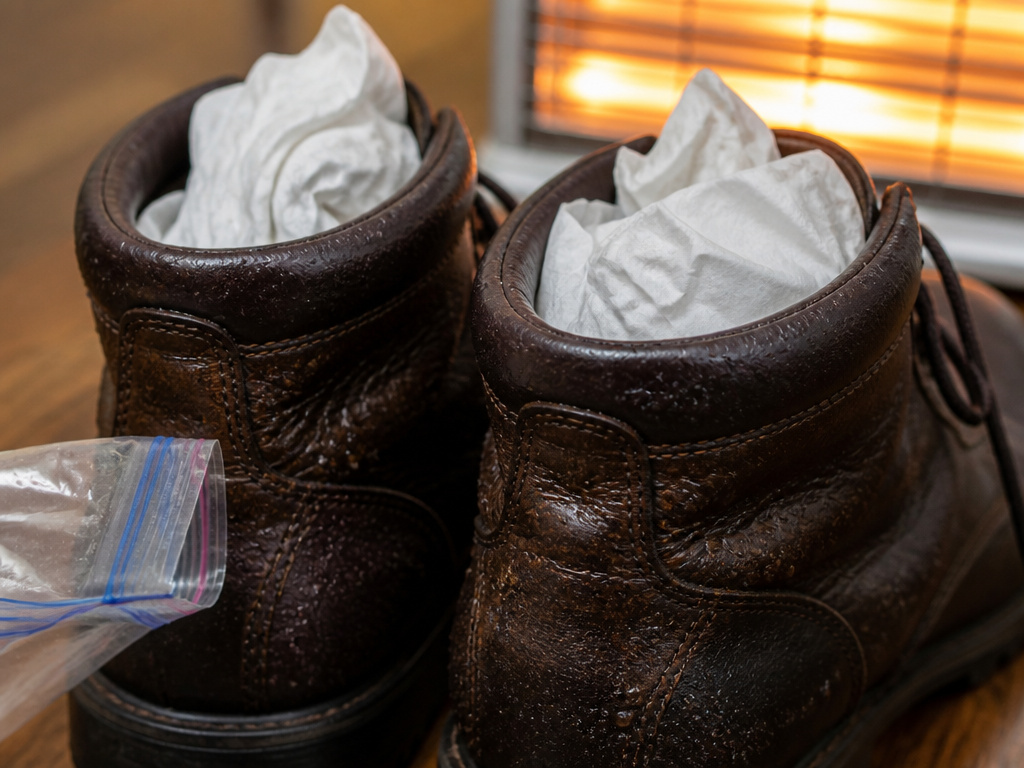 Most boot damage happens between uses, not during them. The top errors are about drying, product choice, and storage.
First, never use direct heat to dry wet boots. Placing them near a fireplace, radiator, or using a hair dryer causes the leather to shrink and crack as it dries too fast. It also delaminates the adhesive holding the sole on. Always air-dry them at room temperature. Stuff the toes with crumpled acid-free tissue paper (not newsprint, which can transfer ink) to absorb moisture and maintain shape.
Second, avoid wax-based waterproofing treatments if there’s any chance you’ll ever resole the boots. As REI’s guide notes, wax residue impairs the ability of new adhesive to bond to the midsole. That turns a simple $80 resole into a reason to scrap the boots entirely.
Third, don’t store boots in plastic bags or airtight containers. Leather needs to breathe. Trapping moisture leads to mold, especially in leather-lined boots. A cloth bag or an open shelf in a cool, dry place is ideal. Using cedar shoe trees is excellent for absorbing moisture and holding shape, but ensure the boots are fully dry first.
Where this goes sideways: Storing damp boots in a dark closet. Mold can start growing on the interior lining in under 72 hours, leading to a musty smell that’s very difficult to eradicate.
A Step-by-Step Guide to Protecting New and Old Boots
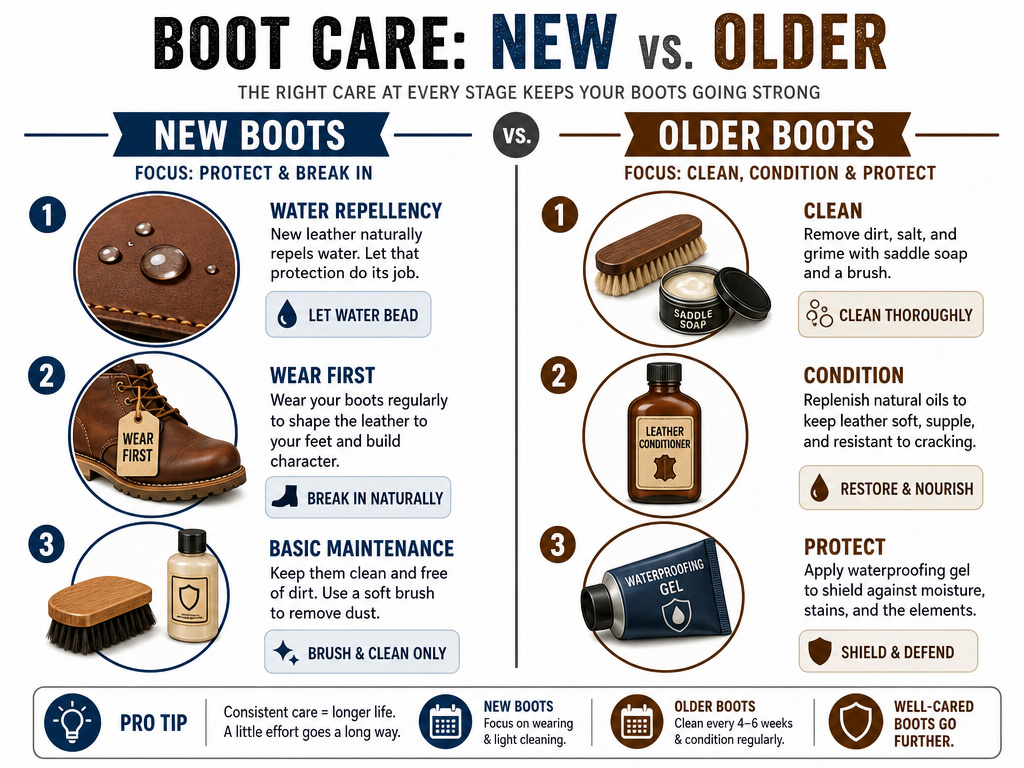 The process differs slightly for brand-new boots versus a worn-in pair that’s seen some miles. Here’s the sequence for each.
For New Leather Boots:
Most quality boots come from the factory with a pre-treatment. Don’t slather on conditioner immediately. 1. Do a water beading test first. If water beads, the factory treatment is still active. 2. Wear them for a few weeks to let the leather break in naturally. 3. After the first few gets dirty, give them their first full clean, condition, and waterproofing cycle as described in the core process.
For Older, Worn-In Boots:
This is where careful assessment matters. Deep cleaning comes first. 1. Remove laces and insoles. Use a soft brush and saddle soap only if the boots are heavily soiled with ground-in dirt. For most urban grime, a damp cloth suffices. 2. Let them dry until just damp. Check for dryness by pinching the leather. 3. Apply a generous but thin coat of conditioner. For very dry leather, a second light coat after the first absorbs can help. 4. Waterproof using a spray or gel. For older boots, a gel like Danner Waterproofing Gel can be worked into the pores for deeper protection. 5. Allow a full 24-48 hours of drying time before wearing.
The goal with older boots is restoration, not just coating over problems. If the leather is deeply cracked, conditioning will help but won’t make the cracks disappear. That’s the leather’s history, focus on keeping the rest of the boot supple.
Special Considerations: Sweat, Gore-Tex, and Resoling
Three specific scenarios change the protection game entirely: profuse sweating, Gore-Tex liners, and future resoling.
If your feet sweat heavily, the inside of your boot needs care too. Salty sweat dries out leather linings, making them brittle. Manufacturers like Lowa recommend applying a conditioner like Lowa Active Cream to the leather lining periodically. Let it soak in fully before wearing the boots again.
For Gore-Tex lined boots, the membrane is the priority. Never use silicone-based conditioners or waterproofers. Stick to approved products like Nikwax or the brand’s own recommendations (e.g., Zamberlan Hydrobloc). These are formulated to protect the leather without clogging the membrane’s pores. Remember, the Gore-Tex fabric itself doesn’t need treatment, just keep it clean.
Finally, think about the end of your boot’s sole life. If you plan to resole them, a great way to extend the life of quality boots, avoid heavy waxes and silicone products. They create a barrier that a cobbler’s adhesive can’t penetrate. Tell your cobbler what products you’ve used; sometimes a special degreaser is needed to prepare the midsole for a new bond.
Frequently Asked Questions
Can I use mink oil to protect my leather boots?
You can, but with major caveats. Mink oil is a heavy, wax-like conditioner that darkens leather significantly and can soften it too much, reducing support. It’s best for work boots that face constant wet conditions, not for hiking or dress boots where you want to maintain the original color and structure. For most uses, a modern, dedicated boot conditioner is a better choice.
How do I protect suede or nubuck leather boots?
You protect them with specific sprays, not creams. First, use a suede brush or eraser to clean off dirt. Then, apply a spray-on suede protector from brands like Tarrago or Angelus. These create an invisible shield against water and stains without altering the nap. Always test on a small, hidden area first.
Does protecting leather boots make them waterproof?
No, it makes them water-resistant. A well-protected boot will shed rain and snow for a time, but prolonged immersion, like stepping in a deep puddle, will eventually wet through. The goal is to give you time to get out of the weather before water soaks in, which prevents the leather from becoming waterlogged and stiff.
Will conditioner darken my light-colored leather boots?
Most conditioners will darken leather slightly, but it’s usually a rich, even patina that lightens again as it dries fully. To minimize darkening, use a very light coat and buff it off thoroughly. For white or very light tan boots, look for a conditioner with a “non-darkening” formula, but always test it on an inconspicuous spot like the inside of a shaft first.
Can I protect my boots if they are already wet?
Yes, and in some cases, you should. The damp-leather method is recommended by brands like Lowa because it helps products penetrate. However, the boots should be damp from cleaning, not soaked from a hike. If they’re dripping wet, dry them with newspaper until just damp, then apply your conditioner and waterproofing.
Before You Go
Protecting leather boots boils down to a simple rhythm: clean when dirty, condition when dry, and re-waterproof every 3–4 months. Watch the leather, not the calendar. The one rule that overrides all others is to never use heat, not for drying, not for speeding up the process. Patience is what preserves the material.
If you take away one action, make it this: the next time your boots get wet, stuff them with paper towels or acid-free tissue and let them air-dry slowly, away from vents and sunlight. That single habit prevents more damage than any fancy product can fix. Everything else is just keeping a quality from a brand like Bickmore going.
