
How to Size Leather Gloves | A Measured Approach
This post contains affiliate links. As an Amazon Associate, we earn from qualifying purchases.
The right glove size is a hand circumference measurement in inches, compared to a manufacturer’s size chart. For most leather gloves, you measure around your dominant palm, excluding the thumb. That number, say, 8 inches, translates to a specific size, like a men’s medium or a women’s 7. The chart is the final authority, not a guess.
Common wisdom says to just try a pair on. Common wisdom is often wrong when you’re buying online or from a maker who doesn’t accept returns. A number is your only defense against a box of expensive regret. This guide walks you through the tape measure, the charts, and the three specific mistakes that turn a fit based on your actual chest measurement into a bad one within a week.
What follows: the two measurements that matter, how to read any size chart, and the difference between a dress glove fit and a work glove fit. You’ll also get the one field-tested trick to verify the fit before you commit.
Key Takeaways
- Measure your dominant hand’s circumference at the knuckles for the primary size number; your hand length from wrist to tip determines if you need a “long” size.
- Leather gloves for active use (driving, work) should fit with a slight allowance for movement; dress gloves should feel like a second skin. Expect a Nokona or Rawlings glove to stretch 10-15% across the palm after 15 20 hours of wear, buy for the final fit, not the initial snugness.
- Always consult the specific brand’s size chart, there is no universal “medium,” and European numbered sizes differ from US lettered ones.
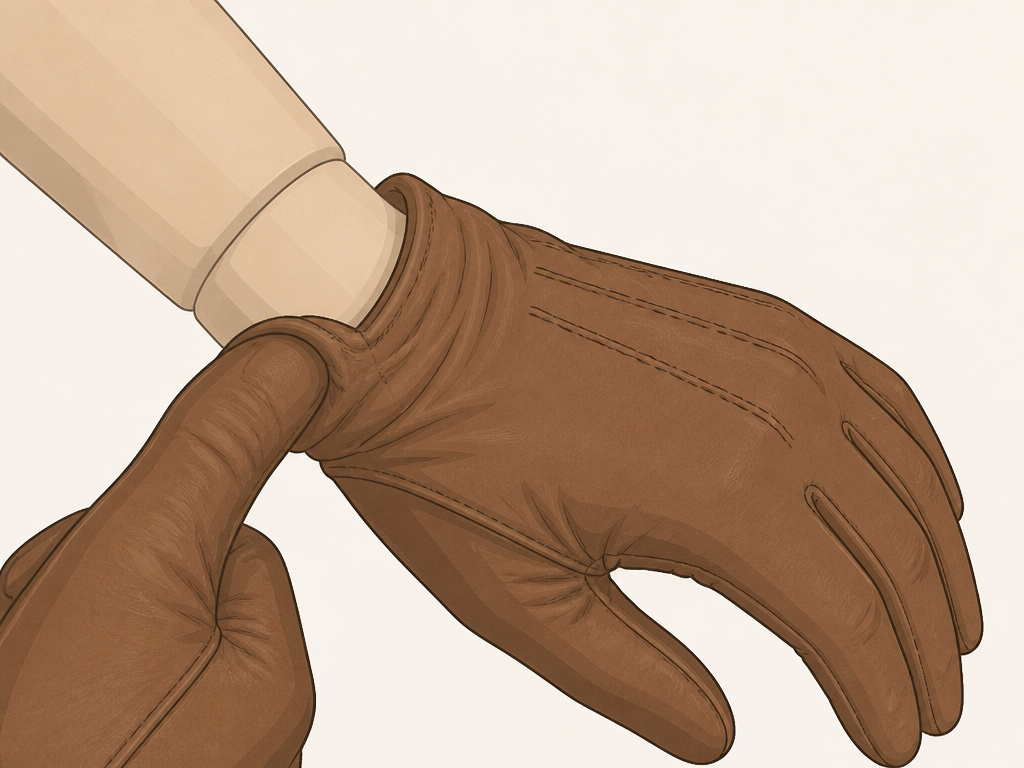
- Pull gloves off by the cuff, not the fingertips, to avoid stretching the leather and stressing the seams.
How to Measure Your Hand for Gloves
You need a soft cloth measuring tape. A piece of string and a ruler works in a pinch. Measure your dominant hand first, it’s usually slightly larger. Make a relaxed, open hand, don’t clench.
Wrap the tape around your palm at its widest point, right across the knuckles of your four fingers. Keep the tape snug but not tight, and don’t include your thumb in the loop. Note the measurement in inches. For the second number, measure from the base of your palm at the wrist crease to the tip of your middle finger. This is your hand length.
The NIST leather glove sizing guide notes the right hand is generally measured first as it is larger, “unless the purchaser is left-handed.” This old standard from Letter Circular 921 still holds, always use the larger of your two hand measurements when ordering.
Write both numbers down. The circumference is your primary key. The length tells you if you need a standard or a “long” fit from brands that offer them. A palm measuring 8.5 inches with a 7.5-inch length is a different animal than an 8.5-inch palm with an 8-inch length. The second will feel cramped in the fingers.
Decoding Glove Size Charts and Standards
Your 8-inch measurement means nothing without a chart to translate it. This is where systems diverge. US men’s sizes often use letters (S, M, L, XL) keyed to a circumference range. US women’s and European unisex sizes typically use numbered sizes (6, 7, 8, etc.).
You cannot assume your size. A men’s medium in a Hestra work glove might fit a 8.5–9 inch palm, while a men’s medium in a sleek Chester Jefferies dress driver might be cut for an 8–8.5 inch palm. The chart is the law.
| Measurement (Palm Circumference) | US Men’s (Letter) | US Women’s / EU (Number) | Common Fit Notes |
|---|---|---|---|
| 7 – 7.5 inches | X-Small | 6 | Very snug dress fit |
| 7.5 – 8 inches | Small | 7 | Standard dress fit |
| 8 – 8.5 inches | Medium | 8 | Common men’s medium |
| 8.5 – 9 inches | Large | 9 | Common men’s large |
| 9 – 9.5 inches | X-Large | 10 | May require “long” |
This table is a general template. Your chosen brand’s chart will have its own ranges. Ignore it at your peril. When selecting the right gloves, this step is essential.
Dress Fit vs. Active Fit: Why Intention Matters
A glove’s purpose changes its ideal fit. This isn’t a minor detail, it’s the difference between dexterity and durability.
Dress gloves, like unlined capeskin or fine lambskin drivers, should fit with near-zero extra space. They should feel like a second skin, with no loose material bunching at the knuckles or fingertips. You’re aiming for elegance and tactile feedback, not warmth or impact protection. The leather will give a little, but it won’t stretch dramatically.
Active gloves are a different story. Work gloves, winter gloves, or rugged driving gloves need operational room. Your hand needs to grip, flex, and sometimes wear a thin inner liner. For these, you want the circumference to feel firm but not restrictive when you make a fist. There should be a slight allowance across the back of the hand.
A retailer’s guide confirms that leather gloves for active use, like motorcycle riding, can stretch 10 to 15 percent after 15 to 20 hours of wear. Buy for the hand you’ll have after break-in, not the one you have on day one.
If you get this wrong, an active glove will bind and fatigue your hand. A dress glove will look sloppy and wear out at the stress points prematurely.
The 0.075 Loss Coefficient: What a Peer-Reviewed Study Taught Us
 Sizing isn’t just about circumference. The relationship between hand length and width is equally critical. A tactical glove sizing study published in a peer-reviewed journal introduced an “empirical loss coefficient ratio” of 0.075 to optimize fit. The researchers found that a sizing system based on specific hand length and width pairs covered 86.4% of subjects, a massive leap from the existing system’s 65.3% coverage.
Their optimal size breakdown was precise: * Small: Hand length 168 mm, hand width 81 mm * Medium: Hand length 177 mm, hand width 83 mm * Large: Hand length 184 mm, hand width 86 mm * XL: Hand length 191 mm, hand width 89 mm
The lesson is profound. Two people with an 8.5-inch palm can have drastically different hand shapes, one long and narrow, the other short and broad. They shouldn’t wear the same glove. While you won’t find this level of detail on a consumer chart, it explains why some gloves just feel “off” in the fingers even when the palm fits. It argues for brands that offer multiple fit profiles, not just scaled sizes.
How to Verify the Fit Before You’re Stuck
 You have the gloves in hand. Don’t just look at them. Put them on and perform.
First, ensure the seam at the base of the thumb, the crotch, doesn’t pull or pinch when you touch your thumb to your pinkie. This is a common failure point on cheap gloves. Next, make a firm fist. The leather should pull taut across the knuckles without feeling like it’s going to split. There should be no excessive material flopping over your fingertips.
Now, simulate the action. For driving gloves, grip an imaginary steering wheel. For work gloves, mimic gripping a tool. Feel for any binding across the top of your hand or in the finger crotches. The glove should move with you, not against you.
Finally, take them off correctly. Hook your thumb into the cuff and pull. Never, ever pull from the fingertips. That single motion stretches the leather irreparably and is the fastest way to destroy a good fit. It’s a mistake I see often.
When to Size Up or Down: Leather Type and Lining
The material dictates your size strategy. Stiff, full-grain cowhide leather for work will break in slowly and may require a size up from your measured chart result if you plan to wear a liner. Supple deerskin or goatskin has more inherent give and often fits true to size.
The lining is the other variable. A thick wool or synthetic fleece lining eats up interior space. If you want that liner in winter, you must account for it in your initial size choice, often a full size up. An unlined leather glove offers the purest fit and will mold perfectly to your hand over time, which is why I champion them for three-season use.
For a comparison of how different leathers behave, our guide on deerskin vs cowhide gloves breaks down the stretch and break-in profiles of each material.
Frequently Asked Questions
What if my hand measurement is between two sizes?
Always round up to the larger size for leather gloves, especially for active use. The leather will stretch and mold to your hand. A glove that’s slightly too large can be managed; one that’s too small is unusable.
How much should leather gloves stretch?
Quality leather gloves will stretch approximately 10-15% across the palm and knuckles with consistent wear. This is why the initial fit should be snug, not tight. They should not stretch significantly in length.
Do leather gloves stretch over time?
Yes, they do. The process of breaking in leather gloves involves the fibers relaxing and conforming to your hand’s unique shape. This controlled stretch improves comfort but is why you must avoid pulling them off by the fingertips, which causes uncontrolled, damaging stretch.
How tight should dress leather gloves be?
Dress gloves should fit like a second skin. You should be able to pinch less than a quarter-inch of material at the tip of your longest finger. Any more and they’ll look baggy. They will gain minimal stretch, so the initial fit is critical.
Where can I find the best leather gloves?
Start with brands known for consistent sizing and quality, like Hestra for active wear or Chester Jefferies for classic dress. Our buying guide for gloves reviews specific models across categories to match your needs and budget.
The Bottom Line
Here’s some straightforward advice. Spend the two minutes with a tape measure. Write the numbers down. Then, and only then, look at the specific size chart for the glove you want. Ignore your usual “size.” Your hand’ 8.25-inch circumference isn’t a medium until the chart says it is.
Remember the 15-hour rule. If they’re meant for driving or work, they should be snug but not painful on day one. That slight pressure across the knuckles is the leather telling you it has somewhere to go. In a week, it’ll be perfect. If they’re dress gloves, they should be perfect from the first wear. That’s the standard.
One final thing. A reader once sent me photos of a wallet they’d repaired using a simple needle and thread from one of my guides. Their success was a great reminder of the basics. It applies here, too. The basics, measure, chart, verify, are what stand between you and a glove that fits for years. Skip them, and you’re just guessing.
