
Mastering How to Use Mink Oil on Leather for Best Results
This post contains affiliate links. As an Amazon Associate, we earn from qualifying purchases.
Using mink oil on leather is a straightforward process: clean the leather thoroughly with a dedicated cleaner like Fiebing’s Saddle Soap, apply a quarter-sized amount of oil with a soft cloth using circular motions, let it absorb for a few hours to overnight, then buff off any excess. The real decision isn’t how to apply it, but whether your leather actually needs its deep-penetrating, darkening properties.
Most people think of mink oil as a universal leather conditioner. It’s not. It’s a specific tool for a specific job, reviving dry, stiff, performance-oriented leathers where water resistance matters more than preserving the original color. Using it on the wrong leather is like using a firehose to water a bonsai tree. This guide walks you through the mechanics of applying mink oil and, more importantly, the framework for deciding when to reach for it versus a gentler leather conditioner.
What follows: the chemistry of why mink oil behaves the way it does, a head-to-head comparison with standard conditioners, the exact six-step application method, and the one field-test mistake I’ve seen permanently alter more boots than any other.
Key Takeaways
- Mink oil is rich in palmitoleic acid, which mimics human skin oils and penetrates leather deeply, offering superior waterproofing but causing permanent darkening.
- Never use mink oil on fine aniline leathers or anything with a water-based finish, manufacturers like Townsend Leather explicitly warn it can cause cracking.
- Apply only a quarter-sized amount per boot, and wait 2-4 weeks between applications; over-oiling leads to clogged pores, a tacky feel, and mold risk.
- For daily-wear items where color preservation is key, use a light conditioner like Bickmore Bick 4. Reserve mink oil for rugged, outdoor work gear.
- The absorption time is longer than you think, plan for a few hours to overnight, not ten minutes. Rushing this step leaves a greasy residue.
The First Rule: Know Your Leather (Not All Leather Needs Oil)
Before you unscrew the tin, you have to answer one question: what is your leather made for? Mink oil is a performance additive, not a cosmetic one. Its job is to get deep into the leather fibers, replace lost fats, and create a water-repellent barrier. That comes with trade-offs, significant darkening and a potential change in the leather’s hand-feel.
If your priority is keeping your leather looking exactly as it did on day one, you’ve already picked the wrong product. Let’s be clear about one thing. A leather conditioner is designed to maintain appearance; mink oil is designed to alter performance.
Mink Oil vs. Leather Conditioner: A Performance Breakdown
Think of this as choosing between a heavy-duty engine oil and a light lubricant for a delicate mechanism. They’re both oils, but their purposes diverge completely.
| Aspect | Mink Oil | Traditional Leather Conditioner |
|---|---|---|
| Primary Action | Deep penetration and waterproofing | Surface moisturizing and protection |
| Effect on Color | Darkens permanently, often by several shades | Minimal to no darkening |
| Best For | Work boots, outdoor gear, stiff vegetable-tanned leather | Jackets, bags, furniture, fine or colored leathers |
| Risk If Misused | Over-softening, clogged pores, mold, finish damage | Buildup of surface silicones, reduced breathability |
The part nobody mentions: Brands like Townsend Leather, which supplies leather to high-end furniture and goods makers, explicitly state “Never use: … Mink oil” in their care guides. They cite incompatibility with modern water-based finishes and the risk of cracking. If your item came with a care tag, ignore it at your peril.
The difference hinges on chemistry. Mink oil is rich in palmitoleic acid, a fatty acid very similar to what’s found in human skin. This lets it integrate into the leather’s structure at a molecular level. A standard conditioner, like Bickmore Bick 4, often uses a blend of lighter oils and waxes that sit closer to the surface to nourish without dramatic alteration.
So, when does mink oil make sense? Reach for it when you have a thick, unlined, vegetable-tanned leather item meant for hard use, think work boots, hiking boots, saddles, or outdoor tool belts. The leather is already tough, and its value lies in durability, not its original hue.
How to Apply Mink Oil in 6 Steps (The Right Way)
The process is simple, but each step has a consequence. Skip one, and you risk a bad result.
What You’ll Need
- Mink Oil: Use a product like Fiebing’s Golden Mink Oil or Red Wing Mink Oil. Pure formulations work best.
- Leather Cleaner: Fiebing’s Saddle Soap is the classic partner. Avoid household soaps.
- Soft Cloths: Two or three clean, lint-free cotton cloths or applicator pads.
- Brush: A soft-bristled brush (a horsehair shoe brush is perfect) for initial dusting.
Step-by-Step Guide
1. Clean the Leather Thoroughly
This is essential. Applying oil over dirt or old polish seals grime into the pores. Use the saddle soap according to its directions, usually, dampen the cloth, work up a lather, and clean in sections. Let the leather dry completely. This can take several hours. Rushing here is the most common pre-application mistake.
2. Conduct a Spot Test
Find an inconspicuous area, the inside of a strap, the back of a tongue. Apply a tiny dab of mink oil. Let it dry fully, which can take a full day. Check for any adverse reaction: discoloration, tackiness, or a change in texture. This step reveals how your specific leather will handle the oil.
3. Apply a Small Amount
A quarter-sized dollop is enough for one average-sized boot. Scoop it with a cloth and rub it onto the leather using firm, circular motions. The goal is to work the oil into the leather’s grain, not just smear it on top. Pay extra attention to seams, welts, and any dry, scuffed areas. These high-wear spots need the most protection.
4. Let It Absorb Deeply
This is where patience pays. Don’t buff after ten minutes. The oil needs time to migrate. Fiebing’s suggests “a few hours to overnight.” I leave mine overnight in a warm, dry room. You’ll see the leather darken as it drinks the oil in. If the surface still looks wet after an hour, you likely used too much.
5. Buff Off the Excess
After the absorption period, take a fresh, dry cloth and buff the entire surface. You’re removing any oil that didn’t penetrate, which prevents a greasy feel and stops dirt from sticking. Use a clean, soft cloth to bring up a soft, satin sheen, not a glossy shine.
6. Allow for Full Curing
Don’t wear the item immediately. Let it sit for another few hours after buffing. This allows the oil that’s deep in the layers to fully settle. The leather will feel slightly firmer and drier to the touch than it did when wet, that’s normal. It’s now ready for use.
I learned the importance of the spot test the hard way. Years back, I rushed to condition a vintage bag without testing. The oil reacted with some old, unseen finish, creating a blotchy, darkened patch I couldn’t fully correct. Now, no matter how familiar I am with the oil or the leather, I test. Every single time.
The Why-Layer: What Mink Oil Actually Does to Leather
It’s not magic; it’s fat chemistry. Leather is skin. Just like your skin, it dries out, loses its natural oils (from the tanning process), and becomes brittle. Mink oil, being rich in palmitoleic acid, acts as a near-perfect replacement for those lost oils.
When you apply it, the oil doesn’t just coat the surface. It wicks into the microscopic spaces between the leather fibers. This accomplishes three things: 1. It swells the fibers slightly, restoring lost volume and making the leather feel supple again. 2. It coats each fiber with a hydrophobic layer, which is what creates the water-repellent effect. Water beads up instead of soaking in. 3. It replaces the lubricants that allow the fibers to flex against each other without cracking.
The darkening happens because the oil itself has a color, and as it fills the porous structure of the leather, it reduces the light scattering that gave the leather its original lighter tone. This change is almost always permanent.
Common Mistakes and How to Avoid Them
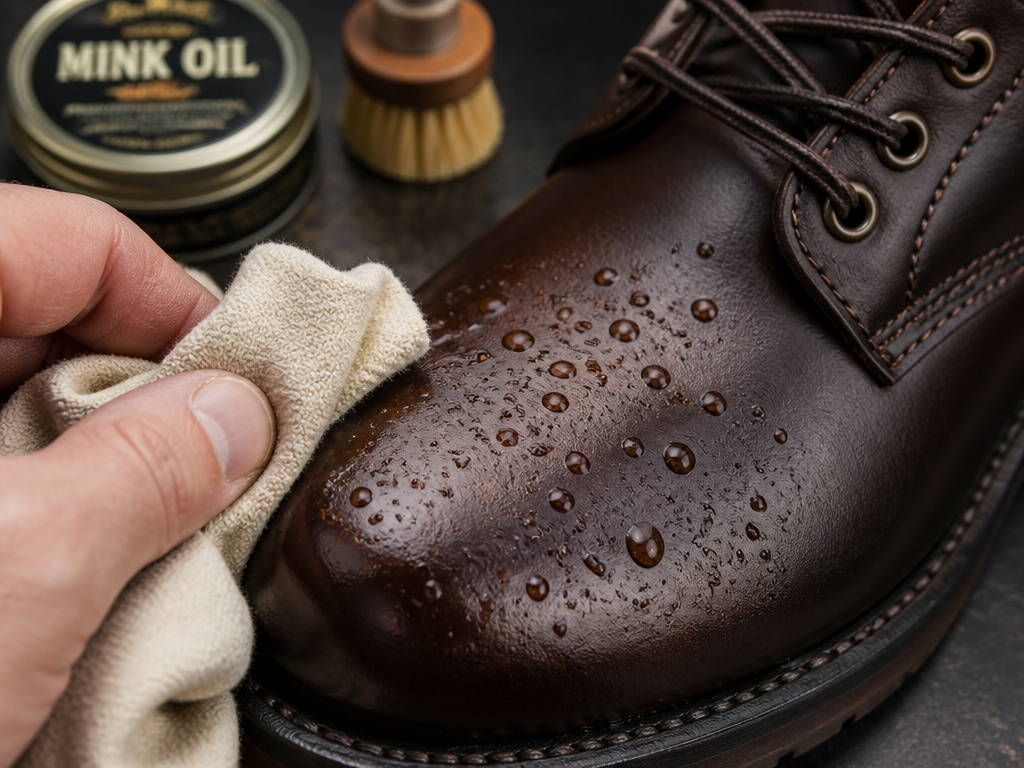
Mink oil is forgiving until it isn’t. These errors have tangible, often irreversible consequences.
Over-application: This is the cardinal sin. More oil is not better. Leather has a finite capacity to absorb. Once the pores are clogged with excess oil, the leather can’t breathe. The result is a permanently tacky surface that attracts dirt and, in a damp environment, can lead to mold or mildew growth inside the item. If you see oil beading on the surface during application, you’ve used too much. Wipe it off immediately.
Using It on the Wrong Leather: Applying mink oil to a delicate aniline leather jacket or a dress shoe is a aesthetic disaster. The darkening is drastic and the leather may become overly soft, losing its structure. For these items, a dedicated leather conditioner like Saphir Médaille d’Or a light cream like Bick 4 is the correct choice. They moisturize without the dramatic visual change.
Ignoring the Manufacturer: If the maker of your leather item says not to use mink oil, listen. The Townsend Leather care guide is a prime example. Their finishes are often water-based, and the chemistry of mink oil can cause them to crack or peel. This isn’t scare talk; it’s a documented compatibility issue.
Not Waiting Long Enough Between Applications: Leather conditions slowly. Applying a second coat before the first has fully settled, which can take 2-4 weeks, prevents proper absorption and creates a gummy buildup. Reapply only when the leather starts to look or feel dry again, which for most hard-use items is every six months to a year.
When to Choose an Alternative (And What to Pick)
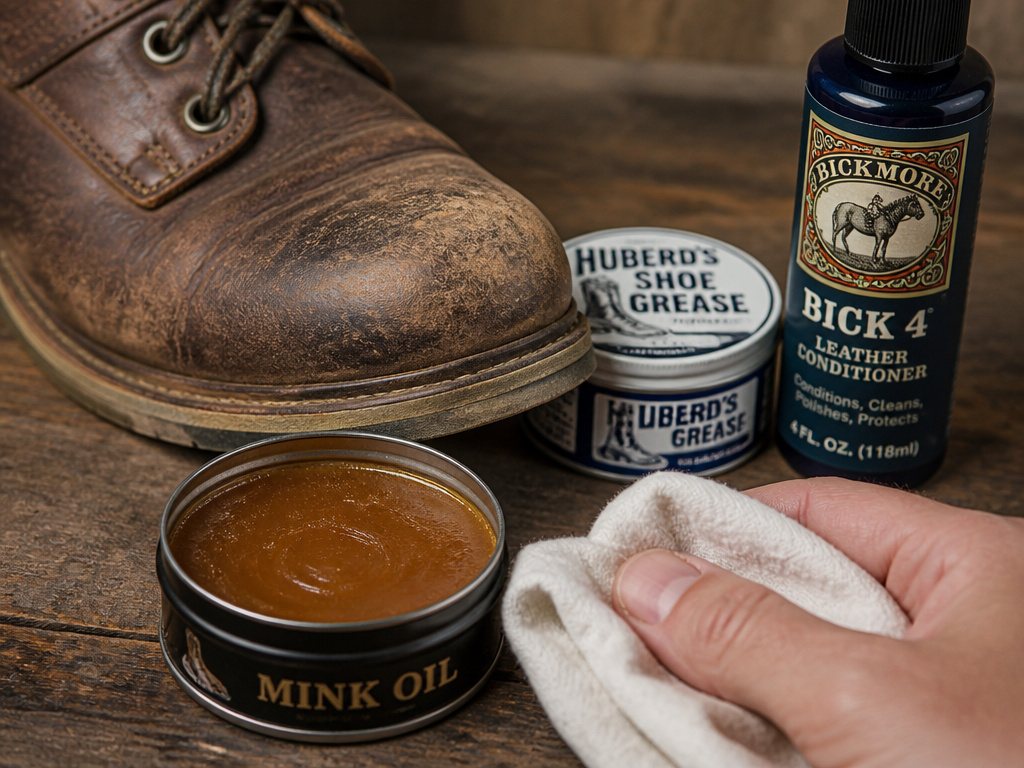
Mink oil isn’t the only tool in the box. Sometimes another product is a better fit for the job.
For Extreme Waterproofing & Heavy-Duty Use: Huberd’s Shoe Grease or Obenauf’s Heavy Duty LP. These are wax-based products that sit on the leather’s surface, forming a more formidable barrier against wet conditions. They also darken leather. They’re the next step up in protection from mink oil, ideal for loggers, farmers, or winter sports gear.
For General Conditioning Without Darkening: Bickmore Bick 4. This is my default for 90% of my leather care, bags, jackets, belts, and lighter-colored boots. It absorbs quickly, doesn’t darken, and keeps leather supple. It’s the daily moisturizer to mink oil’s intensive therapy.
For Shine and Polish on Footwear: Saphir Médaille d’Or Pommadier Cream. This is a pigmented, wax-based cream for shoes and boots where you want to refresh color and add a protective shine. It’s a cosmetic and protective topcoat, not a deep conditioner. Never use it on a leather garment.
Worth knowing before you start: If you’re trying to revive an old, stiff piece but are terrified of darkening it, try a 1:1 mix of pure lanolin and a light carrier oil (like almond oil). Warm it gently, apply sparingly, and buff well. It’s an excellent, underrated natural softener that darkens far less than mink oil.
Frequently Asked Questions
Does mink oil waterproof leather?
Yes, but with a caveat. It significantly increases water resistance by coating the leather fibers. It won’t make leather fully waterproof like a rubber boot, but it will cause water to bead and roll off, giving you time to wipe it dry before it soaks through. For true waterproofing, a wax-based product like Obenauf’s is more effective.
Can mink oil ruin leather?
It can, if used incorrectly. On the wrong type of leather (like fine aniline or finished leathers), it can cause permanent darkening, discoloration, or damage to the surface coating. Over-application can clog pores, leading to a tacky feel, reduced breathability, and mold growth. Always test first.
How long does mink oil last on leather?
Single proper application can protect and condition leather for 4 to 6 months under normal use. For items subjected to heavy wear, water, or extreme conditions, you may need to reapply every 3 to 4 months. If the leather no longer beads water and starts to look dry, it’s time for another treatment.
Can you use too much mink oil?
Absolutely. Leather can only absorb so much. Excess oil sits on the surface or clogs the pores, preventing the leather from breathing. This leads to a greasy, tacky residue that attracts dirt and can promote mold and mildew formation inside the item, especially in boots. Use a quarter-sized amount per boot and buff off all excess.
What’s the best mink oil?
For purity and reputation, Red Wing Mink Oil and Fiebing’s Golden Mink Oil are the benchmarks. Red Wing’s is known for being nearly pure, while Fiebing’s has over a century of leather care expertise. Both are excellent choices for the mink oil vs neatsfoot oil debate, falling on the side of animal-fat conditioning.
Will mink oil darken leather permanently?
In almost all cases, yes. The darkening is a direct result of the oil penetrating the leather’s pores and can be as drastic as six or seven shades on light-colored leather. This effect is generally permanent. While some darkening may fade slightly over many months, the leather will not return to its original color.
Before You Go
Mink oil is a powerful, specialized conditioner. Its value is in reviving and protecting the leathers that take a beating, your work boots, your outdoor gear, your well-used saddles. For everything else, from your favorite jacket to your dress shoes, a gentler leather conditioner is the wiser, more predictable choice.
The practical takeaway is this: match the product to the leather’s purpose. If you need maximum water resistance and don’t mind a darker, oil-rich patina, mink oil applied correctly is a superb choice. If color preservation and a light touch are your goals, look to the best natural oils for leather that prioritize surface care. And always, always do a spot test. The leather will tell you what it needs if you take a moment to listen.
