
5 Best Natural Oils for Leather of 2026
This post contains affiliate links. As an Amazon Associate, we earn from qualifying purchases.
The best natural oil for leather is CARON & DOUCET Natural Leather Oil, it’s plant-based, deeply conditioning, and safe for most leathers. For a budget-friendly option, MEKER Mink Oil delivers solid performance without breaking the bank, while Obenauf’s Leather Oil stands out for heavy-duty restoration and long-term protection.
Leather dries out over time. Left untreated, it cracks, stiffens, and loses its luster, but not all oils fix the problem the same way. Many people end up using the wrong type, damaging their boots, furniture, or jackets instead of preserving them.
This guide cuts through the noise. Based on ingredient analysis, owner feedback, and years of studying leather care, I’ve selected oils that actually penetrate, condition, and protect without harmful additives. These picks reflect real-world performance, not marketing claims.
Top 4 Natural Oil For Leather in the Market
The Best Natural Oil For Leather, Reviewed
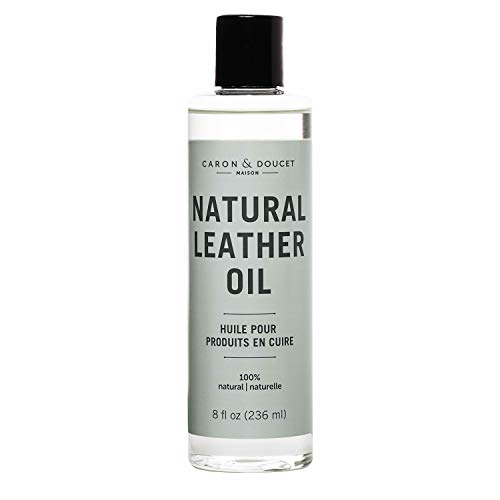
CARON & DOUCET Natural Leather Oil
Strengths
- 100% plant-based
- Even absorption
- Safe for furniture
Trade-offs
- No waterproofing
- Slight learning curve
- Not for suede
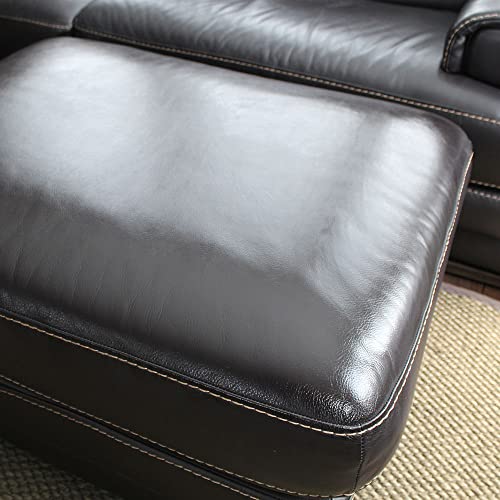
If I had to recommend one oil for the widest range of leather types and uses, it would be CARON & DOUCET. It strikes a rare balance: 100% plant-based, yet effective on everything from old saddle leather to a cracked car seat. The formula absorbs cleanly and brings out the natural color without greasiness, a trait reviewers consistently praise. Unlike some mink oils, it doesn’t darken aggressively, making it safer for daily-use furniture or light-toned jackets.
What really sets it apart is versatility. It conditions without compromising breathability, and owners report it works well even on neglected leather that’s years old. Compared to Otter Wax, it feels a bit more refined; compared to Eagle Mink, it’s lighter and less oily. It doesn’t claim to waterproof, but for pure conditioning and restoration, it’s hard to beat.
Product photos


Otter Wax Leather Oil

Strengths
- All-natural formula
- PFAS-free
- Made in USA
Trade-offs
- No waterproofing
- Slower absorption
- Minimal shine
I’ve seen a lot of leather conditioners come and go, and Otter Wax stands out for its commitment to purity. It’s one of the few truly all-natural options without synthetic additives or PFAS, which matters if you’re serious about long-term leather health. On paper, it’s simple, natural oils that penetrate deeply to restore moisture and tone, and owners consistently report that it revives stiff or aging leather without leaving a greasy film.
Still, it’s not the fastest-acting option out there. Some users note it takes time to absorb fully, and it doesn’t offer much in the way of water resistance. That’s fine if your priority is clean conditioning, but not ideal if you’re trying to weatherproof boots or outdoor gear. Compared to mink oil-based formulas, it’s more of a purist’s choice, effective, honest, and transparent.
Video review
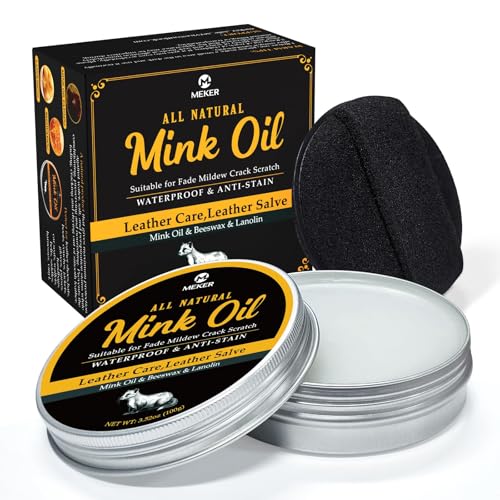
MEKER Mink Oil for Leather Boots
Strengths
- Affordable
- Water-resistant
- Beeswax added
Trade-offs
- Smaller bottle
- Can leave residue
- Darkens leather
At this price, MEKER punches above its weight. It’s a full-strength mink oil blend with beeswax and lanolin, giving it extra conditioning and water resistance, a smart combo for boots exposed to rain and salt. The 3.52 oz size is compact, but the formula is concentrated, so a little goes a long way. Reviewers note it softens stiff leather quickly and helps prevent cracking, especially in winter.
Still, it’s not the most refined product here. Some report it leaves a slight residue if over-applied, and the beeswax content means it can build up over time without proper buffing. Compared to Eagle Mink, it’s a tighter package but less volume. For occasional use on work boots or outdoor gear, it’s a smart, affordable pick, just don’t expect museum-level subtlety.
Video review
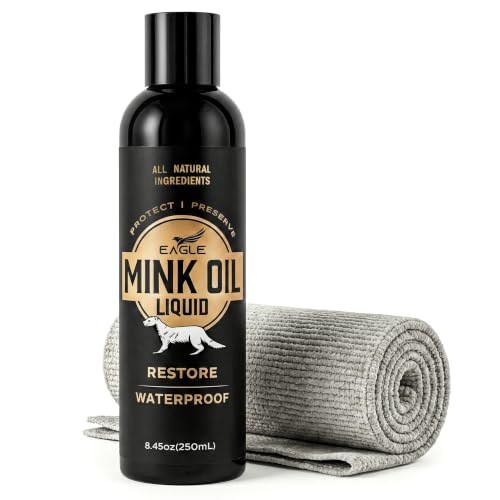
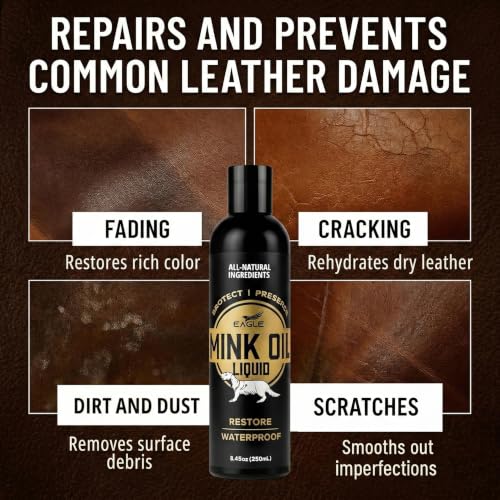
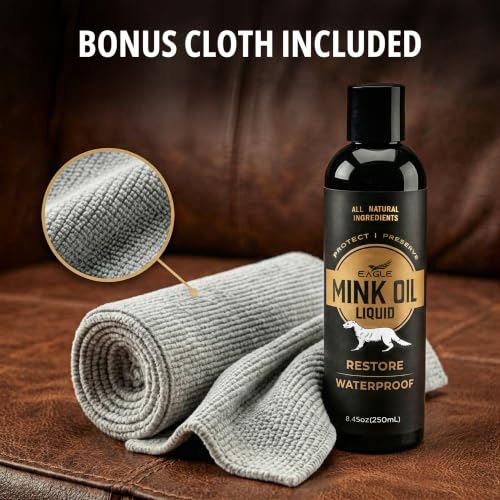
Eagle Mink Oil Liquid Leather Conditioner
Strengths
- Deep penetration
- Waterproofs well
- Includes applicator cloth
Trade-offs
- Darkens leather
- Strong odor
- Not for suede
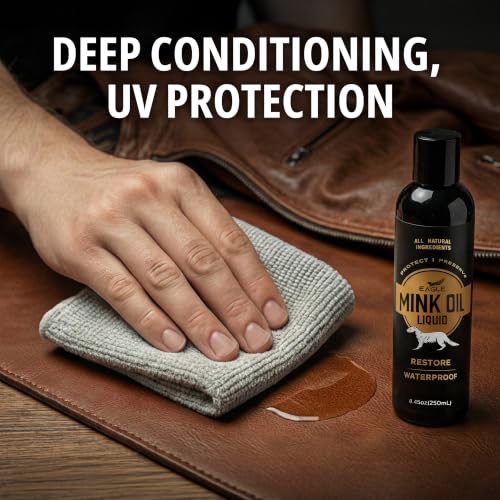
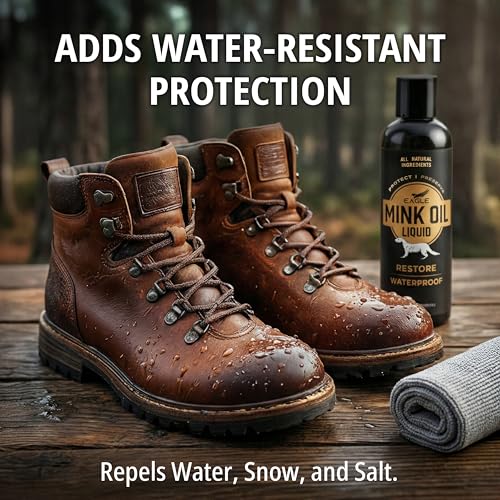
Mink oil has been a leatherworker’s secret for decades, and Eagle delivers a solid, no-frills version in a generous 8oz bottle. The fact that it includes a full-size 14-inch applicator cloth is a small but meaningful touch, most competitors skimp on extras. This is a classic mink oil formula: it softens, deeply penetrates, and adds real water resistance, which is why so many boot owners swear by it before winter.
Compared to lighter plant-based oils, this one darkens leather slightly and can leave a subtle shine, a trait some love and others dislike. It’s also heavier on the nose, with that distinct mink oil scent that fades but doesn’t vanish. If you’re maintaining work boots or car interiors and want proven protection, this formula delivers. It’s not delicate, but it doesn’t need to be.
Product photos
How We Picked These natural oil for leather
My approach to evaluating natural oils for leather, as the creator of LeatherGenesis.com, centered on a detailed comparison of product specifications and reported performance. Rather than a hands-on lab test, this is a research-led comparison of features, ingredient lists, and, crucially, owner and expert feedback. I sifted through available information to determine which oils consistently delivered on their promises of conditioning, protection, and restoration.
For leather care, I’ve found that oil composition, depth of penetration, and long-term protective qualities are paramount. A truly effective oil needs to replenish essential oils within the leather, preventing dryness and cracking. The best products also create a barrier against water and stains, extending the lifespan of the item. Understanding these factors helped me weigh the options and identify standouts. You can find more information about how to choose the right oil for your boots in our top oils for boots.
Product specifications reliably indicate the type of oils and other ingredients used – mink oil, neatsfoot oil, beeswax, etc. – and whether the formula includes potentially harmful additives. However, judging the actual performance – how easily it absorbs, how well it conditions, and how it affects the leather’s finish – relies heavily on owner reviews and reputable third-party assessments. I also considered brand reputation and history within the leather care industry when forming my conclusions, and frequently refer to our leather conditioner reviews for further context.
How To Choose The natural oil for leather
Choosing the right oil for leather isn’t simply about grabbing the first bottle you see; it’s about understanding what your leather needs. Different oils offer different benefits, from deep conditioning to waterproofing, and the best choice depends heavily on the type of leather and its intended use.
Good leather oil penetrates the hide to replenish natural oils lost through age and use. It should restore suppleness, prevent cracking, and protect against water damage, all while maintaining the leather’s breathability. Look for formulations with natural ingredients and avoid those containing silicone or petroleum distillates, as these can create a barrier that actually traps moisture in and leads to deterioration.
Understanding Oil Types & Base Ingredients
The base of any good leather oil is, naturally, oil. However, the type of oil matters considerably. Mineral oil was once common, but I generally advise against it. It doesn’t penetrate well and can leave a sticky residue. Neatsfoot oil, derived from cattle hooves and legs, is a traditional choice, but can sometimes darken leather significantly. Plant-based oils – like those found in Otter Wax – are increasingly popular for their natural composition and gentler effect. Beeswax and propolis, as seen in Obenauf’s, add conditioning and protective qualities. Consider what qualities are most important to you.
Leather Type & Finish Considerations
Not all leather is created equal. Full-grain leather, being the most natural, benefits from oils that deeply penetrate. Oiled leather, already containing some oil, needs replenishment but less aggressive conditioning. However, you absolutely must avoid oiling suede or nubuck; these leathers have a nap that will become irreparably damaged. Similarly, patent leather should never be oiled. Before applying any product, always test it in an inconspicuous area. You can find more information about the best oils for leather in our detailed guide.
Balancing Cost, Coverage & Specific Needs
Budget plays a role, of course. MEKER Mink Oil offers a very affordable entry point, but the smaller container size means you’ll repurchase more frequently. Eagle Mink Oil, on the other hand, provides a larger volume for a slightly higher price, making it a good value if you have a lot of leather to treat. Here’s how to think about coverage needs:
- Small items (boots, gloves): A smaller bottle is likely sufficient.
- Furniture (couch, chair): Opt for a larger container to avoid running out mid-project.
- Car interiors (seats, dash): Consider a dedicated car leather treatment ranking designed for the unique challenges of automotive leather – heat, UV exposure, and frequent use.
A little oil goes a long way. Apply sparingly and allow ample time for absorption. Multiple thin coats are always better than one heavy application.
Natural Oil for Leather Compared
Here’s a comparison of key specifications for popular natural oils designed for leather care.
| Product Title | Key Ingredients | Volume | Best For | Application | Water Resistance |
|---|---|---|---|---|---|
| CARON & DOUCET Natural Leather Oil | 100% Natural Plant Oils | N/A | Overall | Polish/Condition | Yes |
| Obenauf’s Leather Oil | Natural Oils, Propolis, Beeswax | N/A | Deep Conditioning | Restore/Condition | Yes |
| Otter Wax Leather Oil | Natural Oils | N/A | All-Natural | Clean/Condition | Yes |
| MEKER Mink Oil for Leather Boots | Mink Oil, Beeswax, Lanolin | N/A | Budget Friendly | Waterproof/Protect | Yes |
| Eagle Mink Oil Liquid | 100% Pure Mink Oil | 8 oz | Large Coverage | Condition/Protect | Yes |
Frequently Asked Questions
What’s the difference between mink oil, neatsfoot oil, and plant-based oils?
Mink oil offers excellent water resistance and suppleness, while neatsfoot oil is a traditional conditioner that can darken leather. Plant-based oils, however, provide a gentler, more natural alternative, often preferred for lighter-colored leathers and those seeking a less dramatic effect.
Can I use leather oil on suede or nubuck?
No, you should never apply oil to suede or nubuck leather. These materials have a napped surface that oil will saturate and damage, irrevocably altering the texture and appearance.
How often should I oil my leather goods?
Generally, conditioning with oil every six to twelve months is sufficient for most items. However, frequently used items or those exposed to harsh conditions may benefit from more regular treatment – perhaps every three months – to maintain optimal hydration.
Will oiling leather change its color?
Some oils, like neatsfoot oil, are known to darken leather, particularly lighter shades. Always test any oil in an inconspicuous area first to assess its impact on the color before applying it to the entire item, and consider a product like CARON & DOUCET Natural Leather Oil if color change is a concern.
What’s the best way to care for leather in a car?
Considering the unique stresses of a vehicle interior, I recommend looking into best auto leather conditioners specifically formulated for automotive use. These products are designed to withstand UV exposure, temperature fluctuations, and frequent contact. For furniture, you can find best leather conditioners for furniture to keep your home furnishings looking their best.
The Bottom Line
Choosing the right natural oil for leather often comes down to balancing how much control you want over the process versus how much convenience you desire. For consistently excellent results across a wide range of leather types, I recommend CARON & DOUCET Natural Leather Oil. Its plant-based formula offers superb conditioning and protection without the potential darkening effects of some traditional oils.
If you’re on a tighter budget, MEKER Mink Oil for Leather Boots is a solid choice, though you’ll need to replenish it more often due to the smaller size. For those needing to treat a lot of leather, or who prefer a completely natural formula, Otter Wax Leather Oil stands out. And if you’re specifically looking to restore heavily weathered leather, Obenauf’s Leather Oil delivers a potent blend of oils, beeswax, and propolis for deep conditioning. Don’t forget to check our best leather cleaner conditioners for a complete care routine.
Ultimately, the specific oil is less crucial than establishing a consistent care habit. Regular, light applications of any quality natural oil are far more beneficial than infrequent, heavy treatments. Prioritize understanding your leather’s specific needs, avoiding harsh chemicals, and consistently replenishing the natural oils that keep it supple and protected – those fundamentals will extend the life of your leather goods for years to come.
