
Explore Key Types of Leather Gloves: Materials & Best Uses
This post contains affiliate links. As an Amazon Associate, we earn from qualifying purchases.
This post contains affiliate links. As an Amazon Associate, we earn from qualifying purchases.
Types of leather gloves break down by the animal hide used, the tanning process applied, and the construction method. Cowhide offers maximum durability for rough work, goatskin provides dexterity and strength, pigskin resists water, and deerskin delivers luxurious softness. Dress gloves often use lightweight cabretta or kid leather, while functional gloves for welding or ranching rely on heavier, full-grain cowhide.
That list is the starting point, but the real choice happens one layer deeper. The difference between a glove that lasts a season and one that lasts a decade depends on the part of the hide used, how it’s tanned, and what’s stitched behind it.
What follows: a breakdown of each leather’s feel and best use, the hidden specs that define industrial gloves, and the one storage habit that ruins more good gloves than any day of hard work.
Key Takeaways
- Cowhide is the workhorse, but full-grain cowhide lasts years longer than split leather versions, which are common in cheaper work gloves.
- “Kid leather” is often a marketing term for any lightweight grain leather; true kid is rare. For dress gloves, look for “cabretta” for a better balance of softness and durability.
- The lining dictates function. Silk or cashmere is for warmth and dress, Thinsulate is for cold-weather function, and no lining (or a light mesh) is for maximum dexterity and breathability.
- Pull gloves off by the cuff, not the fingertips. Tugging the fingers stretches the leather unevenly and can tear the seams at the joins.
- Let them dry in shape. After wearing in damp conditions, stuff the fingers with acid-free tissue or use glove stretchers to prevent permanent creasing and wrinkling.
The Leather Material Breakdown
Ever wondered why one pair of leather work gloves feels like cardboard while another molds to your hand? It starts with the hide. Not all cowhide is equal, and goatskin isn’t just a fancy name.
Let’s be clear about one thing: the leather’s origin defines its character. Think of it like cooking fats, butter, olive oil, lard. Each has a job.
Cowhide: The Durable Default
Cowhide is the most common leather in the glove industry, and for good reason. It’s abundantly available, cost-effective, and when taken from the right part of the hide and finished correctly, it’s tremendously tough. Full-grain cowhide, the top layer with the natural grain intact, provides superior abrasion resistance. You’ll find it in heavy-duty options like the USDA Forest Service specification gloves, which are built for logging and firefighting.
The split leather version, cut from the lower layers of the hide, is softer and more pliable but sacrifices long-term durability. It’s the default for many budget-friendly leather work gloves. The split fibers are looser, so they abrade faster. For a glove that sees daily abuse, insist on full-grain.
Common mistake: Assuming all “cowhide leather gloves” are equally durable. A split leather palm wears through in a season of ranch work; a full-grain palm can last several.
Goatskin: Strong and Supple
Goatskin is a sleeper hit. It’s thinner than cowhide but has a high tensile strength due to its tight, dense fiber structure. It often doesn’t get split because it’s already thin, which means you’re usually getting the full, durable grain. Goatskin also contains natural lanolin, which helps the leather stay supple and resist drying out. This makes it a fantastic choice for driving gloves or any task requiring good tactile feedback, like detailed mechanical work. Brands like Hestra use it brilliantly in their dexterous utility gloves.
Pigskin: The Breathable Workhorse
Don’t let the name fool you. Pigskin is remarkably abrasion-resistant because of its unique, porous fiber structure. This open structure also makes it breathable and allows it to retain flexibility even when wet, a cowhide glove can stiffen up, but a pigskin glove will stay relatively pliable. That’s why it’s a solid choice for ranch work or gardening where damp conditions are common. It’s durable, but the surface has a distinctive pebbled texture that not everyone finds aesthetically pleasing for dress wear.
Deerskin & Cabretta: The Luxury Touch
Deerskin is one of the softest, most luxurious leathers available straight out of the box. It’s incredibly comfortable and offers great sensitivity. However, that softness comes with less inherent abrasion resistance. It’s perfect for dress gloves or light-duty winter wear where comfort is paramount. Cabretta leather, often used in high-end golf gloves, is a specific type of hairsheep leather known for its smooth, tight grain and excellent grip. It strikes a balance between the softness of deerskin and the durability of goatskin.
| Leather Type | Best For | Key Property | Feels Like |
|---|---|---|---|
| Full-Grain Cowhide | Heavy construction, welding, logging | Maximum abrasion resistance | Stiff at first, molds slowly |
| Goatskin | Driving, mechanical work, dexterous tasks | High strength-to-weight ratio, stays supple | Soft, thin, and strong |
| Pigskin | Wet/damp work, gardening, general ranch duty | Retains flexibility when wet, breathable | Pebbled texture, moderately soft |
| Deerskin/Cabretta | Dress gloves, light winter wear, golf | Unmatched softness and comfort | Buttery smooth, luxurious drape |
Linings & Construction: Where the Glove Actually Works
The leather is the skin, but the lining is the climate control. A glove’s purpose is locked in here. A thick insulation turns a deerskin shell into a serious winter glove; a silk lining turns it into a formal accessory.
For cold-weather function, Thinsulate is the standard. It provides excellent warmth without the bulk of older insulating materials, preserving more dexterity. For extreme cold, some gloves, like those specified in certain government procurement documents, use multi-layer bonded fleece systems. For dress, a silk or fine wool lining adds warmth and a luxurious feel against the skin.
The construction is the other half. Piqué stitching, a type of decorative, reinforced backstitching often seen on the back of the hand, is a hallmark of quality in dress gloves from makers like Chester Jefferies or Dents. It’s not just pretty; it allows for more flexibility than a plain seam. For work gloves, look for double- or triple-stitching at high-stress points like the thumb crotch and fingertips.
A rule I earned through a ruined bag is to always consider what’s adjacent. In gloves, that means the lining must be compatible with the leather’s care needs. A glove lined with a non-breathable material will trap sweat against the leather, speeding up its breakdown from the inside. It’s a slow rot you won’t see until the liner fails.
Matching the Glove to the Task
This process is about matching a material’s physical properties to the hazards and motions of the job. A shooting glove needs a close fit and a reinforced palm; a motorcycle glove needs impact protection and abrasion resistance at the palms and knuckles.
Work & Safety Gloves
Here, durability and protection are paramount. The eLCOSH mechanical hazard glove guide is a critical resource here, outlining that glove selection must start with a hazard assessment. For handling sharp metal or glass, a leather glove alone may not suffice. You’d need a liner or shell made from high-performance materials like DuPont™ Kevlar® or DSM Dyneema®, which offer cut resistance far beyond any leather. Leather, however, excels against abrasion, heat (for welding), and puncture from blunt objects. The USDA Forest Service heavy-duty glove spec is a perfect example: full-grain cowhide, specific thickness measurements, built to handle sparks, rough wood, and repetitive abrasion.
Dress & Fashion Gloves
This is where tanning matters most. Vegetable-tanned leathers will develop a rich patina over time, changing color with exposure to light and oils. They are often used in high-end dress gloves meant to last a lifetime. Chrome-tanned leathers are more common, more water-resistant, and color-fast, but they don’t develop the same character. The Ethiopian dress glove standard (ES 3995-2021) lays out technical requirements for this category, including tensile strength, elongation, and color fastness, proof that even delicate dress gloves have engineering behind them.
Sport & Activity Gloves
Performance is key. A golf glove needs a snug, breathable cabretta leather for grip and feel. Ski gloves need waterproof, insulated leather shells, often with integrated synthetic membranes. The leather here is as much about weather protection and durability as it is about style. Dextrous activities demand thinner, more responsive leathers like goatskin or cabretta.
Where this goes sideways: Using heavily insulated leather gloves for a moderate climate. Your hands sweat, the moisture soaks the leather from the inside, and the insulation compresses permanently. You end up with a bulky, damp glove that keeps neither shape nor heat.
Care That Keeps Gloves in Shape
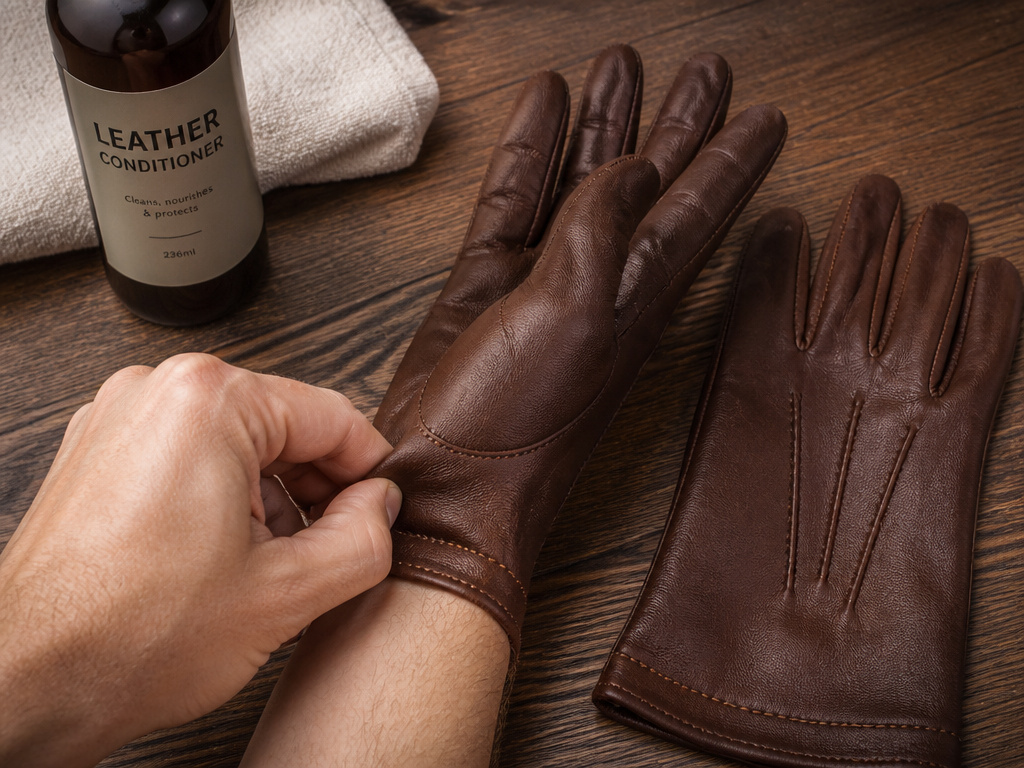
Leather is skin. It dries out, it gets dirty, and it remembers bad posture. The softest deerskin dress gloves can be ruined by one careless habit.
First, understand leather better to make confident choices. If your gloves get wet, let them dry at room temperature, away from direct heat. Heat sources like radiators will bake the leather, making it brittle and prone to cracking. As they dry, maintain their shape. This is where glove stretchers or simple acid-free tissue paper stuffed into the fingers is invaluable. It prevents the leather from collapsing and forming deep, permanent creases.
Cleaning should be gentle. For dirty work gloves, use a damp cloth with a tiny amount of saddle soap, but only if they’re the heavy-duty type. For dress or soft leathers, saddle soap is too harsh and will strip natural oils. Condition sparingly with a product designed for your glove’s leather type. Over-conditioning can clog the pores and make the leather greasy or gummy.
The most common physical mistake? Pulling gloves off by the fingertips. You see it everywhere. That action stretches the leather unevenly, weakens the seams, and over time, will cause the fingertips to become misshapen and loose. Always remove them by pulling from the cuff.
Frequently Asked Questions
What is the most durable type of leather for gloves?
Full-grain cowhide is the most durable common leather for gloves, especially against abrasion and puncture. For cut resistance, high-performance synthetic fibers like Kevlar or Dyneema are used in liners or shell materials, often underneath or alongside a leather palm.
What’s the difference between grain leather and split leather?
Grain leather is the top, outer layer of the hide with the natural grain pattern intact. It’s denser, stronger, and more durable. Split leather is cut from the lower layers of the hide. It’s softer, more pliable, and less expensive, but it wears out faster because its fiber structure is looser.
Can you wash leather gloves?
It depends. Gloves not explicitly labeled as washable by the manufacturer should not be submerged or machine-washed. For most leather gloves, spot cleaning with a damp cloth and mild soap is the safe method. Always condition the leather after it dries from cleaning to replenish lost oils.
Why are some leather gloves so stiff?
New gloves are often stiff because the leather hasn’t been broken in. Heavy, full-grain leathers like those used in welding gloves will be stiffer by design for protection. Stiffness can also indicate a lower-quality leather that has been over-treated with stiffening finishes or a poor fit that doesn’t allow the leather to flex naturally.
How do I soften stiff leather gloves?
Wear them. The best and safest softening method is natural use, which allows the leather to flex and mold to your hand’s shape. You can also gently flex the gloves in your hands when they’re not being worn. Avoid using oils or conditioners not meant for that specific leather, as they can darken it or break down stitching.
Before You Go
The principle is to match the leather’s inherent properties to the task’s actual demands. A cowhide work glove is overkill for driving, just as a deerskin dress glove is a liability for welding.
If you take away one action, let it be this: the next time your gloves are damp from wear, stuff the fingers with a bit of newspaper or tissue before you set them aside. That single habit does more to preserve their fit and lifespan than any fancy conditioner. The leather will tell you what it needs, usually just a chance to dry in the right shape.
And if you’re looking at a pair labeled “genuine leather kid gloves,” pause. That’s often just a lightweight grain leather, not true kid. For real quality, look for the specifics: full-grain, cabretta, a brand like Horween, and stitching that looks like it can handle a pull.
