
How to Wear a Leather Jacket: Fit, Styling & Essential Care Tips
This post contains affiliate links. As an Amazon Associate, we earn from qualifying purchases.
This post contains affiliate links. As an Amazon Associate, we earn from qualifying purchases.
To wear a leather jacket correctly, focus on three essential elements: a tailored fit that follows your shoulders and wrists, layered outfits built from slim base and mid-layers that respect the jacket’s silhouette, and immediate, specific care after exposure to rain. The leather itself is a windproof shell; the warmth comes from what you wear underneath it.**
That distinction between wind barrier and insulator is where most guides get fuzzy. They tell you a leather jacket is warm. It isn’t, not by itself. What it does is stop moving air cold enough to cut through a sweater. Get the layers right underneath, and a single jacket works from a cool autumn evening down to near-freezing.
What follows is a system built on how leather actually behaves, how it breaks in, why it needs oil, and where it will fail if you treat it like a raincoat. This guide addresses the fit that makes it look tailored, the layering that makes it functional, and the care that turns a purchase into an heirloom.
Key Takeaways
- The shoulder seam must sit exactly at the bony edge of your shoulder; sleeves should hit your wrist bone. Leather doesn’t stretch to fit.
- Layer with fine-gauge merino or slim knits, not chunky sweaters. Bulk under the jacket breaks its silhouette and ruins the wind-blocking seal.
- If the jacket gets wet, dry it at room temperature away from heat, then condition only the areas that feel stiff. Never condition a damp jacket.
- Break-in happens through wear, not force. Wear it for short periods indoors first to soften the creases naturally.
- Inspect the zipper brand (YKK, Riri) and the presence of an underarm gusset. These are better indicators of long-term durability than marketing claims about the leather.
The First Rule: Fit Is Everything
Ignore the sizing chart for a moment. A leather jacket should fit like a second skin, not a winter coat. The shoulder seam is your north star, it must land exactly on the bony edge of your shoulder, not an inch down your arm. If it droops, the jacket will always look sloppy and feel heavy. The sleeves should end right at the base of your thumb, where your wrist meets your hand.
Zip it up. It should close without straining across your chest or back. You should be able to hug yourself without the leather pulling tight across the shoulders. That’s the sweet spot: snug but not restrictive. Leather will soften and mold to your body, but it won’t stretch to accommodate a size that’s simply too small. For a deep dive on this, follow our fit guide.
A proper leather jacket fit is defined by three points of contact: the shoulders (seams at the bone), the sleeves (ending at the wrist bone), and the hem (sitting at or just below the belt line). The torso should allow for a lightweight sweater underneath without gaping or pulling at the zipper.
I learned this the expensive way. My first “real” jacket was a size up, bought on a deep sale. The shoulders hung off me. After a year of wearing it, the armholes had stretched into sad, wrinkled bags and the back developed permanent horizontal creases. It never looked sharp. A jacket that fits wrong on day one only looks worse with time.
How Leather Actually Works (It’s a Wind Shell)
This is the most important mechanical fact to grasp: a leather jacket’s primary job is to block wind. High-quality lambskin or cowhide is dense enough to stop moving air almost completely. This means the warm air trapped by your sweater or base layer stays put against your body.
Think of it like this. A merino wool sweater might keep you comfortable in 15°C calm air. In a 10°C wind, that same sweater fails because the moving air strips the warmth away. Put a leather jacket over it, and you’re back to something like 14°C of effective warmth. The jacket isn’t providing the heat; it’s preserving the heat your layers generate.
That’s why bulk underneath is your enemy. A chunky cable-knit sweater creates air gaps between its ridges and the leather. Wind finds those gaps. A slim, fine-gauge merino rollneck sits flush, creating a continuous seal. The leather can do its job.
Layering: Your Temperature Control System
Now that you know the mechanism, the layering logic becomes clear. You’re building a sealed, warm-air system. The jacket is the outer seal. Here’s how to choose what goes inside it, based on the actual temperature.
| Temperature Range | Base Layer | Mid-Layer (The Key) | Notes & Accessories |
|---|---|---|---|
| 15–20°C (59–68°F) | Cotton tee | None needed | Jacket alone is perfect. |
| 10–15°C (50–59°F) | Lightweight merino or thermal tee | Fine-gauge merino crewneck or slim flannel shirt | A light scarf if windy. |
| 5–10°C (41–50°F) | Thermal base layer | Medium-weight merino rollneck or slim zip hoodie (light jersey) | Scarf recommended. Gloves if below 8°C. |
| 0–5°C (32–41°F) | Thermal base | Medium-weight knit (cashmere blend works) | Add a beanie. The three-layer system is mandatory. |
| Below 0°C (Below 32°F) | Thermal base + optional second light layer | Heavy knit (still slim-fit) or insulated gilet over the mid-layer | Leather jacket as outer shell only. Full accessories (scarf, beanie, gloves). |
The “mid-layer” column is where most people go wrong. Let me be clear about what doesn’t belong under a leather jacket:
- Chunky cable-knit sweaters: The ridges press into the leather, showing through and creating draft channels.
- Heavy-weight fleece: It’s too thick. The jacket won’t zip, or if it does, it will strain the zipper and distort the silhouette.
- Puffer vests or gilets worn under the jacket: This is the worst offender. The volume pushes the leather out at the chest, creating a boxy, broken shape. If you need a puffer, wear it over the leather jacket.
The goal is a clean, continuous line from your shoulder to your waist. If your layer adds more than a quarter-inch of thickness, that is probably too much. For more outfit ideas that balance layer and jacket, we have a dedicated guide.
The Rain Question: A Nuanced Answer
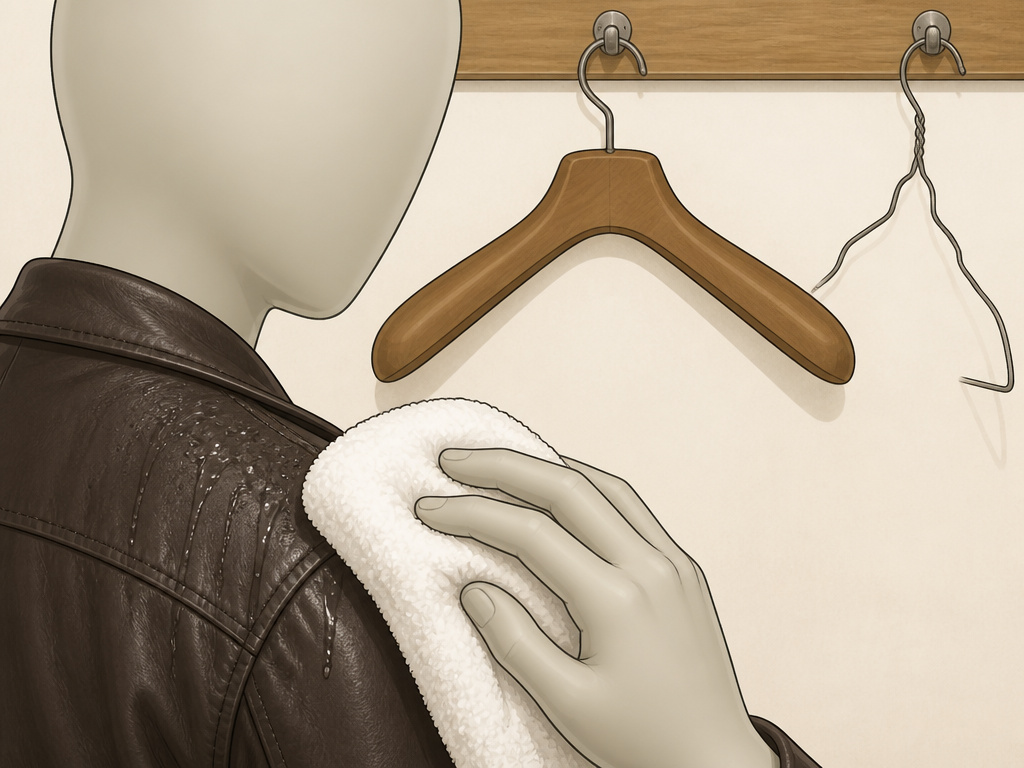
Can you wear a leather jacket in the rain? The consensus answer is a terrified “no.” The practical answer is more measured. Yes, you can be caught in a drizzle. No, you should not treat it as a raincoat.
The damage from water isn’t from the moisture itself, leather is a skin, it can handle getting wet. The damage comes from drying too fast (heat cracks the fibers) or staying wet too long (mold sets in). Here is your action plan if it gets wet:
- Blot, don’t rub. Use a clean, absorbent towel to soak up standing water.
- Dry at room temperature. Hang it on a wide, padded hanger in a room with good air circulation. Never put it near a radiator, fireplace, or in direct sunlight.
- Condition only the stiff spots. As it dries, some panels may feel stiffer than others. Once fully dry, apply a small amount of conditioner just to those stiff areas. Conditioning a damp jacket traps moisture inside.
Where this goes sideways: Letting a wet jacket dry on a wire hanger. The wire concentrates weight on two small points, stretching the shoulders into irreparable peaks as the leather is at its most vulnerable.
The head of design at The Jacket Maker, Gath A. D’Silva put it well: prolonged exposure or improper drying, not a brief unavoidable one, causes irreversible damage. Your jacket can survive a walk in the rain.It might not survive you forgetting about it in a damp closet for a week.
Breaking In: Patience Over Process
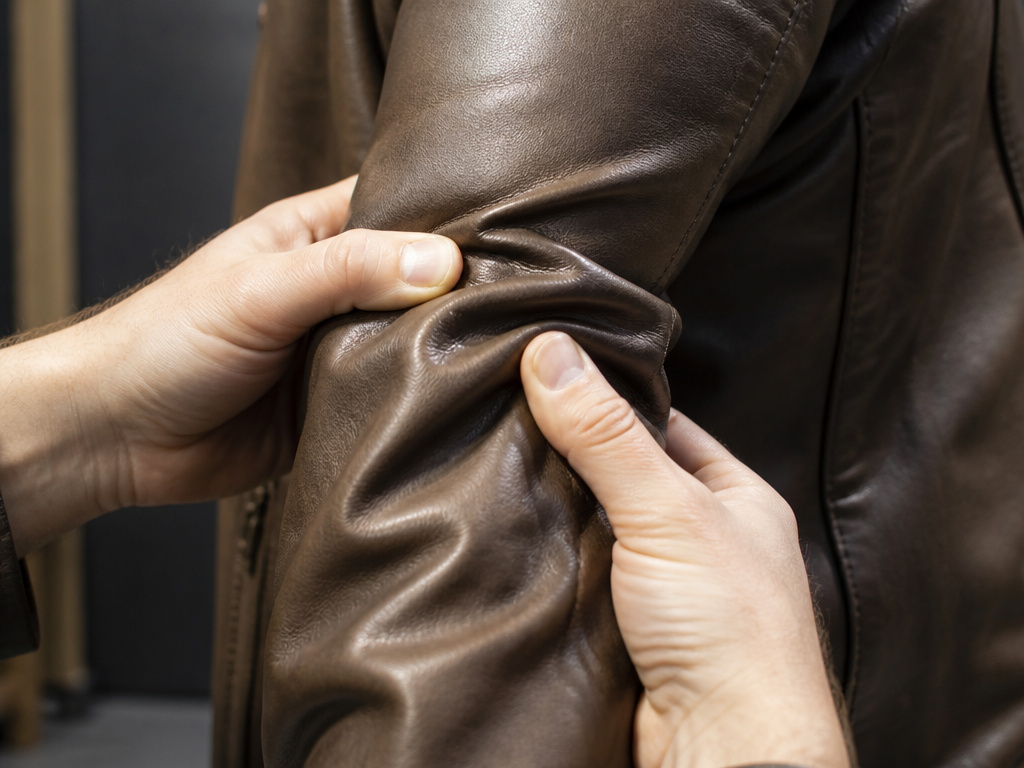
A new leather jacket is often stiff. The urge is to speed up the softening process. Don’t. The best break-in method is simply wearing it. Start with short sessions around the house. The leather will warm from your body heat and soften at the natural stress points, elbows, across the shoulders, around the waist.
Avoid folk remedies like soaking it or baking it in the sun. You’ll dry out the essential oils and risk setting wrinkles in strange places. The leather will tell you what it needs. If after a few weeks certain areas remain stubbornly stiff, you can gently flex them by hand. For dedicated techniques, our guide on how to break it in has you covered.
That stiffness is a sign of quality, by the way. A jacket that’s buttery-soft right out of the box often uses thinner, overly processed leather that won’t hold its shape for years. A little initial resistance is a promise of durability.
The Details That Predict Longevity
When you’re choosing a jacket, look past the leather type for a second. Examine the hardware and the construction. The zipper should be a major brand like YKK, Riri, or Talon. These are workhorses designed for millions of cycles. A no-name zipper will fail long before the leather wears out.
Look for reinforcement at stress points: the corners of pocket openings, the bottom of the zipper placket, the belt loops. The stitching should be tight and even, with no loose threads.
And here’s an underrated champion: the underarm gusset. This is a small diamond-shaped or curved panel of leather sewn under the arm. It allows for greater range of motion without pulling the main body of the jacket or straining the shoulder seams. It’s a tiny detail that speaks volumes about thoughtful design. You’ll find it on jackets from makers like Schott NYC and Aero Leathers.
Care Based on Need, Not a Calendar
Forget the advice to “condition every six months.” That’s like saying “drink a glass of water every three hours” regardless of whether you’re in a desert or a pool. Maintenance depends on use.
A jacket worn daily through a dry, cold winter will need conditioning before one worn five times in a humid spring. Here’s a better system:
- Clean when dirty. Use a damp cloth for dust. For spills, a dedicated leather cleaner is safer than soap.
- Condition when thirsty. Pinch a fold of the leather. If it feels stiff, looks dull, or the color seems thirsty, it’s time. Apply conditioner sparingly to one panel at a time, buffing off any excess.
- Store with support. Always use a wide, padded hanger. Never a wire hanger, which will permanently dent the shoulders. Store in a cool, dry place with some air circulation.
The myth of ritualistic care leads to over-conditioning, which can clog the leather’s pores and leave a greasy residue. Your care guide is your jacket’s own feedback, not a date on your phone.
Frequently Asked Questions
Can you wear a leather jacket in the summer?
Yes, but choose your battles. A lightweight lambskin or perforated jacket can work on cooler summer evenings. Avoid wearing any leather jacket in hot, humid midday sun, you’ll be uncomfortable and the sweat can damage the lining.
What do you wear under a leather jacket for a smart look?
Crisp, slim-fit button-down shirt or a fine merino rollneck. Tuck it into tailored trousers or dark jeans. The key is keeping the layers sleek so the jacket’s structure remains clean.
How do you fix a leather jacket that’s too big?
Leather can be taken in by a skilled tailor, but it’s expensive and has limits. Shoulders are nearly impossible to alter convincingly. It’s almost always better to sell or exchange it for the correct size. Getting your measurements right before you buy is the real fix.
Is it okay to wear a hoodie under a leather jacket?
Slim-fit zip hoodie in lightweight jersey fabric can work, especially with a more relaxed jacket style. Avoid bulky, heavy fleece hoodies. Never layer a hoodie under a hooded leather jacket, two hoods create a lumpy, competing mess at the collar.
How long does a good leather jacket last?
With proper care and occasional minor repairs (like a new zipper pull), a high-quality jacket from a maker like Schott or Aero can last 30 years or more. It’s not uncommon to see vintage examples from the 1970s still in daily wear.
Before You Go
One rule cuts through all the noise: if your jacket gets soaked, dry it slowly at room temperature before you do anything else. Heat is the enemy. Patience is the fix.
The rest, the fit, the layers, the occasional conditioning, flows from understanding that leather is a living material. It’s not a plastic shell. It breathes, it softens, it develops a patina that tells the story of where you’ve worn it. Don’t fight that process. A perfect, shiny jacket straight from the store is just the beginning. A worn-in jacket with creases at the elbows and a subtle glow is the goal.
Start with the right size. Add layers that respect its shape. Listen to it when it needs care. Do those three things, and the jacket will do the rest for decades.
