How to Measure for a Leather Jacket | The 3-Step Fit Test
This post contains affiliate links. As an Amazon Associate, we earn from qualifying purchases.
This post contains affiliate links. As an Amazon Associate, we earn from qualifying purchases.
To measure for a leather jacket, you need three precise body measurements: chest circumference at its widest point, sleeve length from the top of your shoulder to your wrist bone, and shoulder width across your back. Compare these to a manufacturer’s size chart, not a generic one, and remember that a jacket’s “pit-to-pit” measurement is a garment spec, not a body measurement.
That distinction is the whole game. Leather doesn’t stretch like fabric, and a jacket’s internal dimensions are fixed. Getting your body numbers wrong means the jacket either binds across your shoulders or hangs off you like a sack. The goal isn’t just to find a size; it’s to match your unique frame to a manufacturer’s specific cut.
What follows is a breakdown of each measurement, the tools you need, and how to interpret the numbers against a real chart. We’ll also cover when to size up, when a custom jacket makes sense, and the one measurement that most people get wrong.
Key Takeaways
- Measure your body, not your favorite old jacket. Jacket measurements include built-in ease; measuring over a jacket adds ease on top of ease and sizes you too large.
- The “pit-to-pit” measurement on a size chart is a garment spec, not a body measurement. It’s the jacket laid flat, measured from armpit to armpit.
- For motorcycle use, measure your sleeve length with your arm positioned as if you’re holding handlebars; the sleeve will ride up when your arm is lifted.
- If your chest measurement puts you between sizes, size up. A slightly roomy jacket can be belted or broken in; a too-small one is unwearable.
- Shoulder width is the hardest measurement to alter. Prioritize a fit where the shoulder seam sits right at the edge of your shoulder bone.
Tools and Prep: What You Actually Need
Let’s be clear about one thing: you need a soft, flexible tailor’s tape measure. A metal one or a ruler won’t bend to your body’s contours. A piece of string and a ruler can work in a pinch, but it’s a shortcut that invites error.
Wear the thinnest layer you’d typically have under the jacket, a t-shirt or a light sweater. Measuring over a thick hoodie guarantees a jacket that’s too big once you take the hoodie off. Stand straight, breathe normally, and don’t suck your stomach in. This isn’t about vanity sizing; it’s about recording your body’s actual resting state. Have a friend help if you can. It’s nearly impossible to get an accurate shoulder or back measurement by yourself, and a crooked tape throws everything off.
The Chest: Your Anchor Measurement
This is your starting point. With your arms relaxed at your sides, wrap the tape around the widest part of your chest and shoulder blades. Keep the tape parallel to the floor. Don’t pull it tight, you should be able to slip a finger underneath. Record the number in inches.
Here’s where most guides stop. They don’t tell you what to do with that number. A size chart will list a chest measurement, but that’s usually the finished garment measurement, which includes “ease”, the extra room built in so you can move and breathe. According to Italian maker Pierotucci, you should add 1.5-2.5 inches (2.5-5 cm) for women and around 5-6 inches (12-15 cm) for men to your actual chest measurement to find the right jacket size for a standard fit. Your body measurement should be 2–4cm smaller than the chest column on the size chart.
Common mistake: Measuring over a bulky sweater. The jacket’s internal dimensions are fixed; that extra inch of sweater becomes an inch of constriction across the shoulders and chest.
Flat Chest vs. Pit-to-Pit
You’ll see two terms on size charts: “Flat Chest” and “Pit-to-Pit.” They refer to the jacket itself, not you. The “Flat Chest” or “Pit-to-Pit” is the jacket laid flat, zipped up, measured from one underarm seam to the other. Simons Leather notes that a size large straight-fitting men’s jacket has a flat chest measurement of about 24 inches. When this number is doubled, it shows the jacket’s actual circumference and how much ease is included. Don’t try to take this measurement on your body.
| Your Body Measurement | Typical Garment “Chest” Size (with ease) | Fit Profile |
|---|---|---|
| 38 inches | 40-42 inches | Slim |
| 42 inches | 44-46 inches | Regular |
| 46 inches | ,48-50 inches | Relaxed |
For an “in-between” size, like a 43-inch chest, Wested Leather Co. Advises going up rather than down. Your choice, but a tight chest feels awful immediately; a slightly loose one gives you options.
Sleeve Length: Where the Wrist Bone Is Your Guide
Bend your elbow slightly. Place the tape’s end at the very top of your shoulder, where the seam would sit on a well-fitting dress shirt. Run the tape down the outside of your arm, over the elbow, to the bony bump on the outside of your wrist. That’s your sleeve length.
Most people measure to where they think the cuff should land, which is often too short. The cuff should rest at the base of your thumb, right at that wrist bone. Wested Leather Co. Specifies that the shortest sleeve length they’ll make is 22 inches; anything shorter typically requires a non-refundable custom order.
Where this goes sideways: Measuring with a dead-straight arm. Your arm is never perfectly straight, and a jacket sleeve is cut with a slight bend. A straight-arm measurement comes up short by half an inch or more.
There’s a physical reality most guides ignore: leather creases. A jacket will crease at the elbow bend, causing the sleeve to shorten by a quarter to half an inch over time. Factor that in if you like a precise cuff location.
And if this jacket is for motorcycle use? Wested’s advice is specific: measure with your arm positioned as if you’re riding. When you lift your arm to grip handlebars, the sleeve rides up. Accounting for that now prevents a chilly forearm later.
Shoulder Width: The Hardest to Fix
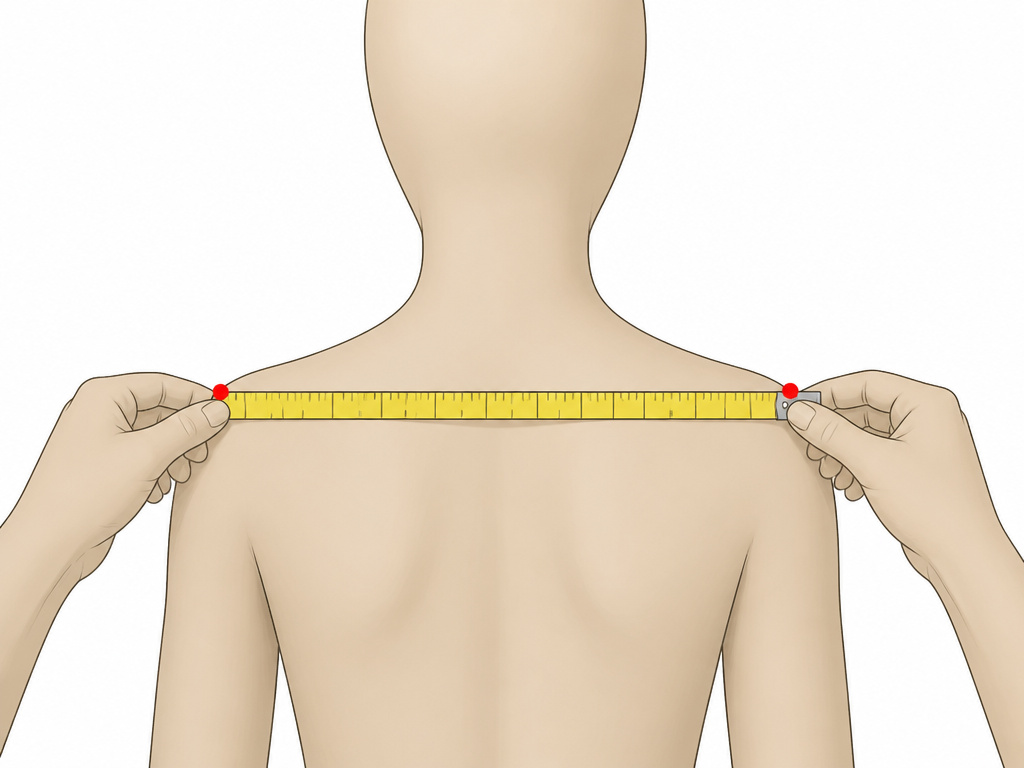 This is the most critical measurement for how the jacket hangs. Have your helper place the tape at the very edge of your left shoulder bone, where your shoulder slopes down to your arm. Measure straight across your back to the same point on your right shoulder. Keep the tape flat and level. Don’t pull it tight; just let it rest.
The shoulder seam of the jacket should hit exactly that point on your body. If the seam hangs down your arm, the jacket looks sloppy and restricts movement. If it’s on top of your shoulder, it pulls and strains the leather with every motion.
I learned this the hard way with a vintage Schott jacket I bought online. The chest fit, the sleeves were perfect, but the shoulders were a full inch too wide. It hung off me like a cape, and no amount of breaking in could fix that drape. Shoulder reconstruction is the most complex and expensive alteration a tailor can attempt on a leather jacket. It’s often cheaper to sell the jacket and buy a new one.
Some styles are designed with specific shoulder proportions. Wested notes that their “Last Crusade” jacket, for instance, is meant to sport slightly bigger shoulders for that classic adventurer look. Trying to make it fit with a narrow shoulder measurement “throws the style and the fit off.” The garment’s intended design can override a perfect body measurement.
The Supporting Cast: Waist, Hips, and Back Length
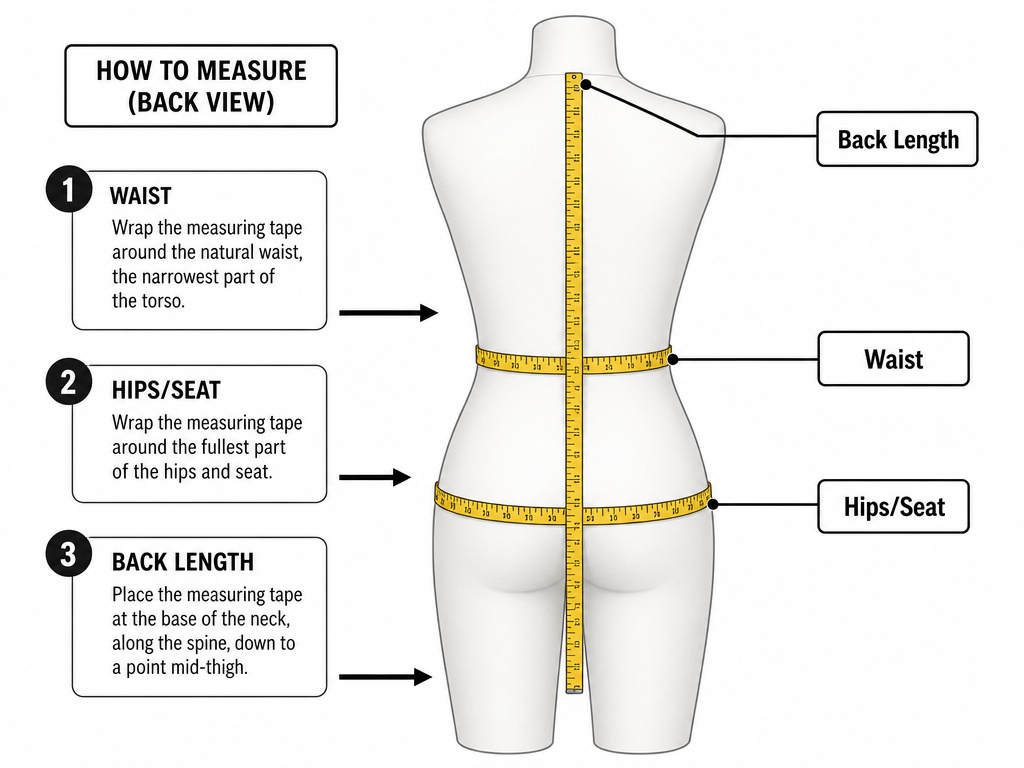 For most standard jackets, bombers, cafe racers, truckers, your chest, sleeve, and shoulder measurements are the primary keys. But for longer coats, tailored styles, or if you have a pronounced V-shaped torso or hip difference, three more come into play.
Waist: Measure around the narrowest part of your torso, typically an inch or two above your navel. Breathe normally.
Hips/Seat: Measure around the fullest part of your hips and seat, usually about 7–9 inches below your natural waist. This is crucial for longer coats and any jacket meant to skim over your hips.
Back Length: This is personal preference. Stand straight. Have your helper measure from the bony bump at the base of your neck (the seventh cervical vertebra) straight down your spine to where you want the jacket to end. A hip-length jacket might end at your belt line; a coat might fall to mid-thigh.
The official ES 6843-2021 leather garment standard provides a technical baseline for these measurements, specifying exactly where to place the tape for consistency. It’s a reminder that this isn’t guesswork; it’s a repeatable process.
How to Use a Size Chart (It’s Not What You Think)
You have your numbers. Now you face a manufacturer’s size chart. Here’s the practical takeaway: you are looking for a range, not a perfect match. Your body will not align perfectly with every column.
Prioritize the measurements in this order: 1. Shoulder Width. If this is off, walk away. 2. Chest. Ensure your chest measurement (plus the recommended ease) falls within the chart’s range. 3. Sleeve Length. It’s easier for a tailor to shorten a sleeve than to lengthen one, but only by a limited amount.
If you’re between sizes, size up. Leather can be broken in and will conform to your body slightly. It cannot be magically stretched an extra inch in the shoulders or chest without risk of seam failure. A jacket that’s slightly large looks intentional, even rugged. A jacket that’s too small looks like you borrowed it from a younger sibling.
This is the logic behind choosing a jacket, measurements inform the choice, but the cut and style dictate the final feel. A slim cafe racer has less ease than a relaxed bomber, even if both are labeled “Medium.”
Special Cases and Pro Tips
Standard advice breaks down at the edges. Here’s what to do when your body or needs aren’t average.
For a V-Shaped Torso (Broad Shoulders, Slim Waist)
Your shoulder measurement will land you in a size whose waist might be too baggy. Look for jackets with a defined waist or a bi-swing back, which allows for shoulder movement without adding bulk below. Some brands, like Schott, are known for cuts that accommodate a V-shaped torso. The underarm gusset, a small diamond-shaped panel, is your best friend here, adding mobility without widening the torso.
For Plus-Size or Big & Tall Frames
The key is to find brands that draft patterns for larger frames, not just scale up a small pattern. This ensures proportional sleeve length, armhole depth, and shoulder slope. Simons Leather specifically lists the Flat Chest measurement for each of its plus-size jackets, allowing for a direct comparison. Resources on finding the best leather jackets for plus-size individuals and best jackets for big and tall body types focus on these proportional cuts.
For Petite Frames
The challenge is often sleeve and torso length. A standard small jacket might fit in the shoulders but have sleeves that cover your hands. Seek out brands that offer petite-specific lines or consider custom. Alterations are possible, but shortening sleeves from the shoulder (to preserve the cuff detail) is complex. Guides for leather jackets for petite frames are essential reading here.
The Vintage Sizing Trap
Vintage jackets, especially from before the 1990s, often run significantly smaller than modern sizing suggests. A vintage size 40 might fit like a modern 38. Always, always seek out the actual garment measurements from the seller. Do not rely on the tagged size alone.
Frequently Asked Questions
Can I just measure my favorite jacket instead?
No. This is the most common mistake. Your favorite jacket already includes the manufacturer’s built-in ease. Measuring over it adds ease on top of ease, resulting in a new jacket that’s almost certainly too large. Always measure your body directly.
How tight should a leather jacket fit when new?
It should feel snug, not tight. You should be able to zip it up comfortably and cross your arms without the back pulling excessively. It should not feel like a straitjacket. Remember, high-quality leather will soften and mold to your body with wear, a process known as breaking in a jacket. It will give slightly, but it will not stretch inches.
What if my measurements don’t match any standard size?
This is when custom-made becomes a compelling option. Many reputable makers, including many of the brands mentioned, offer bespoke services. It costs more, but you get a jacket where every panel is cut for your specific measurements. It’s the only way to get a perfect fit if your proportions are far outside the standard ranges.
Are leather jacket sizes the same as suit sizes?
Not exactly. A suit jacket is designed to be worn over a dress shirt, often with some drape. A leather jacket, especially a riding or fashion style, is often cut closer to the body. Your suit size is a starting point, but you must check the leather jacket brand’s specific size chart. Never assume a 42R suit translates to a 42 leather jacket.
How much does it cost to alter a leather jacket?
It’s expensive and limited. Shortening sleeves ($50-$150) and taking in the waist ($100-$250) are common. Adjusting the shoulders or chest is a major reconstruction often costing $300+ and most tailors won’t guarantee the result. It’s frequently more economical to sell an ill-fitting jacket and use the funds toward one that fits better from the start.
The Bottom Line
Measuring for a leather jacket is a diagnostic exercise, not a creative one. The numbers don’t lie. Your job is to collect them accurately and then read the manufacturer’s chart with a cold eye. Ignore the tagged size; focus on the garment’s flat measurements.
If you remember one thing, let it be this: shoulder fit is essential. A jacket can be stretched a little in the body or intentionally shrunk with careful treatment, but the shoulders are the foundation. Get those right, and you’ve won 80% of the battle for a proper fit.
Then, choose a jacket style that aligns with your measurements and your life. The right jacket, born from correct measurements, isn’t just clothing. It’s a second skin that gets better every time you wear it.
