
Can You Wash a Leather Jacket? Expert Tips for Proper Care
This post contains affiliate links. As an Amazon Associate, we earn from qualifying purchases.
This post contains affiliate links. As an Amazon Associate, we earn from qualifying purchases.
You cannot machine wash a leather jacket. Putting leather in a washing machine will permanently damage its structure, finish, and fit. The correct way to wash a leather jacket is through careful spot cleaning with cold water, a mild neutral soap, and a soft cloth, followed by air drying away from heat. For deep stains or overall grime, professional leather cleaning is the only safe option.
That’s the absolute rule, straight from the manufacturers who make the jackets. Brands like BMW Motorrad, Dainese, and Schott NYC state it in black and white: no machine washing, no tumble drying, no harsh chemicals. The process isn’t about a full submersion wash; it’s about targeted, gentle cleaning that respects the material’s nature. Ignore that, and you’re not just risking a stiff jacket, you’re voiding warranties and inviting permanent cracks.
What follows is a breakdown of why water and leather have a complicated relationship, the exact step-by-step method the pros endorse, and the specific lines you cross that turn a simple clean into a costly repair. We’ll also look at the exceptions, like waxed leather or mold, where the standard advice flips, and how to know when it’s time to hand the job to a specialist.
Key Takeaways
- Machine washing a leather jacket will shrink, stiffen, and crack the hide, voiding most manufacturer warranties.
- Safe cleaning requires cold water, a pH-neutral soap, a soft cloth, and air drying away from direct heat or sunlight.
- The lining can often be washed separately in water up to 40°C, but the leather shell itself must never be fully submerged.
- Using the wrong product, like saddle soap on aniline leather or conditioner on waxed leather, can cause more damage than dirt.
- For deep stains, mud, or blood (“critical condition”), professional leather cleaning is not a luxury; it’s a necessity to save the garment.
Why a Washing Machine is a Death Sentence for Leather
Leather is skin. Think about what happens to your own skin in a long, hot bath, it prunes, it dries out, it loses oils. A washing machine amplifies that effect a hundredfold. The agitation, heat, and detergent combine to strip the natural oils that keep leather supple. The hide then shrinks as it dries, often unevenly, pulling at seams and distorting the jacket’s shape permanently. The result isn’t just a smaller jacket; it’s a brittle, cracked shell.
Manufacturers are unambiguous on this. Schott NYC’s care instructions list “Never wash it in the machine” as the first point to avoid. Belstaff’s product care page states machine washing can void the jacket’s warranty. Dainese calls machine washing a direct cause of permanent damage. These aren’t suggestions; they are the boundaries of the garment’s designed lifespan.
The part nobody mentions: The heat from a dryer or even a sunny windowsill accelerates this damage. Leather dries from the outside in, creating a hard, shrunken shell over a still-damp interior. That stress point is where cracks originate, sometimes months after the botched cleaning.
The 3-Step Spot Clean Method (And Why It Works)
If machine washing is off the table, how do you actually clean a leather jacket? You target the dirt, not the whole garment. This spot-cleaning method is endorsed by Dainese, BMW Motorrad, and Belstaff, and it works because it minimizes water exposure and uses chemistry that won’t attack the leather’s finish.
Here’s a straightforward guide.
Step 1: Dampen, Don’t Soak. Mix a small bowl of cold water with a few drops of a clear, pH-neutral soap. Dish soap is usually too harsh; look for a dedicated leather cleaner like Lexol or Leather Honey.com/best-leather-jacket-cleaner/). Dampen a soft, lint-free cloth (microfiber is ideal) in the solution and wring it out thoroughly. The cloth should be barely damp to the touch. Consequence of skipping this: A sopping wet cloth forces water deep into the leather’s pores, leading to water stains and prolonged drying times where mold can develop.
Step 2: Gentle Circles, No Scrubbing. Gently wipe the soiled area with the damp cloth using light, circular motions. For stubborn dirt, let the damp cloth sit on the spot for a minute to loosen the grime before wiping. Never scrub. Abrasive action will wear away the leather’s topcoat and dye. Consequence of doing it wrong: Scrubbing creates a faded, rough patch. You’ll see a difference in sheen long before you see clean leather.
Step 3: Dry and Buff. Immediately after cleaning, use a second dry, soft cloth to blot away any residual moisture. Then, hang the jacket on a wide, padded hanger in a well-ventilated room out of direct sunlight. Let it air dry completely. This can take 24 hours. Consequence of skipping this: Leaving moisture on the surface leads to water spots, cloudy, permanent rings that no amount of conditioning will fix.
This method is the core of leather jacket care. It’s not glamorous, but it’s effective. It’s how you handle the everyday grime, bug splatters, and minor spills that come with actually wearing your jacket.
When “Wash” Means Something Else: Linings, Padding, and Mold
The word “wash” gets complicated because a leather jacket isn’t just leather. The interior lining and any removable padding often can be washed, following specific rules. This is where you can be more aggressive without risking the jacket’s shell.
Dainese specifies that the lining of their leather garments can be washed separately in water at a maximum of 40°C, using a neutral soap. Removable thermal padding can often go in a gentle machine cycle with liquid detergent. The key is separation: you’re washing the fabric components, not the leather.
Then there’s mold. If a jacket stored in a damp place develops a musty smell or visible mold, the cleaning approach shifts. Dainese advises using only neutral soap and water with a microfiber cloth, avoiding stiff brushes that can grind spores deeper into the leather. The goal is to gently lift the mold without spreading it. After cleaning, drying becomes even more critical, a well-ventilated, dry space is the only way to prevent immediate regrowth.
Where this goes sideways: Trying to kill mold with vinegar or bleach. These acidic or harsh chemicals will stain and degrade the leather fibers, leaving a permanent discoloration far worse than the original mold. If the mold is pervasive, professional cleaning is the only safe path.
The Tools and Potions: What to Use and What to Avoid
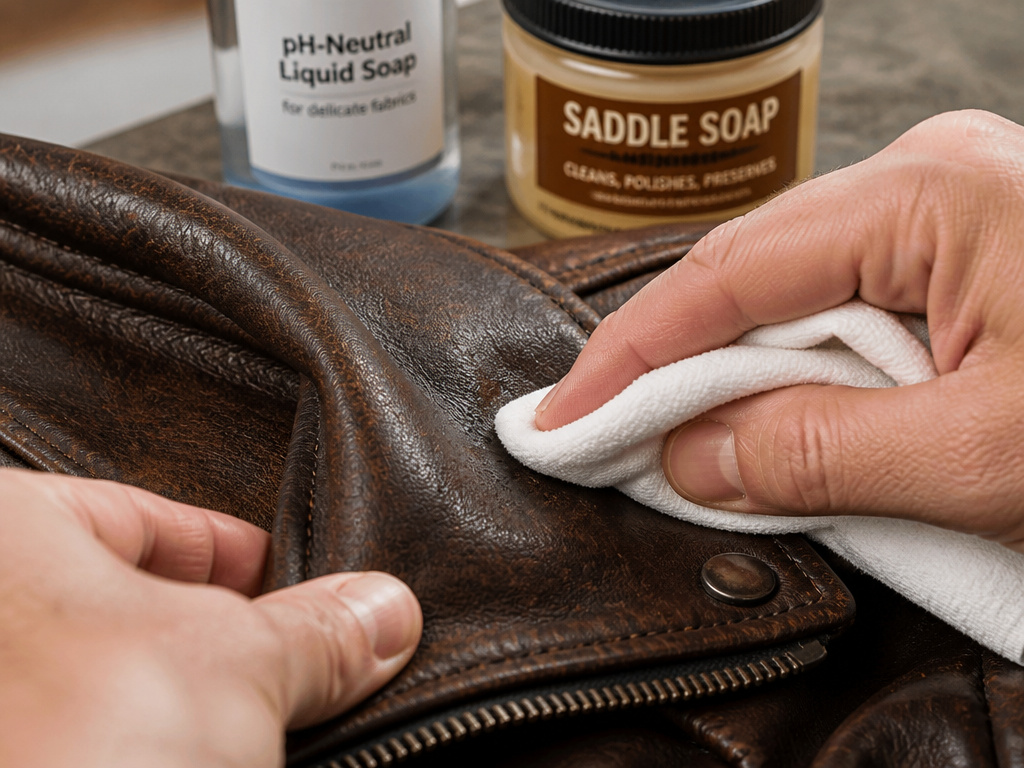
You don’t need a cabinet full of products, but you do need the right ones. Using the wrong cleaner is a classic mistake, one I learned the hard way years ago. I once reached for a heavy-duty saddle soap to tackle a grimy spot on a delicate, aniline-dyed jacket. The soap did its job, too well. It stripped away not just the dirt but also some of the rich, translucent dye, leaving a faint, cloudy patch. The jacket was clean, but visibly altered. It was a failure in applying the right tool for the specific leather type, even though I knew better.
Let’s be clear about one thing. Your toolkit should be simple:
| What You Need | What to Avoid | Why It Matters |
|---|---|---|
| Cold water | Hot or warm water | Heat opens leather pores, letting dirt in and forcing oils out. |
| pH-neutral liquid soap | Detergents, dish soap, saddle soap | Harsh soaps strip protective topcoats and dyes. |
| Soft, lint-free cloths | Abrasive sponges, stiff brushes | Abrasives scratch the surface and create a rough, matte finish. |
| A wide, padded hanger | Wire or thin plastic hangers | Poor support distorts the shoulder shape permanently. |
For ongoing jacket maintenance after cleaning, a dedicated leather conditioner is your next step. But this is where marketing hype clouds judgment. Many commercial conditioners are loaded with silicones and waxes that sit on top of the leather, creating a temporary shine but not nourishing the hide underneath. Look for conditioners with simple ingredient lists, lanolin, beeswax, mink oil, or other natural emollients. And remember, as Belstaff notes, conditioner does not apply to waxed leather jackets, which require a specialist’s reconditioning service.
Waxed Leather and Vintage Leather: The Exceptions That Prove the Rule
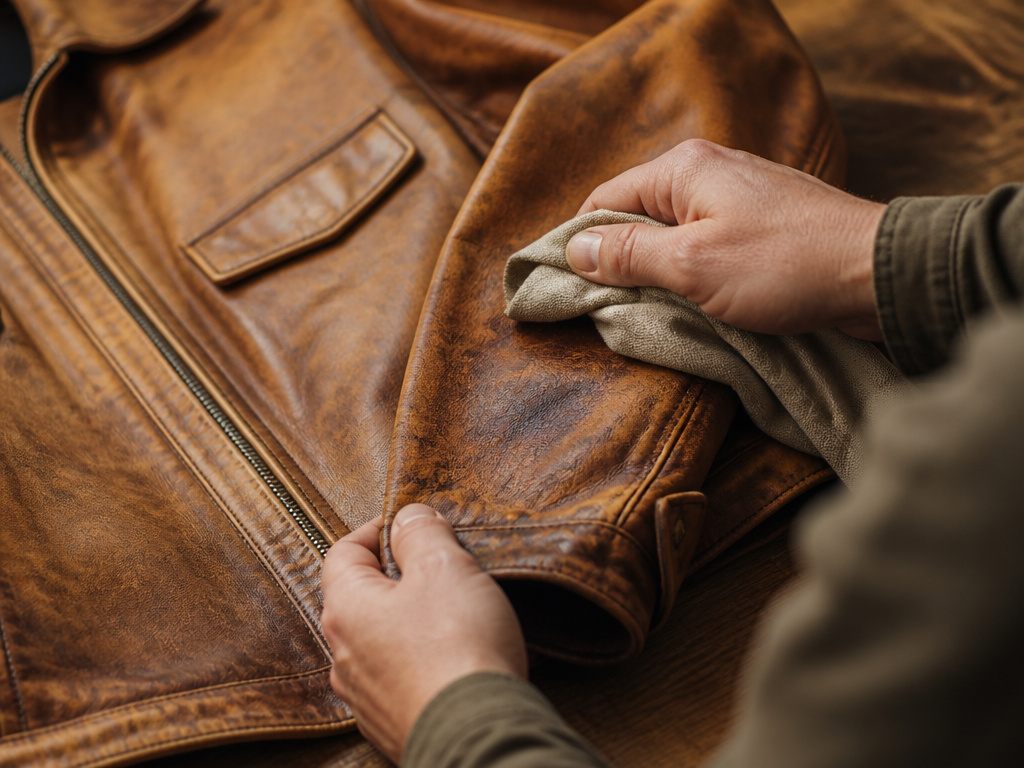
Not all leather is created equal, and neither is all cleaning. Two specific types demand a completely different rulebook.
Waxed Leather (common on brands like Belstaff) is finished with a blend of oils and waxes that create its signature water-repellent patina. Spot cleaning follows the standard neutral soap method, but applying a standard leather conditioner afterwards can actually clog the wax coating. Belstaff explicitly states that their wax product is for cotton jackets only. Re-waxing a waxed leather jacket is a chargeable professional service.
Vintage Leather and other delicate finishes (like aniline or nubuck) are also in a special class. Their porous, untreated surface is more susceptible to water staining and dye runoff. Dainese even mentions that their professional regeneration service may refuse items in “critical condition,” particularly vintage pieces, because the standard cleaning process could damage them. For these jackets, even spot cleaning carries higher risk, making professional consultation the wiser first step.
Easy to miss: The “patina” that develops on a nice jacket, those slight darkening at the elbows and honey-colored highlights, is a sign of the leather aging naturally. Over-cleaning in an attempt to keep it looking factory-new can actually strip away this character and dry out the hide. Sometimes, the best cleaning is a light dusting with a dry cloth.
When to Call a Professional
There’s a line between cleaning and saving. You should call a professional leather cleaner when: 1. The jacket is caked in deep mud or has biological stains (blood). 2. There is extensive mold growth. 3. The leather is very dry, stiff, or already shows light cracking. 4. The jacket is a valuable vintage piece or has a specialty finish (waxed, aniline, suede). 5. You’ve attempted cleaning and caused a water stain or discoloration.
Brands like Dainese and Schott NYC openly recommend professional services for persistent dirt or deep cleaning. Schott NYC’s warranty even outlines what isn’t covered: damage from bad maintenance or abnormal use. A botched home cleaning job that cracks the leather would likely fall under that clause. A pro doesn’t just clean; they assess, nourish, and often re-dye or refinish the leather to restore its integrity.
Think of it as the difference between brushing your teeth and getting a root canal. One is routine care for a leather jacket; the other is essential, specialized intervention to save it.
Frequently Asked Questions
Can you get a leather jacket wet?
Yes, leather can get wet. Light rain is fine. The key is to let it dry naturally at room temperature, away from direct heat like radiators or hairdryers. Never put a wet leather jacket in a confined space like a plastic bag.
What soap is safe for washing a leather jacket?
Use a pH-neutral soap. Castile soap or soaps specifically formulated for leather are ideal. Avoid anything with detergents, alcohols, or acids (like vinegar).
Can you wash a leather jacket lining?
Often, yes. Check the manufacturer’s instructions. Dainese, for example, states linings can be washed separately in water up to 40°C with neutral soap. Some linings may be removable for easier washing.
How do you dry a leather jacket after cleaning?
Always air dry. Hang the jacket on a wide, padded hanger in a well-ventilated room, away from sunlight, heaters, or dehumidifiers. Do not tumble dry. The drying process may take up to 24 hours.
Will washing a leather jacket ruin it?
Machine washing will almost certainly ruin it, causing shrinkage, stiffness, and cracks. Proper hand spot cleaning with correct materials is safe and recommended for surface dirt.
Can a tailor or cleaner wash a leather jacket?
Specialist leather cleaner can, but a standard dry cleaner or tailor likely cannot. Always confirm they have experience with leather garments, not just household items. Many standard dry-cleaning chemicals are too harsh for leather.
Before You Go
The leather will tell you what it needs. A dusty jacket needs a soft brush. A greasy thumbprint needs a damp cloth. A jacket that’s been through a muddy adventure needs a professional’s bench. The goal is never to return it to a showroom state, but to care for it in a way that lets its character, your character, build up over decades.
If you take away one action from this, let it be this: find the care instructions for your specific jacket brand. Whether it’s Dainese, Schott, Belstaff, or another maker, their website holds the exact guidelines that keep your warranty intact. Use that as your manual, and use the spot-cleaning method here as your practical field guide. Everything else, every product recommendation, every caution, flows from that combination of specific rules and gentle technique.
