
How to Care for Leather Gloves | The Rules Most People Miss
This post contains affiliate links. As an Amazon Associate, we earn from qualifying purchases.
Proper leather glove care requires matching three things to the glove’s construction: the washing method (hand-wash only for leather), the drying technique (flat, air-dry, no heat), and the aftercare product (conditioner for leather, DWR refresh for synthetics). Ignoring any one of these ruins the glove’s fit, finish, or water resistance.
That framework sounds simple. The devil is in the exceptions printed on manufacturer tags that most people never read. A GORE-TEX shell glove can go in the dryer; a cashmere-lined deerskin dress glove cannot. A heated glove needs a snug fit, while a winter glove needs an air gap. Get one spec wrong and the glove is done.
What follows is a breakdown of each rule, the physical reason it exists, and the specific manufacturer advice that overrides the generic “use mild soap” guide. You’ll know how to read a care label by the end, and more importantly, why each instruction is there.
Key Takeaways
- Never machine wash leather gloves. The agitation, spin cycles, and heat will shrink, stiffen, and misshape the leather permanently. Hand washing while wearing them is the only safe method.
- Air-dry flat, away from heat. Radiators, hairdryers, and direct sunlight bake the leather, causing it to crack and become brittle. Lay them flat on a towel in a well-ventilated room.
- Condition after every wash. Washing strips natural oils from the leather. A conditioner meeting the Leather Care Products Standard (IULTCS/IUF 460) replenishes them, maintaining suppleness and water resistance. Apply in the evening for overnight absorption.
- Store them correctly. Never crumple gloves in a pocket or bag. Store them flat or on glove forms to maintain their shape and prevent deep creases that can crack.
- Match the product to the material. Use leather conditioner on leather areas; use a DWR (Durable Water Repellent) spray on synthetic waterproof membranes. Using the wrong one does nothing or causes damage.
How to Wash Leather Gloves (Step-by-Step)
The single biggest mistake is treating all gloves the same. A rugged goatskin work glove and a delicate lambskin dress glove share a material, but their construction dictates different rules.
First, check the tag. Always. If it says “dry clean only,” respect that. For hand-washable leather, the universal method is the “wear-and-wash” technique. BMW Motorrad, Aspinal of London, and Mammut all prescribe some version of it. Here’s why: washing them on your hands keeps the leather stretched to its natural shape, so it dries back to the correct size instead of shrinking.
Put the gloves on your hands. Use a small amount of leather soap or a mild, glycerin-based soap dissolved in lukewarm water. Gently work the soap over the exterior, mimicking the motion of washing your hands. Rinse while still wearing them, pressing your hands together to squeeze out water, never wring.
Common mistake: Using dish soap or harsh detergents. These are designed to cut grease and will strip the leather’s essential oils far too aggressively, leaving it dry and stiff.
For combined leather and textile gloves, ZANIER advises a two-part approach: clean the leather panels with a dedicated leather cleaner and the textile areas with a damp brush and mild detergent. Trying to soak the whole glove risks saturating the leather.
What about non-leather, single-layer synthetic gloves? Mammut states their single-layer gloves (without leather) can be machine washed on a cold, wool setting with no spin cycle. This is a rare exception that proves the rule: if there’s no leather and the tag allows it, cold and gentle is the way.
The Right Way to Dry Gloves (And Why Heat is the Enemy)
Water damages leather less than how you remove the water does. Heat is the real killer.
After washing, press the gloves between a clean, absorbent towel to remove excess moisture. Do not rub. Then, lay them flat on a dry towel in a well-ventilated room at room temperature. Rotate them every few hours for even drying.
Where this goes sideways: Placing damp gloves on a radiator, using a hairdryer, or leaving them in direct sun. Heat forces rapid moisture loss, which causes the leather fibers to contract violently and crack. The result is a stiff, misshapen, and brittle glove.
GORE-TEX provides a specific, counterintuitive tip: when the gloves are about halfway dry, put them on and make a fist. This helps restore their original molded shape. It’s a small step that makes a big difference in how they feel when fully dry.
There’s one notable exception to the “no heat” rule. GORE-TEX explicitly says their GORE-TEX shell gloves (not leather-lined) can be tumble dried on a low heat setting. The synthetic membrane and construction can handle it, and the gentle tumbling helps reactivate the DWR coating. This is not a blanket permission for all gloves, only if the manufacturer says so.
Another critical warning from GORE-TEX: “Do not place damp leather gloves on other garments: dyed leather can stain when it is wet.” That dark dye can transfer onto light-colored fabrics, leaving a permanent mark.
Conditioning and Waterproofing: Two Different Jobs
Washing leaves leather vulnerable. Conditioning is non-optional.
Leather conditioner replaces the natural oils stripped away during cleaning. Without it, the leather dries out, loses its suppleness, and becomes more susceptible to cracking. Think of it like moisturizing your skin after a shower.
Mammut gives a brilliant, specific tip for their GORE-TEX leather gloves: “We recommend doing this in the evening to allow the treatment to absorb overnight.” A thick layer slapped on before you head out just sits on the surface and attracts dirt. A thin, even coat applied at night has hours to fully penetrate.
| Product Type | Used On | Purpose | Key Brand Example |
|---|---|---|---|
| Leather Conditioner | All leather areas | Replenishes oils, maintains suppleness, aids water resistance | Any quality brand-specific conditioner |
| DWR Spray | Synthetic waterproof membranes (GORE-TEX, etc.) | Restores water-beading surface treatment | Nikwax TX.Direct Spray-On |
| Waterproofing Wax | Specific leather work gloves | Impregnates leather for heavy-duty water resistance | Nikwax Waterproofing Wax for Leather |
For synthetic waterproof gloves, the surface needs a different treatment: a DWR (Durable Water Repellent) refresh. When water stops beading and starts soaking in, it’s time for a spray-on DWR treatment. Black Diamond specifically names Nikwax Waterproofing Wax for Leather for their gloves, applying a dime-sized amount.
Here’s the thing: a “waterproofing” spray for leather is often just a silicone-based topical sealant. It can clog the leather’s pores, preventing it from breathing and eventually leading to dryness underneath. For true leather, conditioning is waterproofing, it keeps the fibers supple and naturally resistant.
Storage: The Forgotten Half of Care
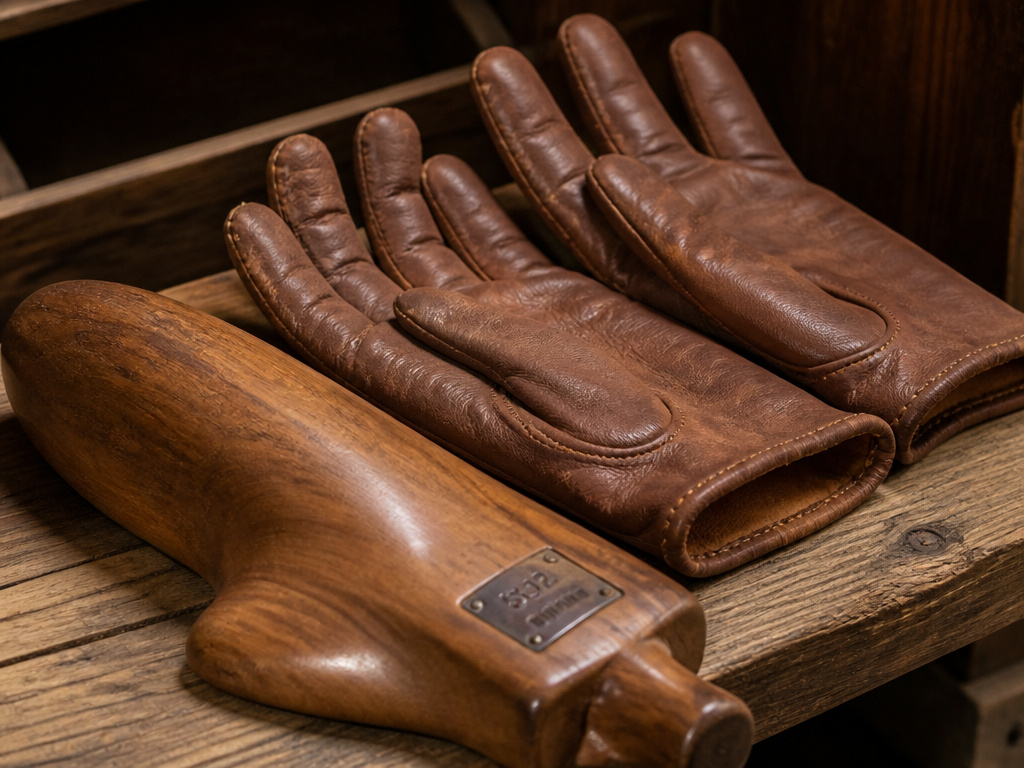 How you put gloves away matters as much as how you clean them.
The goal is to preserve the shape and prevent stress on the leather. Never crumple them into a coat pocket or the bottom of a bag. That creates deep, sharp creases that, over time, become permanent and can crack.
Best practice: Store them flat in a drawer or on a shelf. For the ideal scenario, use wooden glove forms. These hold the fingers curved and the palm open, exactly as the glove was meant to sit. It prevents the fingers from curling and the leather from developing flat spots.
ZANIER offers a crucial note for heated gloves: “The batteries must not be connected to the glove or the charger.” Store the batteries separately in a cool room (5°C to 20°C) at a half-charge. For long-term storage, discharge and half-charge them every six months. This preserves battery life, which is often the first thing to fail on heated gear.
Let me share what I’ve learned the hard way. I used to treat my leather conditioner like paint, applying it liberally to a dry glove. The result was always a sticky, greasy mess that attracted dust. Now, I test any new product on a hidden seam or inside flap first. A thin coat on already-clean, slightly damp leather works infinitely better than a thick one on bone-dry hide.
Special Cases and Exceptions
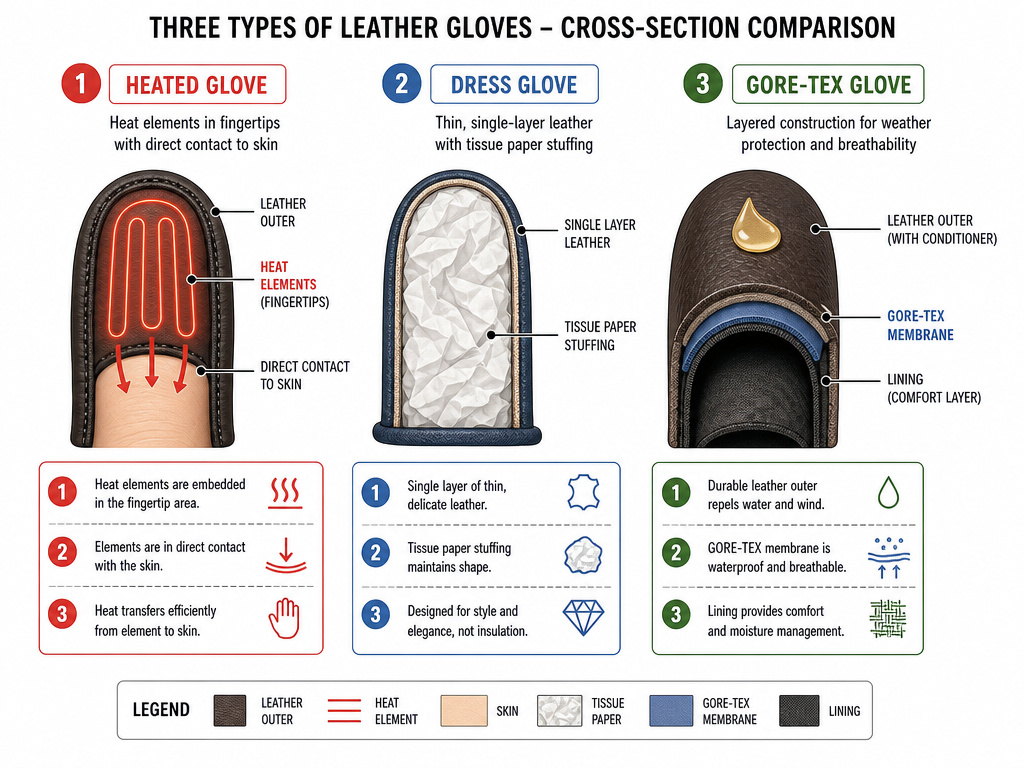 General rules are for general gloves. Special gloves have special needs.
Heated Gloves: ZANIER states that fit rules are reversed. For regular gloves, you want about 5mm of “air” at the fingertips for insulation. For heated gloves, you want minimal space because the heating elements are concentrated in the fingertips. A snug fit ensures the heat transfers to your skin, not the air inside the glove.
Delicate Dress Gloves (Deerskin, Lambskin): These are inherently fragile. The leather is thin and soft for drape and feel, not durability. Avoid getting them wet if possible. If you must clean them, use the lightest possible hand-wash technique and allow them to dry slowly, stuffed with tissue paper to hold their shape.
GORE-TEX Leather Gloves: As per Mammut, these don’t require a separate waterproofing treatment because the membrane handles that. They do require a conditioning treatment after each wash to protect the leather outer layer. This is a common point of confusion.
Frequently Asked Questions
Can I use saddle soap on my leather gloves?
Practically speaking, I wouldn’t. Saddle soap is formulated for removing heavy dirt, sweat, and salt from thick, oil-tanned saddle leather. On finer garment leathers, it’s too aggressive and can over-clean, stripping out more oils than you want. For most gloves, a mild leather soap or glycerin bar is safer.
How often should I condition my gloves?
Condition after every wash, without fail. For gloves you wear frequently but don’t wash often (like driving gloves), a light conditioning every few months helps maintain suppleness. If the leather starts to look dry or feel stiff, it’s time.
My gloves got soaked in the rain. What should I do?
First, blot off excess water with a towel. Never wring them. Then, stuff the fingers and palm with crumpled paper towels or a dry cloth to absorb moisture and help them hold their shape as they air-dry flat away from heat. Once completely dry, condition them.
Can I stretch leather gloves if they’re too tight?
It’s risky. You can try wearing them for short periods to gently stretch them, or use a professional glove stretcher. Avoid the old trick of wearing them wet, this can overstretch the leather unevenly and weaken the seams. It’s always better to size leather gloves correctly from the start.
What’s the best leather conditioner for gloves?
Use a conditioner recommended by the glove manufacturer if they specify one. Otherwise, a high-quality, neutral leather cream or balm (like those from Saphir or Venetian Shoe Cream) works for most types. Avoid silicone-based “protectors” which can seal in dirt and dry out the leather underneath.
How do I remove salt stains from winter gloves?
Dissolve a small amount of white vinegar in water. Dampen a cloth with the solution and gently dab the stain. Follow with a clean, damp cloth to rinse the area, then let dry fully before conditioning. Salt is corrosive, so address these stains soon after they appear.
Before You Go
Leather glove care isn’t about following a single recipe. It’s about understanding why each step exists, the mechanics of leather fibers, the chemistry of oils and water, and the engineering of liners and membranes. The soft snap of a well-conditioned deerskin glove closing around your hand is the payoff.
So here’s your first step this week: find the care tag on your favorite pair. Read it. Then, the next time they need cleaning, follow the specific instructions, not the generic ones. That alone will put your gloves years ahead of most. And if you’re shopping, let that tag guide your choice of leather gloves from the beginning, the best care in the world can’t fix a glove never meant for the job you’re giving it.
