
Understanding Chukka Boots: The Iconic 3-Panel Ankle Boot
This post contains affiliate links. As an Amazon Associate, we earn from qualifying purchases.
This post contains affiliate links. As an Amazon Associate, we earn from qualifying purchases.
A chukka boot is an ankle-high boot defined by three things: a low shaft that stops just above the ankle bone, an open-lace closure with two or three pairs of eyelets, and a three-piece upper construction. The name is pronounced “chuck-uh,” and its design prioritizes lightweight comfort over rigid support, making it a versatile choice for jeans, chinos, and smart-casual outfits.
This three-panel construction is the mechanical heart of the style. The quarters, the side panels with the eyelets, are stitched on top of the vamp, the piece covering your toes. This creates a wide throat that pulls together with laces, a simple system that gives you more fit adjustment than a slip-on Chelsea boot. The rest of the guide walks through where this design came from, the one sole choice that flips its entire use case, and how to spot a well-made pair.
What follows: the three essential features, a breakdown of leather and sole options, and the specific situations where a chukka will either excel or leave you wanting more support.
Key Takeaways
- A true chukka has exactly three panels in its upper: two quarters stitched on top of a single vamp. More panels means it’s a different boot style.
- The sole decides everything. Crepe rubber is casual, cushioned, and wears fast; leather is dressier, durable, and slippery when wet.
- “Unlined” is common and means no internal lining, this makes the boot breathable and soft but offers zero ankle support on uneven ground.
- Chukkas are not all-weather boots. Suede, the most common material, absorbs water and salt stains, so treated leather is better for wet climates.
- The short lacing system offers real fit adjustment for low-volume feet, a clear advantage over the fixed tension of a Chelsea boot’s elastic.
The 3 Defining Features of a Chukka Boot
Count the eyelets and the leather panels. If it doesn’t have two or three pairs of eyelets and a three-piece upper, it’s borrowing the chukka name for marketing. Shoe historian June Swann’s definition nails it: ankle-high, open-laced, and typically unlined, with the quarters sewn on top of the vamp. That last point is visual. Look at the seam running from the eyelets down toward the toe, if the side panel is layered on top, you’re looking at a classic chukka build.
This construction is why the boot behaves the way it does. With just three pieces of leather and often no lining, there’s almost nothing inside, no stiff shank in the arch, a minimal heel counter, and a shaft that collapses softly around your ankle. You get a boot that needs no break-in period. You also get a boot that will not hold your ankle stable on a hiking trail. Its job is urban mobility and style, not off-road performance.
The essential chukka boot is ankle-high, open-laced, and unlined, with two to four pairs of eyelets, thin leather soles, calfskin suede uppers in two parts (each from a single piece of leather; quarters sewn on top of vamp), and rounded toes.
A Quick History: From Polo Fields to Everyday Wear
The name’s origin is tied to polo, where a “chukka” or “chukker” is a period of play. It’s unclear if the boot was worn during the game or just favored by players off the field. The style we recognize was solidified by British military officers in the mid-20th century. Stationed in places like India and North Africa, they had local cobblers make ankle-high, comfortable boots for off-duty wear. These prototypes often used suede and crepe rubber soles for desert terrain, leading to the “desert boot” nickname.
Nathan Clark of C. & J. Clark famously commercialized this style after World War II, leading to the iconic Clarks Desert Boot. Brands like Crockett & Jones have been making refined versions for decades, their classic Chiltern model is still made on Last 224, which dates back to 1953. The style’s appeal lies in that hybrid origin: it carries a slight whiff of adventure and sport but is thoroughly domesticated for pavement and offices.
Sole Choice Defines the Job (Crepe vs. Leather vs. Rubber)
This is the single most important buying decision. The sole dictates the boot’s personality, durability, and appropriate setting.
| Sole Type | Best For | Wear & Feel | The Trade-Off |
|---|---|---|---|
| Crepe Rubber | True desert boots, casual summer wear. | Soft, cushioning, flexible. Feels like walking on a firm eraser. | Wears down visibly within a year of daily use. Can turn tacky in summer heat and stiffen in cold. |
| Leather | Dressier chukkas, smart-casual and business-casual settings. | Firm, sleek, develops a characterful patina with wear. | Provides almost no grip on wet smooth surfaces like stone or tile. Requires more care to avoid water damage. |
| Modern Rubber (Wedges, Commando) | Everyday versatility, all-weather readiness. | Durable, good traction, often includes some cushioning. | Can look chunkier and more utilitarian, moving away from the chukka’s sleek, classic profile. |
Crepe soles are the defining feature of a desert boot. They’re made from natural rubber sap and are incredibly comfortable from the first step. Here’s the thing. That comfort comes at a cost. The material is soft and abrasion-prone. Expect to see noticeable wear on the heel and ball of the foot after several months of regular use. They also have a sensory quirk: on a hot day, they can feel slightly gummy, and they’ll harden and lose cushion in freezing temperatures.
Leather soles are the traditional choice for a chukka boot (before the desert boot variation). They look sharp and lean, pairing naturally with tailored trousers and sport coats. Practically speaking, they demand you watch your step in the rain. A leather-soled chukka on a wet marble lobby floor is an exercise in cautious shuffling. For a versatile daily pair that bridges seasons, a chukka on a thin, studded rubber or a low-profile wedge sole is often the smartest compromise. Crockett & Jones uses a new rubber wedge compound on models like their Chukka 4 for this reason.
Leather & Lining: Why “Unlined” Isn’t Just a Buzzword
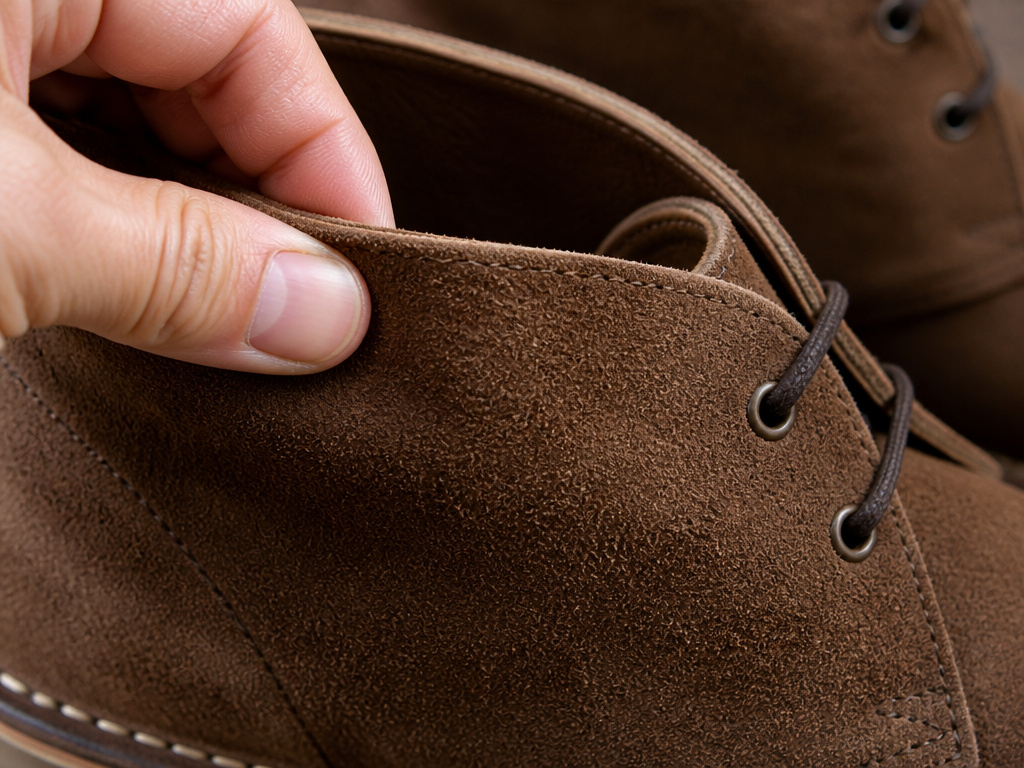 Suede is the classic chukka material, and for good reason. It’s casual, breathes well, and has a rich texture. But that same porous nap is the boot’s weakness in bad weather. Suede drinks rain and will hold white salt rings from winter sidewalks. If you live somewhere wet, a chukka in treated, waxy leather or grained calfskin is a more practical choice. The leather will shed water better and won’t show salt stains as glaringly.
Many chukkas, especially suede ones, are unlined. This means the inner surface you feel against your sock is the backside of the outer leather. There’s no separate fabric or leather lining.
Where this goes sideways: Choosing an unlined suede chukka for rough, uneven terrain. The soft shaft provides no lateral support, and your ankle will roll on a loose gravel path or a hiking trail. That’s its design limit.
An unlined boot is lighter and more breathable, a boon in warm weather. It also molds to your foot faster. The downside is a lack of structure and insulation. For winter wear, a lined chukka (or wearing thicker socks) is necessary. When checking quality, pinch the unlined suede. It should feel dense and springy, not paper-thin. A thin hide in a simple three-panel design has nowhere to hide its flaws.
How a Chukka Boot Should Fit
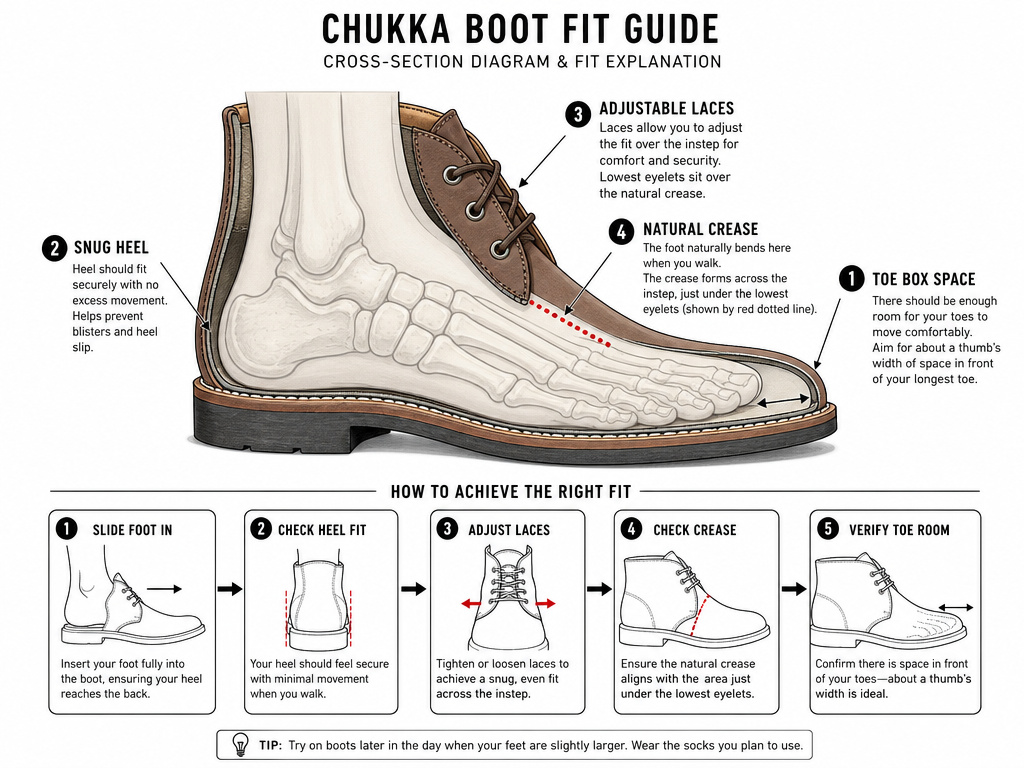 The fit rules for welted footwear apply here, with one extra consideration. The boot must have enough length that your toes don’t jam at the end, and the heel should sit snugly with minimal slip. Because the upper is one continuous piece from toe to tongue, a crease will naturally form across the instep where your foot bends. Sometimes this crease appears directly under the lowest eyelets.
If that crease is severe and cuts into the top of your foot, trying a half-size up can often redistribute the flex point and improve comfort. The lacing exists for adjustment. If you have a low-volume foot, you can cinch the instep snugly. For thicker socks, you have slack to let it out. This is the chukka’s tangible advantage over a Chelsea boot, where the elastic gore sets a fixed tension.
Chukka vs. Chelsea vs. Dress Boot: Which One Fits Your Life?
It’s helpful to see where the chukka sits among its closest ankle-boot relatives. Each has a distinct role.
| Boot Style | Key Feature | Best For | The Limitation |
|---|---|---|---|
| Chukka Boot | 2-3 eyelets, open lacing, 3-panel upper. | Smart-casual versatility, warm-weather boot wear, adjustable fit. | Low ankle support, not for rough terrain or heavy winter. |
| Chelsea Boot | Elastic side panels, slip-on entry. | Streamlined look, quick on/off, sleek under trousers. | Elastic tension is fixed; less adjustable for instep volume. |
| Dress Boot | Higher shaft, often zip or lace closure, sleek last. | Formal wear, tailored clothing, a polished alternative to dress shoes. | Often less comfortable for long walking, can be restrictive. |
The chukka wins on airflow and fit customization. The Chelsea boot wins on sleekness and speed. The dress boot wins on formality and structure. For a wardrobe that values lightweight versatility and you prefer laces to elastic, the chukka is the clear choice. It’s the bridge between a robust leather work boot and a sleek city shoe. If your daily routine involves more walking than board meetings, a comfortable leather walking boot might be a better investment, but it won’t dress up as easily.
What to Wear With Chukka Boots
Chukkas live in the smart-casual realm. That’s their home ground. Think dark denim or chinos with a button-down shirt, a polo, or a sweater. They’re an effortless step up from sneakers. You can push them into a business-casual setting with wool trousers and a sport coat, especially if the boots have leather soles and are in a polished leather.
A few straightforward style guidelines: * Contrast your pants and boots. Wear darker chukkas with lighter pants (e.g., taupe suede with grey trousers) and vice versa. Avoid matching sand-colored boots with khakis, it’s a tonal washout. * Consider the pant break. A slightly shorter, narrower leg opening shows off the boot’s profile. A wide, bunching leg can make the rounded toe look awkward. * Know the limit. Wearing chukkas with a suit is possible with a very casual suit and leather-soled boots, but it’s a look for a creative office or an evening out, not a law firm. And never with shorts.
For color, you can’t go wrong with the classics: sand or taupe suede for true desert boots, dark brown or black leather boots for versatility. Olive or navy suede are great third options if you already own the basics.
Frequently Asked Questions
Are chukka boots and desert boots the same thing?
All desert boots are chukkas, but not all chukkas are desert boots. “Desert boot” specifically refers to a chukka with a crepe rubber sole and is typically made of suede. A chukka boot with a leather sole is just a chukka boot.
Can you wear chukka boots in the summer?
Yes, absolutely. Their ankle height, unlined construction, and breathable materials like suede make them one of the better closed-toe footwear options for heat. The desert boot variant was literally designed for hot climates.
Do chukka boots provide ankle support?
No. The low shaft and minimal structure are the opposite of supportive. If you need genuine ankle support for physical activity or a medical reason, look to a true lace-up boot with a higher shaft and more eyelets.
How do you care for suede chukka boots?
Use a waterproofing protector spray before the first wear. Clean dirt with a rubber-bristle suede brush. For stubborn stains on the sole, a dry art-gum eraser works better on crepe rubber than liquid cleaners. If they get soaked, stuff them with paper towels and let them air dry away from direct heat before brushing.
What socks do you wear with chukkas?
Invisible no-show socks work for a clean look in summer. For cooler weather, classic wool or cotton dress socks are perfect. The boot’s design accommodates a range of sock thicknesses, thanks to the adjustable lacing.
Before You Go
The chukka boot’s genius is in its constraints. Three panels of leather, a handful of eyelets, and a choice of soles. That’s it. That simplicity is what makes it timeless and endlessly versatile. If you want one boot that moves from weekend jeans to weekday chinos without a second thought, a chukka in dark brown or taupe suede is the answer.
Let me share what I’ve learned. Don’t overthink it as a specialty item. Its job is to be a comfortable, good-looking, low-maintenance workhorse for paved life. Just match the sole to your climate, crepe for dry comfort, rubber for all-weather duty, leather for dry days and dressier occasions. And if you see a crease forming right under the laces, don’t panic. That’s just the leather telling you where your foot bends.
