
What Is a Moc Toe Boot? The Iconic U-Shaped Seam Explained
This post contains affiliate links. As an Amazon Associate, we earn from qualifying purchases.
A moc toe boot is a leather boot defined by a U-shaped or moccasin-style seam stitched across the toe box. This construction uses a separate panel of leather over the vamp, creating a distinctive raised stitch that provides a roomier toe area and a more flexible front compared to a plain toe boot. Historically a work boot design pioneered by Red Wing in the 1950s, it’s now a versatile style for both jobsites and casual wear.
That U-shaped seam isn’t just decoration. It’s the signature of a specific, two-piece construction method that directly affects how the boot fits, flexes, and feels. The difference between a moc toe and a plain toe isn’t just skin deep; it changes the boot’s entire character.
What follows is a breakdown of where that stitch came from, what it actually does (and doesn’t do) for comfort, and who this boot is really built for. By the end, you’ll be able to spot the real deal, know how to care for it, and decide if it’s the right boot for your feet.
Key Takeaways
- The defining moc toe stitch is a structural seam joining a separate toe panel to the vamp, not just decorative top-stitching.
- Comfort comes from the accompanying wedge sole and soft leather, not the toe design itself; the two-piece construction can actually make the toe box narrower.
- Quality moc toe work boots use full-grain leather 2.0-3.0mm thick and are often Goodyear-welted for resoling.
- They require a 1-2 week break-in and specific care: condition every 4-6 weeks, replace soles when tread depth falls below 3mm, and always use cedar shoe trees.
- This boot excels for long hours on hard floors (think warehouse, shop, or concrete) but is a poor choice for narrow feet or high-arch support needs.
The Defining U-Shaped Seam
Look at the front of the boot. If you see a single, continuous piece of leather sweeping over the toes, that’s a plain toe. If you see a raised, U-shaped seam circling the front, you’re looking at a moc toe. This isn’t embroidery. That stitch is holding two separate pieces of leather together: the main vamp and an overlay panel that forms the toe box.
This construction traces back to Native American moccasins, which used soft, sewn hides for flexibility. Red Wing Shoe Company adapted it for industry, launching their now-iconic 875 model in 1952 for farmers and factory workers. The design solved a problem. Stiff, traditional work boots of the era were unforgiving. The sewn toe panel allowed more natural foot movement and created a roomier interior, which was a revelation for 10-12 hour shifts.
The moc toe stitch is a functional seam, not purely decorative. It joins the toe box overlay to the vamp, a construction method directly borrowed from traditional moccasin making for improved flexibility.
The stitch became a symbol of American workwear. By the 1970s, brands like Thorogood were producing their own versions, and the style crossed over from the oil rigs and logging sites into everyday casual wear. That crossover is why you see them everywhere today.
Anatomy of a Moc Toe Boot
A moc toe with a Goodyear welt and a Vibram sole is more than its signature stitch. Three other components define its build and feel.
The Wedge Sole. This is the other half of the classic moc toe identity. It’s a flat, solid rubber sole, often in a light “Christy Creme” color, that slopes upward from heel to toe with no separate heel block. The design distributes weight evenly and absorbs impact, which is why people say they feel like wearing sneakers. They’re also less likely to trip you on uneven ground.
The Leather. For a work-grade boot, expect full-grain leather from 2.0mm to 3.0mm thick. Thinner leathers under 2.0mm might feel soft out of the box, but the toe box will collapse and lose structure within a year. You can feel the difference. Pinch the leather. If it’s stout and resists folding easily, it’ll hold its shape. If it’s flimsy, it’s a shortcut.
The Construction. The best are Goodyear-welted. This method stitches a leather strip (the welt) to the upper and the insole, then attaches the sole to the welt. It’s a more complex process, but it means the sole can be cut off and a new one stitched on by a cobbler for about $80-120. It turns the boot from a disposable item into a 5-10 year investment. Cemented construction, where the sole is just glued on, doesn’t offer that longevity.
| Component | What to Look For | Why It Matters |
|---|---|---|
| Toe Construction | A raised, U-shaped structural seam. | Provides flexibility and defines the iconic look. |
| Sole | Solid rubber wedge sole (e.g., Christy Creme). | Absorbs impact on hard floors, offers stable footing. |
| Leather | Full-grain, 2.0-3.0mm thickness. | Ensures durability and maintains toe box structure over time. |
| Build Method | Goodyear welt construction. | Allows for multiple resoles, extending boot life for years. |
The Comfort Myth (And Reality)
Moc toe boots have a reputation for comfort. Here’s the thing: the design doesn’t make them comfortable. The materials and specs that typically come with the design do.
The comfort reputation comes from two places. First, the classic models use oil-tanned leather, which is softer and has a shorter break-in than stiff vegetable-tanned leather. Second, that wedge sole makes a big difference for anyone on concrete all day. It takes the ache out of your joints. So, a comfortable moc toe boot is comfortable because it has a soft wedge sole and supple leather, not because of the stitching on the toe.
Where this goes sideways: Assuming the moc toe stitch means a wide toe box. The extra seam can actually make the boot narrower from side-to-side and top-to-bottom. If you have wide feet, trying them on is non-negotiable.
In fact, the two-piece construction can introduce fit issues. The seam itself takes up interior volume. For some foot shapes, this creates pressure points where the single piece of a plain toe wouldn’t. Most classic moc toe boots also have notoriously flat footbeds. The roomy toe box is there, but the arch support is usually absent. I’ve seen countless people have to add aftermarket insoles to make them wearable for a full day, something you should factor into your purchase.
Let me share what I’ve learned. I used to believe all leather developed a rich, even patina. Then I worked with a poorly dyed belt that faded to a blotchy, uneven gray after just a few months. The lesson? Quality and treatment matter from day one. A boot’s comfort and longevity are determined by the sum of its parts, not a single romantic feature.
Who Should (And Shouldn’t) Wear Moc Toe Boots
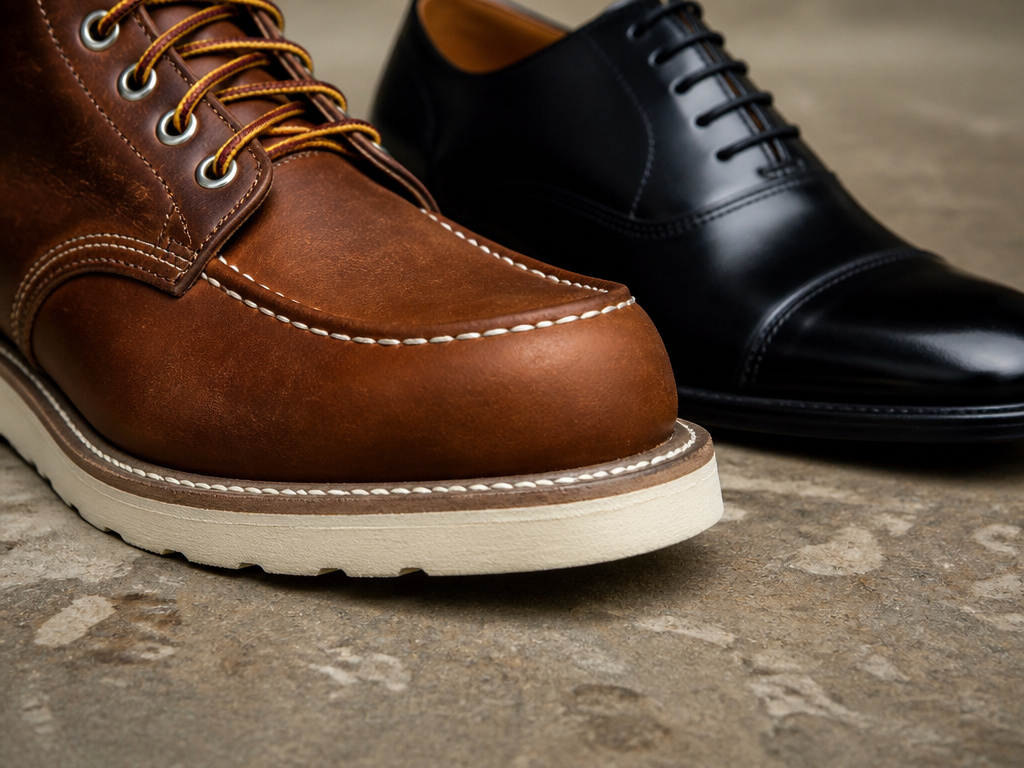
This boot isn’t for every job or every foot. Its design targets specific use cases.
Choose moc toe boots if you:
- Work on hard, flat surfaces: Warehouse workers, factory employees, shop teachers, and retail staff. The wedge sole is made for concrete and tile.
- Need a roomy toe box: If your feet swell during the day or you just prefer a less restrictive fit up front.
- Want casual, versatile style: They pair effortlessly with jeans and have a heritage look that works off the jobsite.
- Are in a moderate-risk environment: For general construction, painting, or landscaping where a soft toe is acceptable, the flexibility is a real asset.
Avoid moc toe boots if you:
- Require a safety toe: Most are soft toe by default. While some models have safety toe options, the classic style does not.
- Have narrow feet or need arch support: The fit can be sloppy in the heel and midfoot, and the arch is typically flat.
- Work in deep mud or need aggressive traction: The flat wedge sole lacks the deep lug pattern needed for serious grip in soft terrain.
- Prioritize a sleek, formal look: The bulky toe and casual sole make them a poor choice for dressier settings.
For those in the first group, a well-made moc toe becomes a trusted tool. It’s the boot you grab for a long day on the floor, knowing your knees and back will thank you later. For everyone looking for durable, everyday men’s leather boots, this style is a cornerstone of the category.
The Care and Feeding Schedule
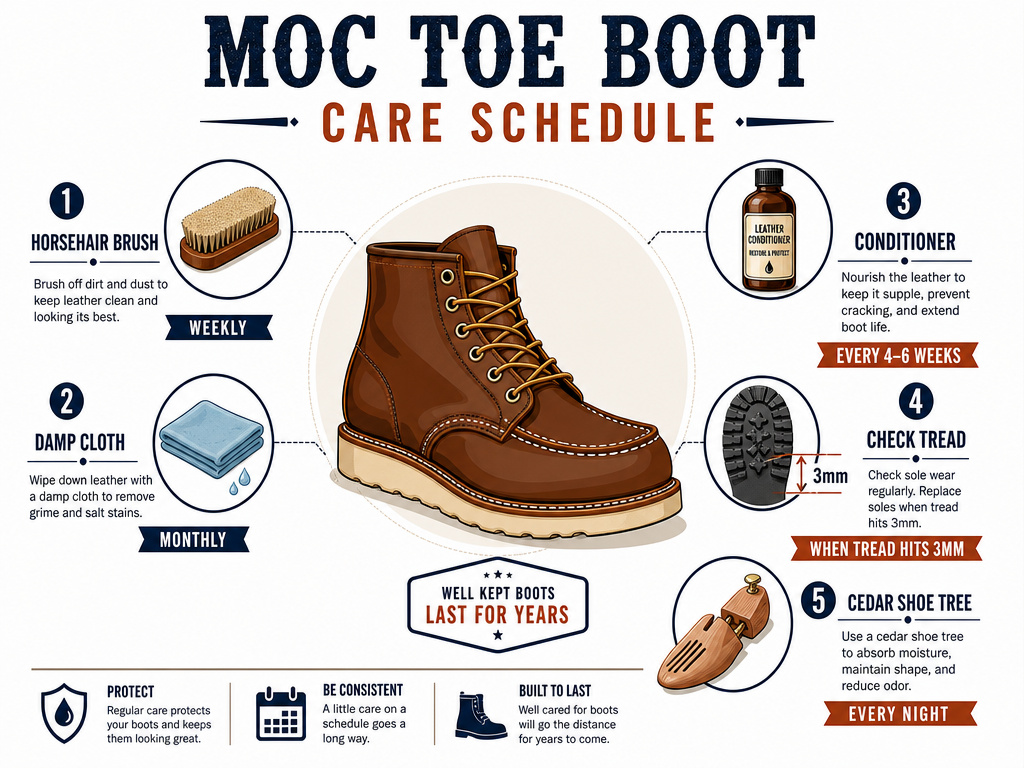
Leather is a skin. It dries out from exposure to salt, sun, and your own sweat. Neglect it, and it cracks. Care for it, and it lasts for decades. Here’s a straightforward maintenance routine.
Weekly (5 minutes): Brush off loose dirt with a horsehair brush. It prevents grit from grinding into the leather and acting as sandpaper.
Monthly (10 minutes): Use a damp cloth to wipe away grime. Never submerge them or use a washing machine, it strips natural oils and can cause the layers to separate.
Every 4-6 Weeks (15 minutes): This is the critical step. Apply a thin coat of conditioner. For maximum water resistance, use a product like mink oil. To maintain suppleness without darkening the leather, a neutral leather cream is better. Work it in with your fingers, let it absorb for an hour, then buff off the excess. This replenishes the oils that evaporate over time.
When Tread Hits 3mm: That’s your signal for a resole. Don’t wait until the leather midsole is exposed. A timely resole at a cobbler like B. Nelson costs less than a new pair of budget boots and gives your broken-in uppers another several years of life.
Every Night: Use cedar shoe trees. They absorb moisture from your sweat, help the boot retain its shape, and prevent the toe box from collapsing. It’s the single easiest thing you can do to extend their lifespan.
Your care kit doesn’t need to be fancy. A basic boot care kit with a brush, cloth, and a quality leather conditioner is all you need. Skip the silicone-based sprays and miracle coatings. They often sit on top of the leather, blocking the pores and preventing future conditioning from penetrating.
Moc Toe vs. Plain Toe: The Real Differences
This is the choice that stumps most people. It’s not about which is objectively better, but which is better for you.
Moc Toe Boots are the specialized tool. The U-shaped seam and typically roomier build offer more flexibility and accommodate foot swelling. They come with that comfort-focused wedge sole and project a rugged, heritage aesthetic. The break-in can be easier due to softer leathers, but the flat arch is a common compromise. As the CGAA moc toe boot guide notes, this style prioritizes natural foot movement and a relaxed look.
Plain Toe Boots are the versatile multi-tool. Made from a single piece of leather over the toe, they have a sleeker, lower-profile silhouette. This often allows for a more precise, secure fit through the midfoot. They can be dressed up more easily and are available with a much wider variety of sole types, from dress leather to aggressive lug patterns. The break-in might be firmer, but the arch support is often better by default.
Think of it this way: the moc toe is your favorite broken-in work jacket, functional, comfortable, and full of character. The plain toe is your tailored field jacket, cleaner, more adaptable, and ready for a broader range of situations. Your choice in leather boot styles should start with where you’ll wear them most.
Frequently Asked Questions
Are moc toe boots actually more comfortable than plain toe boots?
Not necessarily. The comfort primarily comes from the soft, cushioning wedge sole and flexible leather upper commonly paired with the style, not the toe seam itself. The two-piece construction can sometimes create a narrower fit across the toes, so comfort depends heavily on your individual foot shape and the specific boot’s last.
Can moc toe boots be resoled?
Yes, most high-quality moc toe boots are built with a Goodyear welt or stitchdown construction, which allows for multiple resoles. The separate toe panel is not an obstacle to a professional cobbler replacing the outsole, making them a durable, long-term investment.
What kind of outfits do moc toe boots work with?
Their versatile heritage makes them suitable for both workwear and casual styles. They pair naturally with denim jeans, chinos, and flannel shirts for a rugged, everyday look. Their classic profile also allows them to be dressed up slightly with a chore coat or field jacket.
Why do some moc toe boots have a white wedge sole?
The iconic crepe or white wedge sole is a historical feature designed for comfort on hard, flat surfaces like concrete floors. It provides significant cushioning and a wide, stable base, which is why it remains popular for jobs requiring long periods of standing and walking indoors.
Before You Go
Moc toe boots are a commitment to a specific kind of comfort and style. They reward a hands-on owner who doesn’t mind a two-week break-in and a regular conditioning ritual. Don’t buy them for the stitch alone. Buy them for the wedge sole that saves your knees, for the Goodyear welt that promises a decade of wear, and for the patina that tells your story.
If your daily life involves hard floors and you value toe room over a sleek profile, start your search with the classics from Red Wing or Thorogood. Try them on in the afternoon when your feet are at their largest. And budget for a pair of cedar shoe trees on day one. That’s the practical foundation for a boot that isn’t just purchased, but partnered with.
