
How to Soften a Leather Belt Safely With Oils and Conditioners
This post contains affiliate links. As an Amazon Associate, we earn from qualifying purchases.
This post contains affiliate links. As an Amazon Associate, we earn from qualifying purchases.
To soften a leather belt, you need to replenish its lost oils and gently flex its fibers. Apply a thin coat of a quality leather conditioner, neatsfoot, mink, or a beeswax-based balm, let it absorb for 15-30 minutes, then gently bend the belt by hand. Wear it daily; a standard 3-4mm full-grain belt softens noticeably in a week and conforms fully in 2-4 weeks. Never use water, heat, or petroleum jelly, they degrade the leather’s structure.
That timeline isn’t a guess. It’s the chemical and mechanical reality of how dense, full-grain leather reacts to proper care versus force. A belt that feels like a board on day one is a sign of quality, not a defect. The stiffness means the hide is intact and the tanning process has set the protein fibers tight, exactly what gives it a decade of life.
What follows is the safe, two-part process: the right products applied the right way, and the patience to let your body do the final work. We’ll also dismantle the popular “quick fixes” that permanently damage leather, so you can spot bad advice before it costs you a good belt.
Key Takeaways
- Stiffness is a feature of quality full-grain leather. A belt that’s soft out of the box often uses thin, corrected, or bonded leather. The dense fibers of a good belt need time and the right care to relax.
- Condition once, then wear for weeks. A single, light application of conditioner (neatsfoot, mink, or a beeswax-based balm) during the first week of wear is all you need. Re-condition only after 3-6 months. Over-conditioning makes leather weak and soggy.
- Water and heat are destructive shortcuts. Soaking a belt or using a hair dryer might seem to soften it temporarily, but both methods force moisture out too fast, causing the leather fibers to shrink, harden, and crack.
- Petroleum-based products clog and degrade leather. Avoid petroleum jelly and mineral oil. They sit on the surface, attract dirt, and break down the leather’s natural finish over time.
- Store it curved, not folded. When not wearing it, hang your belt on a hook or drape it over a chair back. This maintains a gentle curve in the fibers, preventing sharp creases and helping it hold its broken-in shape.
Why a New Leather Belt Feels Stiff
It’s not poor craftsmanship. It’s physics and chemistry. High-quality leather starts stiff because the tanning process permanently alters the hide’s protein structure to prevent decomposition. This also leaves the fibers compact. Full-grain leather, the top layer of the hide with all its natural grain intact, is especially dense. That density is what allows it to develop a rich patina and last for 15 years instead of 15 months.
Cheaper belts often feel softer immediately because they’re made from corrected-grain leather (sanded down to hide imperfections) or bonded leather (shredded fibers glued together). They’re pre-softened because they’re weaker. Think of it like the difference between a solid oak board and particleboard. One is hard and will last; the other is already compliant.
The tanning process permanently alters the protein structure of skin, making it more durable and less susceptible to decomposition. This necessary chemical change also leaves the leather fibers firm and set, which is why a quality belt requires a break-in period.
The Safe Method: Flex, Condition, and Wear
This isn’t a one-step trick. It’s a sequence that works with the leather’s biology. Rushing any part of it leads to a limp, damaged, or cracked belt.
Start by gently flexing the entire length of the belt in your hands for a minute or two. Don’t fold it sharply or try to roll it into a coil. You’re just encouraging the tight fibers to start loosening up. Pay extra attention to the section that will sit at the small of your back, that area gets the most stress.
Next, apply a thin coat of leather conditioner. Use a soft, clean cloth and rub it in along the grain. “Thin” is the operative word. You should not see a glossy, wet layer sitting on top. The goal is for the conditioner to be absorbed, not to coat the surface. Let it sit for 15 to 30 minutes so the oils can penetrate.
After the conditioner has absorbed, buff off any faint residue with a dry part of the cloth. Now, put the belt on. The real break-in happens on your body. Your body heat warms the newly conditioned leather, and your daily movement continues to flex the fibers. A standard full-grain belt will feel noticeably more flexible after the first week of daily wear. It will be comfortable by week two, and fully conformed to your shape by week four.
Where this goes sideways: Applying a second coat of conditioner a few days later because the belt “still feels a bit stiff.” This over-saturates the fibers. An over-conditioned belt loses its structural integrity, it will stretch out around the buckle holes and sag permanently. One light coat in the first week is plenty.
Conditioners That Actually Work (And One That Doesn’t)
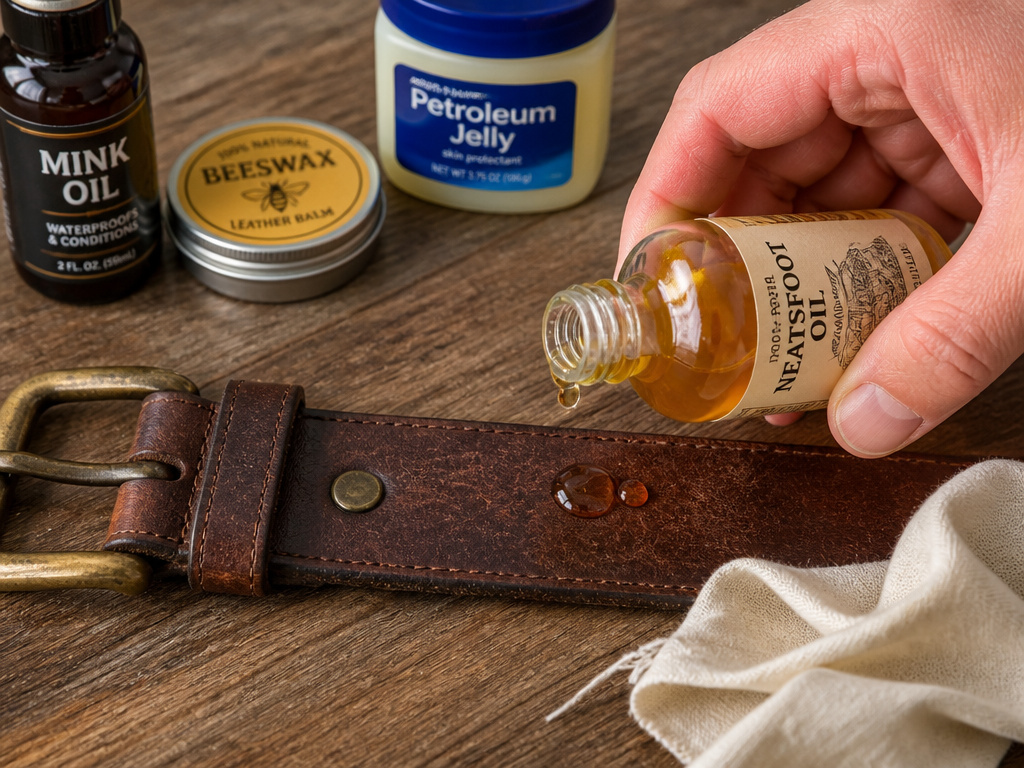
Not all oils are created equal. The best conditioners mimic the fats that were in the animal’s skin. The worst ones seal the leather like plastic wrap.
| Product | Best For | Effect | Risk If Misused |
|---|---|---|---|
| Neatsfoot Oil | Traditional tool belts, work boots, heavy harness leather. | Excellent penetration, restores flexibility, increases water resistance. | Significantly darkens leather. On a natural belt, two applications can turn honey color to deep chestnut. Can over-soften if applied too heavily. |
| Mink Oil | Boots, rugged belts, items needing weather protection. | Softens well, provides a good water-repellent barrier. | Darkens leather (2-3 shades). Can become gummy in warm weather if over-applied. |
| Beeswax-Based Balm (e.g., Obenauf’s LP) | All-purpose protection for belts, bags, and boots exposed to elements. | Conditions with oil while leaving a protective wax layer. | Can build up a cloudy residue if not buffed thoroughly. Less penetrating than pure oils. |
| Coconut or Jojoba Oil | A natural alternative for finished, non-porous leathers. | Light conditioning, mild softening. Easily accessible. | Can go rancid over time. Offers no protective qualities. Apply very sparingly. |
| Petroleum Jelly / Mineral Oil | None. Avoid. | Clogs pores, creates a surface film. | Attracts dirt, breaks down leather’s finish, prevents proper conditioning. Leads to premature drying and cracking underneath. |
I keep a bottle of pure neatsfoot oil for my own heavy-duty gear. The darkening is predictable, which is fine for a brown work belt but a disaster for a light-tan bag. For a dress belt, a dedicated, neutral leather conditioner from a brand like Lexol or Bickmore is a safer bet, it conditions without drastic color change.
The Destructive Shortcuts You Must Avoid
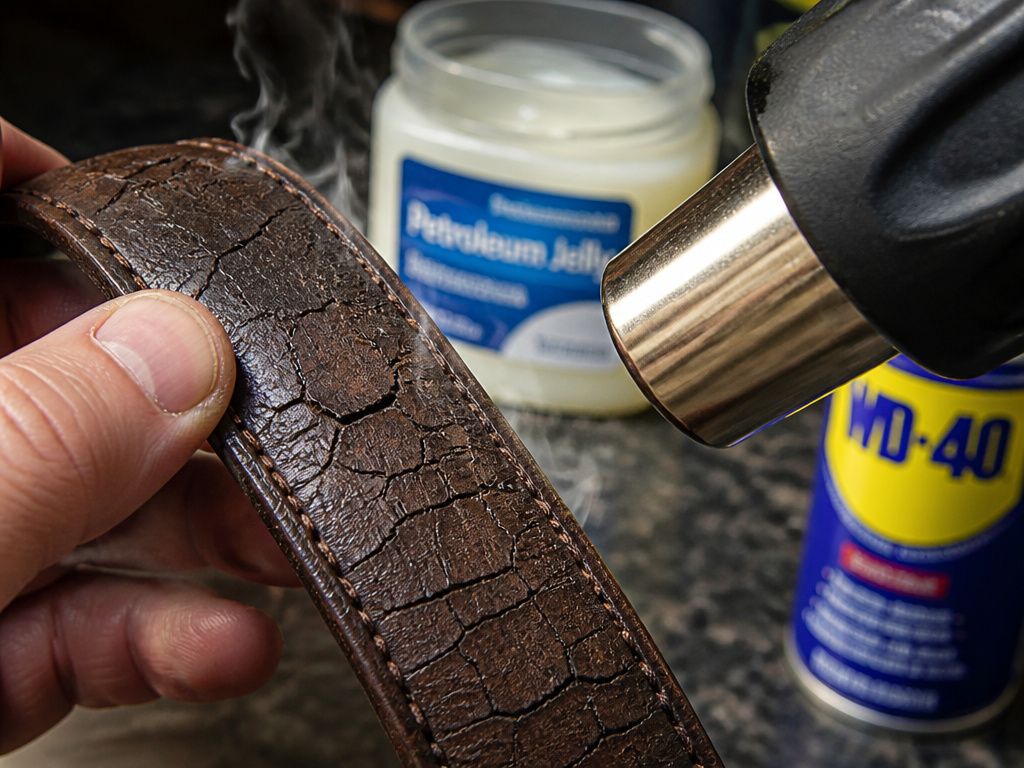
The internet is full of belt-breaking “hacks” that are shortcuts to ruin. They work on the principle of trauma, not care.
Soaking in Water. This might make the belt pliable while it’s wet. But as it dries, especially if you speed-dry it, the water evaporating pulls the leather’s natural oils out with it. The fibers constrict and harden, leaving the belt stiffer and more brittle than before. You might also get permanent water stains and warping.
Applying Heat. A hair dryer, radiator, or afternoon in a hot car window seems like a fast way to “open the pores.” In reality, you’re baking the moisture out of the leather. The fibers shrink and can become so brittle they micro-crack. This damage is often invisible until the belt flexes and a crack opens up.
Using Petroleum Jelly or WD-40. These are petroleum distillates. They don’t absorb; they coat. They clog the leather’s pores, which stops it from breathing and accepting proper conditioner later. They also break down the finish and attract every speck of dust. A belt treated with petroleum jelly will look greasy and dirty within days and will dry out underneath that greasy layer.
Common mistake: Using a hair dryer to speed up drying after a conditioner application. The heat drives the oils away from the surface too quickly, preventing deep absorption. The belt feels dry on the outside but stiff inside, and the surface may develop a waxy, sealed feel.
How Long It Really Takes: A Realistic Timeline
Your belt won’t be broken in by tomorrow. Managing expectations is half the battle. The timeline depends entirely on the leather’s thickness and density.
- Standard Full-Grain (3-4mm thick): This is your typical dress or casual belt. With daily wear and the single conditioning described, you’ll feel a noticeable difference in 7-10 days. It should be fully comfortable and molded by the end of week four.
- Heavy-Duty Leathers (5-6mm thick): Think Hermann Oak harness leather, English bridle, or a weightlifting belt. This dense material is built to take abuse. Expect the break-in to take 4 to 8 weeks of consistent wear. It’s a slower process, but the result is a belt that will outlive you.
- The Unusual Case: If a standard full-grain belt is still rigid after 8 weeks of daily wear and two light conditionings, there might be an issue with the tannage or it’s an unusually dense piece. Contacting the brand is a reasonable step at that point.
Storage and Environment: The Silent Factors
What you do when you’re not wearing the belt matters almost as much as when you are.
Never store a leather belt tightly rolled or folded in a drawer. The sharp crease becomes a permanent stress point and a weak spot. Instead, hang it on a belt hanger or simply drape it over a chair back or a hook. This lets it rest in a natural, gentle curve that supports the break-in process.
Environment matters too. Dry winter air from heating or an arid climate will pull moisture from leather, making it stiff. If your home is very dry, conditioning every 3-4 months might be necessary instead of every 6. Conversely, storing leather in a sealed plastic bag traps moisture and can lead to mold. Use a breathable cloth bag, like a cotton pillowcase, for long-term storage.
When Softening Won’t Work: Signs It’s Too Late
Sometimes, leather is past the point of home repair. Conditioning can’t fix structural failure.
If the belt has deep, alligator-like cracks that you can feel on both sides, the leather’s integrity is gone. It’s not just dry; it’s fractured. Similarly, if the leather feels thin, papery, or spongy, it has been severely over-dried or damaged by chemicals. In both cases, the belt is a candidate for replacement, not restoration. Trying to soften it will only cause it to tear.
Frequently Asked Questions
Can I use olive oil to soften a leather belt?
You can, but you shouldn’t. Olive oil is a vegetable oil that can go rancid over time. It will also darken the leather significantly and may leave a sticky residue. For a similar natural option, jojoba oil is more stable and a better choice.
Will softening my belt make it stretch out?
Proper softening with conditioner should not cause excessive stretching. The leather becomes more flexible, not structurally weaker. Stretching is usually caused by over-conditioning (saturating the fibers) or from the mechanical stress of a buckle that’s too tight. If you need to adjust the length, it’s better to punch a new hole in your leather belt than to rely on stretch.
How often should I condition my belt after it’s broken in?
For a belt in regular rotation, a light conditioning every 3 to 6 months is sufficient. If you live in a very dry climate or notice the leather starting to look dull and feel dry, move to the 3-month end of that range. Always apply conditioner sparingly.
What’s the best way to clean a leather belt before softening it?
Use a damp cloth with a drop of mild soap (like castile soap) to wipe off surface dirt. Let it dry completely before applying any conditioner. Trying to condition over dirt just grinds it into the grain.
My belt is very old and stiff. Is the process different?
The process is the same, flex, condition, wear, but proceed with more caution. Old, dry leather is fragile. Be extra gentle when flexing, use even less conditioner, and give it more time to absorb. Test any product on a small, hidden area first.
The Bottom Line
Softening a leather belt is a test of patience, not skill. The safe method is straightforward: one light conditioning, daily wear, and curved storage. Your body heat and movement are the most effective tools you have.
Resist the tempting hacks. Water, heat, and petroleum jelly are why so many people think leather is a fussy material. It’s not. It’s durable, but it responds poorly to force. A good belt from a maker like Orion Leather Company or Hanks Belts is an investment. Breaking it in correctly is how you ensure it becomes more comfortable with each year, not less.
Start by finding the right leather belt for your needs. Then, follow the steps here. In a month, you’ll have a belt that fits like it was made for you, because in all the ways that matter, it now is.
