
How to Care for Leather Furniture to Keep It Looking New
This post contains affiliate links. As an Amazon Associate, we earn from qualifying purchases.
This post contains affiliate links. As an Amazon Associate, we earn from qualifying purchases.
Caring for leather furniture requires matching three things: your leather type, the correct cleaning schedule, and the right distance from heat. Aniline leathers need gentle dusting and a specific pH-neutral cleaner, while protected leathers tolerate mild soap. Ignoring the printed tag’s care instructions, especially heat-distance warnings, causes irreversible drying cracks within a year.
That distance-from-heat rule is printed for a reason. The IKEA guide states 40cm, and the Plush guide says 50cm. It’s not about avoiding a scorch mark; it’s about stopping the leather’s natural oils from baking out over months, leaving the fibers brittle. The leather will tell you what it needs, starting with a dull surface and a slight stiffness in the cushions.
What follows: a breakdown of daily, weekly, and quarterly tasks pulled straight from manufacturer maintenance PDFs, the one product category you should avoid entirely, and how to spot the early signs that your routine isn’t working.
Key Takeaways
- Identify your leather type first. Using a conditioner meant for protected leather on an aniline sofa will create a sticky, blotchy mess.
- Keep all furniture at least 40cm (12 inches) from radiators, fireplaces, and heating vents. This is the single most effective preventative measure against drying and cracking.
- Dust weekly with a feather duster or vacuum with a soft brush attachment. For heavily padded seats, do this twice a week to prevent abrasive grit from embedding.
- Never use saddle soap, polish, or wax on modern furniture leathers. These products are for saddles and heavy work boots and will clog the pores of your sofa.
- Inspect and condition only when the leather feels dry to the touch, not on a rigid calendar schedule. Over-conditioning is as damaging as neglect.
What Type of Leather Do You Have?
The care instructions on the tag aren’t suggestions, they’re the manual for the material sitting in your living room. Using the wrong cleaner is like using a firehose to water a bonsai tree. Let’s be clear about one thing: you need to know what you’re working with before you touch a bottle.
Start with the label sewn into a cushion seam. If it’s gone, run this simple test. Drip a single drop of water on an inconspicuous spot. If it beads up and sits on the surface, you have a protected or pigmented leather. If the water is absorbed quickly and darkens the spot, you’re dealing with a more delicate aniline or semi-aniline leather. That absorption test dictates everything that follows.
Where this goes sideways: Treating all leather the same. An aniline leather conditioned with a wax-heavy product will develop a cloudy, tacky film that attracts dust and cannot be fully removed without professional stripping.
Here’s a quick reference to decode what you own and its care personality:
| Leather Type | Key Identifier | Care Personality | Common In |
|---|---|---|---|
| Aniline | Rich, natural grain; water absorbs instantly. | High-maintenance aristocrat. Needs pH-neutral cleaners only. | High-end sofas, designer chairs. |
| Semi-Aniline | Slight surface pigment, more uniform color than aniline. | Balanced. Handles mild cleaners, still needs careful conditioning. | Mid-range to premium furniture. |
| Protected (Pigmented) | Smooth, consistent finish; water beads on top. | Durable workhorse. Tolerates mild soap, easier to clean. | Most family-room sofas, office furniture. |
| Bonded Leather | Perfectly uniform surface, often has a fabric backing. | Short-lived budget option. Clean gently, expect flaking in 2-5 years. | Inexpensive furniture sets. |
If your test points to aniline, your cleaner and conditioner choices just got very specific. If it’s protected leather, you have more flexibility. This isn’t a marketing distinction, it’s a verification of the tanning and finishing process. Your next step depends entirely on this box.
The Daily & Weekly Basics: Dust is the Enemy
Leather doesn’t need daily polishing. It needs daily protection from its true enemy: dust and grit. A dust particle isn’t just dirt; it’s a tiny, sharp abrasive. When someone sits down, that grit grinds into the leather’s surface under their weight. Over a year, that gentle abrasion dulls the finish on protected leathers and actually microscratches aniline ones.
Your first-line tool isn’t a fancy potion. It’s a feather duster. A quick, light pass every other day takes twenty seconds and lifts the loose particles before they settle. For a more thorough weekly clean, use your vacuum’s soft brush attachment on the lowest suction setting. Glide it over the surfaces, following the grain. This isn’t about deep cleaning, it’s about removing the abrasive layer before it becomes embedded.
For heavily padded seats and cushions, the Roche Bobois guide recommends increasing this to twice a week. The deep crevices trap more grit, and the constant compression works it into the material. The sound you’re listening for is silence, the soft brush should whisper across the surface. Any scratching or pulling noise means you’re using the wrong attachment or too much pressure.
Skip this if: You’re tempted to use a damp cloth for weekly dusting. Adding moisture without a cleaning agent just moves dirt around and can, over time, leave a filmy residue. Dry dusting is for dust; damp cleaning is for scheduled maintenance.
The Quarterly Cleaning & Conditioning Routine
This is where most guides get vague. They say “clean and condition occasionally.” Here’s the practical takeaway: for most households, a deep clean and conditioning every three to four months matches the natural cycle of oil depletion in the leather. The Plush guide for Performance leather explicitly calls for care 3-4 times a year to maintain its warranty.
Let me share what I’ve learned from manufacturer guides. The Fritz Hansen method is a classic: dissolve 2-3 tablespoons of pure soap flakes (like Castile) in one liter of hot water, whip it to a foam, apply only the foam with a soft cloth, let it dry, and buff gently. This works because the foam carries the cleaning agents without saturating the leather.
For protected leathers, a solution of lukewarm water and a drop of mild dish soap (like Dawn) is acceptable per Haworth’s standards. Apply with a barely-damp microfiber cloth, wipe with a clean damp cloth to rinse, and dry immediately with a soft, dry cloth.
The critical step everyone rushes: Drying. After cleaning, the leather must air-dry completely before you even think about conditioner. This takes a few hours in a well-ventilated room. Applying conditioner to damp leather traps moisture underneath, which can lead to mildew or a splotchy finish.
Once dry, apply a conditioner like Leather Honey or Bickmore Bick 4 for aniline leathers, or a more robust product like Weiman Leather Conditioner for protected types. Use a fraction of the amount you think you need, a coin-sized dab for an entire cushion. Rub it in thoroughly with a clean, lint-free cloth, following the grain. Let it absorb for 30 minutes, then buff off any excess with a dry cloth. The leather should feel nourished, not greasy.
What Not to Use: The Banned Products List
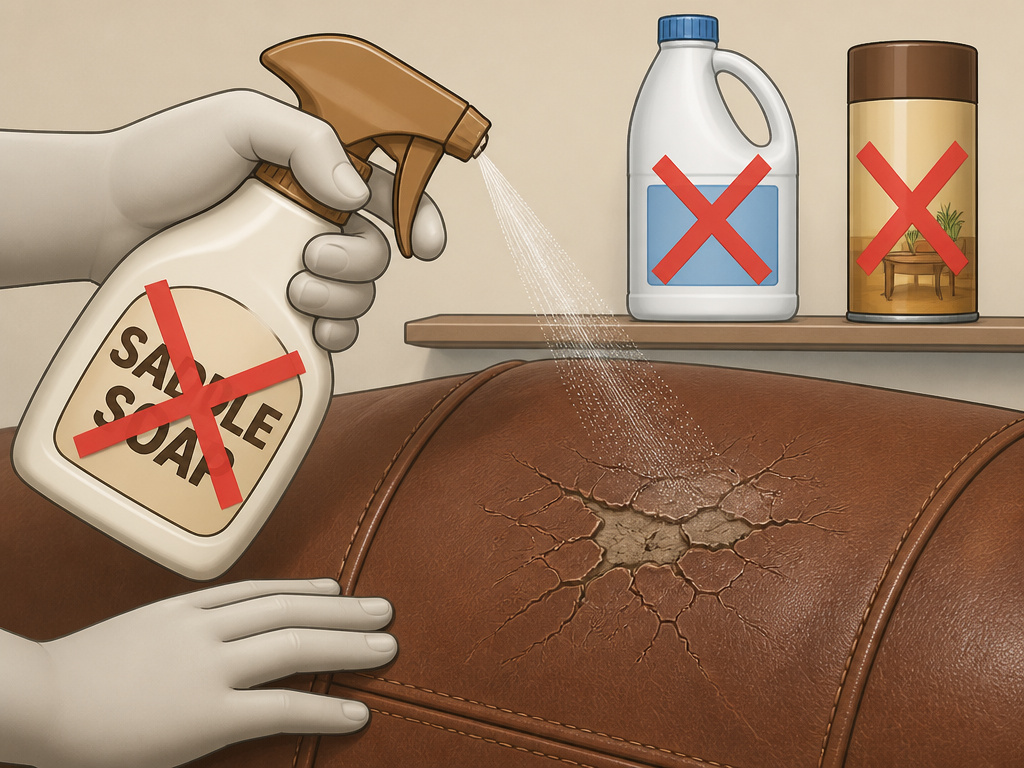
Your kitchen cabinet and garage are full of products that will ruin leather furniture. This isn’t scare talk. It’s the predictable outcome of chemistry. Here’s a straightforward guide to what to avoid and why.
- Saddle Soap, Polish, or Wax: The Haworth guide explicitly says “do not use.” These are designed for thick, rugged saddle leather that needs a waterproof seal. On furniture, they clog the pores, create a sticky film that attracts dirt, and prevent the leather from breathing. The finish will eventually crack and peel.
- Vinegar, Bleach, Ammonia, or Alcohol-Based Cleaners: These are far too acidic or alkaline. They strip the natural oils and dyes instantly, leading to permanent discoloration and a dried-out, cracked surface.
- Silicone-Based “Shine” Sprays: They create an artificial gloss that sits on top and, over time, can actually degrade the underlying finish. The leather loses its natural patina and feels plasticine.
- Furniture Polish (Pledge, etc.): These are for wood. They contain solvents and oils that can soften and damage leather finishes, leaving a greasy, smeary residue.
- “All-Purpose” Cleaners: Their pH is unknown and often far too harsh. They can bleach color and leave a dull, hazy film.
I abandoned using a rotary cutter for leather because it lacked control on curves. The parallel here is using a product designed for a different job, like saddle soap on a sofa. The specific failure is assuming “leather is leather.” It’s not. The wrong product doesn’t just clean poorly; it actively dismantles the material’s integrity. Stick to products formulated for the specific type of furniture leather you own.
Solving Common Problems & When to Call a Pro
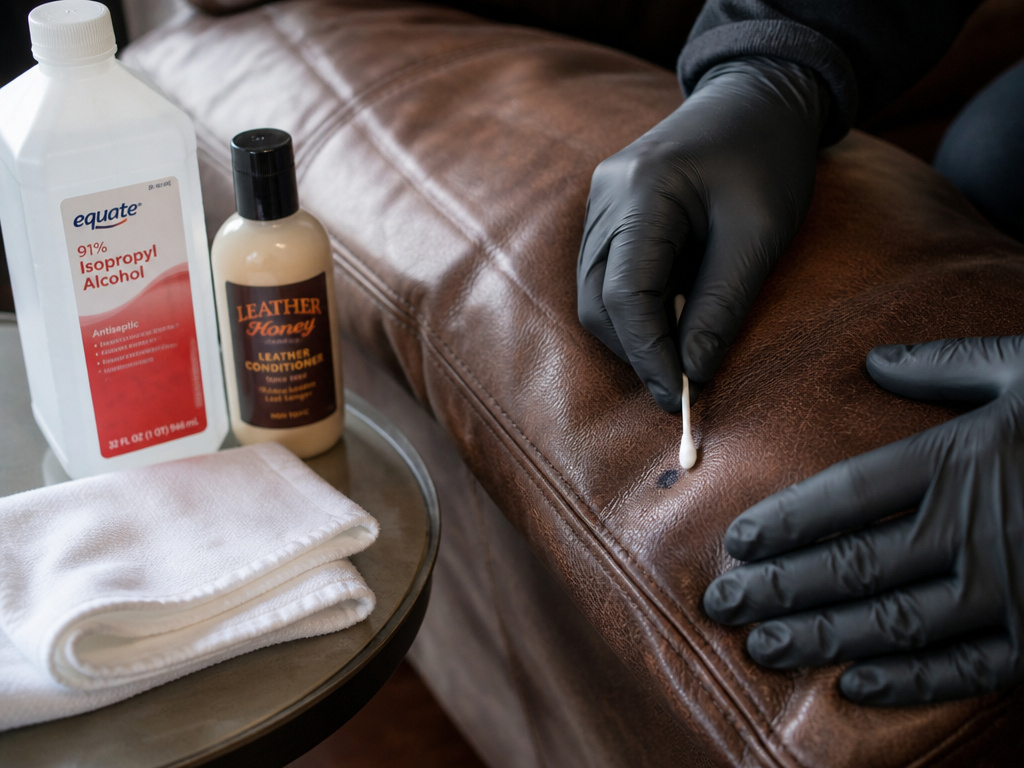
Even with perfect care, accidents happen. The leather will tell you what it needs, often through visual cues. Here’s how to read them and when to stop DIY.
The leather feels stiff or looks dull.
This is the first sign of dryness, usually from heat exposure or under-conditioning. Perform a deep clean and conditioning session as outlined above. If the stiffness remains after 48 hours, it may be too far gone for home treatment and needs a professional’s heavier conditioning products.
There’s a small ink or oil stain.
For ink, dab (never rub) with a cotton swab dipped in 91% isopropyl alcohol on a hidden area first to test. If it doesn’t damage the color, apply gently to the stain. For oil, sprinkle baking soda or cornstarch to absorb it overnight, then vacuum. For both, follow with a full clean and condition of the entire panel to avoid a spotty look.
Cracks are appearing in high-wear areas (armrests, seat edges).
This is advanced dryness and wear. You can gently massage a small amount of conditioner into the cracks to make them less noticeable and prevent further splitting, but you cannot reverse it. This is when you consider a complete leather restoration guide from LeatherGenesis.com/how-to-restore-leather-furniture/).
The color has transferred from jeans or a new rug.
This is dye transfer, common on lighter aniline leathers. Use a dedicated leather dye transfer cleaner like the one from Angelus. Regular cleaners often set the dye further. If it doesn’t budge, professional color-matching and re-dyeing is the only fix.
Common mistake: Scrubbing a stain vigorously. This grinds the contaminant deeper and can fray the leather’s surface grain. Always blot, lift, and dab. If a stain doesn’t lift after two gentle attempts with the correct cleaner, call a professional. Your next attempt may set it permanently.
Storing Leather Furniture (Seasonal or Long-Term)
The single most damaging place for a leather sofa is a hot, dry attic or a damp basement. Consistent, moderate humidity is key. If you’re storing a piece seasonally or during a move, follow this checklist.
First, give it a final complete guide to cleaning leather and conditioning. Never store leather dirty or dry. Second, never stack items on it. Stacking creates permanent pressure marks and deep creases that will not relax. Use breathable cotton sofa covers, not plastic, which traps moisture and leads to mildew. Finally, place cedar blocks or shoe trees inside the cushions. They absorb ambient moisture, maintain shape, and keep the interior fresh.
If you’re just rearranging and want to protect leather furniture from scratches during the move, lift the piece, never drag it. Felt pads on the feet are a must. A dragged sofa doesn’t just scratch floors; the stress can tear the leather at the seams.
Frequently Asked Questions
Can I use baby wipes on leather furniture?
No. Most baby wipes contain alcohol, fragrance, and other chemicals that can dry out and degrade leather over time. They leave a residue that attracts dirt. Use a microfiber cloth dampened with water or a dedicated leather cleaner.
How do I get pet hair off my leather sofa?
Slightly damp rubber glove (like for washing dishes) is the most effective tool. Run your gloved hand over the surface; the hair will ball up and cling to the rubber. A vacuum with a soft brush attachment also works well.
Is sunlight bad for leather furniture?
Yes, direct sunlight is a primary cause of fading and drying. It accelerates the breakdown of dyes and natural oils. Use blinds, curtains, or UV-filtering window film to protect your furniture. Rotate cushions periodically if one side gets more sun.
Can I fix a deep scratch in my leather sofa?
Minor surface scratches can often be minimized by gently rubbing with your fingertip (the natural oils can help) or applying a small amount of conditioner. Deep scratches that expose the lighter-colored underside require a leather filler and colorant, which is best left to professionals.
Why does my new leather sofa feel sticky?
This is often a residue from the factory-applied protectant or from an improperly applied aftermarket product. Wipe it down thoroughly with a barely-damp cloth to remove surface residue, then buff dry. If it persists, use a leather cleaner designed to remove silicone or wax buildup.
Before You Go
One rule most maintenance guides skip: if your leather has gone more than a year without any care and feels stiff, don’t try to fix it with one heavy conditioning session. You’ll likely over-apply and create a greasy mess. Start with a gentle clean, then apply a very thin layer of conditioner. Wait a full week, assess, and repeat if needed. It’s like making a roux, low, patient heat and the right fat build a stable foundation without gumminess.
Your default pick for a family room is a protected leather sofa. It handles the weekly dusting and quarterly cleanings with mild soap without fuss. For a formal sitting room where you want a leather that ages with character, aniline is the choice, just know its high-maintenance personality. The care schedule isn’t a chore; it’s the ritual that keeps the material alive for decades. Everything above assumes a leather that’s still viable, a truly desiccated and cracked piece is faster to replace than to revive.
