
The Best Ways to Protect Leather Furniture from Scratches
This post contains affiliate links. As an Amazon Associate, we earn from qualifying purchases.
This post contains affiliate links. As an Amazon Associate, we earn from qualifying purchases.
You protect leather furniture from scratches by first identifying the leather’s finish, aniline, semi-aniline, or protected. Aniline, being uncoated, demands the most diligence: keep it away from jeans, sharp objects, pets, and sun. Protected leather offers more resistance but still requires strategic placement and physical barriers. The primary tactics are environmental control, physical barriers (covers, pads), and regular, gentle cleaning. Products like dedicated leather protectants can add a shield, but they must match the leather type.
That classification isn’t just marketing. It dictates the threat model. Think of it like house paint: aniline is a raw plaster wall, protected leather is that same wall with three coats of washable eggshell. One shows every fingerprint and water spot; the other wipes clean. If you don’t know which you have, you’ll use the wrong defense.
What follows: the three-part framework to match your leather’s vulnerabilities. This guide explains how to read a manufacturer’s cleaning code, the exact spacing rules from heat sources, the physical barriers that actually work, and the one product category where most people over-spend for zero gain. You’ll also learn when a scratch is just part of the patina and when it’s a sign you need to change tactics.
Key Takeaways
- Your leather’s finish (Aniline, Semi-Aniline, Protected) dictates its scratch resistance and care protocol. Check the manufacturer’s tag or sample book.
- Maintain at least two feet of space between leather furniture and any heating source (vents, radiators, fireplaces) to prevent drying and cracking.
- Denim, especially raw or dark-wash jeans, can permanently transfer dye onto light-colored aniline leather upon regular contact.
- Physical barriers, felt pads on adjacent furniture, soft throws on high-traffic seating areas, and fitted protective covers, are more reliable than any chemical spray.
- Never use baking soda, saddle soap, or generic “cleaners” on fine leather furniture; they can set stains or strip natural oils.
The Leather Type Is Your First Line of Defense
You don’t fight a grease fire with water. You don’t defend an aniline leather sofa the same way you defend a protected one. The leather finish is your battle plan.
Leather is typically graded into three categories: Aniline, Semi-Aniline, and Protected. Aniline leather is dyed but receives no protective topcoat, leaving the natural grain fully exposed. It feels incredible but stains easily and shows every mark. Semi-Aniline gets a light protective coating, offering a compromise between natural feel and stain resistance. Protected leather (sometimes called “corrected” or “pigmented”) has a durable polymer or wax coating applied, making it the most resistant to spills and scuffs. Lexington Furniture explicitly marks its samples with ‘A’, ‘SA’, or ‘P’ for this reason.
Leather classification dictates care. Aniline leathers wear well but are susceptible to staining. Protected leathers are easy to clean. – This distinction, straight from manufacturer guidance, is your foundational rule.
So, the first step is identification. Check your furniture’s documentation or the sample tag. If that’s lost, do a spot test in an inconspicuous area with a drop of water. On aniline, the water will darken the spot and absorb slowly. On protected leather, it will bead up. This test changes everything.
Why does this matter for scratches? An uncoated surface is softer. A cat’s claw or a rivet on a jeans pocket can gouge it, not just scuff it. A coated surface resists that initial penetration. Your defense strategy scales with this vulnerability.
Environmental Control: Placement Is Protection
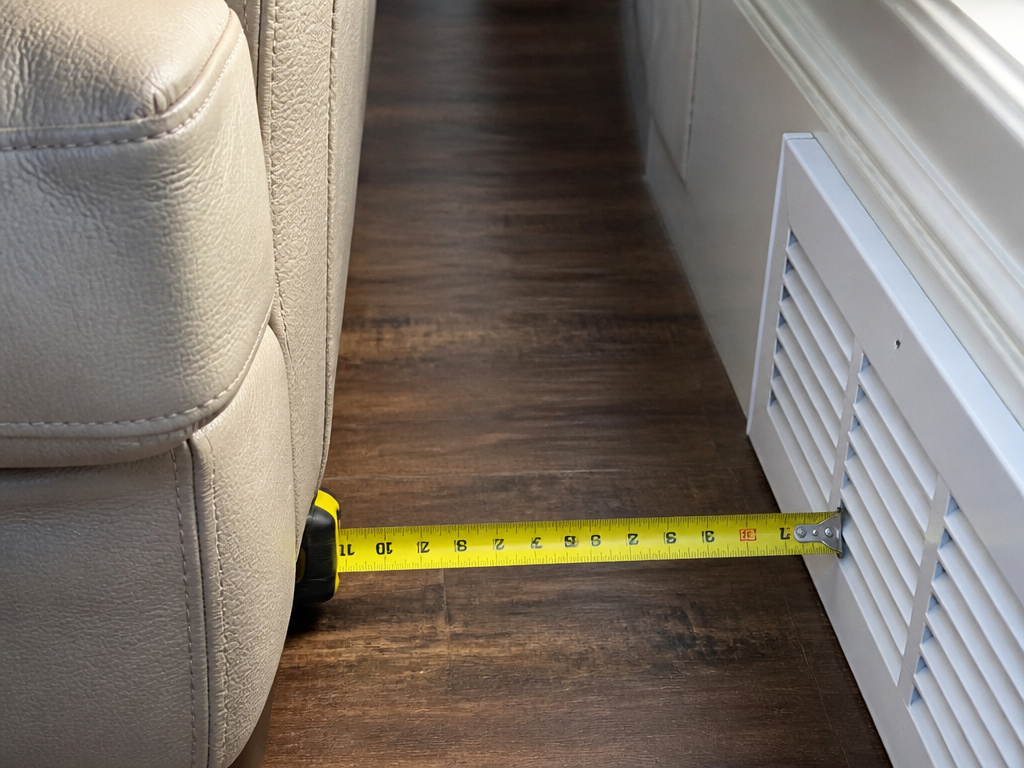 A sofa’s location decides its fate. This is less about decor and more about material science.
Heat is leather’s silent enemy. It doesn’t just fade color; it dries out the hide from the inside, making it brittle and prone to cracking at the slightest pressure. Lexington Furniture’s care guide states you should always maintain at least two feet of space between leather furniture and any heating source, such as vents or radiators. That’s not a suggestion. It’s a measurement that prevents the leather from drying out over time. A brittle leather armrest will crack under elbow pressure within a season if parked next to a floor vent.
Sunlight is the other agent. Direct exposure bleaches the dye and, like heat, accelerates moisture loss. The arm of the sofa that gets the afternoon sun will first fade, then stiffen. The solution isn’t just curtains, it’s placement. Roche Bobois advises keeping sofas away from “direct exposure to sun and moonlight, and away from bay windows.” Think of it like a museum piece; you control the light to preserve the material.
Now for a specific, odd-sounding hazard: jeans. Not all jeans, but many. The dye in dark denim, especially raw or unfinished types, can transfer onto leather with regular contact. Taskers Furniture Care notes that “certain non-colourfast clothing such as denim can stain light coloured leather.” This isn’t a spill you can blot. It’s a gradual, often permanent dye transfer that appears as a faint blue shadow on light beige or grey sections. The fix is behavioral: use a throw blanket on that favorite seating spot if denim is your daily uniform.
Proactive Barriers: Felt, Throws, and Smart Covers
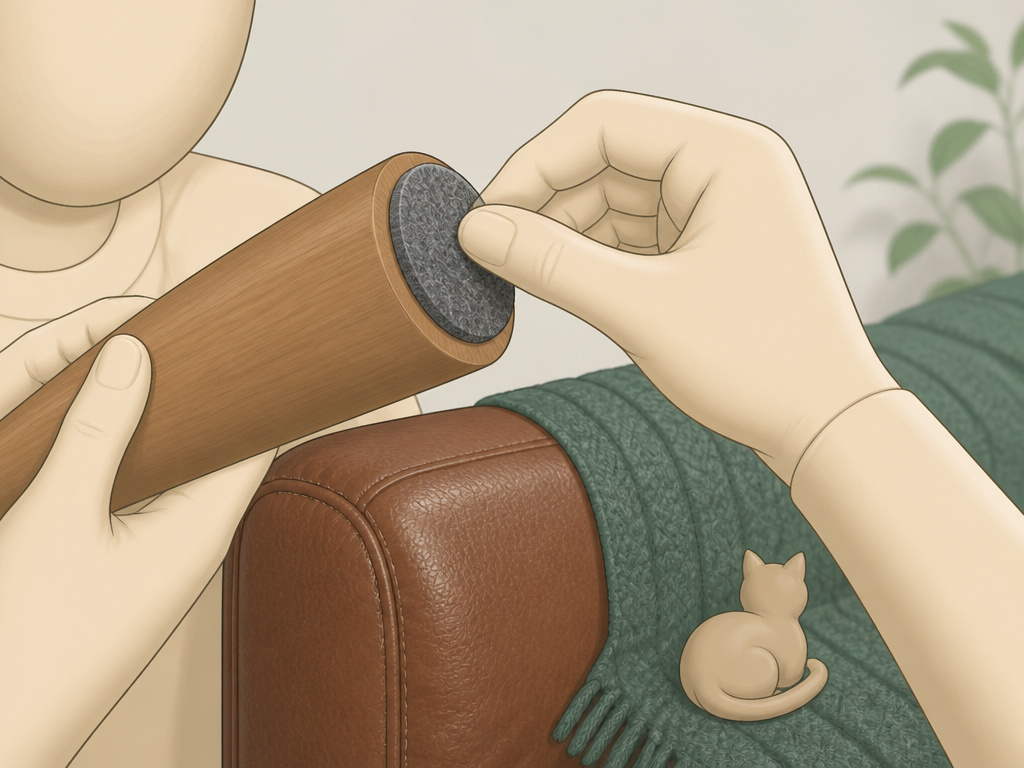 You can’t control every hazard, but you can intercept them. This is where physical barriers earn their keep.
Start with the points of contact. The coffee table that bumps the sofa’s front rail? Adhesive felt pads on the table’s underside are a ten-minute fix that stops years of abrasive nudges. The metal rivets on your jeans or a belt buckle? A soft throw blanket draped over the seat and arms is the simplest, most effective protect leather from cats strategy, and it works just as well against hardware.
For full coverage, especially with pets or active households, consider a dedicated barrier. A well-fitted protective slipcovers for leather furniture can take the brunt of daily wear. The key is breathability; you want a cotton or linen blend that doesn’t trap humidity against the leather. Avoid plastic or vinyl covers, they stick and can promote mildew.
| Barrier Type | Best For | What It Stops | Key Consideration |
|---|---|---|---|
| Adhesive Felt Pads | Table legs, lamp bases | Abrasion from wood/metal on leather | Use high-quality, thick felt that won’t compress flat. |
| Soft Throw Blankets | High-traffic seating areas | Denim dye transfer, rivets, pet claws | Natural fibers like wool or cotton; wash regularly. |
| Fitted Fabric Slipcovers | Households with pets/children | All-over protection from spills and scratches | Must be breathable and removed regularly for airing. |
| Leather-Friendly Cushions | Seat cushions (especially aniline) | Direct body wear, sweat, and friction | Ensure cushion covers are removable and washable. |
The goal isn’t to hide your furniture. It’s to install a sacrificial layer that you can replace or clean, preserving the irreplaceable hide beneath.
The Product Menu: What Works, What’s Hype
The market is full of promises in a bottle. Let’s be clear about one thing: no spray will make an aniline leather sofa immune to a determined cat scratch. But some products can help.
First, understand the categories: 1. Cleaners: For removing surface soil so abrasives don’t get ground in. Use only pH-balanced formulas meant for your leather type. Herman Miller’s guide has a firm rule: “Do not spot clean leather; clean the entire surface.” Spot-cleaning can leave a tide mark. 2. Conditioners: These replenish natural oils lost to heat and dry air, keeping the leather supple and less prone to cracking. A conditioned leather is more resilient. 3. Protectants: These are topical barriers, usually silicone or fluoropolymer-based, that cause liquids to bead up. They are most effective on protected leathers.
For a true protective layer on items that need it, I reach for a brand like Nikwax. For general furniture, a conditioner with a high lanolin content applied quarterly does more for long-term scratch resistance than a “protectant” spray ever will. It’s the difference between feeding your skin moisturizer versus coating yourself in plastic wrap. One supports the material; the other just sits on top.
Which leads to a common mistake: using baking soda as a deodorizer or scratch “buffer.” Here’s the practical takeaway: I advise against it as a lasting solution. The fine powder works its way into the grain and lining of cushions and is nearly impossible to remove completely. You trade a temporary freshness for a permanent, gritty residue that acts as an abrasive every time someone sits down.
When Scratches Happen: The Reality of Repair
Despite your best efforts, marks will appear. The leather will tell you what it needs. A shallow scuff on protected leather might vanish with a dab of the manufacturer’s recommended cream. A deep gouge in aniline leather is a different story.
For minor surface scratches, especially on pigmented or semi-aniline leather, a colored leather balm or filler stick can work wonders. The process is similar to filling a nail hole in wood: clean, apply, buff. Products like those in the Roche Bobois leather care kit are formulated for this.
For deeper scratches that have torn the surface, professional intervention is usually required. A leather technician can inject dye and binder into the wound and re-texturize the area. It’s a skilled job. Attempting a DIY repair with generic kits often makes the damage more visible, creating a shiny, stiff patch that clashes with the surrounding patina.
This is where your initial leather classification returns. A scratch on aniline leather becomes part of its story, a patina. On a protected leather sofa meant to look pristine, it’s a flaw to be corrected. Knowing the difference saves you from futile repair attempts. If you need to explore options, our guide on methods to remove leather couch scratches details the professional approaches.
Frequently Asked Questions
Can I use hairspray to stop cats from scratching leather?
No. This is an old wives’ tale. Hairspray is sticky, can damage the leather finish, and is ineffective as a deterrent. It also attracts dirt. Use a dedicated pet deterrent spray designed for furniture or, better yet, employ physical barriers and provide appealing scratching alternatives.
Will olive oil remove scratches from leather?
No. Do not use cooking oils on leather. Olive oil will go rancid, smell unpleasant, attract dust, and potentially degrade the leather’s fibers. It will not repair scratches. Use a product specifically formulated for leather conditioning or repair.
How often should I condition my leather to keep it scratch-resistant?
For general household furniture, conditioning two to four times a year is sufficient. Over-conditioning can saturate the leather and weaken its fibers. The leather will absorb what it needs; a light, even application is key. Always clean the surface first.
Are there any fabrics I should keep away from leather?
Yes. Rough, textured fabrics like burlap or heavy wool can act like fine-grit sandpaper over time. Also, be cautious with dyed fabrics that are not colorfast (like some new blankets or cheap decorative pillows), as they can transfer color onto light leather.
Is it worth buying a leather protection plan from the retailer?
Rarely. These plans are often expensive and filled with exclusions. The best protection is your own preventative care: knowing your leather type, controlling its environment, and using appropriate barriers and conditioners. Save the money and invest in a set of Guardsman covers.com/best-couch-covers-for-leather-couches/) instead.
Before You Go
One rule most guides skip: if your leather furniture is in a room that drops below 60°F (15°C) regularly, the hide contracts. A sudden shift to a warm, dry environment (like blasting the heat) can cause micro-cracks before you ever touch it. Consistency is a protector.
Your first step this week shouldn’t be buying a product. It should be the identification test. Find out if your leather is aniline, semi-aniline, or protected. That single fact reframes every other decision, from where you place the sofa to what you use to clean it. Everything else, the felt pads, the two-foot rule, the denim caution, flows from that.
Finally, understand that a well-cared-for leather piece develops character. Not every mark is a failure. Some are just proof of a life lived comfortably. Your job is to prevent the destructive scratches, not the honest ones.
