
How to Deodorize Leather | The Fix That Works in 48 Hours
This post contains affiliate links. As an Amazon Associate, we earn from qualifying purchases.
To deodorize leather, find and eliminate the odor source, clean the surface with a pH-neutral leather cleaner, then dry the piece completely with airflow before applying a light, unscented conditioner like Bickmore Bick 4. Baking soda and vinegar are last-resort options that can damage leather if misused.
Let’s be clear about one thing: a bad smell in leather is a symptom, not just an unpleasantness. The odor is coming from something trapped in the fibers, living on the surface, or festering in the lining.
What follows is a straightforward guide. We’ll walk through diagnosing the specific smell, choosing the right cleaner for your leather type, and the one drying step everyone skips that guarantees the odor comes back. I’ll also explain why that bottle of household vinegar or box of baking soda on your shelf is a bigger risk than most articles admit.
Key Takeaways
- Diagnose before you treat. A musty, biological smell needs a disinfectant; a smoke or food smell needs an absorbent. Using the wrong approach makes it worse.
- Airflow is your primary weapon. Trapped moisture is the root of most leather odors. A fan does more than a bag of baking soda.
- Skip the vinegar on good leather. Its acidity can strip finishes and dry out the hide, fixing the smell but creating a brittleness problem.
- Condition last, and sparingly. Applying conditioner over a damp or still-smelly surface seals the odor in. Let the piece dry completely for 48 hours first.
- Leather type dictates risk. Suede and nubuck are far more delicate than finished cowhide; aggressive scrubbing or soaking ruins their texture.
Diagnose the Odor First
Is it a damp basement smell or a stale smoke smell? Your nose knows the difference, and that difference changes everything. A biological, musty odor means mold or mildew spores are present, they need to be killed. A persistent smoke or pet odor means oily residues are trapped, they need to be lifted and absorbed.
Common mistake: Reaching for baking soda for a mildew problem. Baking soda absorbs smells but does not kill mold. You’ll mask the odor for a week, then the mustiness returns stronger as the colony grows.
I learned this the hard way with a vintage briefcase. It had a faint sour smell, so I sprinkled baking soda inside, sealed it, and waited. The smell vanished for a few days. When it returned, it was sharper, almost vinegary. The baking soda had absorbed the airborne acids but left the damp environment perfect for mold to thrive. I had to start over with a cleaner certified to NSF/ANSI 53.
The source also tells you about penetration. Surface smells from spills are easy. Smells from a wet lining or a long-term humid environment have likely soaked deeper. That changes your dry-time estimate from hours to days.
Understand Your Leather Type
You wouldn’t use the same soap on silk as you would on denim. The same principle applies here. The finish on your leather determines how much moisture it can handle and how aggressive you can be.
Finished Leathers (Top-Grain, Full-Grain, Corrected Grain): These have a protective coating. You can use a damp cloth and a dedicated leather cleaner like Lexol Leather Cleaner with less risk of staining the hide itself. The barrier gives you a margin for error.
Suede and Nubuck: These have a raised nap and no protective topcoat. Liquid soaks in immediately and can cause permanent water spotting or matting. For odors here, dry methods like gentle brushing and specialized suede erasers are your first line of defense. Wet cleaning is a last resort.
Aniline and Semi-Aniline Leathers: These are dyed but have little to no protective topcoat. They are the most absorbent and show every mark. They’re also the most vulnerable to harsh cleaners like vinegar, which can strip color unevenly.
| Leather Type | Risk Level for Wet Cleaning | Best First Step for Odors |
|---|---|---|
| Finished Leather (e.g., car seats, belts) | Low | pH-neutral leather cleaner & damp cloth |
| Suede / Nubuck (e.g., jackets, shoes) | High | Dry brushing & suede-specific eraser |
| Aniline Leather (e.g., high-end furniture) | Medium-High | Gentle, minimal-moisture cleaner; spot test first |
The leather will tell you what it needs. A quick check of your item’s care tag or a review of its original product description usually reveals the type. If you’re unsure, assume it’s delicate and start with the gentlest method.
The 3-Step Deodorizing Process (Step-by-Step)
This is a sequence that removes the cause, cleans the surface, and ensures the odor doesn’t return, rather than a single product solution. Rushing any step, especially drying, is how you end up with a “clean” piece that still smells faintly wrong.
Step 1: Remove the Source & Prep the Area
Take everything out of pockets, bags, or linings. Vacuum the interior of bags, shoes, or furniture crevices with a soft brush attachment. You’re removing the physical debris that holds odors. For non-removable linings, this is critical.
Next, do a spot test. Pick an inconspicuous area, a seam inside a jacket, the back of a cushion, and apply a tiny amount of your chosen cleaner. Wait an hour. Check for color transfer, darkening, or texture change. If there’s no reaction, you’re clear to proceed. This five-minute test saves you from a catastrophic, large-scale stain.
Step 2: Clean with the Right Agent
Now, match the cleaner to the diagnosis from section one.
- For General Dirt & Grime (No Strong Biological Odor): Use a dedicated, pH-balanced leather cleaner. Apply a small amount to a soft, white microfiber cloth, never pour it directly on the leather. Work in small, circular sections, rinsing your cloth frequently to avoid reapplying dirt. The goal is to lift the grime, not drown the hide.
- For Musty, Mildew, or Biological Odors: You need a disinfectant. Here’s where a specific product matters. General Motors’ official service bulletins, for example, specify a product like ACDelco Odor Eliminator for this exact scenario, it’s formulated to be non-toxic and safe for automotive interiors. For a home equivalent, a leather-safe disinfectant spray used sparingly on a cloth can work. The key is to follow the product’s dwell time, usually 5-10 minutes.
- For Smoke or Pet Odors: Start with the pH-balanced cleaner to remove surface oils. If the smell persists, a light application of an odor-absorbing product like Febreze Fabric Spray (used cautiously and sparingly on a cloth first) can help. Never soak the leather.
I won’t recommend baking soda or vinegar as a first choice. Baking soda’s abrasiveness can scratch delicate finishes, and its powder form is a nightmare to fully remove from suede. Vinegar’s acetic acid can break down the tanning agents and dry out the leather over time, trading a smell problem for a brittleness problem.
Step 3: Dry Thoroughly with Airflow
This is the part nobody mentions. Drying is an active process. Trapped moisture is the enemy.
Wipe the cleaned surface with a dry, absorbent towel to remove excess cleaner. Then, place the item in a well-ventilated room, ideally with a fan circulating air. Avoid direct heat from radiators, hair dryers, or sunny windowsills. Heat dries leather unevenly, causing it to stiffen and crack.
Let it dry completely. For a jacket, this might be 24 hours. For a thick bag lining or a pair of shoes, give it a full 48 hours. How do you know it’s dry? The surface will feel room temperature and dry to the touch, not cool or damp. The smell of the cleaner should be completely gone.
When Household Remedies Are Worth the Risk (And When They’re Not)
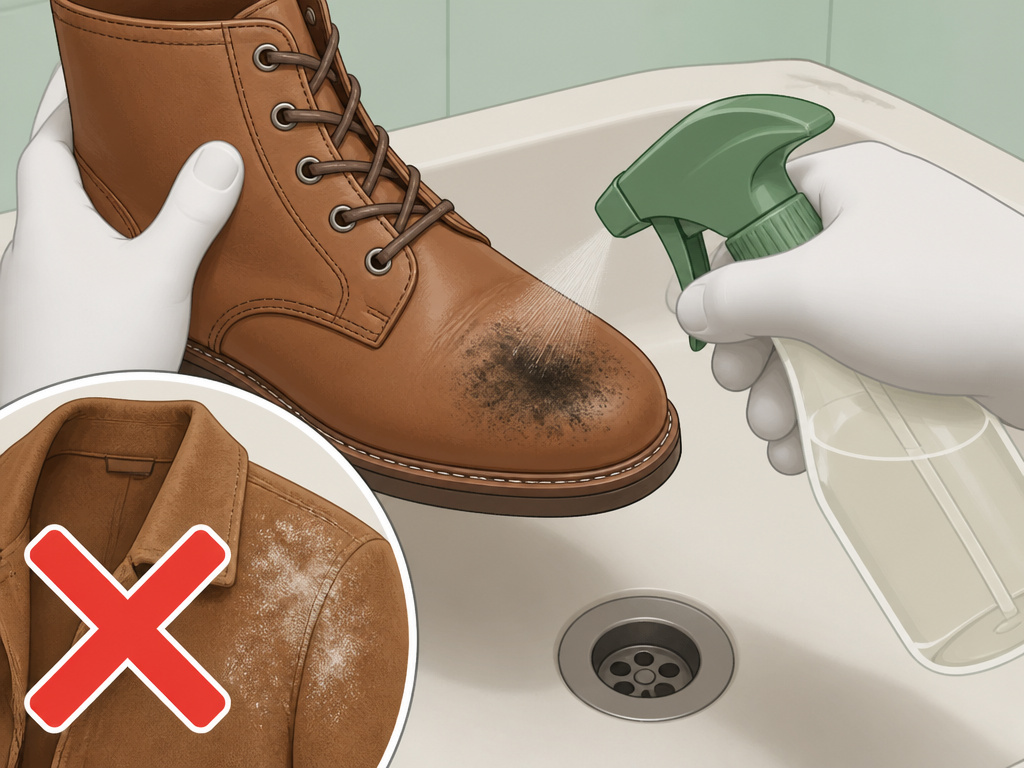 The internet loves a DIY solution. Sometimes they work. Often, they create a bigger problem. Let’s look at the two most common ones.
Baking Soda: It’s a mild abrasive and an effective odor absorber for acidic compounds. On a finished leather item with a dry, powdery smell (like old paper), you can lightly sprinkle some inside a bag, leave it for a day, and vacuum it out. On suede, nubuck, or aniline leather? Don’t. The powder embeds in the nap and is nearly impossible to remove fully, leaving a ghostly white residue.
White Vinegar: Its acidity can kill some surface mildew. The risk is that same acidity can degrade the leather’s natural oils and dyes. If you must use it, only for a severe, localized mildew spot on a durable finished leather, dilute it heavily (1 part vinegar to 4 parts water), apply with a barely-damp cloth, and neutralize immediately with a damp cloth of plain water. Then condition the area soon after.
The short version: Household products are a gamble. A dedicated leather cleaner is formulated for the pH and structure of the material. It’s the difference between using dish soap on your face and using a cleanser with a pH between 4.5 and 6.
The Critical Role of Conditioning (Timing is Everything)
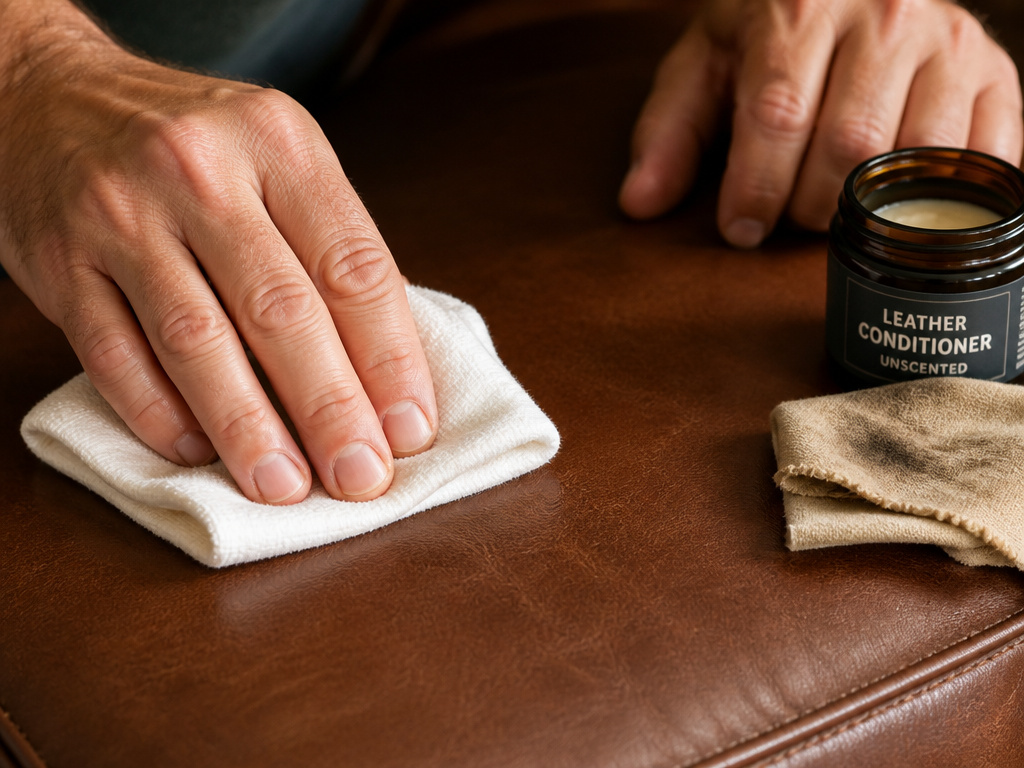 Conditioning is the final step, and only if the leather needs it. Applying a conditioner over a damp surface seals moisture in.Applying it over a lingering odor seals that smell in permanently.
Wait until the piece is fully dry, the full 24-48 hours. Then, assess. Does the leather feel stiff or dry after cleaning? If yes, it needs conditioning. If it still feels supple, you can skip it.
Choose an unscented, light conditioner like Bickmore Bick 4 or Lexol Leather Conditioner. These are designed to nourish without leaving a heavy, greasy residue that can itself turn rancid. Apply a tiny amount to a cloth, rub it into the leather in a circular motion, and let it absorb for an hour. Then, buff off any excess with a clean, dry cloth.
Where this goes sideways: Conditioning too soon or too heavily. A waxy, over-conditioned surface feels sticky, attracts more dirt and dust, and that layer can trap odors against the leather itself. Less is more.
Preventing Future Odors
Deodorizing is reactive. Good storage is proactive. It’s cheaper and easier.
- Let It Breathe: After wearing leather shoes or a jacket, don’t just toss it in a closet. Let it air out in a room for an hour. This releases any absorbed moisture from your body or the environment.
- Use Cedar, Not Silica: Toss silica gel packs in the trash for leather. They over-dry. Use cedar shoe trees in shoes and cedar blocks in storage closets. Cedar absorbs moisture gently and imparts a fresh, natural scent that deters moths.
- Store Smart: Never store leather in plastic bags or airtight containers. Use breathable cotton bags. For bags and shoes, use shape retainers (like stuffers for bags) to prevent creases where moisture and dust can collect.
- Address Spills Immediately: Blot, don’t rub, any liquid spills with a clean, absorbent cloth. The faster you remove the source, the less chance it has to create an odor.
This holistic care cycle, air out, clean when needed, condition sparingly, store correctly, is how you build a collection that lasts decades, not seasons.
Frequently Asked Questions
Can I use Febreze on leather?
Use extreme caution. Spray a small amount on a microfiber cloth first, then wipe the leather. Never spray directly. The alcohol and other solvents in direct sprays can strip finishes and dry out the leather. It’s a last-resort option for stubborn smoke odors, not a standard cleaner.
How do I get a musty smell out of a leather car interior?
The process is similar but scaled. First, identify and fix any water leaks, common culprits are clogged sunroof drains or bad door seals. Then, clean all surfaces with a leather-safe interior cleaner. For severe mildew, a product like 3M™ Quat Disinfectant, referenced in Lexus service bulletins for dealer-level odor remediation, is designed for this. Finally, dry the interior thoroughly by running the air conditioning on high with the windows down to circulate air. A portable fan pointed at the footwells overnight can help.
Will deodorizing ruin my leather’s patina?
It shouldn’t, if done correctly. A gentle, pH-neutral cleaner will lift dirt and odor-causing agents without stripping the oils that contribute to a desirable leather patina. Aggressive scrubbing, harsh chemicals like undiluted vinegar, or excessive soaking can lighten or unevenly fade the color, altering the patina’s development. Always spot test.
How do I remove a perfume or cologne smell from leather?
These are often the toughest, as the scent bonds with oils. Start with a leather cleaner to remove the surface layer. If it persists, try the baking soda method inside a bag (for finished leather only) or use an odor-eliminating product like Ozium Air Sanitizer Spray in the air around the item in a closed space, do not spray the leather directly. Time and airflow are your best allies here.
What’s the difference between deodorizing and cleaning?
Cleaning removes physical dirt and grime. Deodorizing addresses the smell caused by that dirt, mildew, or trapped oils. You can clean without deodorizing (if there’s no smell), but you cannot effectively deodorize without cleaning first. The odor source must be removed.
Before You Go
One rule most guides skip: if a leather item has been wet and smells musty for more than a week, assume mold has taken hold in the lining or stitching. No surface treatment will fix that. The leather itself may be salvageable with the steps above, but a deeply mildewed fabric lining often needs to be replaced by a professional.
The practical takeaway? Start gentle, dry thoroughly, and condition last. This process removes the cause and lets the leather breathe, rather than overpowering a smell with a stronger scent. Your nose, and your leather, will thank you.
