
8 Best Leather Furniture Restorers of 2026
This post contains affiliate links. As an Amazon Associate, we earn from qualifying purchases.
The best leather furniture restorer overall is Leather Honey Leather Conditioner, it deeply hydrates without darkening, and owners consistently report revived suppleness. For deep restoration on worn pieces, Leather CPR Cleaner & Conditioner cleans and conditions in one step. If you’re on a budget but still want solid performance, Weiman Leather Cleaner & Conditioner delivers reliable results at a lower price.
Most people don’t realize how much the wrong product can hurt their leather, over-darkening, greasy residue, or even cracking down the line. I’ve spent years studying how leather ages and reacts to treatments, and the key is using formulas that work with the material, not against it.
This guide cuts through the noise by focusing on what actually matters: ingredient quality, real-world performance, and compatibility with your furniture’s finish. I compared specs and thousands of owner reviews to find options that deliver results without risking damage.
Top 8 Leather Furniture Restorer in the Market
The Best Leather Furniture Restorer, Reviewed
Leather Honey Leather Conditioner

Strengths
- Deep, long-lasting conditioning
- Safe for light leather
- Non-toxic, made in USA
Trade-offs
- Thick, slow-absorbing
- Not a cleaner
- No color restoration
Leather Honey is the heavyweight in this category for good reason. Its formula penetrates deeply, and owners consistently report results lasting six months or more, a claim few others can match. It works on all colors, including white, and doesn’t darken or stain, which sets it apart from oil-heavy conditioners.
It’s not a cleaner or a dye, so it won’t fix dirt or faded color, but for restoring suppleness to dry, stiff leather, it’s unmatched. The texture is thick, and it requires buffing, but the finish is non-sticky and natural. Given its longevity and safety profile, I consider it the smartest buy for long-term leather health.
Video review
Leather CPR Cleaner & Conditioner

Strengths
- Cleans and conditions in one
- Large capacity
- No buffing or rinsing
Trade-offs
- Not for suede or nubuck
- Matte finish only
- No long-term water resistance
Leather CPR markets itself as a one-step revival product, and owner feedback supports that. It cleans grime and oils while adding moisture back into parched leather, all in a single application. The 18oz size means it’s built for heavy use, and users with full leather couches or car interiors say one bottle covers multiple treatments.
The formula is water-based and pH-balanced, so it’s safe on fine furniture, and it dries to a natural matte finish, no shine. Some note it doesn’t condition as deeply as Leather Honey, but it does both jobs well enough to justify skipping separate steps. For furniture that’s seen better days, this is the closest thing to a reset button.
Video review
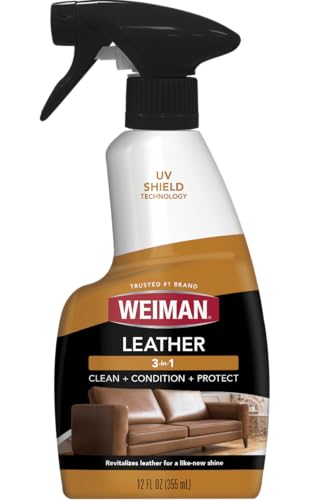
Weiman Leather Cleaner & Conditioner
Strengths
- Easy spray application
- UV protection
- Cleans and conditions
Trade-offs
- Light conditioning only
- Frequent reapplication needed
- Not for deep cracks
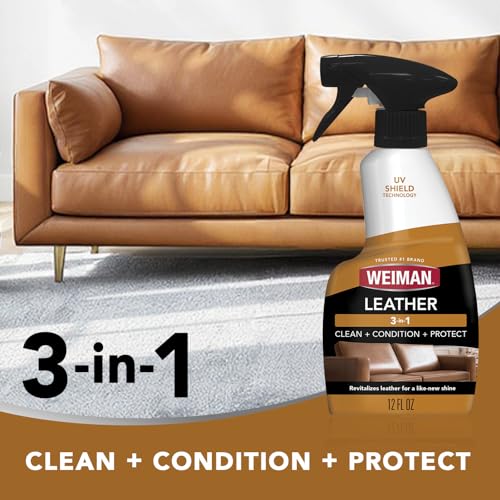
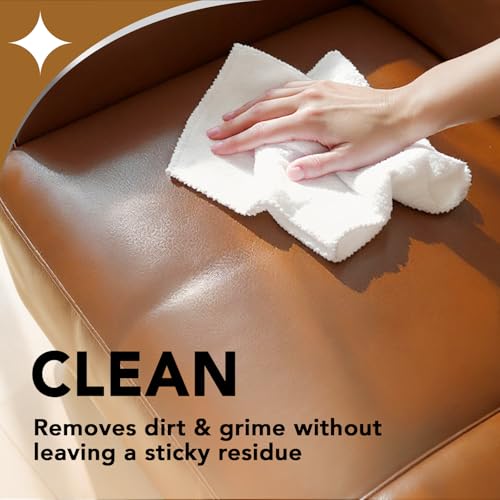
Weiman’s spray formula stands out for convenience and broad compatibility. It’s marketed as a 3-in-1, and owners confirm it cleans surface dirt well, adds a light conditioning boost, and leaves behind a UV-protective finish, all without greasy residue. For car interiors or frequently used couches, that’s a real win.
But I wouldn’t call it a deep restorer. On dried or cracked leather, it improves surface feel but doesn’t penetrate like heavier balms. The natural oil blend helps, but it’s diluted for spray delivery. Still, for a quick refresh between deep treatments, or for buyers on a budget who want one product for multiple leather items, it’s hard to beat.
Product photos
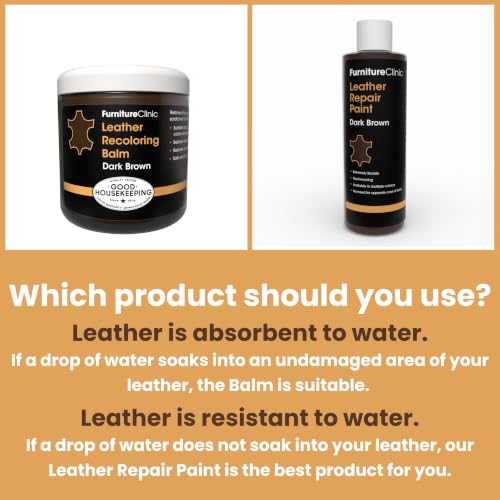
Furniture Clinic Recoloring Balm Dark Brown

Strengths
- Color-matched accuracy
- Fills minor scratches
- Backed by Good Housekeeping
Trade-offs
- Risk of uneven application
- Not a deep conditioner
- Darkens over time
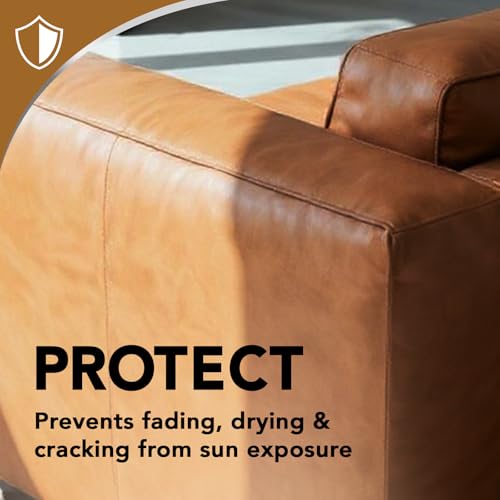
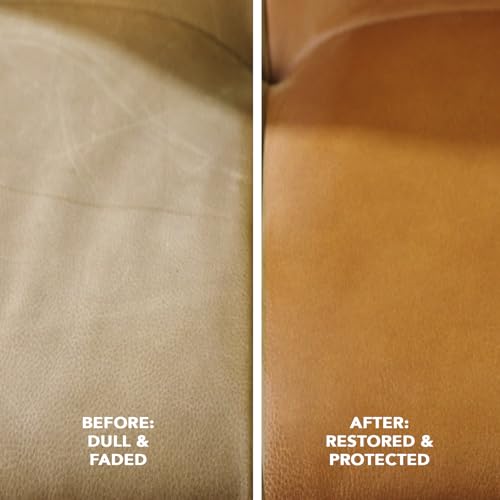
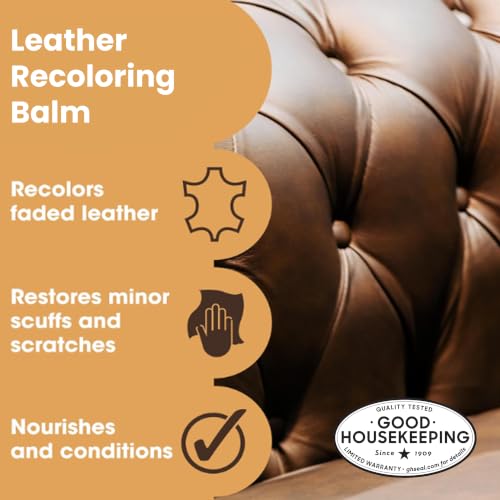
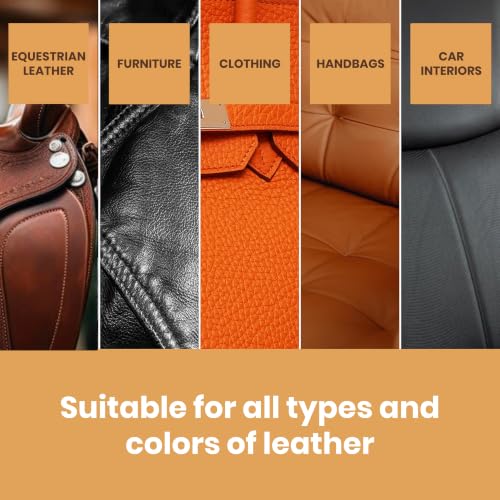
If you’re dealing with visibly faded or scratched leather furniture and want to restore its original depth of color, this balm delivers on paper and in owner reports. The formula is designed specifically for color correction, and users consistently note it handles sun damage and minor scuffs well, especially on medium to dark brown furniture. It’s not a conditioner first, it’s a dye, so I’d treat it more like a cosmetic touch-up than a full restoration system.
Still, the application process is straightforward, and the results look natural when matched correctly to your furniture. Some owners caution that precision matters, too much product or uneven rubbing can leave blotches. But for targeted repair on a worn armrest or faded seat, it’s one of the few products that actually changes the tone back toward factory.
Product photos

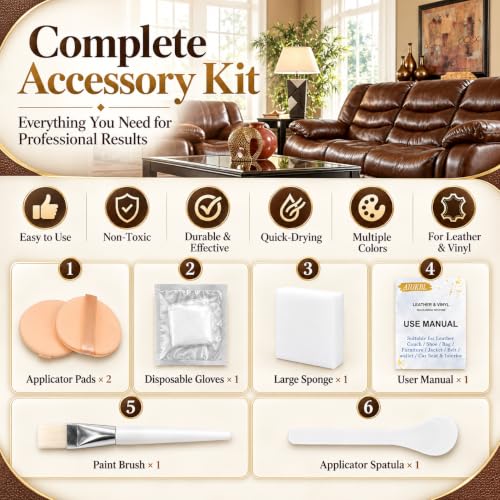
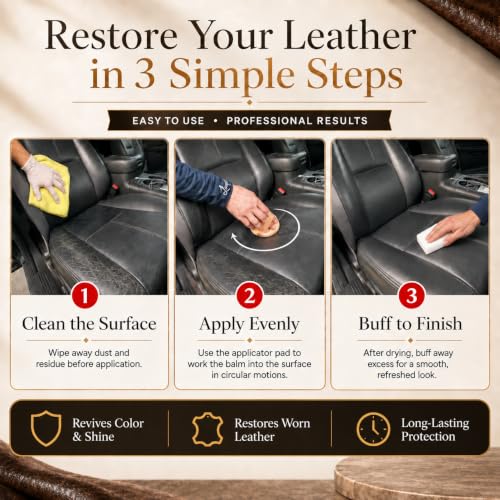
AIUKBL Leather Recoloring Balm Medium Brown
Strengths
- Affordable recoloring
- Scratch-masking ability
- Easy to apply
Trade-offs
- Inconsistent blending
- No brand legacy
- Waxy residue if overused
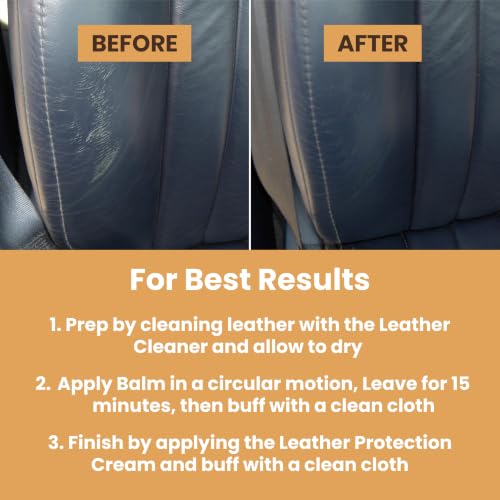
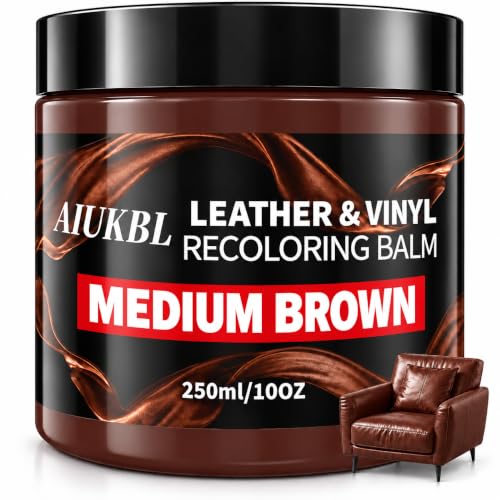
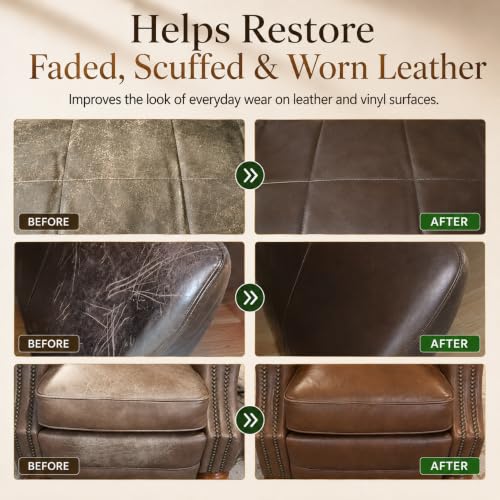
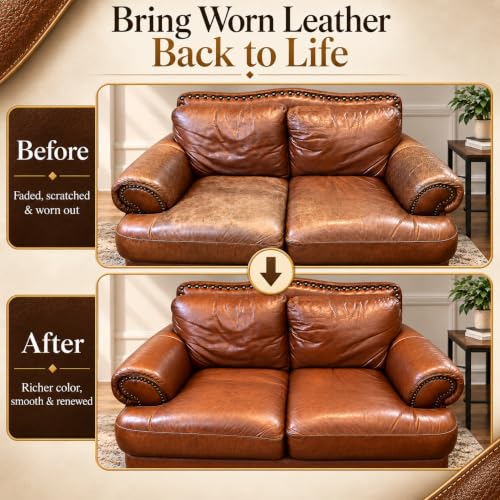
This balm is positioned as a budget-friendly recoloring option, and specs suggest it’s modeled after higher-end formulas like Furniture Clinic’s. Owners report it works well for minor scratches and fading, especially on medium brown furniture. It’s not as polished in packaging or instructions, but for the price, it delivers a solid color boost and scratch-masking effect.
Where it falls short is consistency, some users mention uneven absorption or a slightly waxy feel if over-applied. It lacks third-party validation like the Good Housekeeping seal, but it gets the job done for small touch-ups. If you’re restoring a chair arm or patching a pet scratch, this is a sensible pick.
Product photos

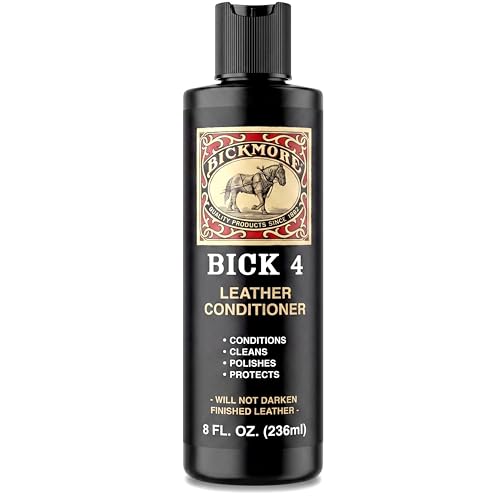
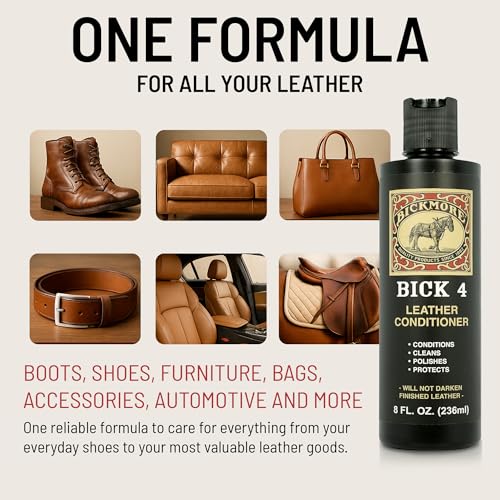
Bick 4 Leather Conditioner & Cleaner
Strengths
- Will not darken leather
- Wax-free formula
- Safe for all finished leather
Trade-offs
- Mild cleaning power
- Requires frequent use
- Subtle results
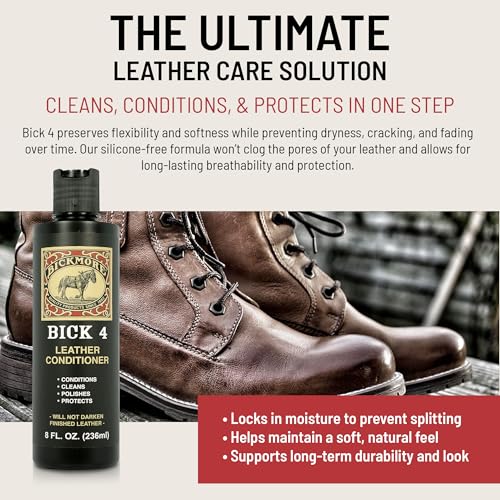
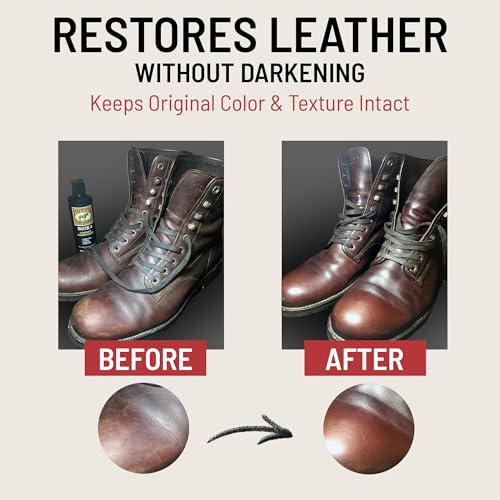
Bick 4 has been a staple in leather care for decades, and it earns its reputation for one key reason: it conditions without altering appearance. This is the go-to if you own light-colored or finished leather furniture and fear darkening, owners repeatedly confirm it preserves the original shade while improving softness. It’s not flashy, and it won’t revive severely dried leather, but for routine maintenance, it’s reliable.
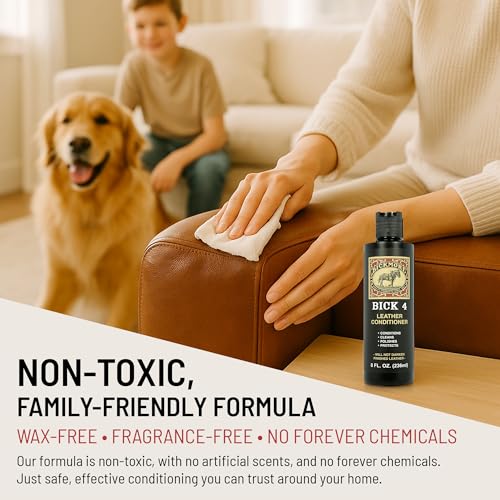
I appreciate that it’s wax-free, which keeps pores open and leather breathable, a detail purists like me don’t overlook. It doesn’t clean heavy grime on its own, so it’s best paired with a dedicated cleaner. But as a once-a-season refresh for a cream-colored couch? I’d pick this over heavier oils any day.
Product photos

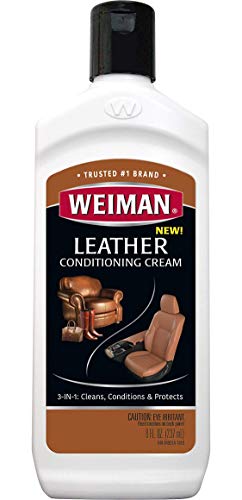
Weiman 3-in-1 Deep Leather Cream
Strengths
- Does not darken leather
- Deep conditioning
- Multi-surface use
Trade-offs
- No color restoration
- Thicker application
- Not for suede
This cream version from Weiman trades the spray for a thicker formula, and it shows in performance. It conditions more deeply than the spray version, and owners report better results on dry, everyday-worn furniture. The fact that it doesn’t darken leather is a major plus for beige or gray sofas where color shift is a concern.
It’s not a dye, so don’t expect color correction, but as a non-darkening, all-purpose cream that cleans, conditions, and protects, it fills a niche. Some users say it leaves a slight sheen, but nothing plasticky. I’d recommend it over the spray for furniture that sees daily use but isn’t in crisis.
Product photos


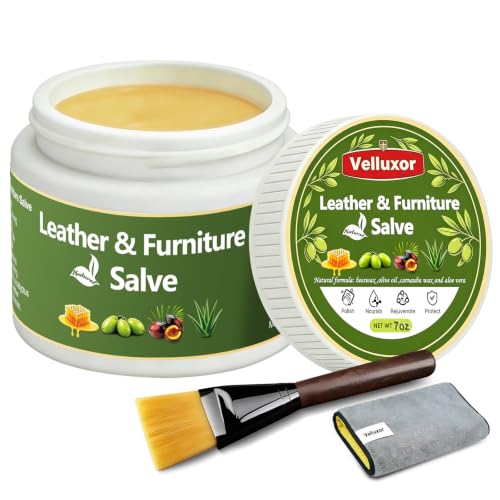
Velluxor Furniture Salve for Leather
Strengths
- Plant-based formula
- Pleasant natural scent
- Includes applicator tools
Trade-offs
- Moderate penetration
- Slower results
- Higher price for performance
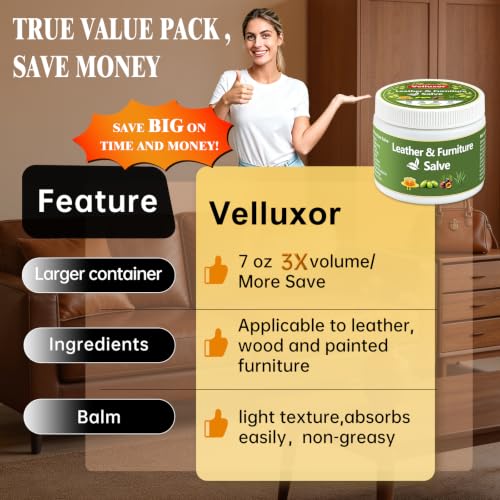
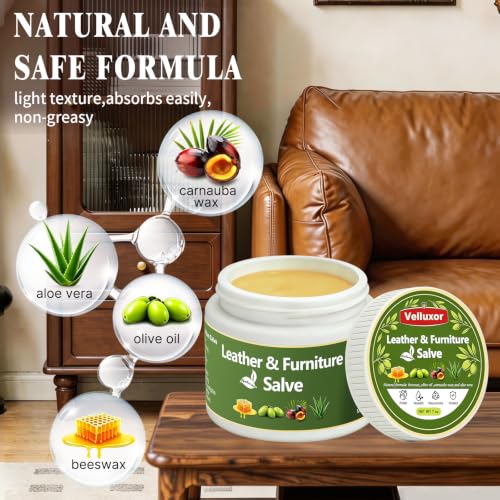
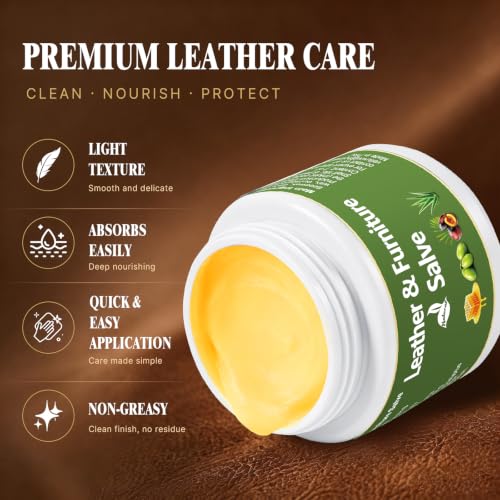
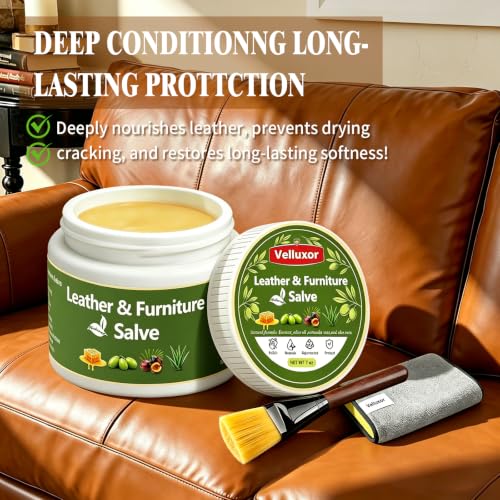
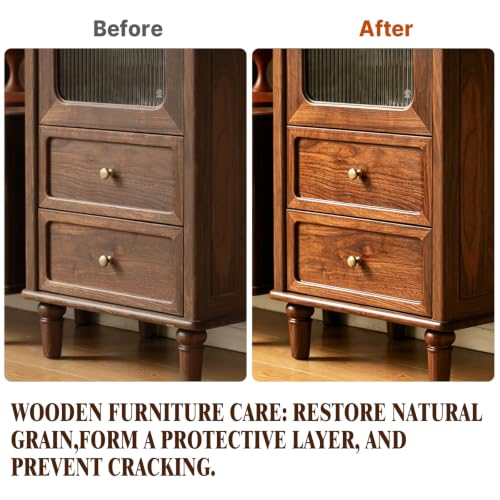
Velluxor leans hard into natural ingredients, and for buyers who prioritize plant-based, non-toxic formulas, that’s a real selling point. The blend of aloe, olive oil, and beeswax is gentle and nourishing, and owners with sensitivities appreciate the lack of strong odors or chemicals. It conditions well for moderate wear and adds a subtle water-resistant barrier.
But it’s not the deepest penetrator, those with heavily dried or antique leather report needing multiple applications. The inclusion of a brush and towel is a nice touch, and the wide jar makes scooping easy. Still, for pure performance, I’d give Leather Honey the edge. For eco-conscious users, though, this is a standout.
Product photos
How We Picked These leather furniture restorer
My approach to evaluating leather furniture restorers, as the creator of LeatherGenesis.com, centered on a detailed comparison of product specifications and features, combined with a careful review of owner experiences and expert opinions. Rather than a hands-on lab test, this is a research-led comparison – I focused on identifying patterns in reported performance and understanding how each product addresses the core challenges of leather care. I weighed information from product descriptions, manufacturer claims, and, crucially, user feedback from a variety of retail sites.
For leather restoration, I found that three factors particularly determine effectiveness: the formula’s ability to replenish oils without residue, its capacity to address color loss or fading, and the breadth of leather types it can safely treat. A product’s ability to deeply penetrate and hydrate is vital for reversing dryness and cracking. Equally important is whether it can restore color without creating an unnatural or overly darkened appearance. Finally, versatility, handling everything from furniture to car interiors, adds significant value. You’ll find more detail on cleaning specifically in our leading leather furniture cleaners.
Product specifications reliably reveal the type of ingredients used (oils, waxes, polymers) and whether a formula is water-based or solvent-based. However, owner feedback is essential for understanding how those ingredients perform in the real world. I prioritized products with consistently positive reviews regarding their ability to soften leather, restore color, and avoid unwanted side effects like stickiness or darkening. For more serious damage, exploring the best leather repair kits might be necessary.
Choosing The Right leather furniture restorer
Finding the right product to revive your leather furniture can feel overwhelming, but focusing on a few key characteristics will steer you toward success.
Good leather restoration isn’t about masking problems; it’s about addressing the root cause of dryness, damage, or color loss. Look for products that clean and condition, offering protection against future wear. Consider the type of leather (finished vs. unfinished) and the specific issue – is it simply dry, or are there scratches and fading to address? Prioritize pH-balanced formulas and avoid harsh chemicals that can strip natural oils.
Understanding Leather Types & Finishes
The first step is identifying what kind of leather you’re dealing with. Most furniture uses finished leather, which has a protective coating. These leathers respond well to conditioners and cleaners designed to replenish oils and prevent cracking. However, unfinished leathers like suede or nubuck require specialized products – the ones we’re discussing here aren’t suitable for those. Using the wrong product can permanently damage delicate surfaces. If you’re unsure, test in an inconspicuous area first. Many owners find a furniture cleaner and conditioner offers the most versatility in maintaining finished leather.
Assessing the Level of Restoration Needed
Not all leather needs the same treatment. Lightly worn leather might only require regular conditioning to maintain suppleness, while severely dried or cracked pieces need more intensive restoration. Consider whether you need to address color loss, scratches, or simply replenish moisture. For minor scuffs, a color-matching balm can work wonders. For deeper damage, a cleaner and conditioner combined is usually best.
- A simple conditioner is ideal for preventative maintenance on newer leather.
- A cleaner and conditioner combo handles light dirt and dryness, keeping leather supple.
- A dedicated recoloring balm is essential for restoring faded or scratched areas, offering a more targeted solution for significant cosmetic issues.
Balancing Performance With Value
Price isn’t always an indicator of quality. While professional-grade products can deliver exceptional results, many affordable options perform admirably. Look for products with concentrated formulas, as a little often goes a long way. Pay attention to coverage area listed on the label – a smaller bottle offering high coverage represents better value. Remember this rule of thumb:
A quality leather restorer is an investment, not an expense. Regular maintenance with a good product will significantly extend the life of your furniture, saving you money in the long run.
You might spend a bit more upfront, but you’ll avoid costly repairs or replacements down the line. For many, the best furniture leather conditioners offer a balance of effectiveness and cost, making them a smart choice for routine care.
Leather Furniture Restorer Compared
Here’s a comparison of key specifications for several leather furniture restorers to help you make an informed decision.
| Product Title | Best For | Leather Types | UV Protection | Key Features | Volume (oz) |
|---|---|---|---|---|---|
| Leather Honey Leather Conditioner | Best Overall | All (except suede/faux) | No | Long-lasting, Non-sticky, Odorless | 8 |
| Leather CPR Cleaner & Conditioner | Best for Deep Restoration | Finished Leather | No | Cleans & Conditions, Matte Finish | 18 |
| Weiman Leather Cleaner & Conditioner | Best Budget Friendly | All Finished Leather & Faux | Yes | Cleans, Conditions, Prevents Cracking | N/A |
| Furniture Clinic Recoloring Balm Dark Brown | Best for Color Repair | N/A | No | Recolor, Repair Scratches | N/A |
| AIUKBL Leather Recoloring Balm Medium Brown | Best Value Recoloring | N/A | No | Repair Scratches, Restore Color | N/A |
| Bick 4 Leather Conditioner & Cleaner | Best for Light Leather | All Types | No | Non-Darkening, Wax-Free | 12 |
| Weiman 3-in-1 Deep Leather Cream | Best Non-Darkening Formula | Finished Leather | No | Cleans, Conditions, Protects | N/A |
| Velluxor Furniture Salve for Leather | Best Plant-Based Formula | All Leather, Vinyl, Wood | No | Plant-Based, Waterproofs, Non-Greasy | 7 |
Frequently Asked Questions
What’s the difference between a leather conditioner and a restorer?
A leather restorer typically contains cleaning agents and conditioning oils, designed to revive heavily worn leather, while a conditioner primarily replenishes oils in leather that’s already in relatively good condition. Think of a restorer as a more intensive treatment for dryness and fading.
Can I use these restorers on all types of leather furniture?
Generally, these restorers are best suited for finished leather; however, you should always test in an inconspicuous area first. Suede, nubuck, and aniline leathers require specialized products and aren’t good candidates for the formulas discussed here.
How often should I restore my leather furniture?
The frequency depends on use and environment, but most furniture benefits from a thorough restoration every 6-12 months. Regular conditioning, perhaps every 3 months, will help maintain the leather and extend the time between more intensive treatments.
Will a restorer change the color of my leather?
Some restorers do contain dyes that can subtly alter the color, particularly on heavily faded pieces. If maintaining the original color is critical, look for a non-darkening formula or consider a dedicated recoloring balm like the Furniture Clinic option, and always test first. You can find more options among the best leather sofa cleaners if you’re concerned about color impact.
Are these products safe for car seats as well as furniture?
Many of these restorers can be used on car seats, but it’s best to stick with products specifically formulated for automotive use. The harsh UV exposure in cars demands stronger protection, so consider the best car seat leather cleaners for optimal results.
The Bottom Line
Choosing a leather restorer often comes down to balancing how much effort you want to put in against the level of restoration needed. For overall results and ease of use, I consistently recommend Leather Honey Leather Conditioner as the strongest all-around performer – it’s a product designed to nourish and protect without the risk of overdoing it.
If you have specific needs, there are excellent alternatives. For deep restoration and tackling significant dryness, Leather CPR Cleaner & Conditioner is an excellent choice. Those seeking a budget-friendly option will find Weiman Leather Cleaner & Conditioner a surprisingly effective solution, while those needing color repair should look to Furniture Clinic Recoloring Balm Dark Brown or AIUKBL Leather Recoloring Balm Medium Brown. Don’t forget that for more substantial damage, exploring car seat leather repair kits might be a necessary step.
Ultimately, the specific product matters less than a consistent routine of cleaning and conditioning. Prioritize understanding your leather type, addressing issues promptly, and using pH-balanced formulas. A little preventative care with the right product, or even a best cleaner conditioner combos will always yield better long-term results than attempting a dramatic rescue with an overly aggressive treatment.
