8 Best Leather Softeners of 2026
This post contains affiliate links. As an Amazon Associate, we earn from qualifying purchases.
Leather Honey Leather Conditioner is our top pick for overall performance, delivering deep conditioning that works across most leather types. For a budget-friendly option, Fiebing’s Liquid Mink Oil offers solid results on smooth leather, while URAD Tenderly stands out as the best natural formula, safe even for suede and nubuck.
Choosing the right leather softener isn’t just about making your gear feel softer, it’s about preserving its life. Too many people use the wrong product and end up with greasy residue, stiff patches, or damaged finishes. As someone who’s spent years studying how leather responds to care, I know that the right softener depends on material type, condition, and intended use.
This guide breaks down the top options based on ingredient quality, real user feedback, and compatibility with different leathers. We looked at how well each product restores flexibility, protects against wear, and avoids harmful additives like silicone. These picks reflect what actually works in practice, not just what sounds good on the label.
Top 8 Leather Softeners in the Market
The Best Leather Softeners, Reviewed
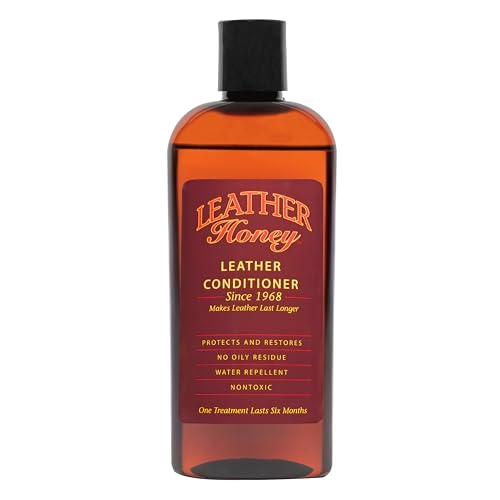
Leather Honey Leather Conditioner
Strengths
- Long-lasting (6+ months)
- Safe for all colors
- Deep penetration
Trade-offs
- Thick consistency
- Takes time to absorb
- No UV protection
Leather Honey is the gold standard for a reason. Its formula penetrates deeper than most, and owners repeatedly confirm that a single application lasts months, something few competitors can claim. It’s effective on everything from white leather couches to vintage jackets, and the fact that it’s non-sticky, odorless, and free of silicones or solvents makes it safe for homes with kids and pets.
While it’s pricier than some, the longevity per use makes it the smarter buy over time. It doesn’t offer UV protection like Weiman, nor is it tailored to boots like Griffin, but as an all-rounder that just works, it’s hard to beat. This is the one I’d recommend to someone who wants “set it and forget it” protection.
Video review
URAD Tenderly Leather Softener

Strengths
- Safe for suede
- Natural lanolin formula
- Gentle on soft leathers
Trade-offs
- Small bottle size
- Slower absorption
- Multiple apps needed
URAD’s Tenderly softener leans into its natural formula with lanolin, a smart choice for those wary of synthetics. Lanolin is a proven moisturizer in both skincare and leather care, and here it delivers gentle, deep nourishment without harsh solvents. Owners praise its ability to soften without greasiness, and the fact that it’s safe for suede and nubuck sets it apart in a market where most conditioners exclude those finishes.
Still, the 5-ounce bottle feels stingy compared to others, and some users report needing multiple applications for thick leather. It’s not the fastest-absorbing option, but for those who value natural ingredients and versatility across leather types, it’s a solid pick.
Video review
Fiebing’s Liquid Mink Oil

Strengths
- Extremely affordable
- Strong waterproofing
- Great for boots
Trade-offs
- Darkens leather
- Greasy residue
- Not for dress leather
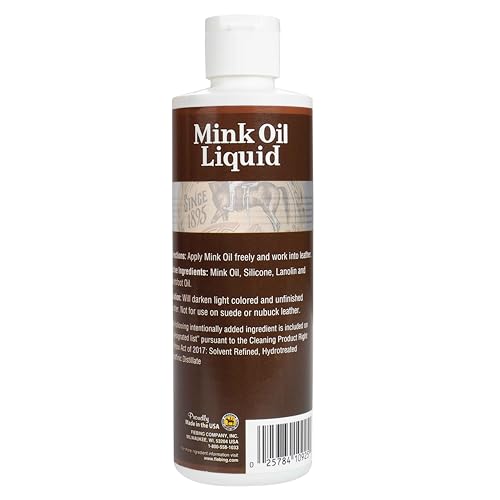
Fiebing’s is the budget king, and it earns its place. At under $10, it delivers real mink and neatsfoot oil in a liquid blend that soaks into thick leather like boots and saddles. It’s not refined, expect some darkening and a greasy feel initially, but for rugged gear that takes a beating, that’s part of the charm.
Reviewers love it for work boots and outdoor gear, though some caution against using it on dress shoes or light leather. It’s not subtle, but it’s effective. If you’re maintaining gear that needs heavy moisture resistance and don’t care about a glossy finish, this is the value pick that still performs.
Product photos


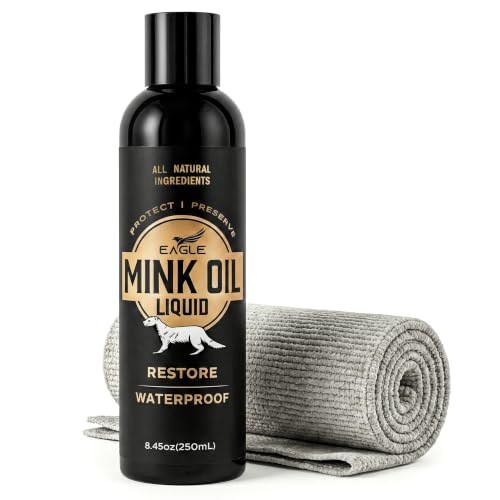
Eagle Mink Oil Conditioner
Strengths
- Deep conditioning
- Excellent waterproofing
- Includes applicator cloth
Trade-offs
- May darken light leather
- Not for suede or nubuck
- Heavy oil feel
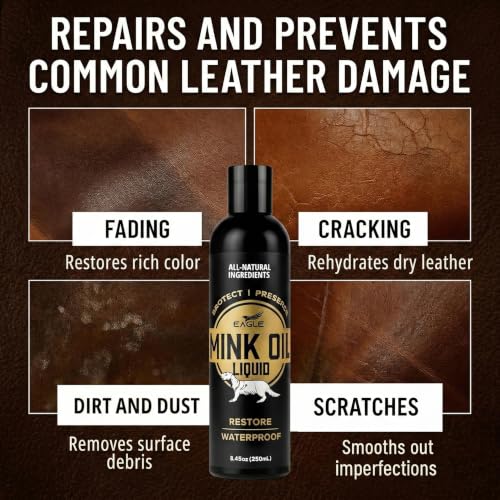
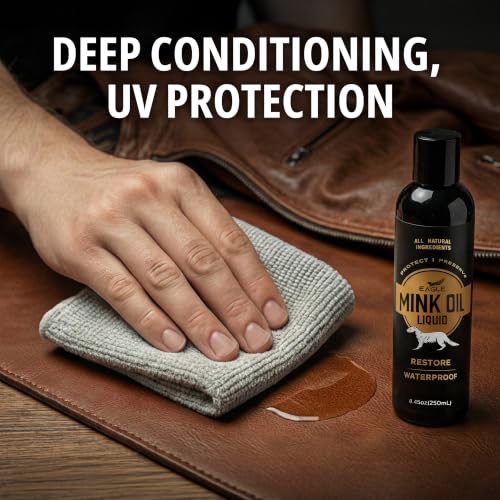
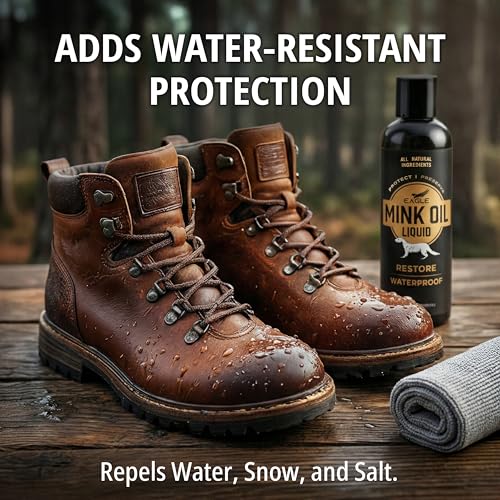
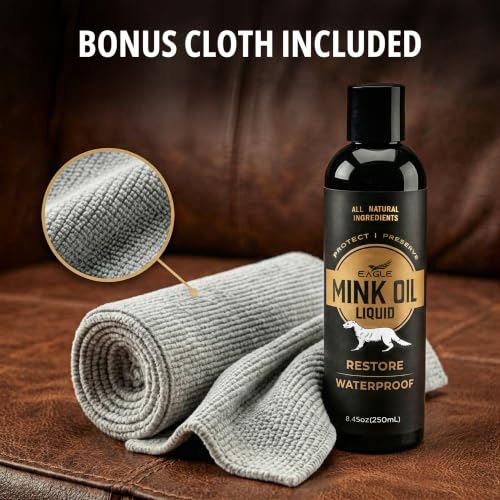
When it comes to waterproofing, Eagle Mink Oil stands out in a category where protection often takes a backseat to shine. On paper, its 100% pure mink oil formula is exactly what heavy-duty leather, like work boots or outdoor furniture, needs to resist moisture and salt damage. Owners consistently report that it deeply softens dry leather and forms a durable barrier, though some note it darkens lighter hides slightly, which is typical with oil-heavy conditioners.
It’s not the most refined option for delicate or light-colored pieces, but if you’re prioritizing defense against the elements, this is one of the few that delivers on that promise without cutting corners. The included 14″x14″ cloth is a thoughtful touch, making application easier than most in this price range.
Product photos
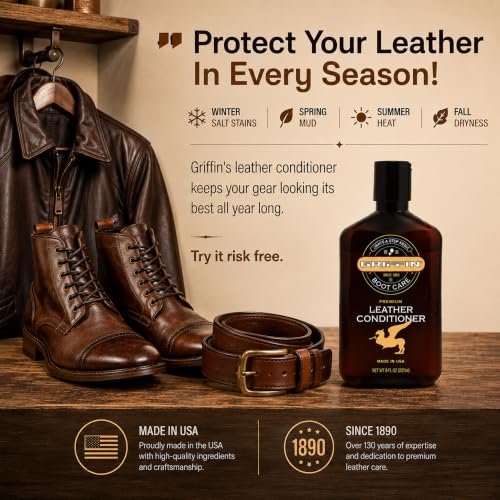
Griffin Leather Boot Conditioner
Strengths
- Non-darkening
- Fast absorption
- Boot-specific formula
Trade-offs
- Narrower focus
- Not for suede
- Average for deep cracks
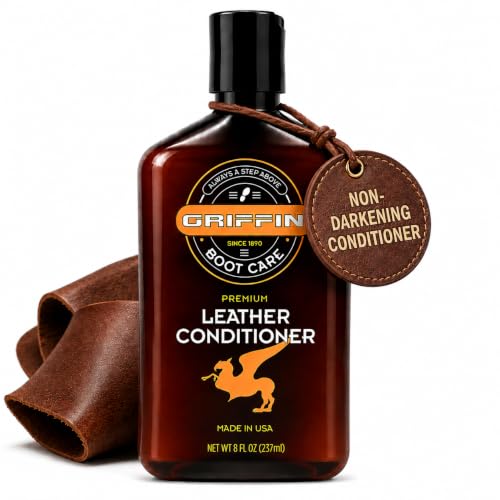
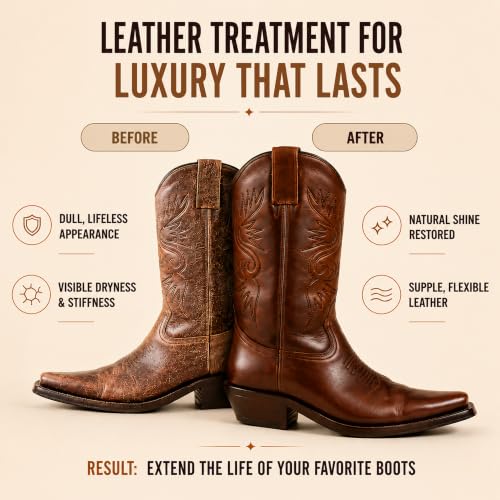
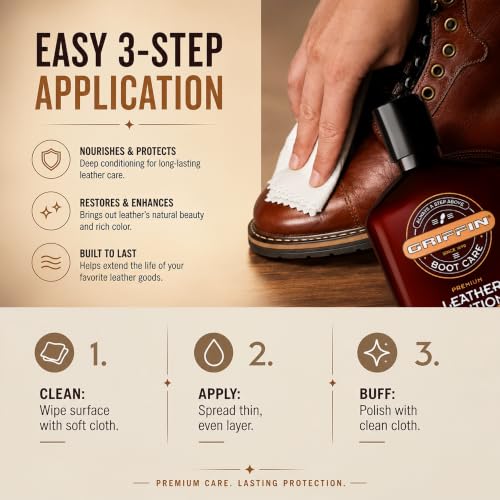
Griffin’s formula is built for boots, specifically thick, rugged ones that take daily abuse. It softens without darkening, which is a big win for those who want to maintain the original look of their cowboy or work boots. Owners appreciate how fast it absorbs and how cleanly it buffs, letting them wear treated boots quickly, no waiting around for hours.
It’s also versatile enough for jackets and furniture, but its real strength is in boot-specific care. Compared to Fiebing’s oily formula, Griffin is more refined and user-friendly. For anyone with a favorite pair of boots they want to keep supple and looking natural, this is the better-balanced choice.
Product photos


Weiman Leather Cleaner & Protector

Strengths
- UVX-15 sun protection
- Cleans and conditions
- Spray convenience
Trade-offs
- Not for deep restoration
- Not for suede
- Average longevity
Weiman’s spray stands out for one key reason: UVX-15 sunscreen. In a category where sun damage is a silent killer, this formula actively shields leather from fading and drying, especially critical for car interiors and patio furniture. The 2-pack offers convenience, and the spray format makes it easy to apply evenly without over-saturating.
Owners note it softens and cleans in one step, though it’s not as intensive as dedicated conditioners for severely dry leather. It’s also not recommended for suede. But if you’re battling sun exposure and want a low-effort maintenance routine, this is the most protective option available.
Product photos


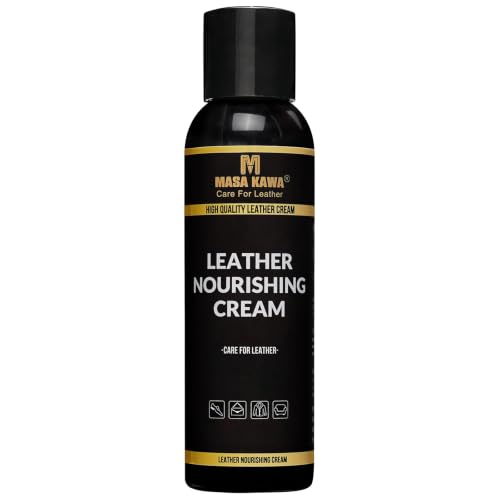
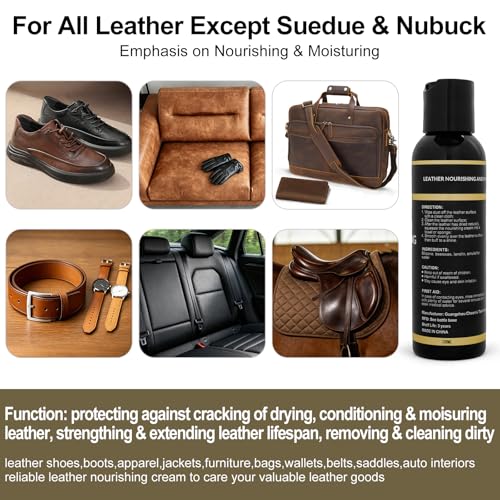
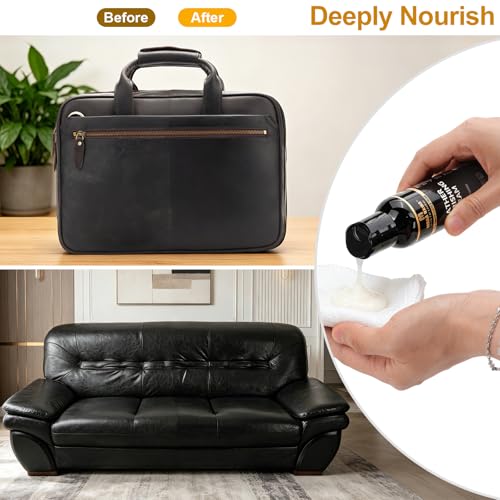
Masa Kawa Leather Care Cream
Strengths
- Works on faux leather
- No color change
- Non-greasy finish
Trade-offs
- Contains silicone
- Not for suede
- Requires buffing
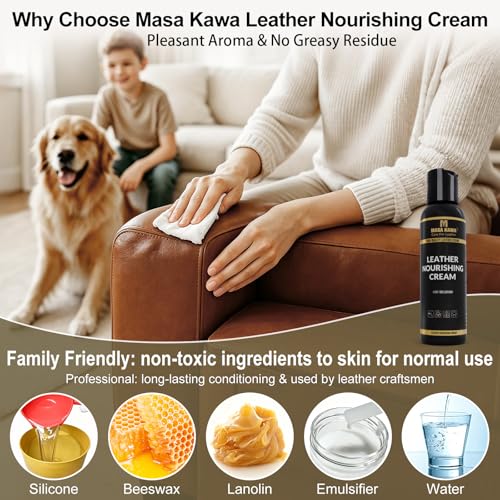
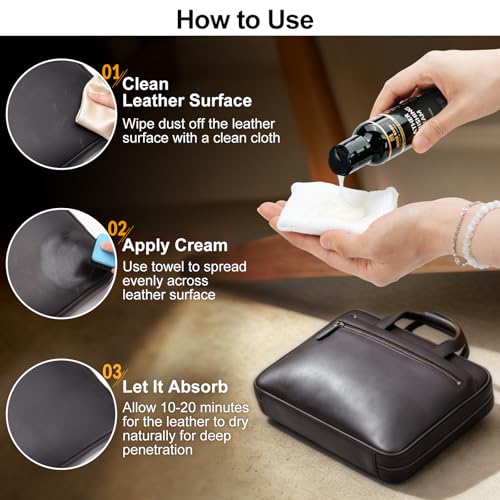
Masa Kawa impresses with its all-in-one versatility. It works on real, synthetic, and faux leather, rare in this category, making it a smart choice for households with mixed materials. The cream spreads easily, absorbs well, and doesn’t darken leather, which owners consistently highlight as a major plus for preserving original appearance.
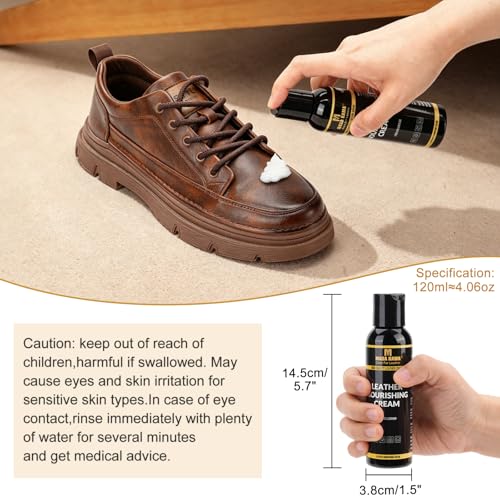
It’s also family-friendly with a mild scent and non-toxic ingredients, though it does contain silicone, which purists may avoid. The 120ml jar offers decent volume, and the formula builds a light protective layer over time. It’s not the deepest conditioner, but for routine care across many surfaces, it’s one of the most practical.
Product photos
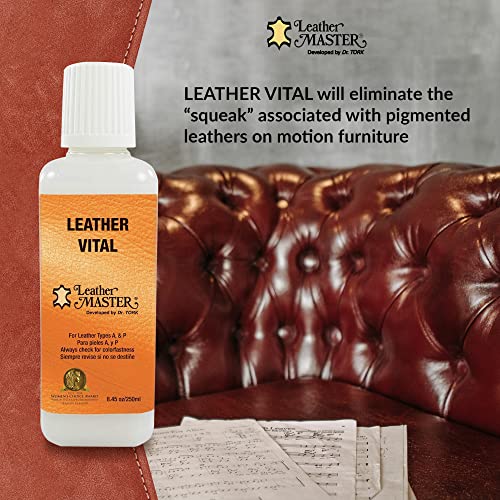
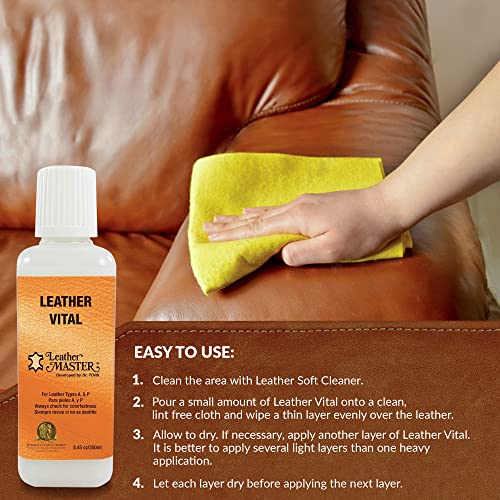
Leather Master Vital Softener

Strengths
- Water-based and safe
- Stops squeaking
- Good for car interiors
Trade-offs
- Mild on severe dryness
- Limited penetration
- Not for suede
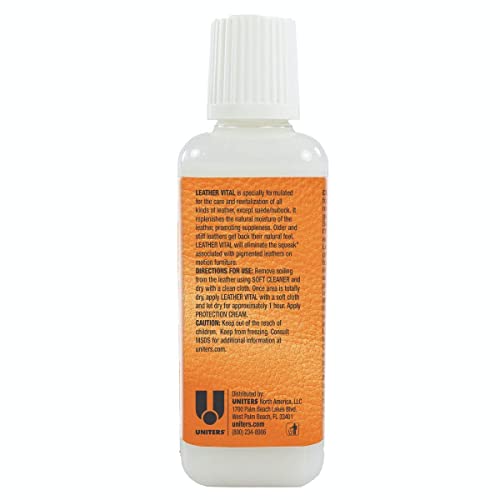
Leather Master’s Vital Softener is built for people who want to stop squeaky car seats and revive stiff, aging upholstery without harsh chemicals. Its water-based, solvent-free formula is a standout for interior care, where over-oiling can degrade foam or attract dust. Reviewers frequently mention how well it restores flexibility to old car seats without leaving a greasy film, something many oil-based products struggle with.
That said, it’s not the strongest option for severely dried leather. It works best as part of a maintenance routine rather than a deep rescue treatment. The 250ml size offers decent value, and its pH-balanced, green formulation makes it safe for regular use in family vehicles.
Product photos
How We Picked These leather softeners
As someone deeply involved in understanding leather – its nuances, its care, and its longevity – I approached researching leather softeners with a focus on both material science and real-world application. Rather than a hands-on lab test, this was a research-led comparison of product specifications, published features, and extensive owner and expert reviews. I weighed the claims made by manufacturers against what users actually experience, looking for consistent patterns of success and identifying potential drawbacks. This process helped me establish a ranking based on performance and value.
For leather softeners, the most crucial factors are the depth of conditioning and the level of protection offered. A softener that merely masks dryness isn’t useful long-term; the formula needs to penetrate and restore the leather’s natural oils. Equally important is protection against future damage – whether from water, UV exposure, or simple wear and tear. These two elements directly influence how well a leather item ages and maintain its appearance, making them central to my evaluation.
Product specifications reliably indicate the type of oils and ingredients used, which gives a strong indication of potential performance. However, owner feedback proved vital in assessing how easily a product applies, how quickly it absorbs, and whether it leaves any undesirable residue. I also considered the reputation of the brand; established names often have a track record of quality, and you can find helpful information in a leather cleaner buying guide to complement your softening routine. Finally, I looked at versatility – some softeners excel on boots, while others are better suited for furniture, and understanding these nuances is key. Proper conditioning is often aided by using one of the best leather oils.
How To Choose The leather softeners
Choosing the right leather softener can make a world of difference in maintaining the beauty and longevity of your leather goods.
A good leather softener should penetrate the material to restore its natural oils, increasing pliability and preventing cracking. Look for formulas that are pH balanced, contain natural ingredients, and are specifically designed for the type of leather you intend to treat. Avoid products with harsh chemicals or silicone, which can damage leather over time. Consider the finish of your leather – smooth, suede, or nubuck – as different types require different care.
Understanding Leather Types & Softener Compatibility
One of the biggest mistakes people make is using a softener designed for one type of leather on another. Smooth, finished leather (like you’d find on a handbag or car seat) benefits from oil-based softeners that replenish lost moisture. However, suede and nubuck are much more porous and require water-based products or specialized softeners designed specifically for those materials. Using the wrong type can stain or ruin the texture. Many products, like Fiebing’s Liquid Mink Oil, are excellent for smooth leather but explicitly warn against use on suede.
Assessing the Level of Restoration Needed
The degree of softening your leather requires will dictate the formula you choose. If your leather is simply feeling a little dry, a lighter conditioner like Leather Honey Leather Conditioner might suffice. However, severely cracked or brittle leather will need a more intensive treatment. For deeply revitalizing older leather, consider formulas containing lanolin, such as URAD Tenderly Leather Softener, as this ingredient is incredibly moisturizing.
- For minor dryness: A light application of a basic conditioner every six months.
- For moderate wear: A deeper conditioning treatment every 3-4 months with a product like Eagle Mink Oil Conditioner.
- For severely cracked leather: Multiple applications of a restorative cream, potentially over several weeks, combined with ongoing maintenance. A product like Masa Kawa Leather Care Cream can be helpful here due to its ability to penetrate deeply.
Balancing Performance with Practicality
A powerful softening formula isn’t always the best choice. Consider how you’ll use the product. If you’re looking for something to quickly revitalize leather car interiors, a spray-on conditioner like Weiman Leather Cleaner & Protector offers convenience and UV protection. However, if you’re restoring a vintage saddle, you might prefer a thicker cream that allows for more targeted application. Don’t underestimate the value of a product that simplifies maintenance; regular upkeep is far more effective than infrequent, drastic treatments. For the best car leather treatment options, focusing on UV protection and regular conditioning is key.
A little bit often is better than a lot at once. Apply leather softener sparingly, allowing it to fully absorb before applying another coat. Over-conditioning can lead to a sticky residue and attract dirt.
Leather Softeners Compared
Here’s a comparison of key specifications for popular leather softener products.
| Product Title | Best For | Leather Types | Waterproofing | UV Protection | Key Ingredients | Size (oz) |
|---|---|---|---|---|---|---|
| Leather Honey Leather Conditioner | Best Overall | All (except suede/vinyl) | Yes | No | Natural | 8 |
| URAD Tenderly Leather Softener | Best Natural Formula | All (incl. suede/nubuck) | No | No | Lanolin | N/A |
| Fiebing’s Liquid Mink Oil | Best Budget Friendly | Smooth Leather/Vinyl | Yes | No | Mink/Neatsfoot Oil | 8 |
| Eagle Mink Oil Conditioner | Best Waterproofing | Smooth Leather/Vinyl | Yes | No | Mink Oil | 8 |
| Griffin Leather Boot Conditioner | Best for Boots | Leather Boots | No | No | N/A | N/A |
| Weiman Leather Cleaner & Protector | Best UV Protection | Finished Leather | No | Yes | N/A | N/A |
| Masa Kawa Leather Care Cream | Best Multi-Surface Use | All (except suede/nubuck) | Yes | No | Silicone, Beeswax | 4.06 |
| Leather Master Vital Softener | Best for Car Interiors | All (except nubuck/suede) | No | No | Water-based | N/A |
Frequently Asked Questions
What’s the difference between a leather conditioner and a leather softener?
A leather conditioner aims to maintain flexibility and prevent cracking by replenishing oils, while a leather softener specifically focuses on restoring pliability to leather that has already become stiff or dry. Softeners often contain ingredients designed to deeply penetrate the material and loosen fibers.
Can I use leather softener on faux leather or vinyl?
Generally, no. Most leather softeners are formulated for natural leather and can damage faux leather or vinyl, causing discoloration or a sticky residue. Always check the product label and avoid anything containing oils or waxes if you have a synthetic material; explore dedicated best leather conditioners for natural leather instead.
How often should I apply leather softener?
The frequency depends on use and environment. For regularly used items, applying a softener every 3-6 months is a good starting point. Leather exposed to harsh conditions (sun, water, heavy use) will benefit from more frequent applications.
Will leather softener darken the color of my leather?
Some darkening is possible, particularly with oil-based softeners, as they replenish oils that can deepen the leather’s hue. It’s always best to test the softener in an inconspicuous area first to assess the impact on color. Lighter-colored leathers are more prone to noticeable changes.
What’s the best way to soften leather car seats?
For leather car seats, I recommend a product that also offers UV protection, as prolonged sun exposure is a major cause of drying and cracking. Consider a water-based formula, as it’s less likely to leave a sticky residue. You can find excellent car cleaner conditioner combos designed for this specific purpose.
The Bottom Line
Ultimately, choosing a leather softener comes down to balancing how much effort you want to put in against the level of restoration and protection you need. For the best overall performance and a good blend of conditioning and safeguarding, I recommend Leather Honey Leather Conditioner. It’s a versatile product that consistently receives high marks from owners for its ability to revitalize and protect a wide range of smooth leathers.
If you have specific needs, the good news is there’s a product tailored to you. For those prioritizing natural ingredients, URAD Tenderly Leather Softener is an excellent choice. If budget is a primary concern, Fiebing’s Liquid Mink Oil delivers solid performance at a very accessible price point, and for those needing serious waterproofing, Eagle Mink Oil Conditioner is a reliable option. Don’t forget to check out our shoe leather conditioner guide if your boots or dress shoes are in need of some attention.
Don’t get too caught up in chasing the perfect formula or the highest-rated ingredient. The most important thing is consistent, gentle care. Regular cleaning and conditioning – even with a simple product – will always yield better results than infrequent, intensive treatments. A little attention now will extend the life and beauty of your leather goods for years to come, and that’s what truly matters.
