
9 Best Leather Stain Removers of 2026
This post contains affiliate links. As an Amazon Associate, we earn from qualifying purchases.
This post contains affiliate links. As an Amazon Associate, we earn from qualifying purchases.
The Furniture Clinic Leather Stain Remover is the best overall choice for tackling tough, common stains like dye transfer and ink without harming most leather types. For a budget-friendly option that still delivers strong performance on ink and spills, the Amodex Ink & Spot Remover is a solid pick. If you’re dealing with oil or grease, the Furniture Clinic Leather Degreaser stands out as the most effective solution.
Most people don’t realize how quickly the wrong cleaner can ruin good leather. Harsh chemicals, incorrect pH levels, or using a product meant for smooth leather on suede can lead to fading, cracking, or permanent damage. I’ve seen it happen too often.
This guide cuts through the noise by focusing on what actually works, based on product specs, real owner experiences, and years of studying leather care. We looked at stain type, leather compatibility, formula safety, and value to find removers that deliver results without risking your furniture, jacket, or car seats.
Top 9 Leather Stain Removers in the Market
The Best Leather Stain Removers, Reviewed
Furniture Clinic Leather Stain Remover

Strengths
- Broad stain coverage
- Good Housekeeping Seal
- Sponge application
Trade-offs
- May need repeats
- Not for suede
- Requires pre-cleaning
This Furniture Clinic product earns its ‘Best Overall’ label by balancing effectiveness, safety, and versatility. It tackles a broad range of stains, dye transfer, nail polish, food, ink, without aggressive solvents, and the Good Housekeeping Seal adds credibility. I like that it’s applied via sponge, reducing direct contact with leather, which minimizes risk. Owners report success on furniture, car seats, and handbags, often after other removers failed.
It’s not instant, repeated applications are common, but it’s reliable. And unlike some solvents, it doesn’t leave behind stickiness or discoloration when used correctly.
Video review
ForceField Leather Ink & Stain Remover
Strengths
- Effective on ink
- Safe on finishes
- Light scent
Trade-offs
- Not for suede
- Requires dwell time
- Limited to surface stains
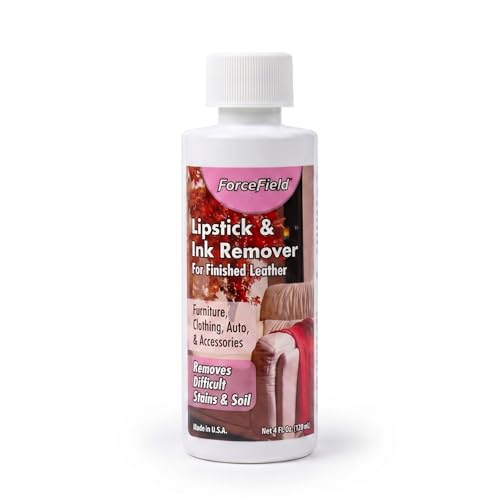
ForceField is laser-focused on ink and makeup, exactly where it shines. I’ve seen pros use it in furniture protection kits, and owner reviews confirm it lifts lipstick, pen marks, and dye transfer from finished leather without dulling the surface. The water-based, pH-neutral formula is a big plus; it doesn’t strip oils like harsh solvents. The light lemon scent is subtle, and the fact that it’s made in the USA under strict standards adds trust.
It’s not for suede or unsealed leather, and dwell time matters, especially for permanent marker. But for targeted cosmetic or ink stains, it’s one of the safest bets.
Video review
Amodex Ink & Stain Remover Pack of 2

Strengths
- Cost-effective pack
- Strong ink removal
- Multi-surface flexibility
Trade-offs
- Same limitations as single
- Potential finish drying
- Not for deep conditioning
Buying two bottles of Amodex makes sense if you’re dealing with recurring stains, say, in a household with kids or frequent ink users. The formula is identical to the single bottle, but the pack offers better long-term value. I appreciate that users can afford to be more generous with application, knowing they won’t run out quickly. Multiple owner reviews mention using one bottle for the car and one for home furniture, which speaks to its practicality.
Still, it’s not a deep leather treatment. It’s a targeted spot solution, and repeated use on the same area could lead to finish degradation. But for ink and light grease on finished surfaces, it’s hard to beat at this price.
Product photos


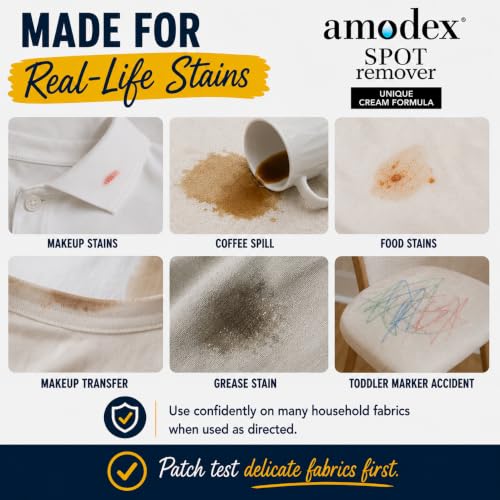
Amodex Ink & Spot Remover 4oz

Strengths
- Effective on ink
- Sharpie recommended
- Multi-surface use
Trade-offs
- Long dwell time
- Risk on delicate finishes
- Not leather-specific
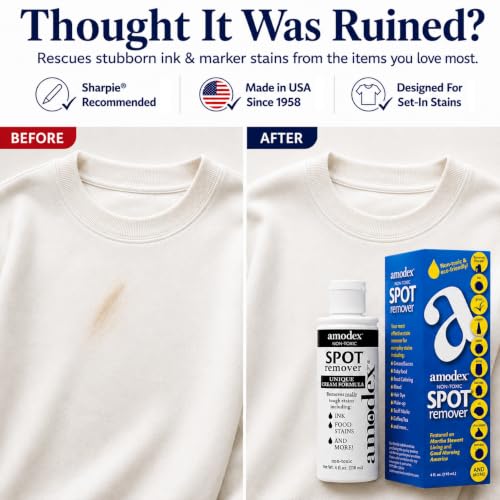
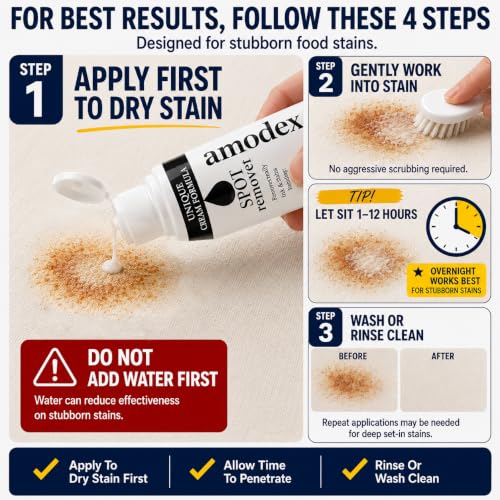
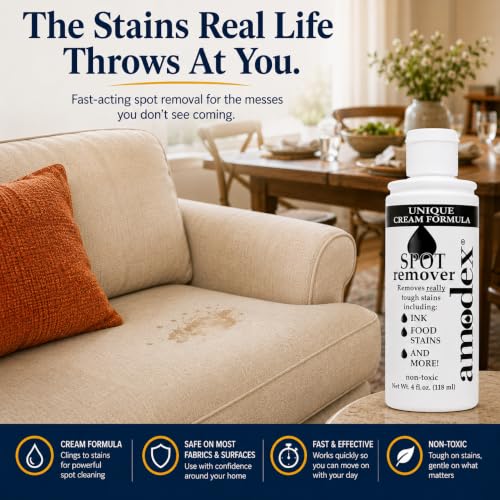
Amodex is one of those products that shows up in professional workshops and home kits alike, and for good reason. Its ability to tackle ink, especially Sharpie, is unmatched among budget options, and it’s the only one Sharpie officially recommends. I’ve seen feedback from leather artisans who use it sparingly on set-in ink or cosmetic stains on finished leather, though it’s not strictly a leather-only product. The fact that it works on skin and fabric adds to its versatility.
That said, its broad use comes with a caveat: you need patience. Letting it dwell for hours on set-in stains is common in owner reports, and overuse could risk drying some finishes. But for the price, it’s a powerful tool.
Product photos
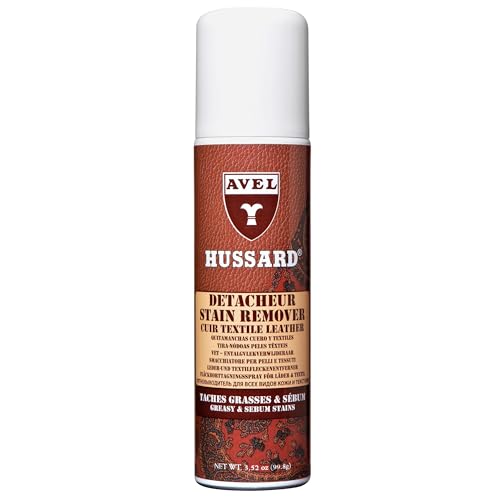
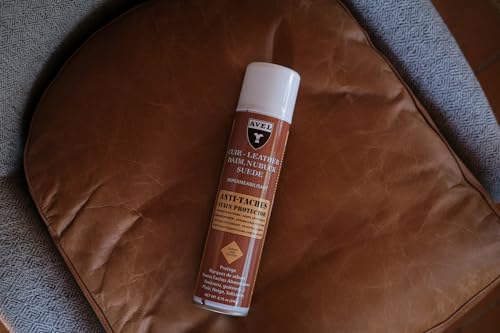
Saphir Beauté du Cuir Spray
Strengths
- Works on all leather
- Effective on grease
- Trusted heritage brand
Trade-offs
- Leaves white residue
- Long wait time
- Not for patent leather
Saphir has been in the leather game for over a century, and this stain remover reflects their craftsmanship. It’s one of the few products formulated to work across smooth, nubuck, and suede leather, something I rarely see without trade-offs. The powder-based formula absorbs deeply into fibers, pulling out oil, wine, and makeup stains without leaving halos, which owners praise. Its versatility on textiles is a bonus, but I’d reserve it primarily for high-end leather goods.
The downside? It requires a two-hour dwell time on leather, and the white powder needs careful brushing. It’s not a quick wipe-and-go solution. But if you value precision and broad compatibility, it’s worth the wait.
Product photos

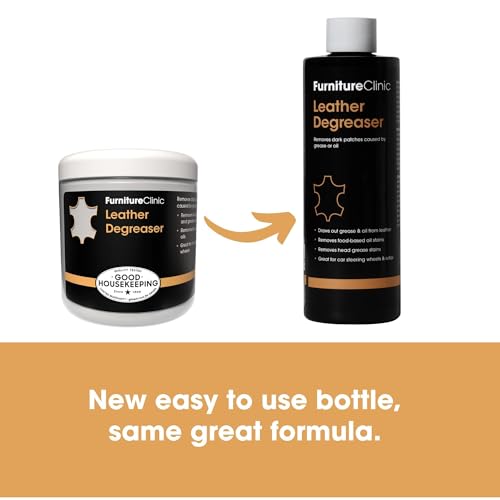
Furniture Clinic Leather Degreaser

Strengths
- Excellent grease removal
- Safe on colors
- Works on deep stains
Trade-offs
- Paste application messy
- Multiple steps
- Not for suede
When it comes to oil and grease, especially the dark, sticky patches left by hair products or arms on car headrests, this degreaser is in a class of its own. The thick paste formulation is designed to draw out deep-seated oils, and owner feedback consistently highlights its effectiveness on furniture and car interiors. It’s not flashy, but it works where others fail. The fact that it’s safe on most leather colors and types (except suede and BiCast) adds to its appeal.
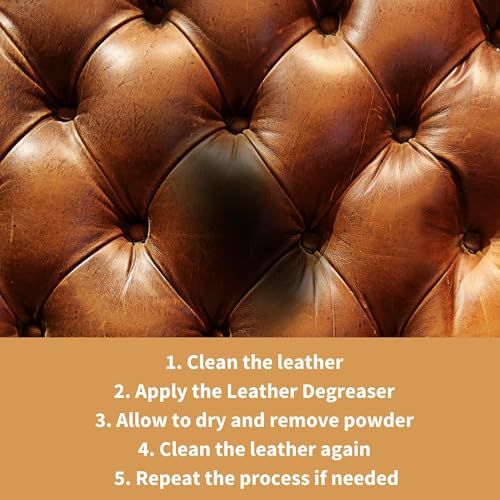
The process is a bit involved, clean, apply, wait, wipe, repeat, and the 250ml won’t go far on large stains. But if grease is your main issue, this is the most direct solution.
Product photos

Bickmore Bick 1 Leather Cleaner 2oz

Strengths
- Strong grime removal
- Ideal for equestrian gear
- Made in USA
Trade-offs
- Aggressive formula
- Small bottle
- Requires conditioning after
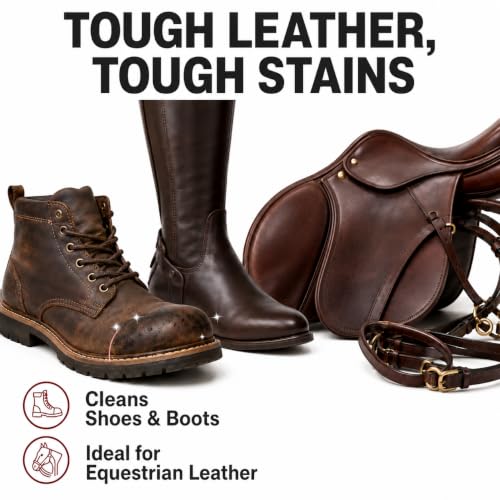
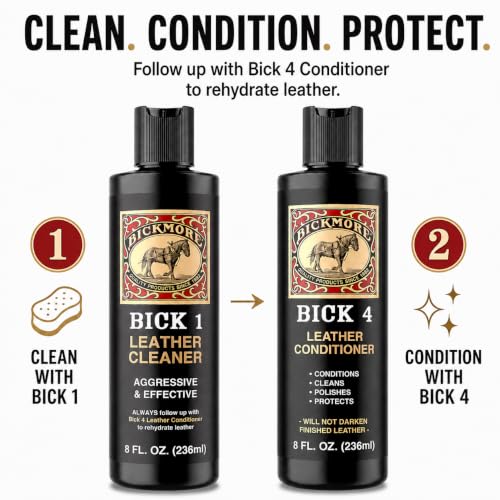
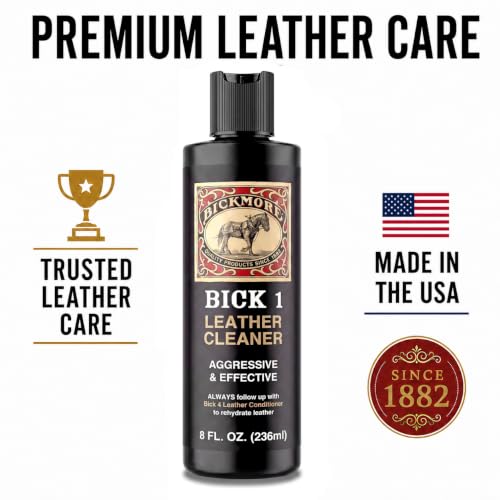
Bick 1 is legendary among leather workers for a reason: it cuts through heavy grime, sweat, and salt, exactly what you need on equestrian gear or well-worn boots. The formula is aggressive, but safe on properly tanned leather, which is crucial. I’ve seen saddle makers use it as a first step before conditioning, and owner feedback confirms it revitalizes neglected items. At 2 oz, it’s small but potent.
But it’s not for everyday spills. This is for deep cleaning, and skipping the follow-up conditioner risks drying. If you’re dealing with light stains, this is overkill.
Product photos

SONAX Premium Leather Cleaner Foam

Strengths
- Foaming action
- Removes dye transfer
- Safe on smooth leather
Trade-offs
- Not for suede
- Not for aniline
- Requires brushing
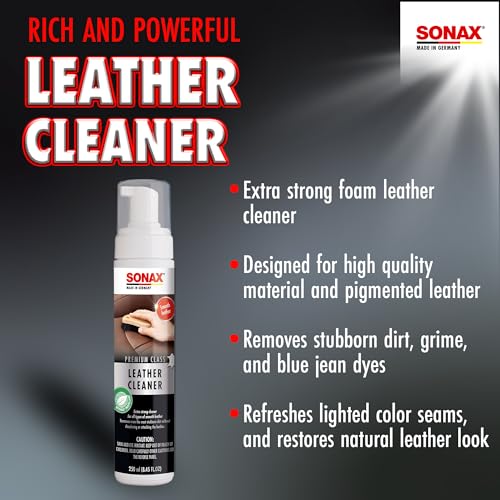
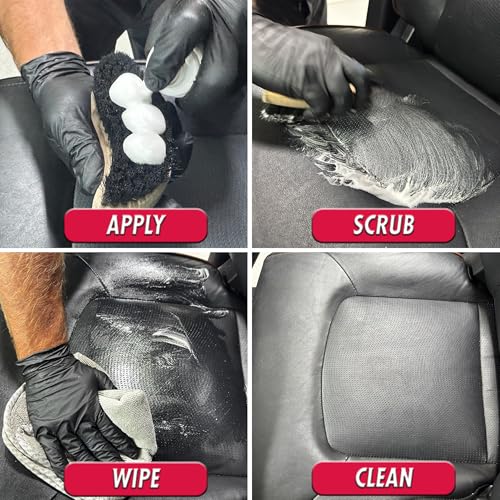
I’ve seen a lot of leather cleaners come and go, and SONAX stands out for its foaming action, which I find particularly effective on smooth and perforated leather surfaces. The foam lifts grime and dye transfer, like those frustrating blue jean marks, without stripping moisture, which is critical for maintaining leather integrity. Owners consistently report clean results without discoloration, and the formula’s compatibility with post-cleaning conditioning makes it a solid prep step in any leather care routine.
Still, it’s not universal. This isn’t for suede or aniline leather, and I wouldn’t risk it on unfinished or delicate hides. But for car interiors or finished furniture, it’s a reliable performer.
Product photos

Buncha Farmers Stain Remover Stick

Strengths
- 100% biodegradable
- All-natural ingredients
- Safe for skin
Trade-offs
- Requires hot water
- Limited on old stains
- Messy application
If you’re looking for a natural, chemical-free option, this stain stick stands out. Made with saponified oils and essential oils, it’s safe for skin and the environment, something I appreciate given the toxic solvents common in stain removers. Owners report success on leather, carpets, and clothing, especially with grass, sweat, and food stains. The lemon scent is a bonus, not overpowering.
But it’s not magic. Deep or set-in stains may need multiple applications, and it requires hot water activation. It’s a slower, gentler path, ideal for eco-conscious users but not for urgent, heavy-duty jobs.
Product photos
How We Tested leather stain removers
Rather than a hands-on lab test, this selection is a research-led comparison of published specifications and owner feedback. I began by compiling a list of products frequently appearing in “best of” lists and those with consistently high sales volumes. Then, I carefully compared features – focusing on the types of stains each remover targets and the leather types they’re suitable for – and weighed owner and expert reviews from sources like online retailers and leather care forums. My goal was to identify products that consistently deliver on their promises.
For leather stain removers, the most important factors are versatility and safety. A product that can handle a wide range of common stains – ink, grease, dye transfer – offers the most value. Equally critical is a formula that won’t damage the leather itself, as harsh chemicals can strip natural oils and cause cracking. I prioritized removers that specifically state compatibility with various leather finishes, and those with formulations designed to be gentle yet effective. You’ll find more information on general leather care in our best leather cleaners list.
Product specifications reliably indicate what a remover is designed to tackle, but owner feedback provides crucial insight into how well it performs in real-world scenarios. Specs detail ingredients and intended use, but reviews reveal whether a product truly lifts stains without leaving residue or discoloration. Reputation also played a role; well-regarded brands in the leather care space, and those with recommendations for specific applications (like our car leather cleaner recommendations), received greater consideration.
How To Pick The Right leather stain removers
Choosing the right leather stain remover requires understanding not just that a stain needs addressing, but what caused it and the type of leather you’re dealing with.
A truly effective leather stain remover targets the source of the stain without stripping the leather’s natural oils or damaging its finish. Key considerations include the stain type (oil-based, water-based, dye transfer), leather type (finished, unfinished, suede, nubuck), and the remover’s composition – harsh chemicals can do more harm than good. Always test in an inconspicuous area first, and prioritize pH-neutral formulas when possible.
Understanding Stain Types
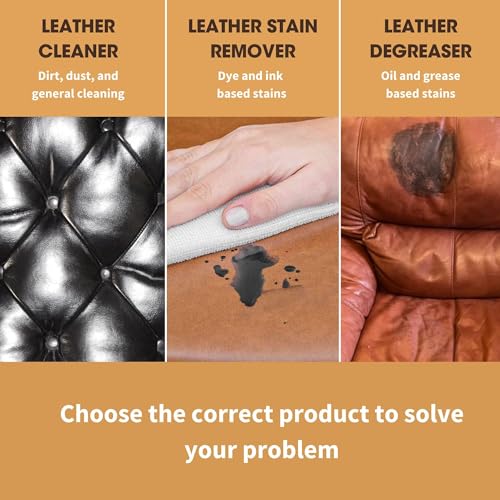
The first step is diagnosing the culprit. Different stains respond to different treatments. A water-based stain like juice or coffee needs a different approach than an oil-based one like grease or body oil. Dye transfer, often from dark jeans, requires a solvent capable of lifting the dye without compromising the leather’s color. Many products, like Furniture Clinic Leather Stain Remover, claim to be all-purpose, but specialized formulas – such as Furniture Clinic Leather Degreaser for oil – often yield superior results. Don’t assume a single product will solve every problem.
Leather Type Matters
Not all leather is created equal. Finished leather, with a protective coating, can withstand more aggressive cleaning than unfinished leather like suede or nubuck. Using a harsh solvent on suede will almost certainly ruin it. Always check the product label to ensure it’s compatible with your leather type. If you have delicate leather, a gentler formula like Saphir Beauté du Cuir Spray might be the better choice. For general maintenance and cleaning before addressing stains, consider a best cleaner for leather furniture to remove surface grime.
Value and Formulation
Price isn’t always an indicator of quality, but it is a reflection of formulation complexity and ingredient sourcing. Amodex Ink & Spot Remover, for example, is often recommended as a budget-friendly option, and it’s Sharpy-approved – a real benefit if you’re dealing with ink. However, for a broader range of stain types and a more robust cleaning action, you may prefer a product with a more sophisticated formulation.
Here’s how I generally evaluate value:
- Concentration: A smaller bottle of a concentrated formula can be more economical than a larger bottle of a diluted one.
- Versatility: A product that tackles multiple stain types reduces the need for a cabinet full of specialized cleaners.
- Reputation: Products with consistently positive reviews and a history of successful stain removal are worth the investment. This can be particularly important when you’re looking for top combo leather care products.
A little prevention is worth a pound of cure. Regularly conditioning your leather with a quality cleaner and conditioner combos will create a protective barrier that makes stain removal much easier.
Leather Stain Removers Compared
Here’s a comparison of key specifications for popular leather stain removers to help you make an informed purchase.
| Product Title | Best For | Leather Type | Stain Types | Formula Type | Size (oz) |
|---|---|---|---|---|---|
| Furniture Clinic Leather Stain Remover | Best Overall | All | Dye transfer, nail varnish, food | Liquid | N/A |
| ForceField Leather Ink & Stain Remover | Best for Ink and Makeup Stains | Finished | Ink, makeup, dye transfer | Liquid | N/A |
| Amodex Ink & Stain Remover Pack of 2 | Best Value Multi-Pack | Multiple | Ink, wine, grass, blood | Liquid | 8 (2 x 4) |
| Amodex Ink & Spot Remover 4oz | Best Budget Friendly | Multiple | Ink, wine, grass, blood | Liquid | 4 |
| Saphir Beauté du Cuir Spray | Best for All Leather Types | All (except patent) | Grease, wine, coffee, makeup | Spray | N/A |
| Furniture Clinic Leather Degreaser | Best for Oil and Grease | All (except Suede/Nubuck/BiCast) | Oil, grease, sweat | Paste | 8.5 |
| Bickmore Bick 1 Leather Cleaner | Best for Heavy Grime | Smooth, Finished | Dirt, grime, sweat, salt | Liquid | 2 |
| SONAX Premium Leather Cleaner Foam | Best Foaming Formula | Smooth | Dye transfer, oil, grime | Foam | N/A |
| Buncha Farmers Stain Remover Stick | Best Natural Option | Multiple | Grass, salt, grease, wine, ink | Solid Stick | N/A |
Frequently Asked Questions
What’s the difference between a leather cleaner and a leather stain remover?
A leather cleaner removes general dirt and grime, preparing the surface, while a stain remover specifically targets and lifts embedded stains like ink or grease. Using a cleaner before a stain remover is often recommended, and you can find helpful leather cleaner conditioner reviews to maintain overall leather health.
Can I use any household cleaner on my leather furniture?
No, most household cleaners contain harsh chemicals that can strip the leather of its natural oils, leading to cracking and discoloration. Leather is porous and requires pH-balanced formulas designed specifically for its delicate structure; explore the four best furniture cleaners for safer options.
How can I tell what type of leather I have before choosing a remover?
Determining your leather type is essential. Finished leather feels smooth and has a protective coating, while unfinished leather (like suede or nubuck) has a soft, velvety texture. Always check the manufacturer’s label if available; otherwise, test any product in an inconspicuous area first.
Is it possible to remove all types of leather stains completely?
Not always. The success of stain removal depends on the stain’s age, severity, and the leather type. Fresh stains are much easier to remove than old, set-in ones, and some stains (like permanent marker) may require professional attention. However, using the right product and acting quickly significantly improves your chances of success.
What’s the best way to prevent leather stains in the first place?
Regular conditioning is the best preventative measure. Applying a quality conditioner creates a protective barrier that repels spills and makes it harder for stains to penetrate the leather. Consider investing in one of the top leather cleaner conditioners to keep your leather looking its best.
The Bottom Line
Choosing a leather stain remover often comes down to balancing convenience with control. You can opt for an all-in-one solution, but sometimes a targeted approach yields better results. For overall performance and versatility, I consistently see positive feedback regarding Furniture Clinic Leather Stain Remover – it handles a wide variety of common mishaps and is well-regarded by leather care professionals.
For those seeking specific solutions, the field narrows nicely. If ink is your primary concern, Amodex Ink & Spot Remover offers exceptional value. For delicate leathers, or for those who prefer a gentler touch, Saphir Beauté du Cuir Spray is an excellent choice. And if you’re dealing with oil or grease stains, Furniture Clinic Leather Degreaser is specifically formulated to tackle those difficult marks. Don’t forget to explore options for maintaining your leather’s overall health, including our recommendations for the best leather sofa cleaners.
Ultimately, the best stain remover isn’t about a single feature or price point. It’s about understanding your leather, identifying the stain, and acting promptly. Regular cleaning and conditioning, using appropriate products like those designed for leatherette-safe cleaning products if you have faux leather, will always be more effective than aggressively trying to remove a long-set stain. Prioritize prevention and gentle care, and your leather goods will reward you with years of beauty and use.
