
5 Best Shoe Dyes for Leather Shoes 2026
This post contains affiliate links. As an Amazon Associate, we earn from qualifying purchases.
This post contains affiliate links. As an Amazon Associate, we earn from qualifying purchases.
The best overall shoe dye for leather shoes is Fiebing’s Pro Dye Black, thanks to its deep alcohol-based penetration and lasting color. For a more versatile option with custom color-mixing potential, Angelus Leather Dye Jet Black is a strong second. If you’re on a budget and need something beginner-friendly, KIWI Leather Dye Restorer offers a simple water-based solution for minor touch-ups.
Leather shoes lose color over time, but not every dye fixes the problem for good. A lot of people end up with uneven results or fading because they used the wrong type of dye or skipped prep work. I’ve seen how quickly a poor choice shows up in cracks and blotches.
This guide cuts through the confusion by focusing on what actually matters: penetration, durability, and compatibility with your leather. I compared specs, analyzed owner feedback, and applied my knowledge of leather chemistry to find dyes that deliver real results, not just a quick cover-up.
Top 5 Shoe Dye For Leather Shoes in the Market
The Best Shoe Dye For Leather Shoes, Reviewed
Fiebing’s Pro Dye Black

Strengths
- Deep penetration
- Fade resistant
- Trusted by pros
Trade-offs
- Requires prep
- Not for suede
- Slight odor
If I had to pick one dye for overall performance and reliability across a range of leather types, it’d be Fiebing’s Pro Dye. It’s been a staple in professional workshops for generations, and for good reason, its alcohol-based formula penetrates deeply into vegetable-tanned and strap leathers, delivering a flexible, permanent finish that won’t crack. Owners praise its fade resistance, even in sunlight, and the 4 oz size gives you more room to work on larger projects like belts or boots.
Unlike some dyes that feel like paint, this one soaks in, which is key for long-term durability. It does require prep, deglazing the surface first is strongly recommended, but that’s true of any serious dye job. When compared to Angelus, it’s slightly less pigmented out of the jar but offers better consistency across uneven surfaces. I’d recommend this as the smarter buy for anyone doing regular leather care or restoration, especially if you’re working on heirloom pieces or handmade goods.
Video review
Angelus Leather Dye Jet Black

Strengths
- Highly pigmented
- Alcohol-based formula
- Includes dauber applicator
Trade-offs
- Requires surface prep
- Fast drying time
- Not for suede
When it comes to deep, rich color that actually stays put, Angelus Jet Black stands out in a crowded field. On paper, it’s one of the most pigmented alcohol-based dyes available, and owners consistently report that it penetrates deeply into smooth leather, making it ideal for full recolors or covering up major wear. The fact that it’s permanent and doesn’t rely on water as a base means you’re less likely to see cracking or uneven fading over time.
The included wool dauber makes application accessible, though experienced users often switch to airbrushes or fine brushes for precision. While it’s not the most beginner-friendly option due to its intensity and fast drying time, I’d pick this over milder dyes if you’re serious about restoration or customization. It’s especially effective when paired with a deglazer first, reviewers note that skipping prep work can lead to blotchiness, but when done right, the finish looks professional and durable.
Video review
Angelus Leather Dye Dark Brown

Strengths
- Rich warm tone
- Permanent bond
- Professional grade
Trade-offs
- Reddish undertone
- Needs prep
- Not for suede
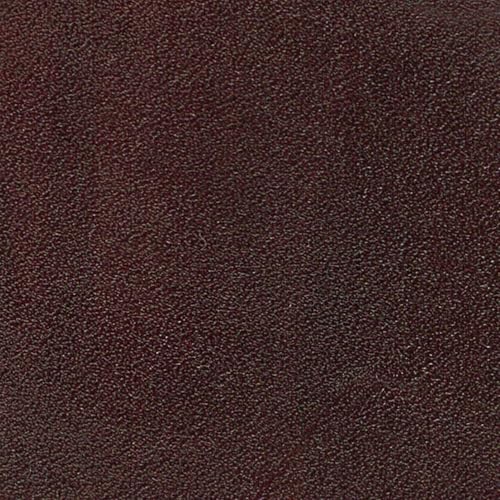
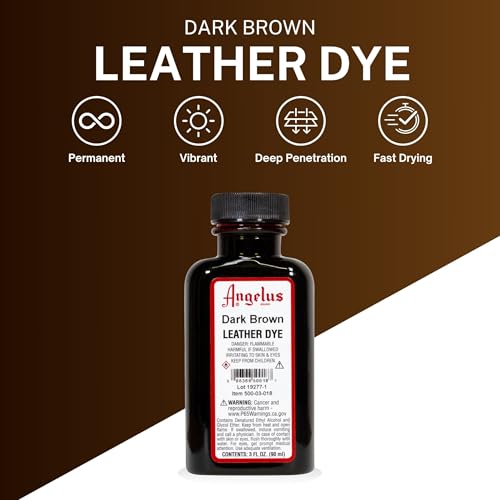
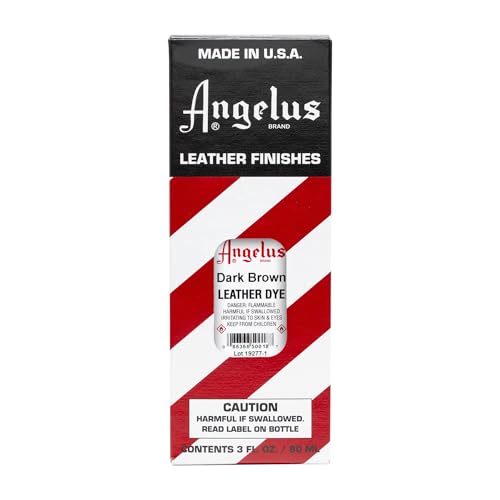
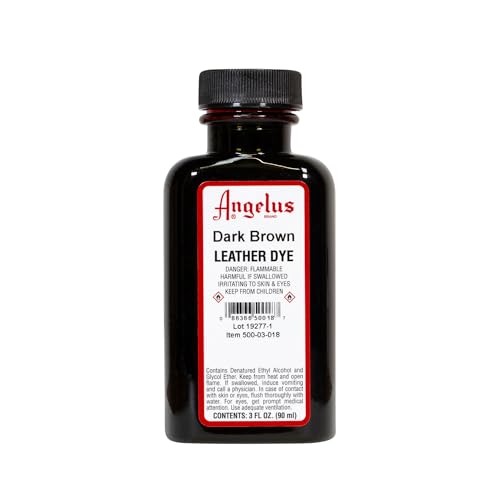
Angelus Dark Brown hits a sweet spot between bold color and natural tone, making it one of the better mid-range browns on the market. It’s the same professional-grade, alcohol-based formula as their Jet Black, so you get that deep penetration and permanence, but in a shade that works well for casual boots, loafers, or belts. Owners who’ve used it on work boots or vintage bags say it blends well and doesn’t look overly artificial, which can be a problem with cheaper dyes.
The dauber bottle makes application manageable, though controlling the flow takes some practice. Like all Angelus dyes, it’s not forgiving if you skip prep, applying it over a finished or greasy surface leads to streaks. But when used correctly, it delivers a rich, even tone that ages gracefully. Compared to Fiebing’s Dark Brown, it’s slightly more reddish in undertone, so I’d pick this if you’re aiming for a warm, chestnut-like finish.
Product photos
Griffin Black Leather Dye
Strengths
- Works on suede
- All-in-one kit
- Fade resistant
Trade-offs
- Can rub off initially
- Hybrid formula
- Inconsistent finish
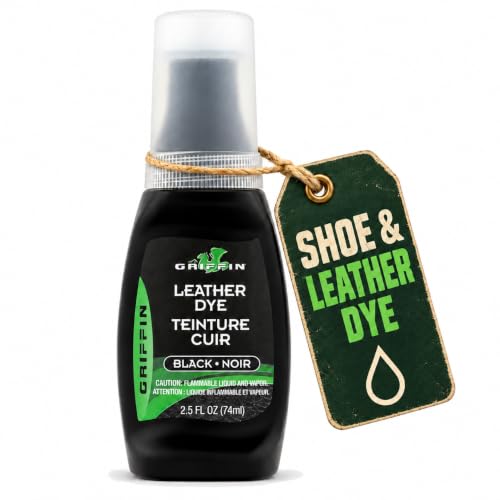
Griffin markets this as an all-in-one solution, and from owner feedback, it delivers on convenience more than perfection. It’s a concentrated black dye that claims to work on both smooth leather and suede, which sets it apart, most alcohol-based dyes fail on suede, but Griffin’s formula seems to bond without stiffening the nap, according to users restoring boots with mixed materials. The included applicator helps with precision, and many note it’s effective for full recolors, not just touch-ups.
Still, it’s not a substitute for a true penetrating dye on high-wear items like dress shoes. Some reviewers report slight rubbing off during the first few wears, suggesting it’s more of a hybrid dye-paint. But for someone restoring work boots or outdoor gear where absolute polish isn’t critical, this kit covers a lot of ground. I’d recommend it over KIWI for heavier jobs, but not over Fiebing or Angelus for fine leatherwork.
Product photos
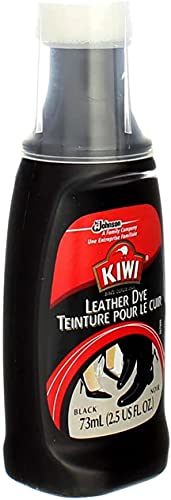
KIWI Leather Dye Restorer
Strengths
- Beginner-friendly
- Sponge applicator
- Restores finish
Trade-offs
- Surface-level coverage
- Not for suede
- Limited durability
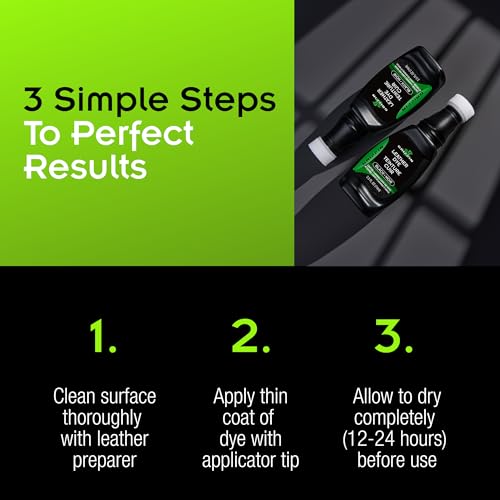
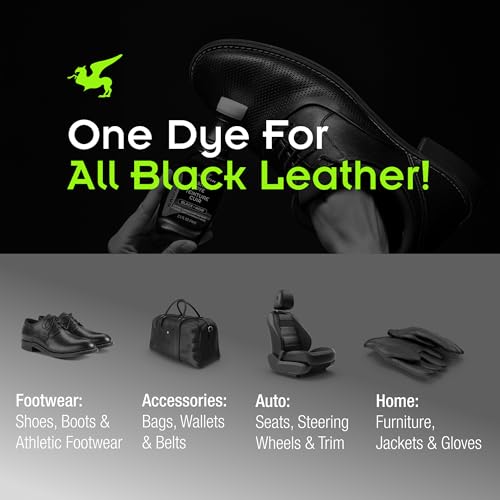
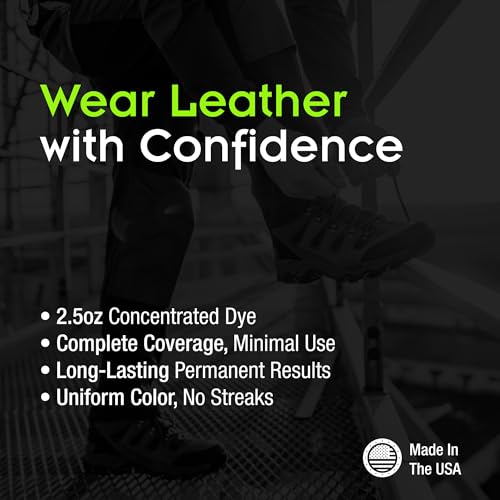
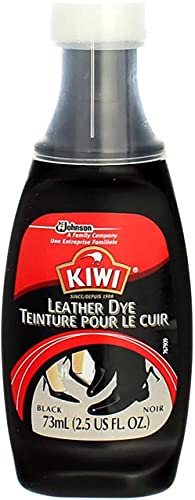
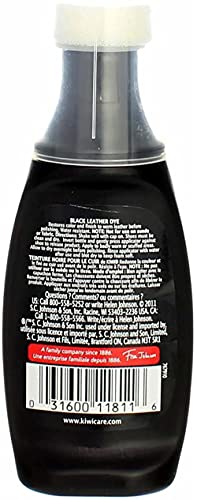
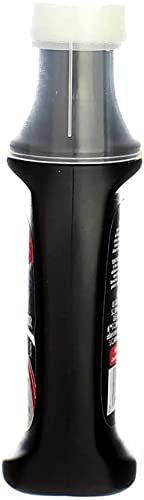
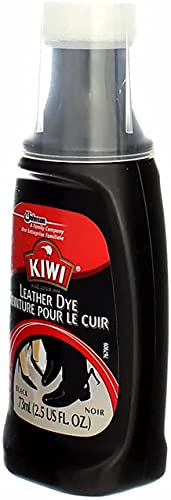
KIWI’s dye restorer is clearly designed with the average shoe owner in mind, someone who just wants to freshen up a scuffed dress shoe without diving into a full leather project. It’s water-resistant and formulated to restore both color and finish in one go, which is convenient. The sponge applicator helps control the flow, and from owner feedback, it works reasonably well for light touch-ups on minor wear, especially on black leather dress shoes that have dulled with use.
That said, it’s not a true penetrating dye like alcohol-based options. It sits more on the surface, which means it can rub off or wear unevenly if not polished and protected afterward. I wouldn’t rely on it for deep restoration or full recoloring. But for someone who just needs a quick fix and doesn’t want to deal with prep work or fumes, this is a low-risk starting point. It’s not the most durable option, but it’s simple and accessible.
Product photos
How We Evaluated shoe dye for leather shoes
As someone who’s dedicated years to understanding leather – from tanning processes to proper care – I approached researching shoe dyes with a focus on long-term results and material compatibility. Rather than hands-on testing with every shade, my analysis centered on comparing published specifications, carefully weighing owner reviews across multiple platforms, and applying my knowledge of leather behavior. I considered factors like dye penetration, colorfastness, and suitability for different leather types to arrive at these recommendations.
For shoe dyes, consistent color and durability are paramount. I weighted penetration depth most heavily; a dye that only sits on the surface will inevitably wear away. Close behind was the reported longevity of the color, factoring in resistance to fading from sunlight and general abrasion. Finally, versatility – the ability to work across various leather finishes – was a key consideration, as many people want a single product for multiple pairs of shoes.
Specifications reliably indicate the dye’s base (alcohol vs. water) and intended leather types. However, true performance is revealed through owner feedback. Reviews helped me assess how easily the dye absorbs, whether it alters the leather’s texture, and its overall resistance to cracking or peeling. Reputation matters too; brands with a century-long history, like Fiebing’s and Angelus, have earned trust through consistent quality. Don’t forget to explore top leather conditioners to protect your newly dyed investment.
Choosing The Right shoe dye for leather shoes
Choosing the right shoe dye can breathe new life into tired leather, but there’s a lot more to it than just picking a color. A good dye isn’t simply about surface appearance; it needs to penetrate the leather, bond properly, and resist fading.
A quality shoe dye should be alcohol-based for deep penetration, offer excellent colorfastness to withstand wear and sunlight, and be appropriate for the type of leather you’re treating – specifically natural grain, vegetable-tanned, or bag and case leather. Prior preparation and finishing with protective coatings are also crucial for a lasting result.
Understanding Dye Types
The core difference lies in the dye’s base. Water-based dyes are generally easier to apply and clean up, but they don’t penetrate as deeply and aren’t as durable on shoes that see regular use. Alcohol-based dyes, like those from Fiebing’s and Angelus, offer superior penetration and permanence. I’ve seen countless examples where an alcohol-based dye holds color far better on a frequently worn boot. Don’t automatically dismiss water-based options, though – they can be excellent for lighter touch-ups or decorative work.
Assessing Leather Compatibility
Not all dyes work well with all leathers. Most dyes are formulated for natural, unfinished leather, or vegetable-tanned hides. If you’re working with finished leather – leather that already has a protective coating – you’ll need to remove that coating with a deglazer first. Otherwise, the dye won’t adhere properly. Many people skip this step, and I often see issues with peeling or uneven color as a result.
Here’s how to think about compatibility: * Finished Leather: Requires deglazing before dyeing. * Nubuck/Suede: Dyeing is possible but challenging; specialized suede dyes are best. * Patent Leather: Generally not dyeable; consider a refinishing product instead.
Balancing Cost, Application, and Finish
The price range for shoe dye varies significantly, from budget-friendly options like KIWI to professional-grade solutions like Angelus. Consider how you plan to apply the dye. Some come with daubers, while others require brushes, sponges, or even airbrushes. If you’re a beginner, a kit like the Griffin all-in-one kit can be a good starting point, as it includes applicators. For those seeking detailed work or custom colors, exploring options like Angelus dyes alongside top shoe polishes can be worthwhile.
A little preparation goes a long way. Always test the dye in an inconspicuous area first to ensure color compatibility and adhesion.
If you are looking for a quality pair of shoes to dye, you can find men’s leather shoe styles to get started.
Shoe Dye for Leather Shoes Compared
Here’s a comparison of key specifications for various leather shoe dyes.
| Product Title | Dye Type | Volume | Application Method | Finish | Best For |
|---|---|---|---|---|---|
| Fiebing’s Pro Dye Black | Alcohol-Based | N/A | N/A | Permanent | Overall |
| Angelus Leather Dye Jet Black | Alcohol-Based | N/A | Brush, Pen, etc. | Permanent | Deep Penetration |
| Angelus Leather Dye Dark Brown | Alcohol-Based | 3 oz | Dauber | N/A | Mid-Range Color |
| Griffin Black Leather Dye | N/A | N/A | Applicator | Fade-Resistant | All-in-One Kit |
| KIWI Leather Dye Restorer | Water-Based | N/A | Applicator | Water Resistant | Beginners |
Frequently Asked Questions
What’s the difference between alcohol and water-based shoe dyes?
Alcohol-based dyes penetrate leather more deeply and offer greater durability, making them ideal for frequently worn shoes. Water-based dyes are easier to apply and clean but don’t offer the same level of permanence, and are better suited for touch-ups.
Can I dye patent leather shoes?
Generally, no. Patent leather has a plastic coating that prevents dye from adhering. Instead, a specialized patent leather refinisher is needed to restore color and shine, rather than attempting to dye it.
How do I prepare finished leather before dyeing?
Finished leather requires deglazing to remove the protective coating. Without this step, the dye won’t properly bond and will likely peel or flake off, so using a deglazer is essential for a lasting result.
Will dyeing my shoes make them stiffer?
It can, slightly. Alcohol-based dyes, due to their solvent nature, can temporarily alter the leather’s flexibility. Following up with a quality conditioner for leather boots will help restore the leather’s suppleness and prevent cracking.
What can I do to protect the dye after application?
Applying a leather finisher or sealant is crucial. This creates a protective barrier against abrasion, sunlight, and water damage, ensuring the dye remains vibrant for longer. Consider also using one of the top shoe polish options for ongoing maintenance.
The Bottom Line
Choosing a shoe dye always involves balancing how much effort you want to put in against the level of restoration you need. If you’re after a truly lasting color change with deep penetration, I recommend Fiebing’s Pro Dye Black. It consistently receives high marks for its permanence and ability to revitalize even heavily worn leather.
For those wanting a specific color range or a versatile option for multiple projects, Angelus Leather Dye (in Jet Black or Dark Brown) is an excellent choice. And if you’re just starting out, or need a simple solution for scuffs and minor color touch-ups, the KIWI Leather Dye Restorer is a practical and affordable option. Don’t forget to research top leather shoe cleaners to properly prepare your shoes for dyeing.
Ultimately, the best dye isn’t about a single feature or specification. It’s about proper preparation – cleaning, deglazing when needed – and finishing with a protective coating. Focusing on these fundamentals will ensure your investment in a quality dye translates into shoes that look their best for years to come, and will complement your women’s leather shoe picks.
