
How to Care for a Leather Dog Collar & Avoid Irreversible Damage
This post contains affiliate links. As an Amazon Associate, we earn from qualifying purchases.
This post contains affiliate links. As an Amazon Associate, we earn from qualifying purchases.
To care for a leather dog collar, follow a simple 4-step routine: wipe it clean after muddy walks, let it air-dry completely away from heat, condition it every 4-6 weeks with a product made for vegetable-tanned leather, and store it flat in a dry place. The core mistake is letting the collar stay damp, which invites mold within 48 hours and leads to permanent damage.
That moisture timeline is the silent killer. A collar that feels just damp to the touch after a walk can still hold enough water inside the leather fibers to start a problem you won’t see until it’s too late. The process isn’t about complicated rituals; it’s about consistency with a few essential rules.
What follows is the straightforward routine, the exact tools to use, the schedule that matches your dog’s life, and the critical warnings most guides glance over.
Key Takeaways
- Never store a damp leather collar. Mold can form within two days in a poorly ventilated space, leaving permanent surface marks.
- Condition with a product made for vegetable-tanned leather every 4-6 weeks for active dogs, focusing on high-flex areas like under the buckle.
- Remove the collar before your dog swims. Saltwater and repeated soaking dry out and degrade leather faster than any other exposure.
- Check hardware monthly. Swivel snaps should move freely, and D-rings should show no cracks or significant wear.
- Avoid silicone-based waterproofing sprays. They create a surface barrier that prevents proper conditioning and can lead to dry, brittle leather underneath.
The 4-Step Leather Collar Care Routine
Let me share what I’ve learned from years of handling leather. The goal isn’t to keep the collar looking brand new, it’s to let it age gracefully without cracking. This four-step process is all you need.
Step 1: Wipe Down After Every Walk. This is the most important habit. After a muddy or dusty outing, wipe the collar with a soft, dry cloth. For stuck-on dirt, use a slightly damp cloth. The key is to avoid soaking it. Think of it like wiping down a wooden workbench; you’re removing the grit before it gets ground in.
Step 2: Air-Dry Completely. If the collar gets wet, dry it naturally. Lay it flat on a towel in a room-temperature, well-ventilated spot. This is non-negotiable. Never use a hair dryer, radiator, or direct sun. Artificial heat cooks the natural oils out, leaving the leather stiff and prone to cracking. A collar should feel completely cool and dry to the touch, this usually takes 12 to 24 hours.
Common mistake: Putting a slightly damp collar away in a drawer or hook. Trapped moisture has nowhere to go, and that’s exactly how you get white or grey fuzzy mold spots on the inside of the collar a week later.
Step 3: Condition on Schedule. Conditioning replaces the natural oils that wear and cleaning remove. Use a conditioner made for vegetable-tanned leather, like Renapur or Leather Genie. Apply a small amount with a soft cloth, working it into the leather, especially under the buckle and around the D-ring where the leather flexes most. A little goes a long way.
Step 4: Store It Flat. When not in use, store the collar flat in a dry place. Don’t coil it tightly on a hook for weeks, that sets a permanent crease. Avoid sealed plastic bags or airtight containers; leather needs to breathe. A shelf in a closet is perfect.
How Often to Clean and Condition
This isn’t a one-size-fits-all schedule. A couch potato pup and a mud-loving retriever have completely different needs. The Lille Björn provides a useful framework that I’ve adapted here.
| Your Dog’s Activity Level | Cleaning Frequency | Conditioning Frequency |
|---|---|---|
| Everyday wear, daily walks | Every 2-3 weeks | Every 4-6 weeks |
| Occasional wear, indoor dog | Every 6-8 weeks | Every 2-3 months |
| Active dog, frequent mud/water | After each messy outing | Every 3-4 weeks |
The “conditioning” cell is your trigger. If the leather looks dry, feels stiff, or has lost its subtle sheen, it’s time. Don’t wait for the calendar. For high-energy dogs, the area under the buckle needs attention most. Saliva and moisture accumulate there, drying out the leather faster than anywhere else.
The Right (and Wrong) Products to Use
Your choice of cleaner and conditioner decides whether the collar lasts two years or ten. Here’s some straightforward advice.
Use This:
- pH-Neutral Soap: For cleaning. A drop of castile soap in water works. It’s gentle and won’t strip oils.
- Beeswax-Based Conditioner: Products like Renapur or Leather Genie. They nourish with beeswax and jojoba oil, which also improves water resistance.
- Soft, Dry Cloth: For everything, wiping, applying conditioner, polishing hardware.
Avoid This:
- Saddle Soap: Unless your dog is literally a plow horse, skip it. It’s a heavy, alkaline cleaner formulated for filthy, thick saddle leather. On a collar, it dries out the leather and can cause uneven darkening.
- Silicone-Based Sprays: I stopped recommending these years ago. They sit on the surface, creating a shiny barrier that prevents subsequent conditioners from absorbing. The leather underneath eventually dries out and becomes brittle.
- Household Cleaners & Harsh Chemicals: Bleach, detergent, solvents, and anything not made for leather will damage the fibers and stitching.
A well-maintained full-grain leather collar doesn’t peel or fray. It develops a rich patina that tells the story of every walk. That’s the sign of a timeless material.
Hardware and Safety Checks
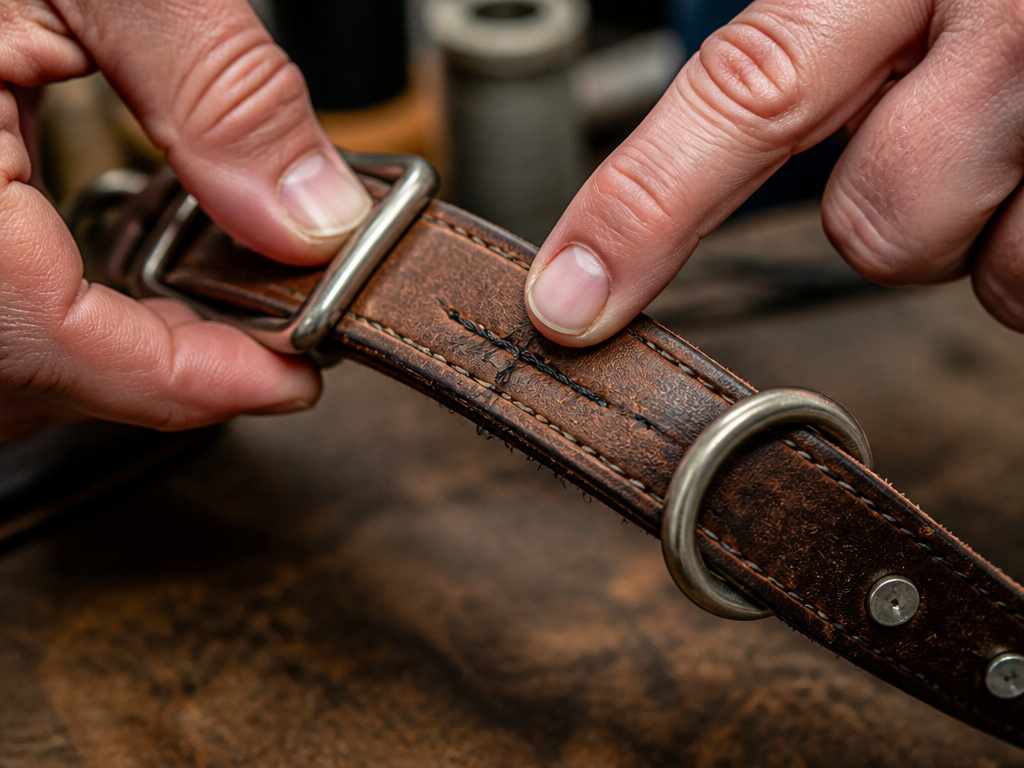 The leather is only half the story. The buckles, D-rings, and stitches are what keep your dog secure. FIREDOG’s safety guide is blunt: regularly check for signs of wear and stop using the product immediately if you find any.
Make this a monthly hands-on ritual. Run your fingers along the entire collar. * Stitching: Look for fraying, broken threads, or sections pulling away from the leather. * Buckle & D-Ring: Check for cracks, significant rust, or deformation. The D-ring should be welded, not a cheap folded piece of metal. * Snap Hook: It should open and close with a positive click and the swivel should move freely without feeling loose.
If anything feels or looks off, retire the collar. It’s not worth the risk. This kind of inspection is as important as choosing a leather collar in the first place.
What to Do When Things Go Wrong
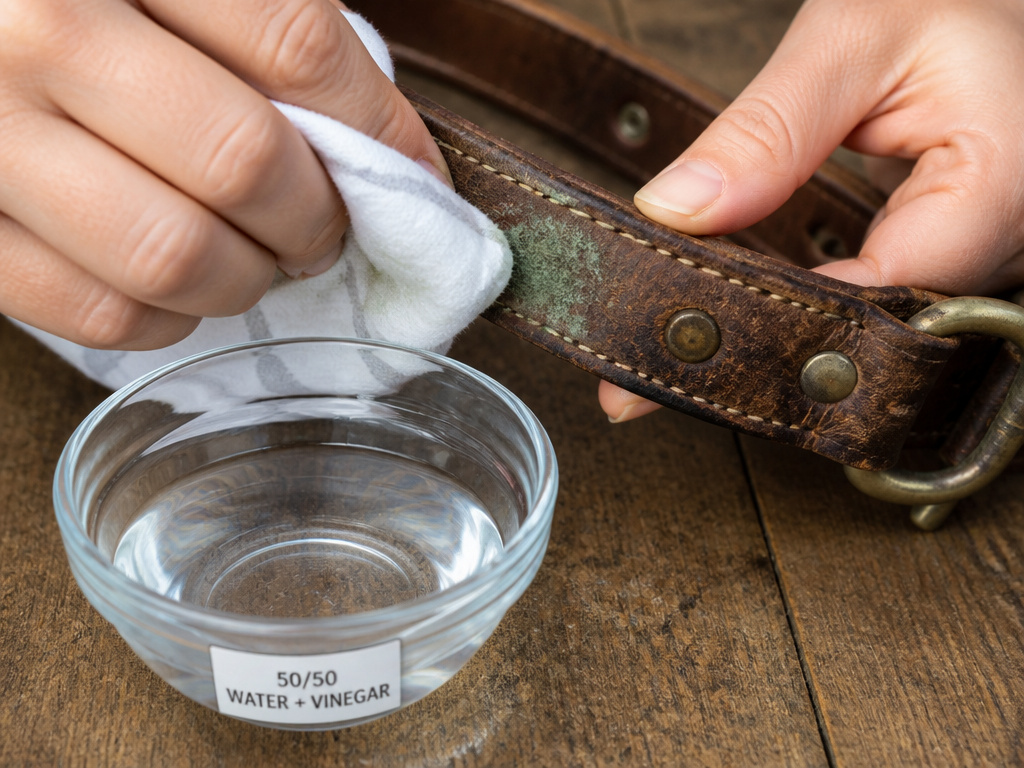 Even with perfect care, accidents happen. Here’s how to handle the most common issues.
Mold: If you see white, grey, or green fuzzy spots, act fast. Wipe the area with a cloth dampened with a 50/50 mix of water and white vinegar. Dry it thoroughly, then condition once fully dry. The earlier you treat it, the less likely it is to leave a permanent stain.
Stiff, Dry Leather: Don’t just drown it in conditioner. First, soften a leather collar with a very light application of conditioner, massaging it in well. Let it absorb for 24 hours. Repeat if needed. Forcing a stiff collar can crack it.
Strong Odors: Odor means bacteria and oils are deep in the fibers. Air the collar out for 48 hours. If the smell persists, clean it with a pH-neutral soap, dry it completely, then condition. The conditioner neutralizes the organic compounds causing the smell.
Water Damage from Swimming: This is a big one. The FIREDOG safety guide states you should never allow your dog to swim while wearing a collar and leash attached, due to entanglement risk. But even without that, saltwater and chlorine are brutal. If it happens, rinse the collar with fresh water, dry it meticulously, and condition it as soon as it’s dry.
Frequently Asked Questions
Can I machine wash a leather dog collar?
No. Never machine wash or tumble dry a leather collar. The agitation, heat, and detergent will destroy the leather’s fibers, cause severe stiffness, and likely ruin the hardware. The proper cleaning process is a gentle hand-wipe only.
How do I know when it’s time to condition the collar?
The leather will tell you. If it looks dull, feels dry or rough to the touch, or has lost its suppleness, it’s time. Check the manufacturer’s recommended conditioning schedule.com/how-to-condition-a-leather-dog-collar/) every 4-6 weeks for an active dog, but always let the leather’s condition be your final guide.
Is vegetable-tanned leather better for dog collars?
In my experience, yes. Vegetable-tanned leather is more durable and ages with a beautiful patina. More importantly, it’s tanned with natural materials, unlike chrome-tanned leather which can sometimes irritate a dog’s sensitive skin. It’s the leather I look for in the best leather collars.
How can I prevent the brass hardware from tarnishing?
Solid brass will naturally develop a darker patina, which many people enjoy. If you prefer it shiny, use a soft cloth and a tiny amount of brass polish, being careful to avoid the leather. For plated hardware, just wipe it dry after wet walks, polish will strip the plating.
My dog’s flea treatment got on the collar. What now?
Remove the collar before applying any liquid spot-on flea or tick treatment. These chemicals can permanently stain and degrade leather. Only put the collar back on once the application spot is completely dry. If some gets on the collar, clean the area gently with a damp cloth and condition it afterward.
Before You Go
Leather care is simple, but it’s not optional. The one rule that overrides all others is this: never let moisture win. Dry the collar completely, every single time. That alone will prevent 90% of the problems that kill leather.
Use a conditioner like Otter Wax or Filson. Check the hardware with your hands every month. And if you’re ever unsure, remember that the principles of general leather care apply here, nourish the material, protect it from extremes, and respect its nature.
A well-cared-for leather collar isn’t just an accessory; it’s a record of your time together. It should soften and darken with memory, not crack and fade from neglect.
