
Learn How to Care for Leather and Prevent Damage & Cracking
This post contains affiliate links. As an Amazon Associate, we earn from qualifying purchases.
Leather care requires matching three things: routine dusting, targeted conditioning when the leather feels dry, and storage away from heat and direct sunlight. The most common failure isn’t neglect, it’s applying the wrong product too often, which clogs pores and prevents the hide from breathing.
That dry feel is the leather telling you its natural oils are depleted. Your job is to replace those oils without gumming up the surface, a balance that hinges on knowing what type of leather you’re dealing with and how it was finished.
What follows is a straightforward guide. This explains what leather actually needs, the specific tools that work, a simple three-step routine, and how to store pieces so they don’t dry out or crack. By the end, you’ll know why you’re doing each step, not just how.
Key Takeaways
- Leather needs to breathe; over-conditioning with wax-heavy products clogs its pores and leads to a stiff, greasy feel.
- Condition only when the leather feels dry to the touch, not on a fixed schedule, this could be every 4 months or once a year.
- Store leather in a stable environment around 70°F (21°C) with 50% humidity; an attic or hot car will cause irreversible drying and cracking.
- Always test any cleaner or conditioner on a hidden area first; an old finish can react unpredictably.
- For daily dusting, use a dry, soft brush before any damp cloth touches the surface, especially on dry, unfinished leathers.
What Does Leather Actually Need?
Think of leather as skin. It needs to stay supple, it needs to expel moisture, and it needs protection from things that will desiccate it. The marketing copy talks about “nourishing” and “protecting,” but let’s be clear about one thing: leather care is about maintenance, not enhancement.
Leather is a porous, fibrous material. Its durability comes from the collagen network within the hide, which is kept flexible by natural oils. Care routines aim to replenish those oils as they deplete from wear, exposure, and time, without sealing the surface so completely that moisture and air cannot pass through.
Ignoring this balance is how you end up with a bag that feels like plastic or a jacket that cracks along the creases. The leather will tell you what it needs, a slight stiffness, a loss of luster, a pale, chalky appearance in the grain. Your first job is to learn to read those signs.
The Right Tools for the Job (And What to Avoid)
You don’t need a cabinet full of potions. A few specific, purpose-built tools will handle 95 percent of situations. Reach for the wrong one, and you’re adding a problem instead of solving one.
A Dry, Soft-Bristled Brush: This is your first line of defense. Brushing removes abrasive dust and grit before you ever apply moisture. I learned this on a dry, unfinished vegetable-tanned belt. Using a damp cloth first raised the grain, making it feel rough. A dry brush first, then a barely-damp cloth, kept the surface smooth. A horsehair brush or a very soft shoe brush is perfect.
White Cotton Cloths: Always apply cleaner or conditioner to the cloth first, never directly onto the leather. This gives you control over the amount and prevents product from pooling in seams or stitch holes. Old t-shirts work, but cheesecloth or dedicated lint-free applicator cloths are better.
A pH-Balanced Leather Cleaner: For routine cleaning, a mild soap and water solution works, as Ford’s manual suggests. For deeper cleaning, use a product designed for the task, like **[Motorcraft Premium Leather and Vinyl Cleaner](https://www.amazon.com/dp/B01N7587I7? Avoid anything with alcohol, solvents, or strong detergents.
A Lightweight, Oil-Based Conditioner: This is where most people go wrong. You want a conditioner that absorbs, like King Ranch Leather Conditioner for their specific leathers or a neutral oil like pure neatsfoot or coconut oil blend for traditional items. Avoid silicone-heavy “conditioners” and never use mink oil on fine furniture or garments, it’s too heavy and will darken the leather significantly.
The Three-Step Core Routine
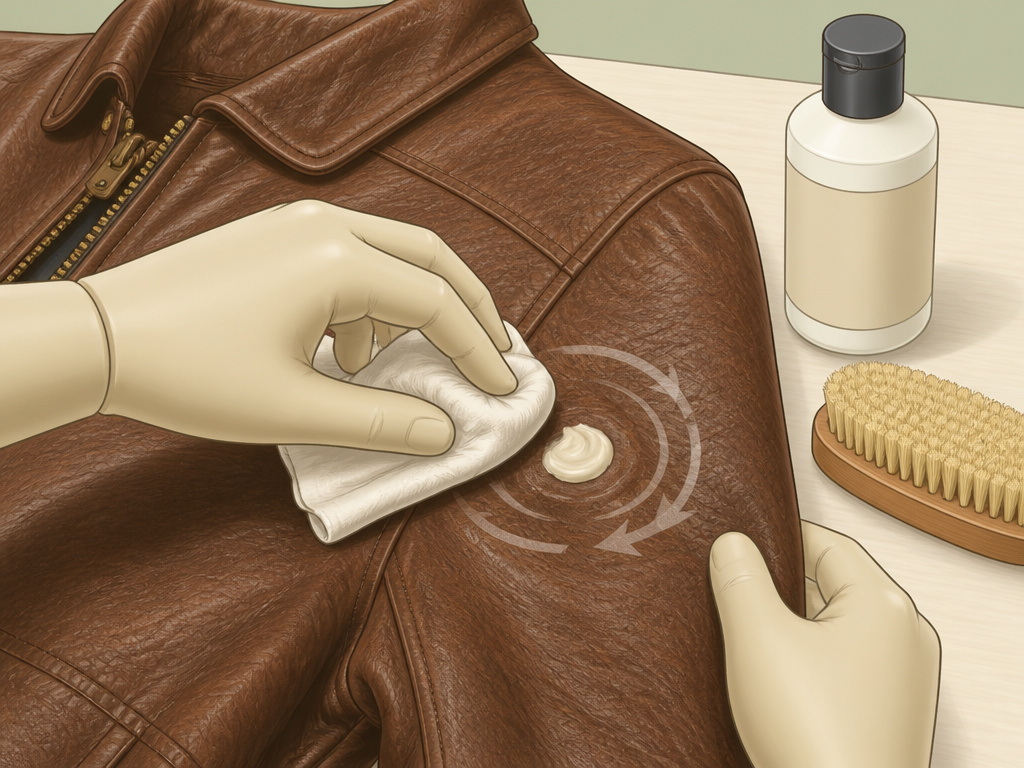
This isn’t a rigid schedule. It’s a cycle you initiate based on the leather’s condition. The trigger is the leather itself, not the calendar.
1. Clean: Remove, Don’t Add
Dust and body oils are the main abrasives. Start with a dry brush. For general cleaning, dampen a cloth with distilled water or a mild soap solution, wring it out completely, and wipe the surface. Dry immediately with a separate cloth.
Common mistake: Soaking the leather, especially near seams or perforations. Waterlogged leather loses strength as it dries and can warp.
For a deeper clean, apply a dedicated leather cleaner to your cloth and work in small, circular sections. Let it dwell for a minute, then wipe away with a clean, damp cloth and dry thoroughly. This prepares the surface for conditioning by opening the pores.
2. Condition: Feed the Hide
Conditioning replaces the oils that have evaporated or been worn away. Apply a nickel-sized amount of conditioner to your cloth and rub it into the leather in a circular motion with moderate pressure. You’re working it into the grain, not painting the surface.
How often? When the leather loses its suppleness. For a frequently used jacket, this might be every six months. For a sofa in a stable room, it could be once a year. For aerospace leather, the Perrone Aerospace spec calls for conditioning every 200 flight hours, a specific benchmark for high-use items.
| Leather Type | Conditioning Trigger | Product Type |
|---|---|---|
| Vegetable-Tanned (Belt, Bag) | Surface feels stiff, looks pale | Pure neatsfoot oil or dedicated conditioner |
| Aniline (Sofa, Jacket) | Loss of softness, slight dulling | Lightweight milk or cream conditioner |
| Protected/Pigmented (Car Seats) | According to OEM schedule | Mercedes-Benz Leather Care Foam (A 001 986 59 71) or similar |
| Suede/Nubuck | Special case – rarely conditioned | Suede cleaner & brush only |
3. Protect & Store: Create a Stable Environment
After conditioning, let the piece rest for 24 hours before using or storing. Protection is about environment, not more product. Keep leather away from intense heat sources, direct sunlight, and extreme dryness.
The ideal storage climate, per aerospace standards, is 70°F (21°C) at 50% relative humidity. Your attic or a car in summer can hit 120°F and 10% humidity, that’s a desert to leather. Store items in a cool, dark place inside breathable cotton bags, not plastic.
How to Spot (And Fix) Common Problems
 Leather is resilient, but it has clear failure modes. Here’s what to look for and the first action to take.
Drying & Cracking: The leather feels like stiff cardboard and shows fine white lines, usually in flex areas. This is often from heat and low humidity. * Fix: A deep conditioning treatment may help early cracks, but advanced cracking is structural damage. Focus on prevention with proper leather furniture care for upholstery.
Color Transfer: Dye from dark jeans or newsprint rubs off onto light leather. * Fix: Act quickly. Use a leather cleaner designed for dye transfer, like Motorcraft Premium Leather Cleaner. Test on a hidden area first. Some transfers, as Roche Bobois notes, may be permanent.
Stiffness After Getting Wet: The leather got soaked and dried without conditioning. * Fix: Once completely dry, apply conditioner slowly and patiently, like building a roux, add a little, let it absorb, add more. Force-feeding won’t work.
Sticky or Gummy Residue: From over-application of conditioner or using the wrong product. * Fix: Wipe with a barely-damp cloth to remove surface residue. Let dry fully. Going forward, use less product and choose a lighter conditioner for your leather jacket care.
Specific Care by Leather Item
While the core principles are universal, application varies. Think of it as the same medicine, different dosage.
- Shoes & Boots: Use cedar shoe trees to absorb moisture and maintain shape. Condition the uppers, but pay special attention to the welt and sole edge to prevent drying. Our guide on leather shoe care has the full process.
- Bags & Briefcases: Empty them before storage. Stuff with acid-free paper to hold shape. Condition the straps and handles most, as they get the most wear and flex. Check out our focused advice on leather briefcase care.
- Car Interiors: Follow the manufacturer’s specific instructions to avoid warranty issues. Generally, vacuum dust, clean with a mild solution, and use a conditioner designed for automotive leather, like the Mercedes-Benz foam. More details are in our leather car seat care article.
- Belts & Wallets: These small items endure constant friction and body moisture. Check them seasonally for dryness. A simple, occasional wipe with a conditioning cloth is often enough. We have dedicated steps for leather belt care and leather wallet care.
Frequently Asked Questions
How often should I condition my leather?
When it feels dry. There is no universal schedule. Press your thumb into the leather; if it feels stiff and doesn’t give slightly, it’s time. For reference, high-use items like daily boots might need it quarterly; a sofa in a climate-controlled room might go 18 months.
Can I use household products like olive oil or vinegar?
Do not use olive oil, it can go rancid. Do not use vinegar, it’s an acid that can damage the tannins and finish. Stick to products formulated for leather or pure, neutral oils like neatsfoot.
Will conditioning darken my leather?
Most conditioners will darken leather slightly while wet, but it should lighten back to near its original shade as it absorbs. Some oils, like mink, cause permanent darkening. Always test on a hidden area, like the inside of a strap. I once rushed conditioning a vintage bag without a test. The conditioner reacted with an old finish, causing a blotchy discoloration I couldn’t fully reverse. Never skip the basics.
What’s the best way to store leather long-term?
Clean and condition it first. Place it in a breathable cotton bag or pillowcase (not plastic). For shape-critical items like leather boots or handbags, use stuffers. Store in a cool, dark place with stable humidity, a closet inside your home, never an attic or basement.
Is “genuine leather” good quality?
“Genuine leather” is a technical term meaning it contains real leather, but it often refers to the lowest grade of laminated leather. It tells you nothing about thickness, finish, or durability. Focus on terms like “full-grain” or “vegetable-tanned” for quality, and always inspect the feel and edges.
The Bottom Line
Leather care is simple once you ignore the noise. Your toolkit is a brush, a cloth, a mild cleaner, and a light conditioner. Your schedule is set by the leather’s dryness, not the date. Your storage is any cool, dark, stable spot in your living space.
The single most damaging thing you can do is store a dry leather item in a hot, arid place like a car trunk or attic. The cracking that follows is often irreversible. Everything here assumes the leather is still viable, a piece that’s been baking for a year is a candidate for restoration, not routine care.
So pick one item, your favorite bag, your daily boots, the sofa arm. Feel it. If it’s dry, give it a light conditioning. Then find it a better home than that sunny spot by the window. That’s the whole game.
