
How to Care for Your Leather Tote Bag & Maintain Its Quality
This post contains affiliate links. As an Amazon Associate, we earn from qualifying purchases.
To care for a leather tote bag, match your routine to the leather type: clean with a damp cloth and pH-balanced cleaner, condition every 3-6 months with a quality product, and always store it empty, stuffed, and in a breathable dust bag. The single biggest mistake is over-conditioning, which clogs the leather’s pores and leaves a greasy, tacky surface that attracts dirt.
That distinction between leather types changes everything. A tote made from Dooney & Bourke’s All Weather Leather needs only water and mild soap, while a full-grain vegetable-tanned piece from Popov Leather demands regular conditioning, especially in arid climates. Most guides treat all leather the same, which is how you end up with a bag that’s either bone-dry or perpetually sticky.
What follows is a breakdown of daily care, a cleaning method that actually works, the right way to condition, and storage that prevents mildew. We’ll also cover what to do when things go wrong, because they always do.
Key Takeaways
- Leather type dictates care. Treated, finished leathers (like All Weather Leather) often need no conditioner, while porous, full-grain leather requires it every 3-6 months.
- Over-conditioning is the #1 owner error. Applying too much product or conditioning too often creates a tacky residue that attracts dust and can take weeks to absorb fully. Storage is essential.** Always store your tote empty, lightly stuffed with acid-free paper, and inside its cloth dust bag, never in plastic.
- Patina is a feature, not a bug. Expect and embrace color darkening and softness over time; it’s the sign of a well-loved, quality hide.
- When in doubt, blot and air dry. For spills, immediately blot, don’t rub, and let the bag dry naturally away from direct heat.
The Daily Habits That Prevent Most Damage
Your leather tote’s longevity is decided by how you handle it Monday through Friday, not by the annual deep clean. Think of it like skin; prevention is simpler than correction.
Start with clean hands. Leather absorbs oils and grime from your fingers, leading to dark, glossy patches on handles and straps over time. If you commute, be mindful of where you set the bag down. The bottom panel is a magnet for concrete grit, salt, and moisture, all of which accelerate wear.
Common mistake: Overfilling a structured tote. The Popov Leather tote measures 12.5″ x 15″ x 9″ when open, plenty of room. But consistently stuffing it beyond capacity stretches the leather permanently, distorting its shape and straining the stitches.
Compartmentalize. Use a small pouch for lotions, pens, or makeup. A leaked lipstick or hand sanitizer can remove stains from leather, but it’s a hassle you can avoid. For the interior, a quick weekly shake-out over a trash can gets rid of crumbs and debris before they ground themselves in.
How Do You Clean a Leather Tote Bag?
Cleaning isn’t about aggressive scrubbing. It’s about gentle, consistent removal of surface contaminants before they become embedded. The process varies slightly depending on whether your bag has a treated finish.
For general dust and light dirt, a dry, soft microfiber cloth is all you need. Wipe in one direction. If you need more power, move to a damp cloth. Here, “damp” is critical, the cloth should be wrung out so thoroughly it feels almost dry to the touch. Use lukewarm water.
| Leather Type / Situation | Cleaning Method | What to Avoid |
|---|---|---|
| General Dust & Dirt | Dry, soft microfiber cloth. | Water, any liquid cleaner. |
| Light Soil & Spills | Damp cloth with lukewarm water. Blot, don’t rub. | Soaking the leather, rubbing vigorously. |
| Treated Leather (e.g., Dooney & Bourke All Weather) | Damp cloth with distilled water & mild bar soap in circular motion. Rinse with distilled water. | Creams, polishes, or conditioners. |
| Stubborn Grime | pH-balanced leather cleaner on a soft cloth, applied in small sections. | Alcohol-based cleaners, saddle soap, household detergents. |
| Fabric Lining | Soft-bristled brush for dirt, then damp microfiber cloth with mild soap solution. | Saturating the fabric; always air dry completely. |
For a dedicated clean a leather bag session, a pH-balanced leather cleaner is your best tool. Apply a small amount to a cloth, never directly onto the bag, and work in small, circular motions. Wipe away the residue with a separate clean, damp cloth before it dries. Let the bag air-dry completely, away from radiators or sunlight, before using or storing it.
This specific leather may be cleaned with a soft cotton cloth slightly dampened with distilled water (sodium-free seltzer water may be substituted) and a mild bar soap, applied in a circular motion. Dooney & Bourke’s official care guide for its All Weather Leather collection.
Unlined or leather interiors need a lighter touch. Dampen your cloth even less, and avoid any pooling moisture. The goal is to lift dirt, not to wet the interior surface.
Conditioning: The Step Everyone Gets Wrong
Conditioning replenishes the natural oils that keep leather supple and prevent cracking. But more is not better. Leather can only absorb so much at once.
The interval depends on your climate and leather type. DÖTCH Leather recommends conditioning every 3–6 months. Popov Leather advises once a month in dry areas. Your bag will tell you what it needs. If the leather looks dull, feels stiff, or shows tiny white creases when bent, it’s thirsty.
Here’s the thing. Use a quality leather conditioner or cream, not a silicone-based “protector” that sits on top. Apply a pea-sized amount to a soft cloth and work it into the leather in gentle, circular motions. Cover the entire surface evenly.
I once rushed through conditioning a vintage bag and applied too much product. The result was a surface that stayed tacky for weeks, attracting every piece of lint and dust until it finally absorbed. It was a patient lesson in thin, even coats.
Let the conditioner absorb for at least 30 minutes, then buff off any excess with a clean, dry cloth. You should feel a slight warmth through the cloth from the friction, and the leather should have a soft sheen, not a greasy shine. This is a core part of leather handbag maintenance.
Some leathers, like the treated All Weather Leather, explicitly require no conditioning. Adding conditioner to a finished leather can dull its surface and compromise its water-repellent treatment. Always check your manufacturer’s guide first.
Proper Storage Is Non-Negotiable
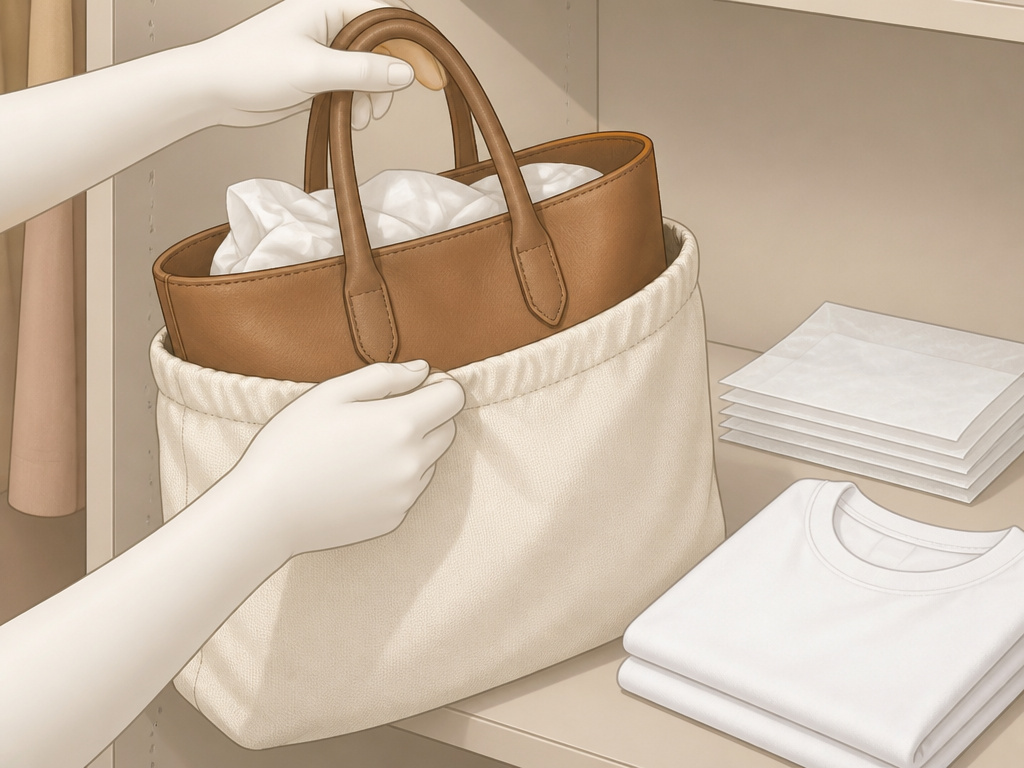 How you store your tote when it’s not in use determines whether you’ll face a mildew problem or a misshapen bag in six months. The goal is to support its shape while allowing it to breathe.
First, ensure the bag is completely clean and dry. Even a little residual moisture sealed in a closet will encourage mold. Next, stuff it. Use acid-free tissue paper, bubble wrap, or old cotton t-shirts. The aim is to provide gentle support, not to stretch it back into shape. Avoid newspaper, the ink can transfer.
| Storage Do’s | Storage Don’ts | Reason |
|---|---|---|
| Store in the provided cloth dust bag. | Store in a plastic bag or sealed container. | Cloth breathes; plastic traps moisture and causes mildew. |
| Keep in a cool, dry, dark place (e.g., a closet shelf). | Store in direct sunlight, a damp basement, or near a heat vent. | Sun fades color; heat and humidity dry out or mold leather. |
| Store upright in its natural shape. | Hang by straps for long periods or crush under other items. | Hanging stresses straps; crushing causes permanent creases. |
| Lightly stuff with breathable material. | Store completely empty and collapsed. | Stuffing maintains structure and prevents deep creases. |
Then, tuck it away in its dust bag. This cloth sack is not just packaging, it’s a essential shield from dust and light, which can fade colors over time. Never use a plastic bag; it traps humidity and is a direct ticket to mildew city.
If you’re storing for a season, check on the bag every month or two. Give it a gentle feel to ensure no odd smells or dampness have developed.
When Standard Care Isn’t Enough: Special Cases
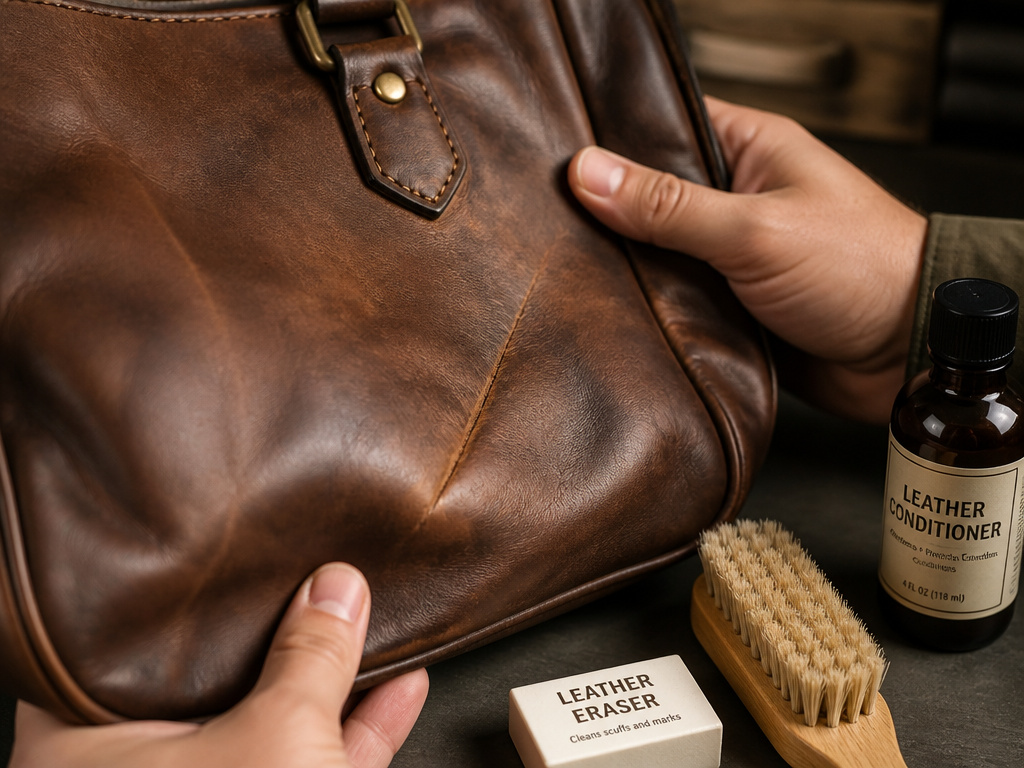 Not all leather is created equal, and not all problems are simple. Some materials and situations break the standard rules.
Haircalf and Suede: These are delicate. Tiffany & Co. Notes that haircalf can bald in high-impact areas over time. For suede, never use water or standard cleaners. A suede brush and eraser are your only safe tools. If a suede bag gets wet, blot it and let it dry naturally, then brush the nap gently.
Patent Leather: The high-gloss finish is vulnerable to color transfer and scratches. Clean only with a dry or slightly damp cloth. Never let patent leather pieces touch each other in storage.
Significant Stains or Deep Scratches: This is the threshold for professional help. As DÖTCH Leather advises, attempting a home fix on a deep ink stain or a gouge can make the damage permanent. A professional leather bag repair specialist has the tools and dyes to make a near-invisible correction.
The “Dry Climate” Rule: If you live in Arizona or similar, your conditioning schedule is different. Leather dries out faster. You might need to condition every 8 weeks instead of 6 months. The leather will feel stiff and look thirsty when it’s time.
Frequently Asked Questions
Can you use baby wipes on a leather tote bag?
No. Most baby wipes contain alcohols, fragrances, and moisturizers that can strip leather’s natural oils or leave a sticky residue. They are formulated for skin, not hide. Stick to a damp water cloth or a dedicated pH-balanced leather cleaner.
How do you get wrinkles out of a leather tote?
Gentle heat and moisture. Stuff the bag to smooth the wrinkled area from the inside. Hold a steamer or a kettle (not boiling) several inches away to allow warm steam to waft over the leather, do not directly apply steam or water. As the leather warms and slightly humidifies, gently massage the wrinkle with your fingers. Let it dry completely while stuffed.
Does rain ruin a leather tote bag?
Not if you act quickly. Quality leather is durable. If it gets wet, blot away excess water with a dry cloth. Let it air-dry at room temperature, away from direct heat. As it dives, you may notice temporary darkening; this should even out. Once fully dry, give it a light conditioning if it’s an untreated leather.
How can you tell if a leather tote is good quality?
Look for full-grain or top-grain leather, even and sturdy stitching, robust hardware (like brass zippers), and a well-finished interior. A quality bag won’t have a strong chemical smell, it should smell like leather. The heft and feel are also giveaways; good leather has substance, not a cardboard-like stiffness. For a curated list, see our guide to the best leather tote bags.
Before You Go
Leather care isn’t about coddling an ornament. It’s about maintaining a functional, beautiful tool. The single most useful habit is the simplest: when you empty your bag each evening, give it a quick wipe with a dry cloth and put it away properly. That routine prevents 90% of issues.
If you remember one rule, let it be this: less is more with conditioner. A thin, even coat absorbed over 30 minutes does more than a thick, rushed slather. Your bag’s patina, the story of its use, will develop beautifully if you just keep it clean, fed, and dry. For everything else, including selecting the right leather bag cleaner or finding a leather tote for work, the principles here are your foundation. Now go use that bag.
