
How to Clean a Leather Couch | The Pro’s 4-Step Protocol
This post contains affiliate links. As an Amazon Associate, we earn from qualifying purchases.
To clean a leather couch correctly, follow a strict escalation protocol: 1) Dry brush to remove dust, 2) Damp microfiber cloth for surface soil, 3) pH-neutral leather-specific cleaner for stuck-on grime, and 4) Specialist stain removers only as a last resort. Never drench the hide, and always test any product in a hidden area first.
That sequence isn’t arbitrary. It’s a defense against the single biggest mistake people make: reaching for a liquid cleaner first. Dust is abrasive. Rubbing it into the leather with a wet cloth is like sanding the finish with fine grit. A dry brush lifts it away without risk.
What follows is the mechanics behind each step, why a pH-neutral cleaner matters, when a damp cloth is enough, and the one type of leather that breaks all the rules. By the end, you’ll be able to look at any stain and know exactly which rung of the ladder to start on.
Key Takeaways
- Start dry, always. A soft-bristled brush removes abrasive dust before any liquid touches the leather.
- IKEA SEGLORA leather is an exception: never use cleaners or conditioners, only vacuum and a slightly damp cloth.
- “All-in-one” cleaner/conditioner combos are typically poor at both jobs; use separate, dedicated products.
- The goal is to clean the surface, not saturate the hide. A damp cloth, not a wet one, prevents moisture damage.
- Always perform a patch test in a hidden area (like the back near the seam) with any new product.
What You’ll Need (And What to Avoid)
Gather your tools before you start. Having them ready means you won’t be scrambling with a stain halfway through the process.
You need a soft-bristled brush (a horsehair detailing brush or a clean makeup brush works perfectly), several clean, white microfiber cloths, and a dedicated, pH-neutral leather cleaner like Saphir Omni’Nettoyant or Lexol pH Leather Cleaner. A pure gum rubber eraser is underrated for lifting scuff marks from smooth leathers.
Common mistake: Drenching the leather with cleaner. The goal is to clean the surface, not saturate the hide. Over-wetting can lead to water rings, stiffening, and in the worst cases, mold growth under the seams.
Avoid “all-in-one” cleaner and conditioner combos. They’re convenient, but the chemistry is working against you. A cleaner needs to lift and suspend dirt; a conditioner needs to bond with the leather fibers. Mixing them usually means neither works well. You also want to steer clear of any household products containing vinegar, alcohol, ammonia, or silicone. They can strip finishes, dry out the hide, or create a gummy buildup.
The 4-Step Leather Couch Cleaning Protocol (and When to Stop)
This is the core of the method. Think of it as a ladder. You start on the lowest, safest rung and only climb higher if the previous step failed. Jumping straight to step three is how you remove a stain but leave a dull, damaged patch behind.
Step 1: The Dry Brush
Every cleaning session starts here, even if the couch looks clean. Leather attracts and holds dust like a magnet. That dust sits in the grain and the crevices of piping.
Take your soft brush and gently sweep the entire surface. Use long, overlapping strokes, following the grain of the leather. You’ll see a faint cloud of dust lift away. This isn’t just tidying up; you’re removing an abrasive layer that would grind into the finish if you started rubbing with a cloth. Do this weekly, and you’ll rarely need to go beyond step two.
Step 2: The Damp Microfiber Cloth
For general soil, fingerprints, or light spills that have been dabbed up, this is often the finish line. Dampen a white microfiber cloth with distilled or filtered water. Wring it out until it’s just barely damp to the touch, you shouldn’t be able to squeeze a drop out.
Wipe the leather in smooth, straight motions, again following the grain. Rinse and wring the cloth frequently as it picks up dirt. The goal is to transfer soil from the leather to the cloth, not to push it around. Let the area air dry completely. You’ll feel the difference: the leather will lose that slightly tacky feeling and return to its normal texture.
This is based on years of practical experience. For most dust and surface dirt, a dry, soft brush is more effective and less risky than immediately reaching for a liquid cleaner.
Step 3: pH-Neutral Leather Cleaner
When dry brushing and a damp cloth aren’t enough, it’s time for a dedicated cleaner. This is for stuck-on grime, body oils, or spills that left a residue. The word “pH-neutral” is essential. Leather has a specific pH range; acidic or alkaline cleaners can break down its chemical structure, leading to permanent dryness or discoloration.
| Cleaning Agent | Best For | Risk If Used Incorrectly |
|---|---|---|
| Dry Brush | Dust, loose debris | None if brush is soft |
| Damp Microfiber Cloth | Surface soil, fingerprints | Water rings if cloth is too wet |
| pH-Neutral Leather Cleaner | Stuck-on grime, oils | Finish damage if not pH-neutral |
| Specialist Stain Remover | Ink, dye, specific tough stains | Permanent discoloration if misapplied |
Apply the cleaner to a clean microfiber cloth, not directly onto the leather. Work in small sections using light, circular motions. Let the cleaner dwell for a minute, its cleaning power comes from a chemical reaction, not elbow grease. Then, wipe it away with a second damp cloth. Always follow the manufacturer’s instructions on the bottle.
Step 4: Specialist Stain Removal
This is the last resort. For ink, dye transfer (like from new jeans), or wine, you may need a targeted product. The rules are stricter. You must know your leather type (aniline, semi-aniline, pigmented). What works on a protected, pigmented leather can ruin a delicate aniline hide.
The universal rule here is: if you don’t know, don’t guess. A failed DIY stain removal can set the stain permanently or damage the finish beyond a simple repair. In many cases, calling a professional is cheaper than replacing the couch.
Understanding Your Leather Type: It Changes Everything
Not all leather is created equal, and treating it as if it is will cost you. The cleaning protocol above is designed for the most common type: pigmented (or protected) leather. This has a painted-on topcoat that makes it durable and stain-resistant. Aniline leather, dyed through without a topcoat, is more vulnerable and needs gentler care.
The most critical exception is IKEA SEGLORA leather. IKEA’s own guide states you should never use cleaning agents or cream on it, as it will stain. For SEGLORA, your entire cleaning arsenal is a vacuum with a soft brush attachment and a slightly damp microfiber cloth. That’s it. This is a non-negotiable, model-specific fact that overrides all general advice.
| Leather Type | Key Identifier | Cleaning Restriction | Conditioning Needed? |
|---|---|---|---|
| Pigmented/Protected | Uniform color, slightly plastic feel | Use pH-neutral cleaner | Yes, to maintain topcoat |
| Semi-Aniline | Some natural variation, softer feel | Gentle pH-neutral cleaner only | Yes, more frequently |
| Full Aniline | Visible natural markings, very soft | Damp cloth only; test all products | Yes, with light oil-based conditioner |
| IKEA SEGLORA | Specific to IKEA products | No cleaners or conditioners | No |
Why does this matter? Using a standard cleaner on an aniline couch can strip its natural oils. Using a conditioner on SEGLORA will create a greasy stain. Your first job is to identify what you have. Check the manufacturer’s tag or manual. If that’s lost, assume it’s pigmented and always, always do a patch test in a hidden spot.
The Right Way to Treat Stains and Spills
 Speed and method are everything. The moment a spill happens, your priority is to blot, not rub. Use a clean, absorbent cloth or paper towel to soak up as much liquid as possible. Rubbing pushes the spill deeper into the leather’s pores.
For oily stains (cooking oil, lotion), you might need to move straight to a pH-neutral cleaner after blotting. For water-based spills (juice, coffee), the damp microfiber cloth (Step 2) is usually sufficient if you act fast. Let me share what I’ve learned about one tricky case: ink. A pure gum rubber eraser can sometimes lift ballpoint ink from smooth, finished leather if you catch it immediately. Gently buff the mark. If it doesn’t budge, stop, specialist products are next, and they are high-risk.
Where this goes sideways: Using a solvent like rubbing alcohol on an ink stain. It might lift the ink, but it will also dissolve the leather’s protective topcoat, leaving a permanent dull spot that’s more obvious than the original stain.
The leather will tell you what it needs. If a stain disappears with gentle blotting, don’t escalate. More product isn’t better; it’s just more risk.
Conditioning: The Essential Follow-Up (For Most Leathers)
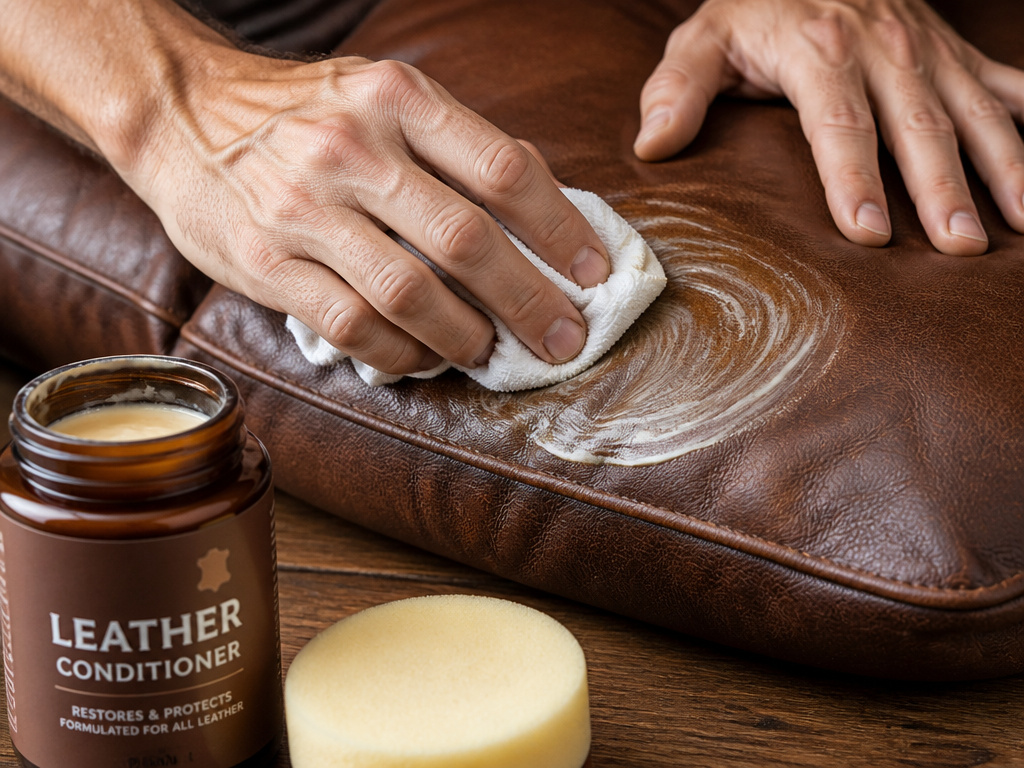 Cleaning, especially with a dedicated product, can remove not just dirt but also some of the leather’s natural oils. Conditioning replenishes those oils, keeping the hide supple and preventing it from drying out and cracking. Think of it like moisturizing your skin after washing your face.
Conditioning is not a cleaning step. It’s a separate, dedicated process. Apply a quality leather conditioner, like those from the same brands as your cleaner, to a clean, dry couch. Use a clean applicator or cloth and work it in evenly. Buff off any excess after 15-20 minutes. How often? For a couch used daily, every 6-12 months is a good rule. In very dry climates, you might do it every 4-6 months.
The practical takeaway: Schedule your conditioning. Mark it on your calendar. A well-conditioned leather couch ages into a rich patina. A neglected one becomes brittle and cracks at the stress points, the seat edges and armrests, within a few years.
Frequently Asked Questions
Can I use vinegar and water to clean my leather couch?
I would strongly advise against it. While some home guides suggest a vinegar solution, it’s acidic. Leather has a specific pH balance, and introducing an acid can degrade the finish and dry out the hide over time. A pH-neutral cleaner is formulated to clean without disturbing that balance.
How often should I clean my leather couch?
For light maintenance (dry brushing), do it weekly. A full damp-wipe down can be done monthly. A deep clean with a dedicated cleaner should only be done when needed, maybe once or twice a year, or when a spill occurs. Over-cleaning with products can do more harm than good.
Can I use baby wipes on leather?
No. Many baby wipes contain alcohols, fragrances, and lotions that can leave a residue on the leather or degrade the finish. They are designed for skin, not for leather care. Stick to a damp microfiber cloth for quick wipes.
Why is my leather couch sticky after cleaning?
Sticky feel usually means one of three things: you used a product not meant for leather (like a multi-surface cleaner with silicones), you didn’t fully buff off a conditioner, or an “all-in-one” product has left behind a film. The fix is to clean the area gently with a pH-neutral leather cleaner to strip that residue, then re-condition properly if needed.
Can cracked leather be repaired by cleaning and conditioning?
No. Cracks are physical splits in the leather fiber. Cleaning and conditioning can prevent further cracking by keeping the remaining leather supple, but they cannot mend existing cracks. Repairing cracks requires filling and coloring, which is a professional restoration job.
Before You Go
Let’s be clear about one thing: the goal isn’t a sterile, factory-perfect surface. It’s a healthy, lived-in piece that ages with character, not neglect. The dry-brush-first protocol exists to minimize how often you need to escalate to harsher methods.
If you take away one action, make it this: find out exactly what type of leather your couch is made from. That single fact dictates every product you can and cannot use. Everything else, the gentle circles, the pH talk, the warning against drenching, flows from that.
Understand leather better to make confident choices. Your couch is a long-term investment. Clean it like one.
