
The Correct Way to Clean Nubuck Boots & Avoid Crack Damage
This post contains affiliate links. As an Amazon Associate, we earn from qualifying purchases.
To clean nubuck boots, you need three specific tools, a dry nubuck cloth, a nubuck brush, and a gum eraser, and must avoid all heat during drying. Clean only when the boots are completely dry, brush in a circular motion to lift the nap, and air-dry them at room temperature, never exceeding 37°C (98.6°F). Applying heat shrinks and cracks the leather within a single drying cycle.
That temperature cap is the critical line between a boot that dries ready for another season and one that comes off the radiator stiff, shrunken, and permanently damaged. The velvet surface of nubuck is full-grain leather buffed to a soft nap, and that open structure is what makes it both beautiful and vulnerable.Treat it like smooth leather and you’ll grind dirt in; treat it like suede and you might use the wrong brush.
What follows is the method that respects the material: the exact tools, the forbidden shortcuts, and the drying rule that every manufacturer quietly agrees on but most guides bury in the fine print.
Key Takeaways
- Never use heat to dry nubuck. Air-dry at room temperature, and keep it below 37°C (98.6°F) to prevent shrinkage and cracking.
- You must use a nubuck brush and clean, dry cloth. A stiff horsehair brush works; a generic clothes brush or an old toothbrush will flatten the nap.
- Clean the boots only when they are completely dry. Cleaning damp nubuck pushes stains deeper into the fibers.
- Waterproof immediately after cleaning and drying. Use a nubuck-specific spray protector like Nikwax Nubuck & Suede Proof or Urad Sahara, applied in 2-3 thin coats.
- Brush your boots after every wear. A quick, gentle brush in the direction of the nap prevents dirt from becoming embedded and keeps the surface from matting.
The Essential Tools You Actually Need
Forget the kitchen sink. Cleaning nubuck boots starts with the right tools, and substituting any of them usually makes the problem worse.
A nubuck brush has stiff, short bristles, often brass or synthetic, designed to stand up the nap without damaging it. A gum eraser (sometimes called a suede eraser) lifts scuff marks by abrasion, and a dry, soft nubuck cloth removes surface dust without leaving lint.
The brush is essential. Using a soft clothes brush or your hand just presses dirt deeper. The right motion is a light, circular scrub for a few seconds per area, which generates a tiny amount of heat to help lift the dirt. You can find a dedicated nubuck brush from brands like Blundstone or Urad, or a generic stiff-bristled brass brush meant for suede and nubuck.
The eraser is for scuffs, not deep stains. Rub it gently on the mark, then brush away the rubber debris. If you need a liquid cleaner, it must be formulated for nubuck. I keep a bottle of Nikwax Footwear Cleaning Gel on hand for this. Generic leather cleaners or saddle soap will clog the pores and often darken the leather permanently.
Here’s what happens if you skip the right tools: | If You Use This | What Happens | Timeline | |———————-|——————|————–| | A soft clothes brush | Dirt is pressed flat, nap flattens and shines. | After 2-3 cleanings | | A generic all-purpose cleaner | Residue clogs pores, leather stiffens, color may change. | Visible after drying | | Paper towels instead of a cloth | Lint gets stuck in the nap, creating a speckled, fuzzy look. | Immediate |
Why Nubuck Is Different From Your Other Boots
Let’s be clear about this. Nubuck is top-grain cowhide that’s been buffed on the outside to raise a short, velvety nap. This makes it more durable than suede but requires more specific care than smooth full-grain leather.The buffing process opens up the leather’s fibers, making it incredibly absorbent.
This is its Achilles heel. A spilled drink doesn’t bead up; it soaks in like a sponge. Dirt doesn’t sit on the surface; it lodges between the fibers. That’s why protection is the first priority, not an afterthought. A well-protected nubuck boot will shed light dirt and moisture, making the inevitable cleaning nubuck session much simpler.
The other critical difference is the nap. When you brush it one way, it lays flat and darkens. Brush it the opposite way, and it lifts and lightens. This is a characteristic, not a defect. Your goal when cleaning and maintaining is to keep that nap upright and even.A matted, shiny patch on the toe is a sign of friction and infrequent brushing, not a sign the boot is worn out.
Step-by-Step: The Cleaning Process
Your boots are dry and you have your tools. Here’s the sequence that gets them clean without drama.
Step 1: Dry Brush. Take your nubuck brush and go over the entire boot outdoors or over a trash can. Knock off all loose dirt, mud, and debris. Pay extra attention to seams and the area around the laces. This prevents you from making mud paste in the next step.
Step 2: Address Scuffs. Gently rub any scuff marks with the gum eraser. Use short strokes and brush away the residue. Don’t press too hard or scrub a large area, you’re abrading the surface.
Step 3: Deep Clean (If Needed). For ingrained dirt or stains, apply a small amount of nubuck-specific cleaner like Nikwax Gel to a damp section of your nubuck cloth. Work in small, circular motions on the soiled area. The key is to use the cleaner sparingly; you want to lift dirt, not soak the leather.
Step 4: Drying. The Most Important Part. Dab any excess moisture with a clean, dry towel. Then, let the boots air-dry at room temperature, away from direct sunlight, radiators, or vents. Stuff them with paper or a towel to help them hold their shape and absorb internal moisture. This takes at least 12 to 24 hours. They must be completely dry before you even think about the next step.
Where this goes sideways: Putting wet boots on a radiator or using a hair dryer. The outer leather dries fast and shrinks, while the inside stays damp. This creates internal stress that cracks the leather or separates it from the sole. The damage shows up as stiff, misshapen boots after just one “quick” dry.
What Never to Do: The Quick Ruin List
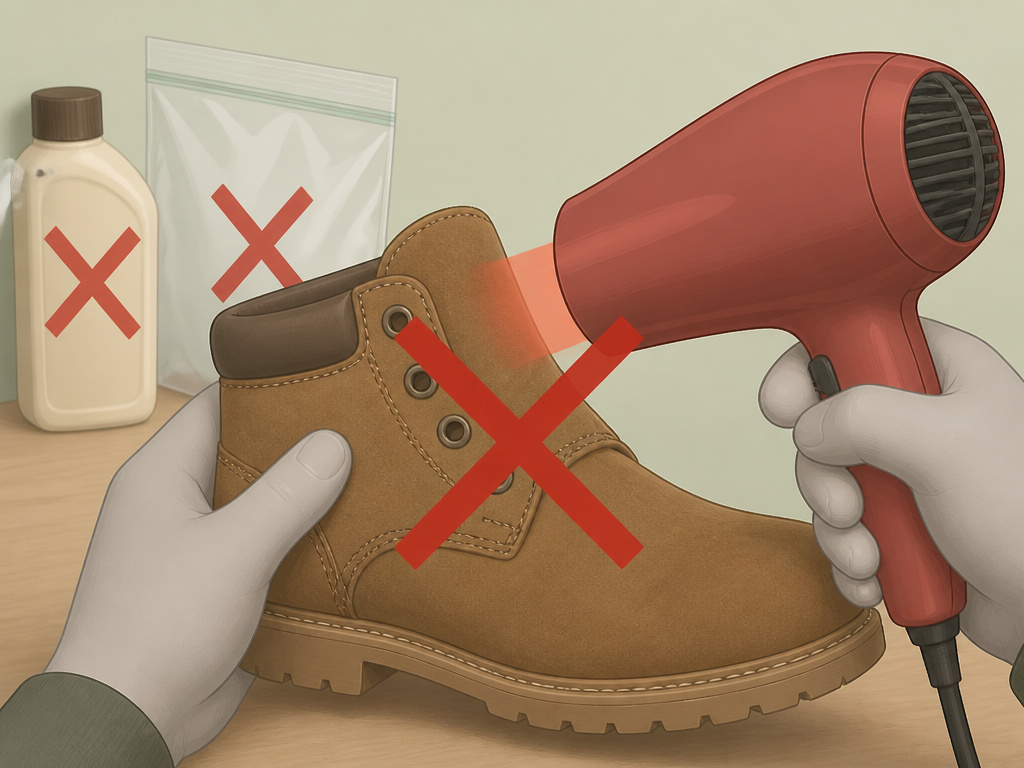 Nubuck is forgiving if you know its rules, but a few mistakes guarantee permanent damage. I see these all the time.
First, never use heat. This includes hairdryers, radiators, ovens, sunny windowsills, or car dashboards. The ALFA Shoes guide states the limit clearly: do not go above 37°C (98.6°F). That’s just above body temperature. Your goal is evaporation, not baking.
Second, never use generic leather conditioners, creams, or polishes. Products designed for smooth leather contain oils and waxes that will clog nubuck’s open pores, attracting more dirt and creating a stiff, dark patch. The Instyle.com.au care sheet is explicit: do not use leather conditioners, shoe polish, saddle soap, or unidentified pastes.
Third, never store them dirty or in plastic. Trapped moisture leads to mold. After cleaning, store your boots in a cloth bag in a cool, dry place. A closet floor is fine; a damp basement or a hot car trunk is not.
Waterproofing: Your Best Defense
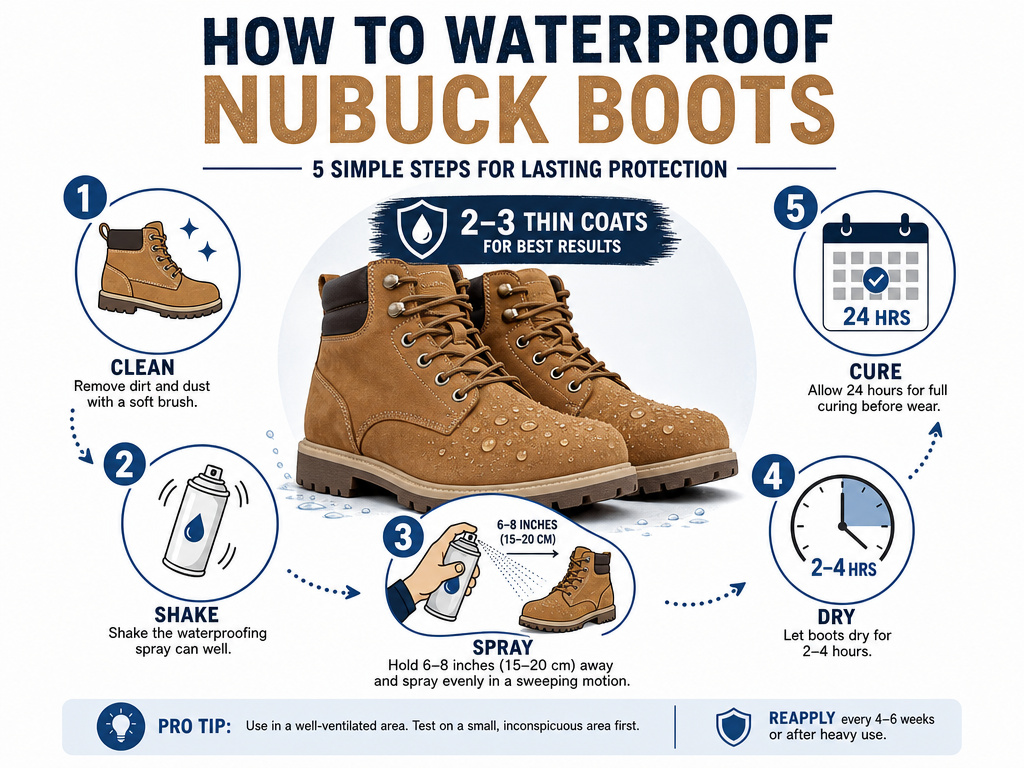 Cleaning is reaction. Waterproofing is prevention. You should apply a protector after every cleaning, and possibly reapply once a season depending on use.
The correct method is often missed: apply 2 to 3 thin coats. As Urad.com notes for their Sahara spray, you need 8 hours of dry time between each coat for optimum protection. One thick coat will soak in unevenly and leave a sticky residue.
- Ensure boots are clean and completely dry.
- Shake the waterproofing spray can thoroughly.
- In a well-ventilated area, hold the can 6-8 inches away and spray an even, light mist over the entire surface.
- Let it dry for the recommended time (usually 2-4 hours), then apply a second thin coat.
- Let the boots cure for a full 24 hours before wearing.
A well-protected boot will cause water to bead up and roll off. When water stops beading and starts soaking in, leaving a dark spot, it’s time to reapply. This is also the best practice for waterproof suede boots, as the materials have similar needs.
Nubuck Boots vs. Nubuck Furniture
The principles are the same, but the execution differs. Boots see concentrated grime, salt, and physical abrasion. Furniture sees oils from skin and general dust.
For a nubuck sofa, the Urad guide suggests cleaning high-contact areas like armrests weekly if the nap flattens, or every month or two under normal conditions. You’d use a vacuum with a brush attachment after applying a dry cleaner like Aquila. For boots, the recommendation is to brush them gently after every wear. This daily minute of care prevents the need for a deep clean as often.
The products can overlap. A premium protector like Sahara is marketed for both furniture and footwear. But the brushing tool for furniture is often larger and softer. For boots, the smaller, stiffer brush is necessary to get into stitching and seams. If you’re trying to clean leather boots of a different type, the tool kit changes completely.
Frequently Asked Questions
Can I use water to clean nubuck boots?
You can use a barely damp cloth to wipe off fresh mud, but the boot must be dry before you start. Never soak nubuck or hold it under running water for long. The goal is spot cleaning, not washing. For a full clean, use a dedicated nubuck cleaning product.
How do I remove salt stains from nubuck boots?
Mix a solution of equal parts white vinegar and water. Dampen a corner of your nubuck cloth with the mixture and gently dab (don’t rub) the salt-stained area. Let it dry completely, then brush the nap. Follow with a waterproofing treatment, as the vinegar can strip some protection.
Can nubuck boots be repaired if the nap is worn shiny?
Yes, to a degree. A professional cobbler can sometimes re-buff the leather to raise a new nap, but this is a thinning process and can’t be done endlessly. For DIY, a vigorous brushing with a horsehair nubuck brush can often revive flattened areas. Prevention through regular brushing is far more effective.
Is the cleaning process the same for nubuck and suede?
Very similar, but not identical. They require the same gentle cleaners and waterproofing sprays. The key difference is the brush: nubuck uses a stiff-bristled brush, while suede often uses a softer brass wire brush or a specific suede brush to avoid damaging its more delicate fibers. Our guide on nubuck vs suede details the material differences.
How often should I clean my nubuck boots?
There’s no fixed schedule. Clean them when they’re visibly dirty or stained. The more important habit is regular maintenance: brush off dry dirt after each wear and reapply waterproofing spray when water no longer beads on the surface. This might mean a deep clean only once or twice a year.
The Bottom Line
Nubuck boots ask for a little more attention than other leathers, but they give back a unique look and durability. The whole system hinges on two things: keeping the nap alive with the right brush, and keeping heat away during drying.
If you remember nothing else, remember the 37-degree rule. That’s the line. Cross it, and you’re not just drying your boots, you’re cooking the leather. Everything else, from the care for leather boots to the specific sprays, supports that simple, physical limit. Treat the nap gently, protect it proactively, and dry it patiently. They’ll last for years.
