
Nubuck vs Suede: The Crucial Choice for Durability & Style
This post contains affiliate links. As an Amazon Associate, we earn from qualifying purchases.
Nubuck and suede look similar at a glance, but the difference between them is structural and fundamental. Nubuck comes from the tough outer grain layer of a hide, sanded to be velvety, while suede comes from the softer inner split layer. This single fact dictates durability, water resistance, and lifespan. Nubuck boots will outlast suede boots in daily use; suede offers a softer, more breathable feel for garments.
The lifespan gap is measurable. A pair of well-maintained Timberland nubuck work boots can last three to five years of regular use. A suede jacket of similar quality, worn just as often, shows significant wear in one to three years. This quality issue arises directly from working with two different layers of the same animal skin.
Let’s break down the details. What follows is a look at how each material is made, the performance specs that matter, and the specific care routines that keep them looking their best. By the end, you’ll know which one fits your lifestyle, and which common mistake to avoid that can ruin a piece in minutes.
Key Takeaways
- Nubuck originates from the dense, outer grain layer of a hide, making it significantly more durable and structured than suede.
- Suede comes from the softer inner split, prized for its breathability and plush feel but far more vulnerable to stains and abrasion.
- Regular brushing with the correct brush (brass/gum rubber for suede, softer bristles for nubuck) is the most important maintenance step, not liquid cleaners.
- Applying a standard leather conditioner to suede will permanently mat the nap and create dark, greasy spots, a common and costly error.
- For high-wear items like boots or bags, nubuck is the practical choice; for delicate jackets or luxury accessories where feel is paramount, choose suede.
The Core Structural Difference: Grain vs. Split
This isn’t about a visual trick. The divide between nubuck and suede starts with which part of the animal hide the tannery uses. An untreated hide has a layered structure, and each layer has distinct properties.
Nubuck leather is made from the top grain. This is the outermost layer of the hide, directly beneath the animal’s hair and epidermis. It’s a dense network of tightly packed collagen fibers. That density is what gives full-grain leather its legendary strength and natural water resistance. To make nubuck, this top grain surface is lightly sanded or buffed. This abrasion raises a fine, velvety nap without destroying the underlying tight grain structure. You’re essentially roughing up the toughest part of the leather.
Nubuck retains the durability of top-grain leather while gaining a soft texture. The sanding exposes the tips of the dense fiber bundles in the grain layer, creating a short, uniform nap that feels firm and velvety to the touch.
Suede comes from the inner split, also called the corium or flesh side. This is the layer revealed after the top grain is mechanically split away. Its collagen fibers are looser, more open, and less dense. To make suede, this split layer is buffed to raise its much longer, looser fibers into a fluffy nap. Because it starts from a softer, more porous foundation, suede feels significantly plusher and more breathable than nubuck. It also lacks the structural integrity of the grain.
This fundamental origin story explains everything that follows. A leather’s strength comes from fiber density. You cannot buff a soft split into having the toughness of a dense grain.
Feel, Look, and Long-Term Wear
Run your fingers across each material. The sensory difference is immediate and speaks directly to their construction.
Nubuck has a short, tight nap. It feels substantial, almost like very fine velvet on a firm backing. When you stroke it, the color may shift slightly, a characteristic called a “pull-up” effect, but the nap itself doesn’t move much. It shows the hide’s natural character marks, like faint pore patterns or minor scars, which add to its authentic, rugged appeal. Over years, a quality nubuck piece develops a rich patina, with the nap wearing down evenly in high-contact areas to reveal a slightly smoother surface.
Suede feels distinctly fluffy and deep. The longer, looser fibers of the split layer create a nap that moves easily under your hand, catching the light differently. It offers a uniform, plush appearance without visible grain markings. The trade-off for this luxurious feel is that it wears differently. The loose fibers are prone to matting and flattening, especially at edges, cuffs, and elbows. A suede jacket will show wear patterns faster than a nubuck jacket.
Where this goes sideways: Assuming a stain on suede is gone once the surface dries. Oil and grease can penetrate the porous split layer deeply, leaving a dark shadow that no surface cleaner can reach. The stain resurfaces over time as the oil wicks back up through the fibers.
How They Handle the Elements
Your local weather should influence your choice. The fiber density that defines each material also dictates how it interacts with water and abrasion.
Nubuck, thanks to its grain-layer foundation, has a natural advantage. Its tighter structure makes it more resistant to water absorption. Light rain will bead up on a treated nubuck surface for a time. While not inherently waterproof, it responds well to protectors like Tarrago Nano Protector, which can bind to its dense nap. For abrasion resistance, nubuck’s durability is why brands like Timberland use it for their classic work boots; it’s built to handle rough surfaces.
Suede is highly absorbent. Its open nap acts like a sponge, pulling in moisture immediately. This causes dark water spots and, if not dried correctly, can stiffen the leather. Abrasion resistance is lower; scuffs show up as shiny, flattened patches. You don’t buy suede for a beat-up, “lived-in” look the way you might with waxed canvas or roughout leather. You buy it for its pristine, tactile luxury, which requires protection from the elements.
| Property | Nubuck | Suede |
|---|---|---|
| Water Resistance | Moderate (with treatment) | Very Low (absorbs instantly) |
| Abrasion Resistance | High | Low |
| Breathability | Good | Excellent |
| Stain Resistance | Low-Moderate | Very Low |
| Best Climate | All-weather (with care) | Dry, mild climates |
A Real-World Guide to Care and Maintenance
Here is the practical takeaway. Caring for these materials is less about aggressive cleaning and more about consistent, gentle prevention. The wrong product can cause irreversible damage in one application.
Cleaning nubuck starts with a soft-bristled brush, often included in a dedicated kit like the Kiwi Suede & Nubuck Kit. Brush in one direction to lift dirt and restore the nap. For deeper cleaning, use a foam cleaner specifically made for nubuck, such as Saphir Omni’Nettoyant Suede. Apply sparingly with a microfiber cloth, never saturating the leather. Let it dry completely, then brush again.
Cleaning suede requires even more finesse. A gum rubber or brass-bristle suede brush is essential. For stains, a suede-specific eraser can lift dirt before a liquid cleaner is needed. The golden rule: never use a standard leather conditioner. The oils and waxes will soak into the porous split layer, matting the nap into dark, greasy clumps.
Common mistake: Applying a protector spray and wearing the item immediately. The solvent needs time to evaporate and the active ingredients to cure. I applied Tarrago Nano Protector to a pair of suede boots and let them sit for 24 hours. Water beaded perfectly for months. When I got impatient and wore another pair too soon, the spray rubbed off the high-friction areas within a week, leaving them unprotected.
Your maintenance toolkit should be separate from your smooth leather supplies. A good kit contains: – A soft nubuck brush. – A stiff brass or gum rubber suede brush. – A suede/nubuck eraser bar. – A specialized, water-based foam cleaner (like Saphir’s). – A quality water-and-stain protector spray.
Choosing the Right Material for Your Project
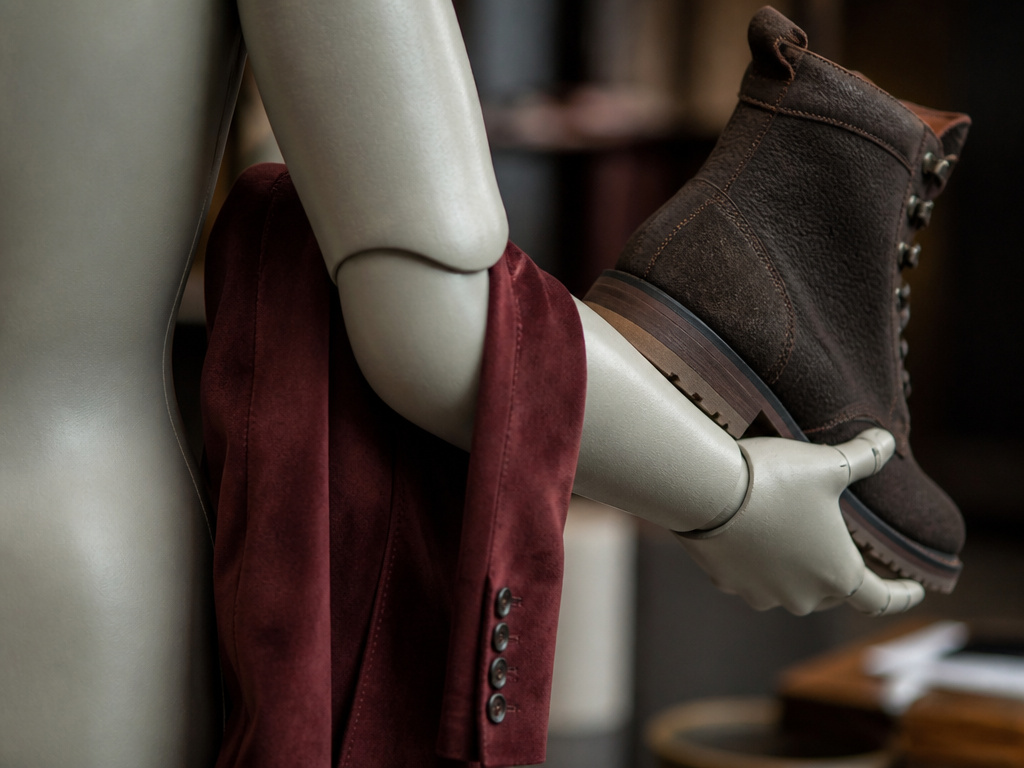 This is where you move from theory to decision. The choice between nubuck and suede matches the material’s inherent properties to the item’s intended use.
Choose Nubuck for:
- Footwear for daily wear: Boots, casual shoes, and sneakers that will see pavement, weather, and regular use.
- Durable accessories: Belts, bags, and watch straps that need to hold their shape under tension and weight.
- High-contact upholstery: Furniture arms, headrests, and other areas that see constant friction.
Choose Suede for:
- Fashion-first garments: Jackets, blazers, gloves, and hats where softness, drape, and breathability are the top priorities.
- Delicate accessories: Evening bags, pouches, or linings where the item won’t face heavy abrasion.
- Decorative elements: Accents on clothing or furniture where you want a luxurious textural contrast.
Some products blur the lines effectively. High-end synthetic materials like Ultrasuede® ST are engineered to mimic suede’s hand-feel while offering dramatically improved stain resistance and durability, often boasting over 500,000 double rubs in upholstery tests. These are fantastic for family sofas or light-colored garments where real suede would be impractical.
Frequently Asked Questions
Is nubuck more expensive than suede?
Usually, yes. Because nubuck uses the more valuable top grain layer of the hide, the raw material cost is higher. The manufacturing process is also more involved. You are paying for superior durability and structure.
Can you make suede waterproof?
You can significantly improve its resistance, but you cannot make it truly waterproof without destroying its character. Spray-on protectors like Tarrago Nano Protector create a hydrophobic barrier at the fiber tips. However, a direct, sustained soak will still penetrate. These sprays also need reapplication every few months with regular wear.
How do you fix crushed suede?
First, try brushing vigorously with a suede brush to lift the nap. For stubborn matting, hold a garment steamer 6-8 inches away and pass it lightly over the area. The gentle steam can help the fibers swell and stand up. After steaming, let the piece dry completely, then brush again. Never iron suede.
Is nubuck or suede easier to clean?
Nubuck is generally more forgiving. Its shorter, denser nap doesn’t hold onto dirt and stains as tenaciously as suede’s long fibers. Both require specific cleaners, but a stain on suede often demands immediate and more precise treatment to prevent setting.
What’s the difference between suede and roughout leather?
Both expose the flesh side of the leather, but roughout is the full hide flipped over, so the rugged, unsanded corium layer is on the outside. It’s much tougher and more casual than suede. Roughout leather is a functional, work-oriented material, while suede is a refined finish.
The Bottom Line
Let’s be clear about one thing. Your lifestyle should pick the leather.
If you need something that can handle Monday mornings, afternoon rain, and years of use, nubuck is your answer. It’s the practical choice for anyone who views leather goods as tools for living. Understand that it still needs care, brushing and protection, but it will reward you with longevity.
If you’re after the softest touch, the richest texture, and a luxury feel for special occasions, suede delivers that experience. Embrace the required maintenance as part of the ritual. Store it properly, brush it often, and keep it away from downpours.
Both materials teach the same lesson: leather is a spectrum of possibilities, each with a purpose. Choose the one whose purpose matches yours.
