
How to Stretch Leather Boots | The 1/2 Size Limit & What Breaks
This post contains affiliate links. As an Amazon Associate, we earn from qualifying purchases.
This post contains affiliate links. As an Amazon Associate, we earn from qualifying purchases.
To stretch leather boots, target width, not length. Leather can typically be stretched about a half-size wider, from a D to an E width, or up to half an inch in the calf if unlined. The process requires a boot stretcher, a leather-softening agent like a dedicated stretch spray or conditioner, and patience over 2-3 sessions. Never force stretch on safety toes or expect to gain meaningful length.
That half-size ceiling is the first thing most guides gloss over. They talk about stretch like it’s a magic fix, but leather has a memory and a breaking point. Push it too far, and the fibers lose their density, leaving you with a boot that’s permanently baggy and won’t hold its shape.
What follows is a breakdown of what actually stretches, the tools that work, and three proven methods ranked by effectiveness. We’ll also cover when to stop DIY and call a professional, because sometimes the right tool is a cobbler’s expertise, not another gadget from your closet.
Key Takeaways
- Leather boots can be stretched about half a size in width; the length is virtually fixed.
- Steel and composite safety toes will not stretch. A tight toe cap means you bought the wrong size.
- A boot stretcher is the most controlled method; the thick sock and hairdryer method is the cheapest.
- Professional stretching by a cobbler costs between $40 and $70 and takes 24-48 hours.
- Over-conditioning leather to soften it can saturate and permanently damage the fibers.
The Limits of Leather Stretch
Let’s be clear about this: you cannot stretch a boot longer. The sole and the lasting board inside set the length. Brett Viberg, a third-generation bootmaker, states that even with a skilled cobbler, you might gain a quarter- to a half-size in length, max. He emphasizes, “The length is set.”
What you can adjust is width and volume. Full-grain leather, the best for stretching, has a dense fiber structure that can typically give between a quarter-inch and a full half-size when treated correctly. If your boot is more than a half-size off in any dimension, stretching will not create a proper fit. You’re working against the boot’s fundamental architecture.
Leather stretches; soles do not. That’s why shoe size is mostly fixed. Stretching will gain you a quarter- to a half-size in length, max. Width is a bit more forgiving.
This becomes critical with work boots. The rigid structure of a steel toe or composite toe is non-negotiable. You can stretch the leather around the cap, but the cap itself will not budge. A tight safety toe is a sizing error, not a stretching opportunity.
Tools You’ll Actually Need
Forget the balled-up newspaper. Effective stretching requires a few specific items, and understanding what each one does prevents damage.
The centerpiece is a boot stretcher. There are one-way models that expand width and two-way models that add a bit of length. For most width issues, a one-way stretcher is sufficient. Look for a wooden model with a smooth finish to avoid marking the interior lining. This is your most controlled form of pressure.
Next, you need a softening agent. Your options are a dedicated shoe stretch spray (like Angelus or Tarrago brands) or a light leather conditioner like Lexol Leather Conditioner. The spray is formulated to relax fibers temporarily for stretching. A conditioner moisturizes and softens for the long term, but as Viberg warns, dousing boots to speed softening “can saturate the leather and cause permanent damage.” A little goes a very long way.
Finally, have a quality boot brush and a clean cloth on hand. You’ll want to brush out any dust before starting and buff the leather after any conditioning.
If you’re preparing for a broader project, our guide to stretching leather items covers the fundamental principles that apply to boots, bags, and jackets alike.
Three Proven Stretching Methods
Here are the most effective at-home techniques, listed from most to least controlled. Each assumes you’ve first cleaned the boots and applied your chosen softening agent to the interior where you need stretch.
Method 1: The Boot Stretcher (Most Effective)
This is the gold standard for targeted, even pressure.
- Insert and Expand: Place the stretcher into the boot. Turn the handle to expand it until you feel firm resistance against the leather. Do not force it to the point of creaking.
- Let It Sit: Leave the stretcher in place for 6-8 hours, then remove it and try the boot on. For significant stretch, you may need to repeat this process over 2-3 nights, expanding the stretcher a little more each session.
- Condition After: Once the desired fit is achieved, apply a thin coat of conditioner to the stretched areas to help the leather recover and maintain suppleness.
What happens if you skip conditioning? The stretched fibers can dry out and become brittle, leading to cracks along the new stress points within a few months of wear.
Method 2: The Thick Sock & Hairdryer (Quick & Cheap)
This method uses your foot as the stretcher and heat to make the leather pliable.
- Put on two pairs of thick socks and lace the boots up snugly.
- Warm the tight spots with a hairdryer on a medium setting. Keep the dryer moving, never hold it in one spot for more than 10 seconds. The leather should feel warm, not hot.
- Flex and walk for 20-30 minutes as the leather cools. The cooling phase is when it sets in the new, slightly expanded shape.
- Condition immediately after, as heat dries leather out.
This method is excellent for tackling specific hot spots like the little toe knuckle or the instep. For a deeper dive on making stiff leather pliable, our methods for softening stiff boots offers more detail.
Method 3: The Freezer Method (For Toe Box Width)
This is a passive, indirect method best for gaining a small amount of width in the toe box.
- Seal water in two plastic bags, leaving some air so they can expand.
- Insert a bag into each toe of the boot, pressing it into the tight areas.
- Place the boots in the freezer overnight. As the water freezes and expands, it gently pushes the leather outward.
- Thaw and dry the boots at room temperature the next day before trying them on.
Where this goes sideways: Using too much water. The bag should only fill the space you want to stretch. An overstuffed bag can distort the entire toe box shape, leaving you with a clownish, rounded bulge.
What Not to Do: Common Mistakes
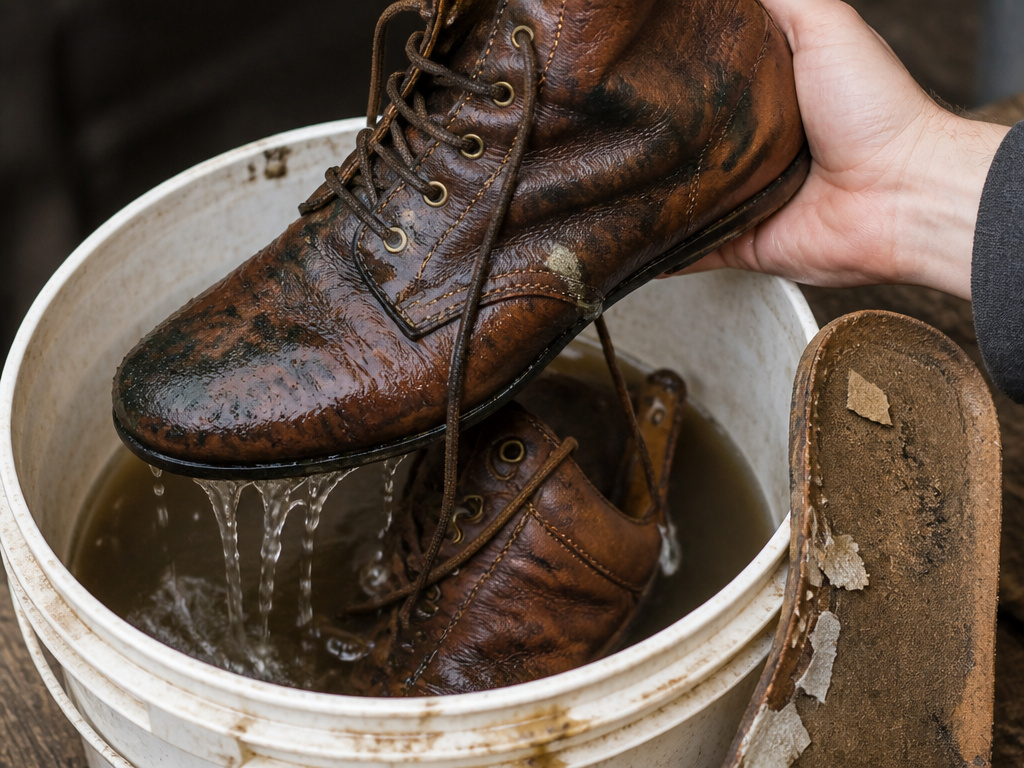 The desire for instant comfort leads to destructive shortcuts. Here’s what to avoid.
Don’t soak your boots. Submerging them to then wear them wet is a notorious “quick break-in” tip. It works by brutally forcing the leather to stretch, but it also washes out natural oils, weakens stitching, and can cause the insole and midsole to delaminate as they cycle through wet and dry. The risk of mold and permanent structural damage is high.
Don’t over-apply conditioner or oil. Your goal is to soften, not saturate. A leather that’s drunk with oil loses its tensile strength and becomes overly supple, it will stretch past the point of good fit and then never recover, becoming sloppy. For conditioning, I keep it simple with Bickmore Bick 4; it hydrates without darkening or oversoftening. The selection and application of boot conditioners is its own precise art.
Don’t ignore the construction. Trying to stretch boots with extensive synthetic lining, glued-on soles in poor condition, or rigid thermoplastic counters is a recipe for a loud crack. Always check for non-leather components first.
When to See a Professional Cobbler
 A cobbler with a professional-grade, mechanical stretching machine can apply precise, consistent pressure that’s difficult to achieve at home. This service usually costs between $40 and $70 and takes 24 to 48 hours.
Take your boots to a pro if: * You need stretch in a very specific, localized pressure point. * The boots are a high-quality investment piece you don’t want to risk. * You’ve attempted a DIY method and the boots are still uncomfortably tight.
A good cobbler can also assess whether the boots are suitable for stretching at all. Sometimes, the correct fix is a different size. For ongoing care after a stretch, a consistent routine is key, outlined in our article on essential boot care steps.
Frequently Asked Questions
Can you stretch leather boots a full size?
Practically speaking, no. While leather has some give, aiming for a full size stretch is unrealistic and risks overstretching the fibers, which leads to a permanently loose, misshapen boot. A half-size increase in width is the reliable ceiling for quality full-grain leather.
How long does it take to stretch leather boots?
With a boot stretcher, plan for 2-3 sessions over consecutive days, leaving the stretcher in for 6-8 hours each time. The thick sock method can provide relief after a single 30-minute session, but for lasting change, repeat it over several days. A professional cobbler’s machine typically completes the job in 24-48 hours.
Will stretching leather boots ruin them?
Not if done correctly and within the material’s limits. The ruin comes from aggressive techniques: too much force, excessive heat in one spot, or chemical saturation from over-application of sprays or oils. Patient, gradual pressure with proper leather preparation is safe.
Can you stretch the calves of leather boots?
Yes, with a specialized boot-calf stretcher. For unlined leather, you can gain up to half an inch (about 1 cm). If the boot is lined with leather or fabric, expect slightly less, about 3/8 of an inch. This is a common need for those with athletic calves.
Before You Go
Stretching leather is a corrective measure, not a substitute for a proper fit. The most important step happens before you buy: try on boots with the socks you’ll wear, in the evening when your feet are their largest. If they’re more than a half-size off, return them.
For the slight adjustments, remember the hierarchy: a boot stretcher with a proper softening spray offers the most control. Heat and thick socks can solve spot issues. The freezer method is a last resort for toe boxes. And when in doubt, the modest fee for a cobbler is cheaper than replacing a ruined pair of boots.
Your boots should get to know your feet gradually. Force the relationship, and you’ll both end up worse off.
