
How to Use a Leather Watch Roll: A Guide for Safe Travel
This post contains affiliate links. As an Amazon Associate, we earn from qualifying purchases.
This post contains affiliate links. As an Amazon Associate, we earn from qualifying purchases.
To use a leather watch roll correctly, match three things: a clean watch, a properly sized compartment, and a secure closure. Place each watch on its own cushion, ensure it doesn’t touch another, and fasten the roll before placing it in the center of your carry-on bag, cushioned by soft items like clothing. This prevents scratches, pressure, and movement during travel.
That method works because it addresses the three failure points every roll faces: friction, impact, and poor fit. Most damage happens inside the bag, not during the careful hand-off from dresser to case.
What follows is a breakdown of why those three rules matter, the specific design features that make or break them, and the maintenance steps that keep the leather itself from becoming a problem.
Key Takeaways
- Clean your watch before packing it. Dust and grit trapped against the case cause micro-scratches you won’t see until the light hits them just right. A roll’s interior lining is essential. Stick to suede or microfiber; felt sheds fibers into watch crevices.
- Metal bracelets need special consideration. A rigid bracelet loop won’t fit over a standard cushion, so look for rolls designed to accommodate them.
- Store the roll in a temperate, dry place. Direct sunlight and excess humidity will alter the leather’s color and finish over time.
- An annual wipe with a leather cream maintains the exterior. Use a clean, soft cloth and gentle circular motions.
The 3-Step Method for Safe Packing
Get this sequence right and the roll does its job. Get it wrong, and you’re carrying a fancy tube full of potential damage.
First, clean the watch. I don’t mean a full polish. Run a soft, dry microfiber cloth over the case and crystal to remove dust. Even tiny particles become abrasive pads when pressed between metal and the roll’s lining during travel. This is the single most skipped step, and it’s the one that leaves a collection looking hazy after a dozen trips.
Second, seat the watch on its cushion. The goal is zero contact. If you have a multi-watch roll, place each timepiece in its own compartment, ensuring the case or bracelet doesn’t touch its neighbor. For watches on straps, the cushion should support the watch head while letting the straps lay flat. If the strap is too short for the cushion’s circumference, you’ll strain the spring bars or bend the leather. This is where that “compressible cushion” spec from brands matters, it can accommodate different wrist sizes without stress.
Third, secure the closure and place the roll in your bag. Whether it’s a snap, a zip, or a strap, fasten it completely. Then, position the roll in the main compartment of your carry-on, surrounded by soft items like folded shirts or a sweater. Never use an exterior pocket. The jostling there is direct and constant, and the difference between a padded middle and a thin nylon pocket wall is the difference between a safe arrival and a cracked crystal.
The part nobody mentions: The single heaviest item in your bag should never be resting against the roll. A laptop or power bank creates a focused pressure point that can dent a case or, over a long flight, gradually compress the cushion enough for watches to shift and touch.
Why the Right Roll Matters More Than Your Technique
You can follow every step perfectly, but a poorly designed roll will still let you down. The craftsmanship dictates the ceiling of protection.
The exterior leather needs to be more than just pretty. Vegetable-tanned leather is the standard for a reason, it’s durable, develops a characterful patina, and provides a solid barrier. A cheap “genuine leather” case might look fine new, but it won’t absorb the knocks of travel the same way. The structure is in the hide.
Inside, the lining is your watch’s direct environment. This is non-negotiable.
| Lining Material | Best For | Risk If Chosen |
|---|---|---|
| Microfiber | General use, metal cases | Almost none; non-abrasive and non-shedding |
| Suede | All watch types, premium feel | Can hold dust if not kept clean |
| Felt | Low-cost rolls | Sheds fibers into crown gaps and bracelet links |
| Synthetic Plastic | Budget cases | Can react with metal or leave a chemical smell |
Microfiber or suede are the only two options I’d trust. That felt warning comes straight from industry guides, those loose fibers are a nuisance at best and a threat to movement integrity at worst.
The closure system is the final guard. Older rolls required you to literally roll the leather around the watches, which often let them slide into contact. Modern designs use individual compartments with a rail (often called an M-Slide system) or secure snap closures that keep each watch centered. When you’re comparing the best leather watch rolls, a secure, multi-point closure is a sign the maker thought about in-transit security, not just static display.
Common Design Pitfalls & How to Navigate Them
Even a well-made roll has limits. Knowing them turns a potential headache into a simple checklist.
The first pitfall is the metal bracelet. A leather strap conforms; a metal bracelet is a rigid loop. Many standard roll designs have fixed cushions that you’re meant to slip the watch onto. A metal bracelet often won’t fit over that cushion, leaving you to awkwardly lay the watch on top where it can slide off. Some high-end rolls are built with this in mind, featuring deeper compartments or open-sided designs. If you primarily wear bracelets, this spec is your first filter.
The second is cushion size versus your wrist. A cushion designed for an 8-inch wrist will over-stretch and potentially deform the leather on a strap sized for a 6.5-inch wrist when you try to close the roll. The leather pulls taut against the spring bars. Look for the phrase “compressible” or “flex” cushions, they solve this by accommodating different lengths without permanent strain. This is a classic case of a one-size-fits-none approach causing real damage.
The third is overall dimension. Most premium rolls fit watches up to 55mm in diameter. If you own a larger dive watch or a vintage panerai, measure it. A watch that’s too large for its compartment will press against the lining constantly, and the forced closure will stress the roll’s seams. For these, you need a model specifically noted for oversized or tool watches.
Where this goes sideways: Buying a roll based on slot count alone. A three-slot roll with poorly spaced cushions is worse than a two-slot roll where each watch sits in true isolation. The number is marketing; the internal geometry is protection.
Caring for the Leather Itself
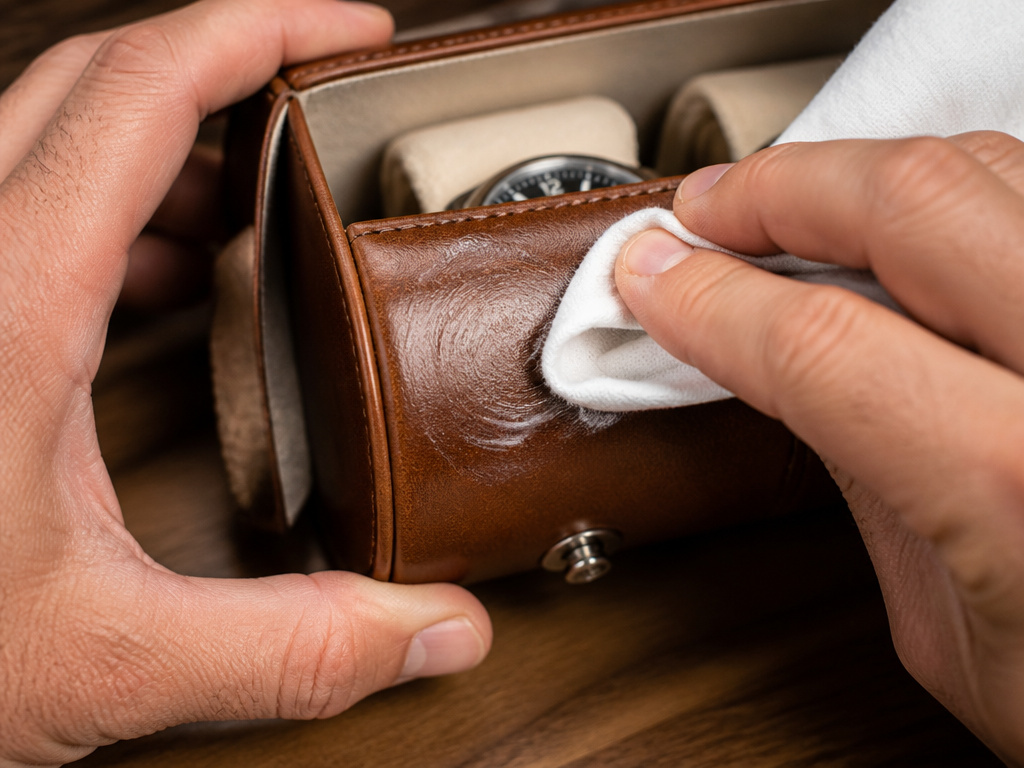 The roll is a leather good, too. Neglect it, and the protection it offers degrades along with its appearance.
The Kross Studio manual gives the clearest prescription: use a “universal protective and renovating cream for leather” applied annually with a soft cloth in circular motions. After ten minutes, brush lightly with a clean, dry cloth. This isn’t about slathering it on. It’s about maintaining the hide’s moisture and flexibility so it can absorb impacts without cracking. The same principle applies if you’re learning how to use leather balm on other goods, thin, even coats win.
For the interior, the same manual advises a soft, slightly damp, soaped cloth for stains on the microfiber. Never soak it. The goal is to spot-clean, not wash. Let it air dry completely before using the roll again. A damp lining transfers moisture to your watches, and that’s a shortcut to mold and metal corrosion.
Storage matters when the roll is empty. Keep it in a cool, dry place away from direct sunlight and heat sources. Prolonged exposure to sun will fade and dry out the leather; excess humidity can encourage mildew. Think of it like caring for leather straps, consistent, moderate conditions prevent most problems.
I stopped recommending silicone-based sprays for waterproofing leather years ago after they left a waxy residue that blocked conditioners from ever absorbing properly. That lesson applies doubly here. A leather roll doesn’t need to be waterproof; it needs to be breathable and supple. Stick with creams and balms.
Travel vs. Home Storage: Adjusting Your Approach
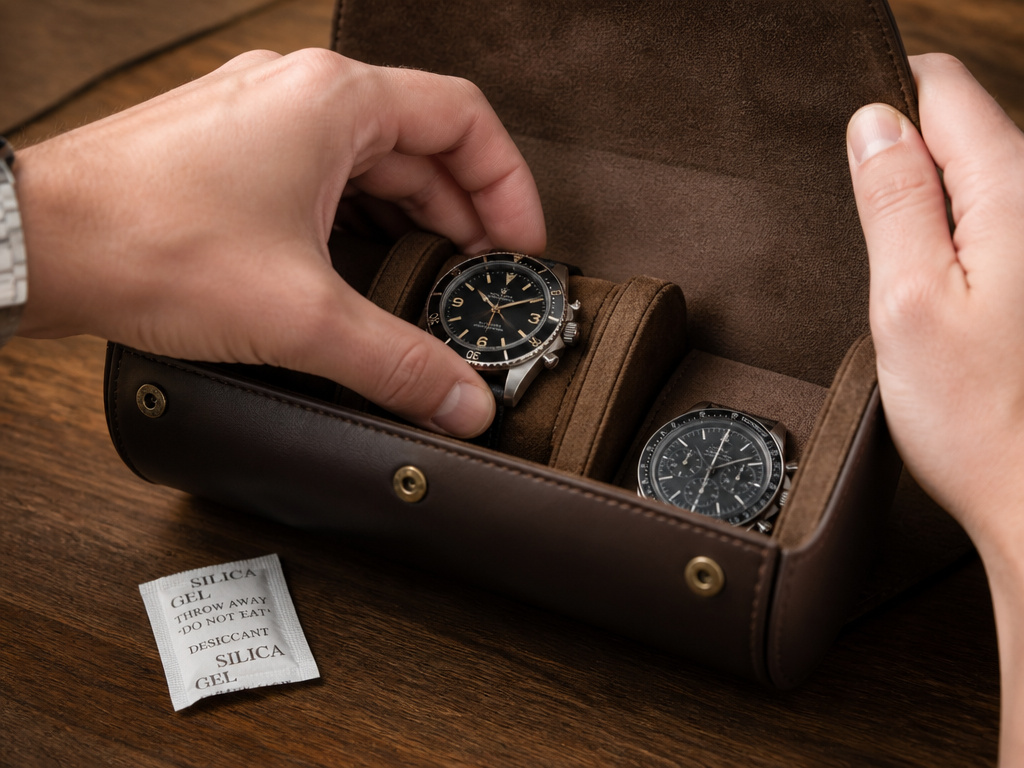 A roll’s job changes depending on whether it’s in a suitcase or on your dresser.
For travel, the priority is immobilization. Use every strap and snap. Pack the roll in the bag’s center. The watch inside should be the one you’re not wearing, it’s a spare. This is the scenario the roll was built for, and following the three-step method is crucial.
For home storage, the priority shifts to accessibility and long-term preservation. You can leave the closure slightly loose to avoid constantly compressing the leather. It’s fine to store the watch you wear daily in the roll overnight, it keeps dust off. But for a watch you’re storing for a season, consider a silica gel packet placed near the roll (not inside it) in a drawer to manage humidity. This is less about the roll and more about proper strap care in a static environment.
The convenience of a roll at home is its compactness. Not everyone has space for a large watch box. A three-slot roll can hold your weekly rotation on a nightstand neatly. Just remember to rotate the watches you store long-term every few months to prevent the straps from setting in a single curved position.
Frequently Asked Questions
Can a watch roll damage my watch?
If used incorrectly, yes. The main risks are scratches from watches touching, strap deformation from an ill-fitting cushion, and pressure points from overstuffing your luggage. A quality roll used properly eliminates these risks by providing individual, padded compartments.
How many watches should I put in a roll?
Never exceed the designed slot count. For optimal safety, leave one slot empty if possible. This gives each watch more space and reduces the chance of contact if the roll is compressed. A three-watch roll with two watches is safer than a three-watch roll filled to capacity.
Are leather watch rolls good for long-term storage?
They are adequate, but not ideal for very long periods (years). Leather is breathable, which is good, but a dedicated watch box with a humidity-controlled environment is better for multi-year storage. For a watch in regular rotation, a roll on your dresser is perfect.
How do I clean a suede-lined watch roll?
Use a dedicated suede brush or a clean, dry microfiber cloth to gently brush away surface dust. For stains, a slightly damp cloth with a tiny amount of mild soap can be dabbed (not rubbed) on the spot. Let it air dry completely. Avoid saturating the suede.
My watch has a very thick case. Will it fit?
Measure the watch’s diameter, including the crown. Most rolls accommodate up to 55mm. If yours is larger, you specifically need a roll marketed for oversized or tool watches, which have deeper compartments. Forcing a thick watch into a standard roll will stress the seams and press the crystal against the lining.
Can I check a watch roll in my luggage?
You should never check valuables. Always carry your watch roll in your carry-on bag. This keeps it under your control and protects it from extreme temperature swings, pressure changes, and rough handling that occur in the cargo hold.
Before You Go
The rule of three covers it: clean watch, right fit, secure placement. A roll is a simple tool that fails in simple ways, usually by letting two hard objects touch or by being crushed itself.
If you only take one action, make it the pre-travel wipe-down. That five-second habit prevents 90% of the wear a travel watch accumulates. The rest is about choosing a roll that doesn’t fight your collection’s specifics, whether that’s metal bracelets or smaller straps.
And treat the leather annually. A dry, cracked roll isn’t just ugly; it’s lost the flexibility that makes it protective. A thin coat of a good leather cream keeps both the hide and your watches inside in better shape. It’s the part of the system that ages, so give it the minimal care it needs.
