
What Is a Cafe Racer Jacket | The 3 Details That Define It
This post contains affiliate links. As an Amazon Associate, we earn from qualifying purchases.
A cafe racer jacket is a short, fitted leather riding jacket defined by a straight center zip, a short stand-up (mandarin) collar, and a minimalist exterior with no lapels, belts, or excessive hardware. It originated in 1960s British motorcycle culture, designed for speed and mobility, and remains a versatile style piece that works with jeans, boots, and modern streetwear.
That definition covers the shape, but the real story is in the details. The difference between a timeless piece and a passing trend often comes down to three specific construction choices.
What follows is a breakdown of the cafe racer’s DNA: its history, the exact features that define it, the leathers it’s made from, and how to spot a jacket built with a minimum 1.2mm thick leather and CE-certified armor versus a fashion copy. By the end, you’ll be able to read any product description and know exactly what you’re getting.
Key Takeaways
- A true cafe racer jacket has three non-negotiable features: a straight center zip, a short mandarin collar, and a clean, minimalist exterior with no lapels or belts.
- The style was born from 1960s British “ton-up” boys who modified bikes for speed and needed streamlined, aerodynamic gear.
- For actual riding protection, look for jackets built to European standards (EN 17092, EN 1621) with thicker leather (1.3mm+) and pre-installed or compatible armor pockets.
- The most common fit mistake is sizing up for a “relaxed” look; a cafe racer is meant to be close-fitting, and going too large ruins its silhouette.
- Zipper quality (like YKK) and stitching density (8-10 stitches per inch) are more reliable indicators of a jacket’s longevity than the leather type alone.
What Defines a Cafe Racer Jacket?
Forget vague style descriptions. A cafe racer jacket is defined by a specific set of physical features. If it’s missing one, it’s borrowing the aesthetic, not embodying the original design.
The collar is the first giveaway. A cafe racer uses a mandarin collar, a short, upright band that sits close to the neck. This wasn’t a fashion choice; it reduced wind resistance at speed. The classic biker jacket uses wide, fold-down lapels that catch air.
Second is the zipper. It runs in a straight line down the center of the jacket. That symmetrical, clean line is a core part of the minimalist look. The diagonal zip of a traditional moto jacket is iconic, but it’s busier and more decorative.
Third is the complete lack of clutter. You won’t find epaulets, wide belts, or rows of decorative snaps. The philosophy is functional minimalism. Any hardware present, like zippers or pocket snaps, should serve a purpose and be high-quality.
A genuine cafe racer jacket is not just a style. It’s a set of engineering decisions made for a specific riding posture and purpose. The mandarin collar cuts drag, the straight zip simplifies closure, and the clean profile avoids snagging.
History & Origins: From Transport Cafés to Timeless Style
The name isn’t a marketing invention. It comes directly from 1960s British motorcycle culture. Post-war youths, often called “Rockers” or “Ton-Up Boys,” would gather at transport cafes.
Their goal was speed, modifying bikes to be lighter and faster to race between these cafes. “Ton-up” meant reaching 100 miles per hour. Their gear evolved to match. Bulky, heavy leathers were out. Riders needed jackets that were close-fitting, aerodynamic, and allowed full range of motion for leaning into corners.
This cultural moment cemented the cafe racer’s DNA. It was born from function, and its enduring style is a happy byproduct. When you see a modern jacket with those features, it’s directly referencing that era of raw, mechanical enthusiasm. Understanding this history of the moto jacket helps explain why these details matter beyond fashion.
Cafe Racer vs. Biker Jacket: A Side-by-Side Breakdown
It’s easy to lump all leather motorcycle jackets together. The differences, however, are stark and meaningful. This table lays them out.
| Feature | Cafe Racer Jacket | Classic Biker / Moto Jacket |
|---|---|---|
| Collar | Short, upright mandarin/band collar | Wide, fold-down lapels |
| Front Closure | Straight, center zip | Angled, diagonal zip (often offset) |
| Silhouette | Streamlined, minimalist, clean lines | Heavier, more decorated, statement-making |
| Typical Hardware | Minimal snaps; no belts, few pockets | Prominent belts, buckles, epaulets, many zippers |
| Primary Vibe | Sleek, precise, understated | Rebellious, rock-and-roll, bold |
| Best For | Versatile style; sport riding on road-focused bikes | Making a strong style statement; classic cruiser culture |
The practical result? A cafe racer is generally more versatile. It can dress up or down more easily because it doesn’t dominate an outfit. A biker jacket is the outfit. This is a key distinction when you’re trying to choose a leather jacket for your wardrobe.
Key Features & Construction: What to Look For
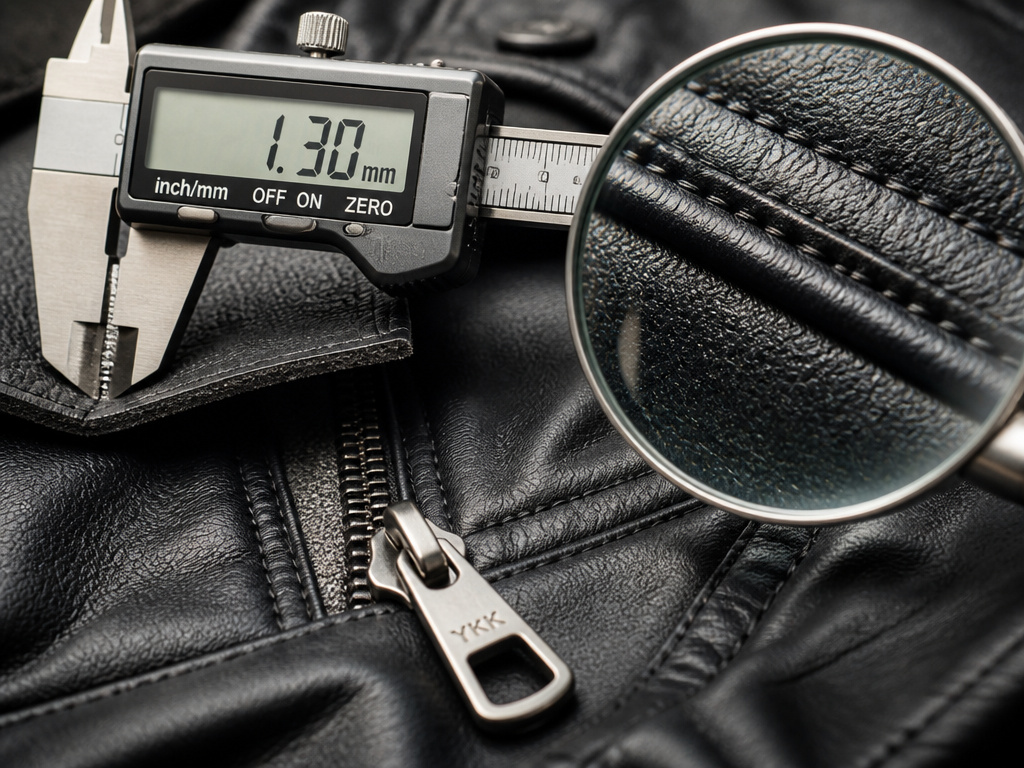 Beyond the big three (collar, zip, minimalism), several other features separate a well-made racer from a cheap copy. Pay attention to these details.
Articulated Sleeves & Gussets: The jacket should be cut for a riding position, not just standing. Look for sleeves that are pre-shaped with a slight forward bend or underarm gussets (triangular fabric panels). These allow your arms to reach forward to handlebars without the entire jacket riding up your back. It’s a small design point that dramatically increases comfort and mobility.
Stitching Density: This is a huge tell for quality. Seams should be tight, with 8 to 10 stitches per inch. Loose, wide stitching (4-6 SPI) will fail faster under stress. Double-stitching or bar-tacking at high-stress points like pocket corners and zipper ends is a sign of thoughtful construction.
Zipper Quality: The zipper is the most used mechanical part of the jacket. A cheap plastic zipper will fail. Look for branded metal zippers, preferably YKK. They glide smoothly, hold up to tension, and signal that the manufacturer didn’t cut corners on hardware.
Leather Thickness & Type: Thickness matters for protection, not just feel. Fashion jackets often use leather under 1.0mm for softness. For actual riding, you want 1.3mm to 1.5mm cowhide for abrasion resistance. Leather type also affects the character: * Cowhide: Durable, stiff at first, develops a great patina. The standard for heritage riding jackets. * Goatskin: Surprisingly tough, more supple than cowhide, and naturally water-resistant. * Lambskin: Incredibly soft and lightweight, but offers minimal abrasion protection. Best for fashion-only pieces.
Cafe Racer Jackets for Riding vs. Fashion
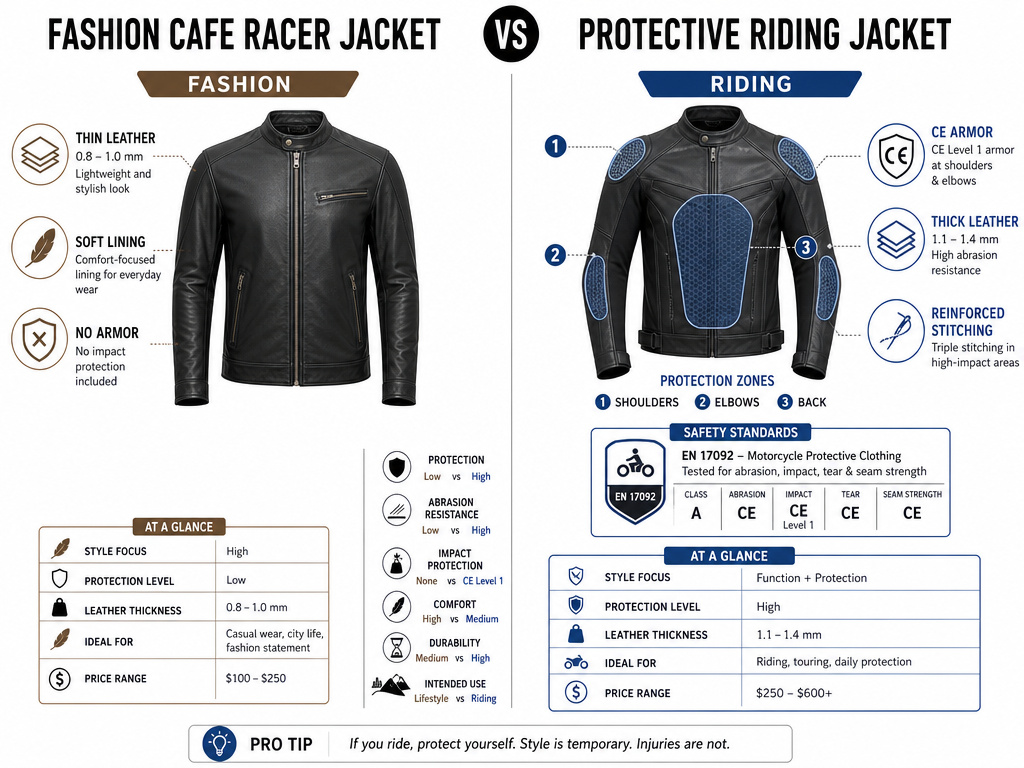 This is the most critical distinction you need to make before buying. Many jackets look the part but are not built for impact.
A fashion cafe racer prioritizes look, softness, and immediate comfort. The leather is often thinner lambskin or a lightweight cowhide. It may have a generic quilted lining and lack any structure for armor. It’s a style piece, full stop.
A protective riding jacket built in the cafe racer style will have specific features: * CE-Certified Armor Pockets: Pockets at the shoulders, elbows, and back designed to hold CE Level 1 or 2 armor (meeting standards like EN 1621-1:2012 for limbs). Some, like the Ausmoto Gear Dare Rider, come with the armor included. * Reinforced Impact Zones: Extra layers of leather or aramid fiber (like Kevlar) in the shoulders, elbows, and back. * Proper Leather Weight: As mentioned, thicker hide for abrasion resistance. * Secure Closure: Sturdy zippers and often a snap or button at the collar to keep it closed.
If you plan to ride in it, the jacket’s specification sheet is your bible. Look for mentions of EN 17092, the European standard for motorcycle protective clothing. A fashion jacket will never cite this.
How Should a Cafe Racer Jacket Fit?
The fit is non-negotiable. The style is built on a close, tailored silhouette. Here are the checkpoints.
Shoulders: The seam should sit right on the edge of your shoulder bone. If it hangs down your arm, it’s too big.
Chest & Torso: It should feel snug but not restrictive when zipped. You should be able to wear a thin sweater underneath, but not a bulky hoodie. The waistband should hit at your natural waistline.
Sleeves: With your arms at your sides, the cuffs should hit right at your wrist bone. When you raise your arms to mimic holding handlebars, the sleeves should not ride up excessively to expose your forearms.
Length: It’s a short jacket. The bottom hem should sit at your waistband or just below it.
Common mistake: Sizing up to get a relaxed, casual fit. A cafe racer that’s one size too large loses its defining shape and looks boxy. If you want an oversized leather jacket, choose a style intentionally designed that way.
Getting the leather jacket fit right is crucial because a cafe racer from a brand like Schott or Vanson will require a break in a leather jacket period to mold to your body. Expect a few weeks of regular wear before it feels like a second skin.
Iconic Brands & Models
While many brands make cafe racer styles, a few are benchmarks for heritage and quality.
Schott NYC: The American standard. Their racer styles are impeccably made with heavyweight leather and solid hardware. They define the “American interpretation” of the style.
Aero Leathers: A Scottish brand revered for its historical accuracy and custom options. They work with premium hides and offer period-perfect details. The Real McCoy’s: A Japanese brand obsessed with perfect reproductions of vintage styles. Their cafe racers are museum-grade for accuracy and material quality.
For a more affordable entry point with modern features, brands like Rev’It! Or Alpinestars make technical riding jackets with a cafe racer aesthetic, incorporating armor and advanced materials. Our curated selection of cafe racer jackets explores specific models across different price points and use cases.
Frequently Asked Questions
Are cafe racer jackets good for motorcycle riding?
They can be, but only if specifically designed for it. Look for features like CE-certified armor pockets, leather thickness of at least 1.3mm, and reinforced stitching. A fashion cafe racer made from thin lambskin offers no real protection in a slide.
What’s the difference between a cafe racer and a bomber jacket?
Bomber jacket typically has a ribbed knit collar, cuff, and waistband, a front zipper, and often a more relaxed fit. A cafe racer has a mandarin collar, a cleaner torso, and a closer fit. The bomber is a military aviation style; the cafe racer is purely motorcycle-derived.
What kind of motorcycle is a cafe racer jacket for?
Historically, it was worn by riders of stripped-down, lightweight British bikes like Triumphs or Nortons built for speed. Today, it suits any standard, sport, or naked bike, essentially any motorcycle where you lean forward into a more aggressive riding position.
Can you wear a cafe racer jacket casually?
Absolutely. Its minimalist design makes it one of the most versatile leather jackets. It works perfectly with jeans and t-shirts, chinos and boots, or even layered over a button-down shirt for a smart-casual look. Its simplicity is its strength.
How do I care for a cafe racer leather jacket?
Use a leather conditioner designed for the type of hide (oil-based for veg-tan cowhide, lighter lotions for lambskin) once or twice a year. Store it on a wide, padded hanger, never a wire hanger, to maintain its shoulder shape. For specific steps, follow a dedicated guide on how to care for a leather jacket.
The Bottom Line
A cafe racer jacket is more than a trend. It’s a specific recipe with a clear history: mandarin collar, straight zip, clean profile. That formula has lasted because it works, on a bike and on the street.
When you’re looking at options, let the details guide you. Check the zipper brand. Count the stitches per inch. Read the specs for armor and leather thickness. Those tangible factors tell you far more about what you’re buying than any marketing copy ever could.
It won’t be the softest thing off the rack, but give it a month of wear. That’s when it starts becoming yours.
