
How to Care for Your Leather Briefcase to Avoid Cracking
This post contains affiliate links. As an Amazon Associate, we earn from qualifying purchases.
To care for a leather briefcase, you need a schedule, not just good intentions. Match your conditioning to your local climate, every couple of months in arid areas, every six months to a year in humid ones. Clean spills immediately with a blot, never a rub, and store the bag empty in a breathable cotton dust bag away from heat and light.
That schedule is the part most people guess wrong on. A bag in Phoenix needs a different rhythm than one in Miami, and getting it backwards dries the leather out or invites mold. The rest is about avoiding the few things that cause irreversible damage.
What follows: the exact cleaning steps, the debate on stuffing for storage, the products that work without clogging the leather’s pores, and how to handle the specific messes, ink, oil, winter salt slush, that standard advice falls apart on.
Key Takeaways
- Condition on a climate-based schedule: every 2-3 months in dry climates, every 6-12 months in humid ones.
- Never use silicone-based “conditioners”; they seal the surface and prevent the leather from breathing, leading to premature drying underneath.
- Always blot moisture, never rub. For winter slush, use a damp cloth first to dissolve salt, then a dry one.
- Store your briefcase empty, in a cotton dust bag or pillowcase, never plastic, in a cool, dark, dry place.
- Perfumes, hand sanitizers, and heavy laptops are three common threats your briefcase faces daily; manage contact and weight intentionally.
The Leather Care Schedule That Actually Works
Forget “condition when it looks dry.” By the time a full-grain leather briefcase looks thirsty, it’s already started to lose its natural oils, and the first micro-cracks are setting in. The goal is to stay ahead of that.
The single biggest variable is your local climate. Leather is hygroscopic, it pulls moisture from the air. In a dry desert climate, it loses moisture rapidly to the atmosphere. In a humid coastal climate, it stays plumper but is more susceptible to mold if over-conditioned.
Buffalo Jackson, a leather goods maker, specifies conditioning every couple of months in arid climates but only every 6 months to a year in humid ones. That’s a fourfold difference in frequency based solely on your zip code.
Here’s a straightforward framework. Start here, then watch your bag.
| Climate Type | Conditioning Frequency | Interior Wipe-Down | Key Risk If Ignored |
|---|---|---|---|
| Arid / Desert (e.g., Phoenix, Las Vegas) | Every 2-3 months | Monthly | Leather dries, loses suppleness, and cracks along stress points (handles, corners) within 12-18 months. |
| Temperate / Mixed (e.g., Midwest, Northeast) | Every 4-6 months | Every 4-6 weeks | Slow, even drying leads to generalized stiffness and a dull patina. |
| Humid / Coastal (e.g., Miami, Seattle) | Every 6-12 months | Monthly | Over-conditioning can clog pores; trapped moisture under the surface can promote mildew, especially in storage. |
The part nobody mentions: Your daily commute matters. A briefcase that sits in a dry, air-conditioned office all day and only sees the outside during a walk to the car is living in a “temperate” micro-climate, even if you’re in Arizona. Observe your bag’s surface. If it feels cool and slightly waxy to the touch, it’s fine. If it feels warm, dry, or papery, it’s time.
Cleaning: What to Use (And What to Avoid)
Let’s be clear about this: most daily dirt doesn’t require a deep clean. A soft, dry brush or cloth does 90% of the work. For the other 10%, you need the right tool for the specific job. Using the wrong one, like saddle soap on a modern dress briefcase, creates more problems than it solves.
Start simple. Always. 1. Empty the bag completely. Tap it upside down over a trash can. Use a hand vacuum on the lining if you have one. 2. Dry Dust. Use a horsehair brush or soft microfiber cloth to remove all surface dust and grit. This prevents scratching during any wet step. 3. Spot Clean. Identify actual stains before you do anything else.
Now, match the cleaner to the stain. This is where people scrub in panic and set the stain permanently.
| Stain Type | Tool & Agent | Method | Never Use |
|---|---|---|---|
| Dust & Dry Dirt | Soft brush, dry microfiber cloth | Brush with the grain. | Water, cleaner sprays (they turn dirt to mud). |
| Water & Salt Slush | Dry cloth, then slightly damp cloth for salt. | Blot. Wait. Blot again. Air dry. | Rubbing, heat (radiator, hair dryer). |
| Oil or Grease | Dry microfiber cloth. | Gently press and lift repeatedly to draw oil out. | Water or soap (they spread the oil). |
| Ink | Cotton swab with a drop of isopropyl alcohol (for non-suede). | Dab, don’t rub. Test inside a pocket first. | More alcohol, scrubbing (drives ink deeper). |
| General Grime (for robust leathers) | Damp cloth with a drop of mild, pH-neutral soap (like Dawn). | Wipe a small section, dry immediately. | Soaking the leather, “saddle soap” on finished leathers. |
Common mistake: Reaching for saddle soap because it’s “traditional.” Saddle soap is designed for unfinished, thick equestrian leather that gets caked in mud and sweat. On a finished briefcase leather, its alkaline pH can strip away protective topcoats and dyes, leaving a cloudy residue and drying the hide. I don’t recommend it for modern briefcase care.
For a structured approach to deeper cleaning, our guide on how to clean a leather briefcase walks through the entire process step-by-step.
Conditioning and Protection: Feeding the Leather
Conditioning isn’t about adding a shiny layer on top. It’s about replenishing the natural oils that evaporate and degrade over time. Think of it like applying a hand-rubbed oil finish to wood, you work in thin, even coats, letting each one fully absorb before even thinking about the next.
You need two things: a conditioner with a silicone-free formula and the right technique.
Choosing a Conditioner:
- Look For: Natural ingredients like lanolin, beeswax, or mink oil. These mimic leather’s own fats and absorb well.
- Avoid: Products with silicone or petroleum listed high in the ingredients. They sit on the surface, create a plastic-like feel, and eventually cause the leather underneath to dry out and crack. The only thing a silicone-based “conditioner” conditions is the profit margin of the company selling it.
- A Default Pick: For someone who wants one answer, Bick 4 Leather Conditioner is a safe, widely available benchmark. It doesn’t darken leather significantly and absorbs cleanly. For a more traditional, protective finish, a beeswax-based cream like Pecard Leather Dressing is excellent for bags that see rough weather.
The Application Technique:
- Clean First. Never condition over dirt.
- Less is More. Apply a dime-sized amount to a soft, lint-free cloth (an old t-shirt works).
- Work It In. Massage the conditioner into the leather using small circular motions. Focus on high-wear areas: handles, strap edges, bottom corners. You’ll feel the leather warm slightly and darken as it drinks the conditioner in.
- Buff Off Excess. After 10-15 minutes, take a clean, dry part of the cloth and buff the entire surface. No residue should remain. If it’s sticky, you used too much.
- Wait. Let the bag rest for at least 12 hours before using it. This cure time is mandatory.
The principles here are the same for all leather goods. Whether it’s a briefcase, a leather handbag, or a pair of leather boots, the goal is absorption, not coating.
When Things Get Wet
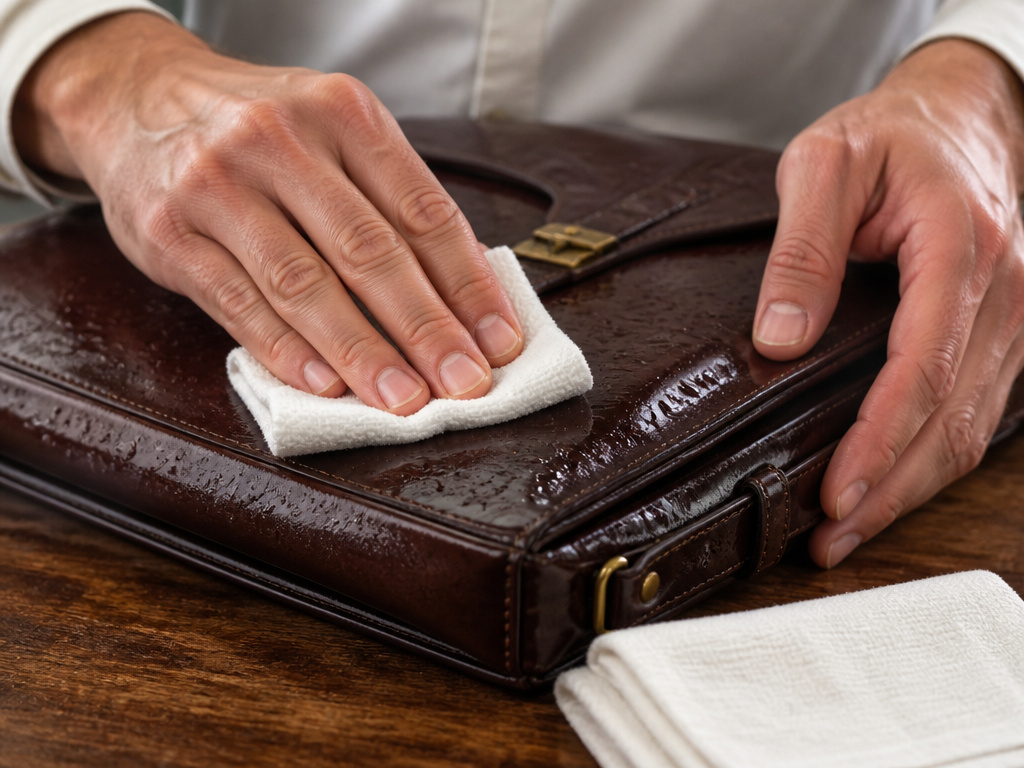 Rain happens. A spilled coffee happens. Your reaction in the first sixty seconds defines the outcome.
The universal rule is blot, never rub. Rubbing grinds moisture and contaminants into the leather’s pores. Blotting lifts them away.
For clear water, a dry cloth is fine. But here’s the critical edge case: winter wetness. If your bag gets hit with slush or street spray, that moisture contains salt or chemical de-icers.
Where this goes sideways: Using a dry cloth on salt stains. The dry cloth just smears the salt crystals, which then act as abrasives every time you move the bag. You’ll see a white, crusty residue form in the grain within a day.
The fix is simple. Use a cloth dampened with clean water first to dissolve the salt, then follow immediately with a dry cloth to blot the moisture away. It’s a two-step blot.
If the bag is thoroughly soaked, like from a downpour, your job is to manage the dry-down. 1. Blot the exterior as best you can. 2. Stuff the bag with crumpled newspaper or plain paper. This serves two purposes: it absorbs moisture from the inside of the leather, and it holds the bag’s shape so it doesn’t warp or wrinkle as it dries. 3. Let it air-dry at room temperature, away from direct heat sources. A heater or hairdryer will bake the leather, making it brittle and prone to cracking. 4. Be patient. A soaked bag can take two to three days to dry completely. Only remove the paper stuffing when the interior feels completely dry to the touch.
Storing Your Briefcase Correctly
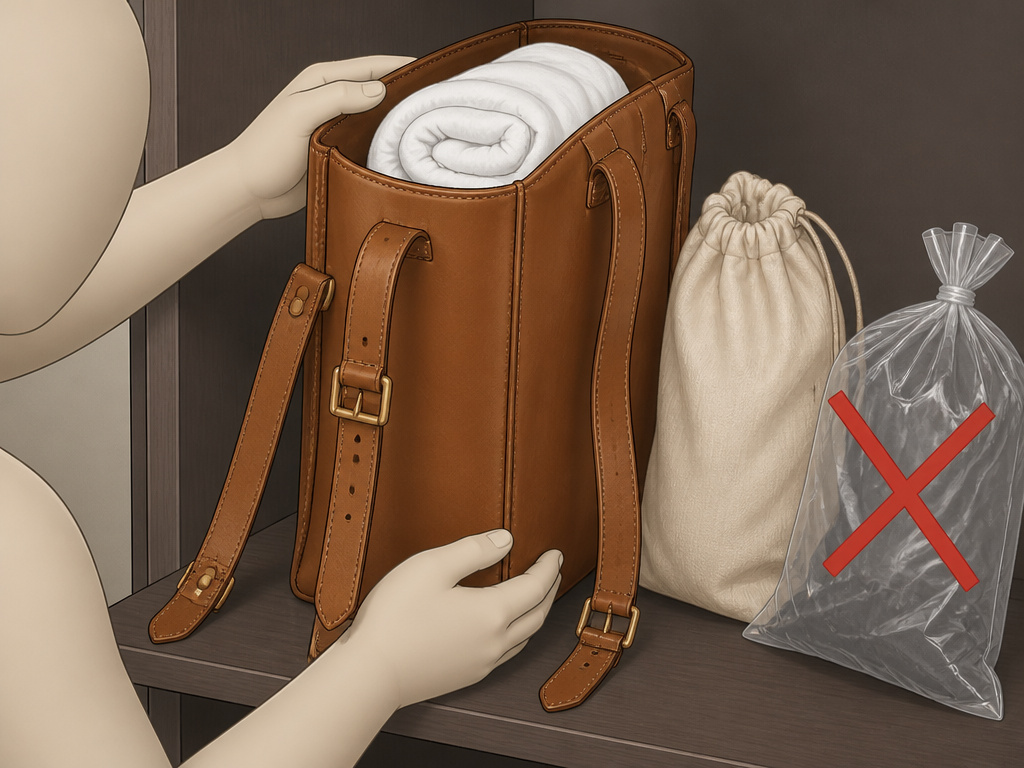 You won’t use it every day. Long-term storage is where silent damage occurs, mildew, discoloration, permanent creases.
There’s a genuine disagreement among experts here. Some, like Pecard and RUMI of Sweden, recommend storing with stuffing (acid-free paper) inside to maintain shape. Others, like I Medici Leather, advise against stuffing with tissue paper, warning that buckles and straps left fastened can press permanent indentations into the leather.
I’ve come around on this: store it empty, but supported. Here’s why. A tightly stuffed bag keeps tension on the seams and leather for months. Over years, this can stress the stitching. But a completely empty bag can collapse into awkward folds. The middle ground is to use a breathable stuffer, like a rolled-up cotton towel or a pillow, that provides gentle support without strain. And always, always undo all buckles and straps.
The storage environment is non-negotiable: * Container: A breathable cotton dust bag or pillowcase. Never a plastic bag. Plastic traps moisture and leads to mildew. * Location: A cool, dark, dry closet shelf. Avoid attics (heat) and basements (damp). * Position: Upright, if it’s structured. For softer bags, lay it on its back.
This logic applies whether you’re storing a briefcase or a leather jacket; trapped moisture is the enemy.
The Three Enemies No One Thinks About
Your briefcase isn’t just fighting the elements. It’s facing your daily life.
- Hand Sanitizers and Perfumes. These are alcohol-based solvents. A daily spritz of perfume or a dollop of sanitizer that touches the leather will slowly dissolve its oils and dyes, leaving a permanent, discolored dry spot. Be mindful when applying.
- The Heavy Laptop. As the Deli Group source notes, a leather briefcase “was not designed for laptops.” High-quality leather is heavy itself. Adding a 4-5 lb laptop creates constant stress on the straps and stitching. The bottom panel will eventually stretch and sag. Use a padded sleeve, and consider carrying the laptop separately if your commute is long.
- Other Leather Goods. Storing leather items touching each other for months can lead to dye transfer or, in rare cases, chemical reactions between different tanning agents. Keep them separated in their own dust bags.
Protecting against these requires habit, not product. It’s the final layer of essential leather care.
Frequently Asked Questions
Can I use coconut oil on my leather briefcase?
I don’t recommend it. Coconut oil can go rancid over time, leading to unpleasant odors. It also tends to be overly greasy and doesn’t absorb evenly, which can attract more dirt. Stick with conditioners formulated specifically for leather.
How do I remove scratches from my briefcase?
Light surface scratches are often part of developing a patina and will blend in with time and conditioning. For deeper scratches, apply a small amount of conditioner to the area and buff gently with a soft cloth. The oils can help minimize the appearance. Avoid “scratch repair” kits that use pigments, as they rarely match perfectly and can look worse.
What’s the difference between caring for full-grain and top-grain leather?
The process is identical. The difference is in the outcome. Full-grain leather, being more porous, will absorb conditioner more readily and develop a richer patina from care. Top-grain leather, with its sanded and often coated surface, might absorb less and show conditioning more as a surface sheen. Both need the same schedule.
My bag has a musty smell. How do I fix it?
Mustiness usually means mildew from stored moisture. First, take the bag out and let it air thoroughly in a dry, ventilated area for several days. Then, clean the interior lining with a cloth dampened with a 50/50 mix of water and white vinegar (test on a hidden area of the lining first). The vinegar smell will dissipate, taking the mustiness with it. Ensure the bag is bone-dry before storing again.
Is it okay to use a generic “all-purpose” leather cleaner?
It’s a gamble. Many all-purpose cleaners contain detergents or solvents that are too harsh for fine briefcase leather. They can strip color and dry out the hide. For a significant investment like a leather briefcase, it’s worth using products from reputable brands in the best leather care category that are designed for finished, high-quality leather goods.
Before You Go
One rule most guides skip: if your briefcase goes more than 14 days in direct summer sun or next to a heat vent, condition it immediately. That kind of dry heat pulls moisture out faster than any schedule accounts for. Everything above assumes normal use, extreme conditions demand an immediate response.
The goal isn’t a bag that looks new forever. That’s impossible. The goal is a bag that ages with character, not decay. The scratches, the darkened handles, the soft sheen, that’s the story of its use. Your job is just to make sure the story lasts for decades. So pick a conditioner you trust, mark your calendar, and when rain comes, just remember: blot, stuff, and walk away. The leather will handle the rest.
