
How to Clean a Leather Diaper Bag: Step-by-Step Care Guide
This post contains affiliate links. As an Amazon Associate, we earn from qualifying purchases.
This post contains affiliate links. As an Amazon Associate, we earn from qualifying purchases.
Cleaning a leather diaper bag requires matching the cleaning method to the specific leather type. The universal rule is a gentle wipe with a soft, damp cloth, but the details, water type, soap, conditioning, and drying, change completely between real leather, coated leathers like Dooney & Bourke’s All Weather, and vegan leather (PU).
Most advice gets the first step right but misses the critical second act: knowing what not to do. A method that revives cowhide can ruin polyurethane (PU) vegan leather in a single cleaning, and “conditioning” a bag that needs none is a guaranteed way to create a sticky, gunky mess. What follows is a breakdown by material, drawn from manufacturer manuals and the specific failures they’re written to prevent.
Key Takeaways
- Always identify your leather type first. Real leather, coated leather (All Weather, Saffiano), and vegan leather (PU) have mutually exclusive cleaning rules.
- Never use heat to dry leather. Air-dry only, away from radiators and sun. Artificial heat shrinks and stiffens the hide permanently.
- Vegan leather (PU) gets a wipe, never conditioner. Conditioner sits as a sticky film on non-porous PU and attracts more dirt.
- Test every product on a hidden seam. Colorfastness varies even within the same bag line.
- Storage matters as much as cleaning. Store clean, dry, and stuffed in a breathable bag, never in plastic.
The Universal First Step
Empty the bag completely. Turn it upside down over a trash can and give it a firm shake to dislodge crumbs, sand, and debris. Use a soft-bristled brush or a lint roller on the interior lining to lift surface dust and pet hair.
This isn’t just about tidiness. Grit trapped in seams or under hardware acts like sandpaper every time the bag moves, wearing down the leather’s finish and stitching long before its time.
Now, find the care tag. If it’s gone, you need to identify the leather by sight and touch. Is the surface a uniform, slightly plastic-like finish? That’s likely coated leather or PU. Does it have a visible grain and feels like skin? That’s real leather. This identification dictates everything that comes next.
How to Clean Real Leather (Full-Grain, Top-Grain)
Real leather breathes. It has pores that absorb oils and lose moisture over time. Cleaning it is a two-part job: a gentle surface clean followed by replenishing those lost oils with a dedicated conditioner.
Your toolkit is simple: a white or light-colored microfibre cloth, distilled water, and a pH-neutral leather cleaner or a sliver of mild, glycerin-based bar soap. The white cloth prevents dye transfer.
Step 1: The Patch Test
Dampen a corner of your cloth with your cleaner or soapy water. Wipe a small, inconspicuous area, like the back of a strap or an inside seam. Wait a few minutes. If the color doesn’t transfer to the cloth and the leather doesn’t change texture, you’re clear to proceed.
Step 2: The Gentle Wipe
Wring the cloth out so it’s barely damp. Wipe the leather in gentle, circular motions, working on one section at a time. Don’t soak the leather. For a leather handbag or backpack, pay extra attention to handles and the bottom, where oils and dirt accumulate.
Step 3: Rinse and Dry
Go over the area with a second cloth dampened with only distilled water to remove any soap residue. Let the bag air-dry naturally, away from direct sunlight or heat sources. This is where patience is essential. Stuff the bag loosely with clean, white tissue paper to help it hold its shape as it dries.
Step 4: Condition
Once completely dry, wait 24 hours if you’re unsure, it’s time for conditioning. Apply a small amount of leather conditioner to a fresh cloth and massage it into the leather in circular motions. Let it absorb for at least an hour. This step replaces the natural oils your cleaning lifted and is what prevents the leather from drying out and cracking. It’s the same principle as maintaining leather furniture.
| Do This | Don’t Do This | Why It Matters |
|---|---|---|
| Use a barely-damp white cloth | Use a sopping wet cloth or sponge | Soaking leather strips its natural oils, leading to stiffness and potential water marks. |
| Air-dry away from heat | Use a hairdryer or place near a heater | Artificial heat causes leather to shrink and crack. The damage is irreversible. |
| Condition after full drying | Condition while the leather is damp | Conditioner can’t penetrate a damp surface and may seal moisture in, causing mildew. |
Cleaning Coated & Specialty Leathers
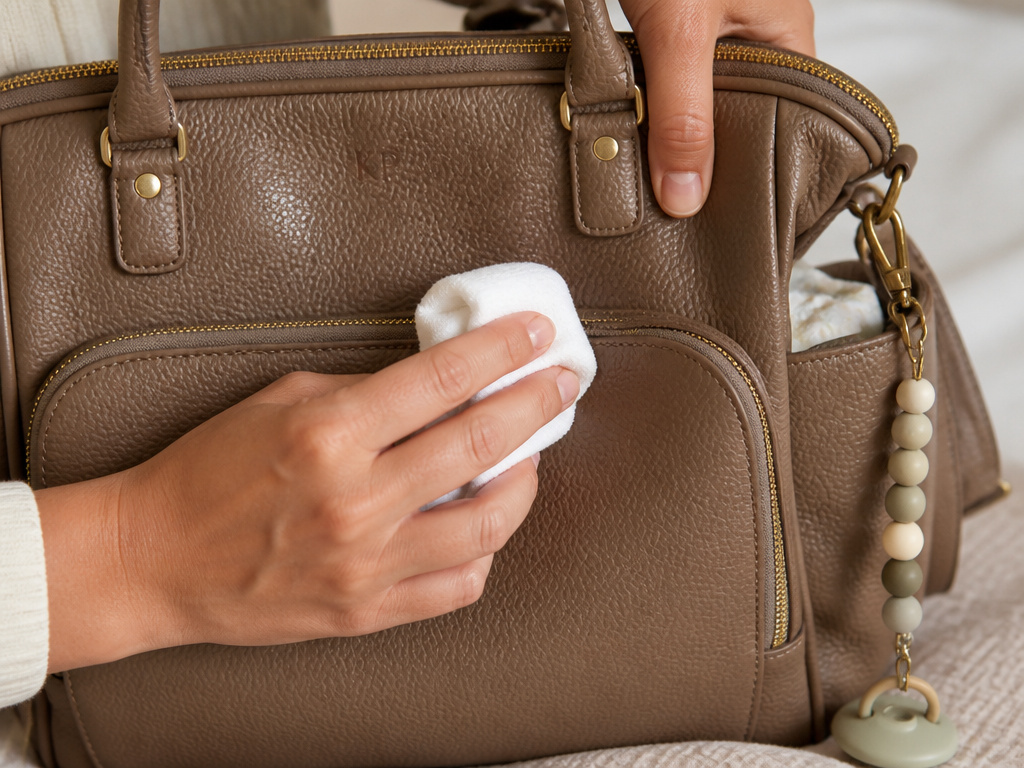
Brands like Dooney & Bourke treat their leathers for durability and water resistance. Their All Weather Leather Collection has a specific, non-negotiable protocol.
Dooney & Bourke specifies cleaning All Weather Leather with a soft cotton cloth slightly dampened with distilled water (or sodium-free seltzer water) and a mild bar soap applied in a circular motion. You must repeat with distilled water until no soap residue remains, then let it dry completely. Crucially, this collection requires no creams, polishes, or leather conditioning products.
The coating does the protecting. Adding conditioner on top is redundant and can degrade the finish. The same rule applies to their Saffiano and Florentine collections. The takeaway? If your bag has a treated, pebbled, or polished finish, assume it needs only a clean wipe and nothing more until the manufacturer says otherwise.
Suede is a different beast. It’s the fuzzy nap on the flesh side of the hide. Never use water or liquid cleaner on suede. Use a dedicated suede brush or a dry, clean microfiber cloth to brush the nap gently, lifting stains and restoring the texture. For a leather backpack with suede accents, spot-clean only with a suede-specific eraser.
Cleaning Vegan Leather (PU) and Trim
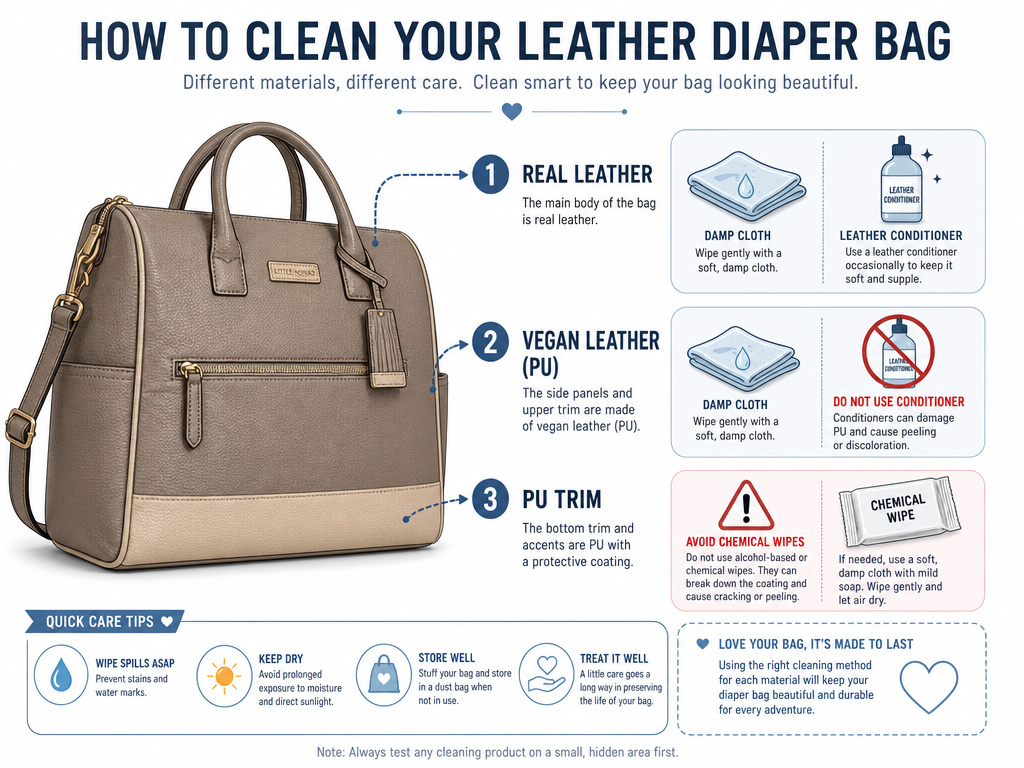
Vegan leather, usually polyurethane (PU) or PVC, has no pores. It’s a plastic layer over a fabric backing. This changes every rule.
The Golden Rule: Never, ever condition PU. Conditioner is formulated to soak into porous animal hide. On PU, it sits on the surface as a tacky film that attracts dust and grime, often permanently discoloring the material.
For general cleaning, a damp microfiber cloth with a drop of mild soap is sufficient. Brands like OiOi issue specific warnings: avoid alcohol-based cleaners, hand sanitisers, and fragranced wipes, as these can break down the PU finish over time. If you have a leather diaper bag with PU trim, clean only the trim with this method, avoiding the real leather sections.
Where this goes sideways: Using a “leather” cleaning wipe on a bag with PU trim. The chemicals in the wipe can dissolve the plasticizer in the PU, leaving a faded, sticky patch that attracts more dirt. The fix often involves a complete trim replacement.
| Material | Clean With | Condition? | Biggest Risk |
|---|---|---|---|
| Real Leather | Damp cloth, pH-neutral cleaner | Yes | Drying out & cracking from lack of oil |
| Coated Leather | Distilled water & mild bar soap | No | Degrading the coating with oils or creams |
| Vegan Leather (PU) | Damp cloth, mild soap (no alcohol) | No | Breaking down the PU layer with chemicals |
| Suede | Dry suede brush or eraser | No | Water staining and matting the nap |
Tackling Stains and Spills
Speed is your best tool. Blot, don’t rub, liquid spills immediately with a dry, absorbent cloth. For a dried-on stain like pureed food or formula, start with the gentlest method: a damp cloth. If that doesn’t work, use a tiny amount of leather cleaner on a hidden area first.
For ink or dye transfer, proceed with extreme caution. Often, these stains are permanent on lighter leathers. Your best bet for significant stain removal is to consult a professional leather cleaner. The cost is usually less than the cost of ruining a several-hundred-dollar bag with a DIY chemical experiment.
For repairing leather that has been scratched or scuffed, a matching leather cream can often minimize the appearance. Deeper gouges are a job for a professional.
How to Store Your Cleaned Bag
Cleaning is pointless if you then store the bag in a way that damages it. Never store a leather bag in a sealed plastic bag or container, trapped moisture is the primary cause of mildew.
- Ensure the bag is completely dry, inside and out.
- Stuff it gently with acid-free tissue paper or a clean, white cotton towel to maintain its shape.
- Place it in the original dust bag or a breathable pillowcase.
- Store it in a cool, dry, dark place. Attics, basements, and hot cars are the enemy.
This storage method is just as critical for leather furniture and leather diaper backpacks you plan to keep between children. Humidity and heat are what cause PU to degrade and real leather to mold.
Frequently Asked Questions
Can I use baby wipes on my leather diaper bag?
No. Most baby wipes contain alcohol, fragrance, and other chemicals that dry out real leather and can degrade the coating on treated or vegan leathers. Stick to a clean cloth with water or a dedicated leather cleaner.
How often should I condition my real leather diaper bag?
For a bag in daily use, condition it every 3 to 6 months. In very dry climates or if the leather starts to look dull or feel stiff, you can condition it more frequently. Always clean the bag before conditioning.
The leather got soaked in the rain. What do I do?
Blot off excess water immediately with a dry towel. Stuff the bag with paper to hold its shape and let it air-dry at room temperature for 24-48 hours. Do not apply heat. Once fully dry, condition it thoroughly to replenish the lost oils.
How can I tell if my bag is real leather or vegan leather (PU)?
Check the care tag. If it’s not there, do a touch and sight test. Real leather has an irregular grain and feels warm and supple. PU often has a perfectly uniform texture, feels cooler to the touch, and may have a slight plastic smell. You can also do a water test on a hidden spot: a drop of water will bead on PU but slowly absorb into real leather.
Can I machine wash a leather diaper bag?
Absolutely not. Machine washing will destroy the leather’s structure, likely ruin any interior lining, and cause irreversible damage. Even bags with nylon bodies but leather trim, like some TWELVElittle models, are spot-clean only.
Before You Go
The one spec that matters more than any other is your leather type. Treat full-grain leather like skin that needs feeding, treat coated leather like a finished surface that just needs wiping, and treat vegan leather like the plastic-coated fabric it is. Get that right, and you avoid 90% of cleaning disasters.
When in doubt, gentler is always safer. A damp cloth and patience will solve most problems; a harsh chemical rarely solves any. And if you’re eyeing a new purchase, this whole process is a good argument for choosing diaper bags made with full-grain leather from the start, they’re built to handle the clean-up.
