
Chesterfield Sofa Defined: Classic Proportions & Key Features
This post contains affiliate links. As an Amazon Associate, we earn from qualifying purchases.
A Chesterfield sofa is a specific type of sofa defined by three essential design features: rolled arms that curve continuously from a back of equal height, deep button-tufting, and historically, leather upholstery. According to the Chesterfield Trade Association, its authentic proportions require a seat depth to seat height ratio of roughly 1:1 and an overall sofa height to seat height ratio of roughly 1:1.5.**
That definition isn’t just about looks. It comes from a 250-year-old request for a sofa that wouldn’t wrinkle a gentleman’s suit. The result is a piece built for posture, not for sinking into.
What follows is a breakdown of those official proportions, the story behind the buttoning, and a straight answer on whether its famous firmness fits your life. We’ll also untangle the modern variations, from velvet to velvet, and how to spot quality in a market full of imitations.
Key Takeaways
- The signature rolled arms and back must be of equal height and form one continuous curve, this is the silhouette’s backbone.
- Authentic proportions, per the Chesterfield Trade Association, demand a seat depth within 15% of the seat height and the overall height within 15% of being 1.5 times the seat height.
- It was famously commissioned so gentlemen could sit upright without wrinkling their suits, which explains its characteristically firm, supportive seat.
- This sofa is ideal for someone who prefers sitting on a firm, structured cushion rather than sinking deep into a soft one.
- While traditionally leather, modern versions use everything from linen to velvet, but the construction and silhouette must remain correct to earn the name.
What Makes a Sofa a ‘True’ Chesterfield? (The Official Proportions)
Let’s be clear about this. The term “Chesterfield” gets slapped on any tufted sofa today, but the trade association has specific, measurable rules. It’s not just a vibe.
The overall shape, size and proportions of authentic Chesterfield sofas are not rigorously defined. Variations are permissible; however, there are key and compulsory elements that must be present.
The first is the continuous arm. The two upright arms are not attached separately; they are a curving extension of the back itself. This creates that iconic, enveloping silhouette. Break that line with a stark joint or a mismatched height, and you have a different sofa.
The second is proportion. The association provides ratios. The seat depth shouldn’t be significantly more or less than the seat height, aim for a 1:1 ratio, allowing a 15% variance. Then, the overall height of the sofa should be about one and a half times the height of the seat, again within 15%. These aren’t arbitrary. They ensure the classic, balanced stance. A seat too deep loses the upright posture; a back too tall looks looming.
Where this goes sideways: Buying a “Chesterfield” with a seat depth 10 inches greater than its height. You’ll slouch, the support line breaks, and you lose the defined sitting posture the design enforces.
For a real-world example, look at the Argos HOME Chesterfield sofa manual. Their models (like SKU 8817109) list dimensions of 1800mm long by 900mm wide by 635mm high. That 635mm overall height needs to work back to those seat ratios. If the seat height is around 425mm, the math holds, seat depth (~900mm?) would be off, but that manual shows how mass-market versions interpret, and often stretch, the classic form.
The Origin Story: A Sofa Designed for Suits, Not Slouching
The most persistent origin tale points to Lord Philip Stanhope, the 4th Earl of Chesterfield, in the mid-1700s. The story goes that he wanted a new kind of seat for his library where his well-dressed guests could sit comfortably upright. The goal was simple: no wrinkled suits.
Existing furniture of the time used lower seats and softer stuffing. Gentlemen would sink in, creasing their fine wool and silk. Stanhope’s solution was a higher, firmer seat with structured button-tufting to keep the stuffing evenly distributed and resistant to collapsing. The high, rolled arms provided a place to rest an elbow without sliding sideways.
I want to help you make confident choices. This isn’t a dusty history lesson. That origin story explains everything about the Chesterfield’s feel. It was never meant to be a napping couch.
The design was a hit among the aristocracy and soon spread through clubs, libraries, and studies. Its association with academia and authority stuck. The deep buttoning, initially functional, became its decorative signature. Early fillings like horsehair were awfully rigid, but the design persisted because it served a specific social purpose, dignified, alert conversation.
The 3 Non-Negotiable Design Features (Beyond the Leather)
Leather is the classic cover, but it’s not what defines the genus. Three structural features do.
- Equal-Height Rolled Arms and Back. This is the silhouette. The arms and back form a continuous, unbroken line at the same height, creating that distinctive “wall” around the sitter. It’s a closed, formal shape.
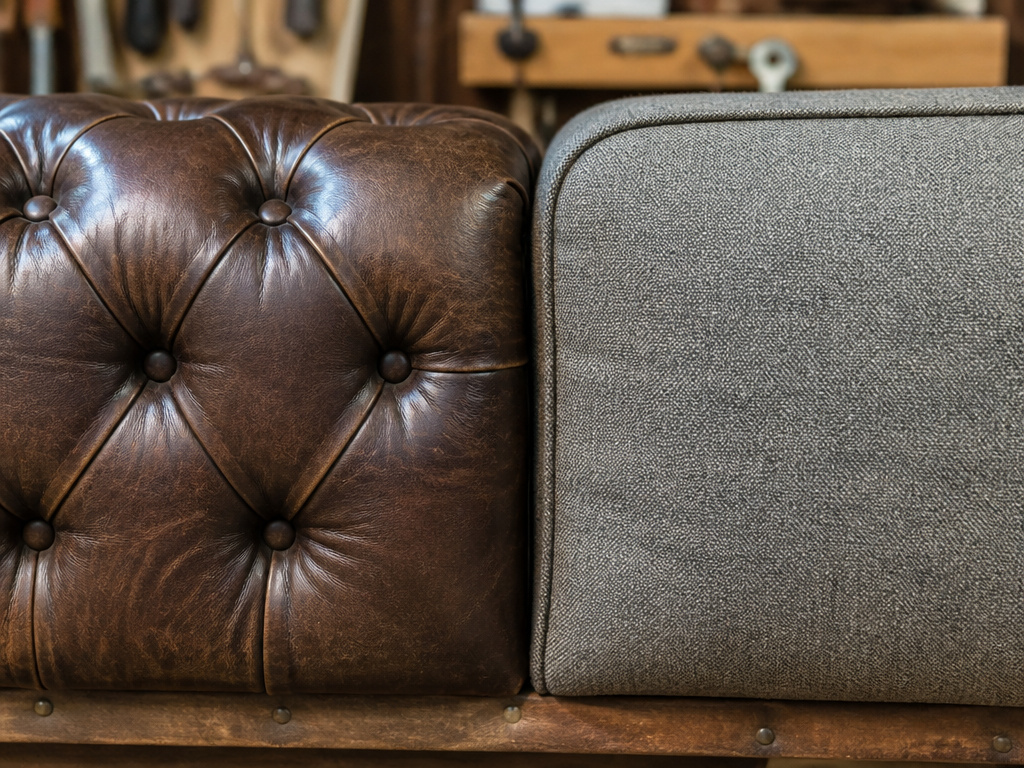
- Deep Button-Tufting. This isn’t shallow stitching. The buttons are deeply recessed, pulling the upholstery into a diamond or square pattern. Originally, this tacked down the interior stuffing. Today, on quality frames, it’s done over a core of high-density foam and still provides structure, preventing the cushion from shifting and bulging.
- A Low, Firm Seat with a High Back. The seat is relatively low to the ground, promoting that upright posture. The back is high, offering support. Together, they create a seated angle that’s more throne than recliner.
Miss one, and you have a tufted sofa with rolled arms, not a Chesterfield. This matters because the name carries expectations about construction and cost. A real one is a major piece of joinery.
| Feature | Purpose (Then) | Purpose (Now) | Common Imitation Flaw |
|---|---|---|---|
| Equal-Height Rolls | Created a formal, enclosed seating posture. | Defines the iconic silhouette and proportional balance. | Arms are lower than the back, breaking the continuous line. |
| Deep Button-Tufting | Secured horsehair stuffing evenly across the large surface. | Provides visual depth, structure, and prevents cushion migration. | Shallow, faux buttons glued or lightly tacked on; no structural function. |
| Low, Firm Seat | Kept gentleman upright to prevent suit wrinkling. | Offers supportive, posture-conscious seating (not for lounging). | Seat is too soft and deep, encouraging slouching. |
Chesterfield Sofa Styles & Variations
Once you know the rules, you can spot the players. The two main classic styles are the English and the Continental.
The English Chesterfield is what most people picture: button-tufting across the entire back and arms. It’s the fully quilted, maximalist version. The Continental Chesterfield (or Club style) omits the buttons from the center of the back, often replacing them with simple piping. The arms are usually plain as well. It’s a slightly less formal, cleaner look.
Then you have the material shift. Leather is the heritage, but it’s not a law.
- Traditional Leather: Usually aniline or semi-aniline dyed hides. This develops a rich leather patina over decades. A protected pigment finish is more common for family-use pieces.
- Modern Fabrics: Velvet, linen, wool, and performance fabrics are now standard. Velvet, in particular, leans into the opulent, tactile nature of the tufting.
Here’s some straightforward advice. The move to fabric isn’t just about color. A wool-blend Chesterfield has a completely different presence than a mahogany-colored leather one, softer, more inviting, but still structured. The construction under the fabric should still be top-notch; don’t let a pretty cover hide a plywood frame.
Common mistake: Choosing a deep, plush velvet on a true Chesterfield frame. The fabric begs you to sink in, but the seat’s firm base resists. The mismatch can feel confusing, not cozy.
Is a Chesterfield Sofa Comfortable? (The Honest Answer)
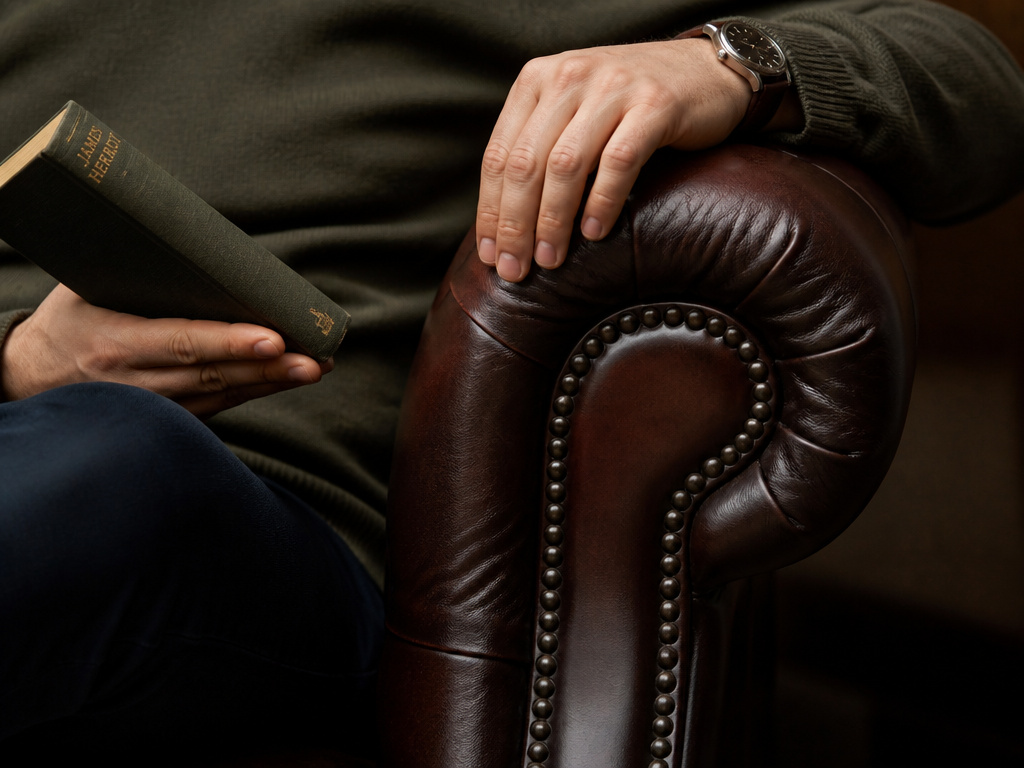
It depends on how you define comfort. If comfort means a soft, enveloping hug where you disappear for a movie marathon, a true Chesterfield will disappoint you. If comfort means proper spinal support, a place to sit upright for hours of conversation without backache, it excels.
Shea Pumarejo of Younique Designs puts it perfectly: it’s for “anyone who likes a firmer seat and doesn’t like fluffing cushions.” You sit on it, not in it. The arms are at the perfect height for resting an elbow while reading. The back support is unwavering.
My rule of thumb with leather is that if it feels stiff, it likely needs conditioning, but if it feels dry and brittle, it needs it urgently. With a Chesterfield’s firm seat, that initial stiffness is the point, it’s the frame and high-density cushioning, not the leather. Breaking in a leather Chesterfield means the top-grain relaxes and develops character, not that the seat softens.
So, who is it for? It’s for formal living rooms, studies, and libraries. It’s for people who appreciate defined seating and traditional craftsmanship. It is not, generally, for a casual family den where the primary activity is sprawling.
How to Spot Quality: Beyond the Buttons
A real Chesterfield is a significant investment. Mass-produced imitations mimic the look but fail in the details that ensure a 50-year lifespan. Here’s what to scrutinize.
First, the frame. It should be made from kiln-dried hardwoods like oak, beech, or ash. Joints should be doweled, double-dowelled, or corner-blocked, never just stapled. You can often feel the weight; look for a gauge 12 or heavier. Second, the tufting. Buttons should be hand-tied through the upholstery to the webbing or frame underneath. This is what creates the deep, lasting dimples. Glued-on buttons are a sure sign of a shortcut.
Look at the studs and piping. Decorative nailhead trim should be evenly spaced and hand-hammered, not a glued-on plastic strip. Piping along the seams should be tight and consistent, with no puckering or loose threads.
Finally, consider the leather types. For a traditional look, a semi-aniline leather offers some protection while allowing natural character. For heavy use, a full-grain leather is practical. Beware of corrected grains or bicast leathers stamped with a fake grain pattern, they won’t age; they’ll just wear out.
Frequently Asked Questions
Are all Chesterfield sofas made of leather?
No. While leather is the traditional and most common upholstery, modern Chesterfields are widely available in fabric, velvet, linen, and synthetic materials. The defining characteristics are the rolled arms, deep button-tufting, and proportions, not the covering material.
What’s the difference between a Chesterfield and a regular tufted sofa?
True Chesterfield has three specific features a regular tufted sofa may lack: 1) rolled arms that are exactly the same height as the back, forming one continuous curve, 2) deep, structural button-tufting (not decorative), and 3) specific proportional ratios between seat height, depth, and overall height. Many sofas borrow the tufting but miss the other rules.
Is a Chesterfield sofa good for a small space?
It can be tricky. The classic Chesterfield has a substantial, commanding presence. However, two-seater “loveseat” versions or apartment-scale models with slightly scaled-down proportions are available. Avoid a full-size, three-seat version in a small room, as it will dominate the space visually.
How do I clean and care for a leather Chesterfield?
Regular dusting with a soft, dry cloth is key. For routine cleaning, use a damp cloth with a small amount of pH-balanced soap designed for leather. Condition only once or twice a year with a product meant for upholstery leather. Avoid silicone-based conditioners and never use furniture polish. For a stain emergency, our guide on how to clean a leather sofa walks through the safe steps.
Why are Chesterfield sofas so expensive?
Quality Chesterfield is a piece of handcrafted furniture. The process involves skilled woodworking for the frame, expert upholstery with hours of hand-tufting, and the cost of premium materials like hardwood and full-grain leather. This isn’t assembly-line furniture. You’re paying for craftsmanship that lasts generations.
The Bottom Line
A Chesterfield sofa is a specific design with a specific purpose. It’s a piece of architectural furniture for your living room, not a cloud to melt into. Before you buy, measure your space against those 1:1 and 1:1.5 ratios from the trade association. More importantly, be honest about how you sit. If you crave a firm, supportive perch that makes you sit up and pay attention, you’ve found your match. If you want to curl up and disappear, look at deeper, softer styles.
The leather, or velvet, or linen, is just the skin. The real value is in the hardwood bones and the hand-tied buttons that will hold their shape for your lifetime. Choose the frame and the craftsmanship first. The cover is the finishing touch on a timeless form.
