
Aniline vs Pigmented Leather Sofa | Choose the Right One
This post contains affiliate links. As an Amazon Associate, we earn from qualifying purchases.
Aniline leather sofas are unfinished hides dyed with soluble colorants, offering a supremely natural feel that ages uniquely but stains easily. Pigmented leather sofas have a painted, protective topcoat, providing uniform color and high stain resistance ideal for active homes. The practical middle ground is semi-aniline, which adds a light protective layer to an aniline base.
That distinction is about more than just a “natural” versus “protected” label. It’s a choice between a living material that tells your story and a durable surface designed to withstand it. The right pick depends entirely on what happens in your living room.
What follows is a breakdown of the chemistry, the real sofa specs, and the maintenance truths that separate marketing from reality. By the end, you’ll know which of the three finishes fits your home’s rhythm.
Key Takeaways
- Aniline leather is permeable. It absorbs spills and oils directly into the hide, which creates patina and vulnerability in equal measure.
- Pigmented leather is a shield. Its polymer topcoat sits on top, blocking most stains but also masking the hide’s natural character.
- Semi-aniline is the hybrid. It offers most of aniline’s look with a fraction of its fuss, making it the default for most modern quality sofas.
- Your lifestyle dictates the choice. Homes with pets, kids, or high traffic need the protection of pigmented or semi-aniline. Quiet, adult-centric spaces can handle aniline’s demands.
- “Aniline” is a chemical. It’s an organic compound (C6H7N) used in dye production, explaining why aniline-dyed leather is so color-saturated at the fiber level.
The Core Difference: Aniline vs Pigmented vs Semi-Aniline
You see three terms: aniline, semi-aniline, pigmented. They describe a ladder of protection, each rung trading off some natural feel for some practical resilience.
Aniline-dyed leather has no surface coating. The soluble dye penetrates the hide completely, leaving the grain open and tactile. This is leather in its most honest, vulnerable, and expressive form.
This openness is the whole point. It’s why aniline leather develops a rich patina, the oils from your skin, the light from your window, the minor scuffs from daily life all interact directly with the leather’s fibers. It’s also why a spilled glass of red wine becomes a permanent feature, not an accident.
Pigmented leather flips the script. A layer of pigment mixed with polyurethane or acrylic is rolled or sprayed onto the surface. This creates a consistent color and a physical barrier. Stains sit on top, waiting to be wiped away. The feel is smoother, often slightly cooler to the touch, and the grain pattern is subtly muted by the coating.
Semi-aniline splits the difference. It starts with an aniline dye bath for depth of color, then receives a very light clear topcoat. This coating offers some stain resistance, buying you time to clean a spill, without completely plastifying the surface. The grain remains visible, and the hand-feel is still soft.
| Finish Type | Protection Level | Feel & Appearance | Best For |
|---|---|---|---|
| Aniline | Very Low | Supremely natural, shows all hide markings, develops a unique patina. | Low-traffic, adult-only spaces where character is prized over practicality. |
| Semi-Aniline | Moderate | Natural grain is visible, soft feel, slight sheen from light topcoat. | The majority of households; balances beauty with everyday stain resistance. |
| Pigmented | Very High | Uniform color, smooth feel, grain pattern is subdued. | Active homes with kids/pets, commercial settings, or where a pristine look is required. |
The choice is about matching the leather’s porosity to your life’s potential for mess, as you can find all three types in high-end sofas.
Why “Aniline” Isn’t Just a Marketing Term
Let’s be clear about this. “Aniline” isn’t a fancy word for “good.” It’s the name of an industrial chemical. Knowing that changes how you see the product.
Aniline (C6H7N) is an organic compound, a building block for dyes, polyurethane foam, and pharmaceuticals. In leatherwork, aniline dyes are soluble colorants that penetrate the hide completely, unlike pigments that sit on the surface. This is where the Wikipedia entry on aniline clarifies its role as a precursor in dye manufacturing.
Its industrial nature comes with handling specs that hint at its potency. The International Chemical Safety Card (ICSC 0011) notes aniline’s workplace exposure limit is just 2 ppm (parts per million) as an 8-hour average. It can be absorbed through the skin. This is to underline that the dye in your sofa is a deep, molecular-level coloration, though it is fixed and safe.
That deep penetration is why aniline leather can’t be “corrected.” A manufacturer can’t sand away a scar or spray over a blemish because the color is in the fibers, not on them. What you see is the unvarnished truth of the hide. When a maker uses pure aniline dyes, they are confident in the hide’s quality. They’re also committing to a product that will change with you.
Real Sofa Examples: How Brands Apply These Finishes
 Look at any reputable sofa spec sheet. The finish isn’t hidden; it’s a key feature that dictates the product’s care and lifespan.
Take the Poly & Bark Napa 88.5” Leather Sofa in Cocoa Brown. Its listing explicitly states it’s made with “semi-aniline dyed Italian tanned leather.” The description adds that the leather is “treated for long-lasting smoothness.” That’s the protective topcoat at work. It’s a family-friendly choice, designed to look good while resisting the occasional cracker crumb or juice splash.
Contrast that with the Poly & Bark Capa 96.5″ Sofa in Chocolate Brown. This model boasts “full-grain pure-aniline Italian-dyed tanned leather” and notes the color is “non-pigmented.” The listing warns it will “scuff and develop into a beautiful vintage patina.” This is an invitation to a long-term relationship, not a promise of perpetual newness.
Then there’s the Wellington’s Furniture Savoy Leather Sofa. The manufacturer calls it “Protected leather, also known as pigmented, semi aniline or finished leather.” They market it directly as “ideal for active households” due to its “durable topcoat that resists stains.” The warranty fine print is telling: it explicitly excludes damage from “hair oil, hair gels, body lotions, and some medications” that cause chemical reactions with the leather. Even a tough pigmented finish has its limits against certain compounds.
Where this goes sideways: Choosing an aniline sofa because it’s “the best,” then using a silicone-based leather conditioner. The silicone can’t penetrate the tight topcoat of a pigmented sofa, so it sits on top as a greasy film. On aniline leather, it clogs the very pores that give the leather its breathability and natural feel, leading to a stiff, plastic-like surface over time.
These examples show that serious manufacturers are transparent. The finish dictates the care instructions and the warranty coverage. Reading the specs is essential due diligence.
How to Choose: Lifestyle Over Aesthetics
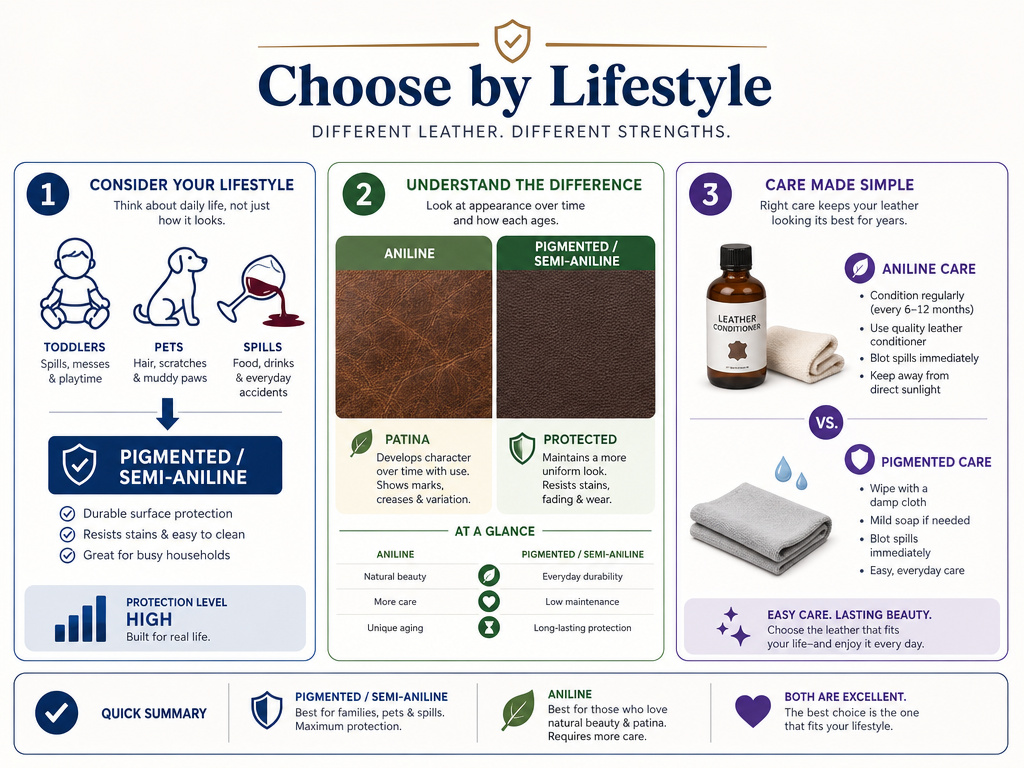 Forget what looks better in a showroom under perfect lighting. The right choice is the one that survives your living room. Ask these questions:
- Who uses the space daily? Toddlers, teenagers, and large dogs are agents of chaos. Their presence pushes you firmly toward semi-aniline or pigmented finishes. Aniline leather and grape juice are a tragic combination.
- What’s your tolerance for patina? Patina is a nice word for “wear patterns.” On an aniline sofa, this means armrests will darken, seating areas will soften and show creases, and minor scuffs will appear. If that sounds like character, go aniline. If it sounds like damage, you want a protected finish.
- How much maintenance will you actually do? Aniline leather needs gentle, regular cleaning with pH-balanced products and occasional conditioning with absorbent oils or creams. It’s a commitment. Pigmented leather mostly needs dusting and a damp cloth for spills. Semi-aniline sits in the middle.
Here’s some straightforward advice. For most people, the best leather sofa guide points to semi-aniline. It avoids the extreme fragility of full-aniline and the sometimes-plastic feel of fully pigmented leather. It’s the workhorse of the quality leather world.
Care & Maintenance: What Actually Works
Care protocols diverge completely based on the finish. Using the wrong method doesn’t just fail, it can cause damage.
For Aniline Leather:
- Clean with a barely damp microfiber cloth. For spills, blot immediately, never rub. Use a dedicated, mild leather cleaner like Colourlock Leather Cleaner.
- Condition sparingly, once or twice a year, with a product designed for naked leather. Leather Honey or Chamberlain’s Leather Milk are good examples. Apply a thin coat, let it absorb fully, and buff off any excess.
- Protect from direct, prolonged sunlight, which can dry and fade it. Rotate cushions if possible to ensure even wear.
For Semi-Aniline & Pigmented Leather:
- Clean with a mild soap (like dish soap) in water, or a cleaner for protected leathers. The topcoat allows for more aggressive cleaning than aniline.
- Conditioning is often optional. The topcoat locks in moisture. Conditioning may not penetrate and can just sit on the surface. Focus on cleaning.
- Protect with a fabric guard designed for leather? I’m skeptical. Most leave a residue. The best protection is the factory topcoat. For pigmented sofas, a product like Scotchgard for Leather can be used, but test it in a hidden area first.
A recurring issue I see is mold on leather stored in damp basements. This isn’t a finish-specific problem, but it’s a disaster for any sofa. It requires immediate, gentle cleaning with a vinegar-water solution (1:1) and controlled drying, never direct heat. If mold has set in, professional help is your only real shot.
The principles of good leather sofa care are universal: act fast on spills, keep it out of the sun, and dust regularly. The products you use, however, are not.
Frequently Asked Questions
Is aniline leather real leather?
Yes, it’s some of the most authentic real leather you can buy. “Aniline” refers to the type of dye used, not a covering or coating. It’s full-grain leather that has been dyed through with soluble aniline dyes, leaving the natural grain surface completely exposed and uncoated.
Which is more expensive, aniline or pigmented leather?
Typically, high-quality aniline leather is more expensive than pigmented. This is because the process uses premium, unblemished hides (flaws can’t be hidden) and more expensive dyes. However, price is also driven by brand, construction, and design. A well-made pigmented leather sofa from a brand like Restoration Hardware can cost as much as a lower-end aniline sofa.
Can you fix scratches on aniline leather?
Minor scuffs and scratches are often part of the patina and can be lessened with a gentle rub of your finger (the natural oils can help) or a specialized aniline leather cream. Deep scratches or cuts are very difficult to repair perfectly because you cannot “paint over” the damage without changing the leather’s character. Professional leather repair is the only option for significant damage.
Is pigmented leather fake leather?
No, pigmented leather is genuine leather with a painted surface coating. The base is still real animal hide. “Bonded leather” or “bi-cast leather” are different materials that use leather fibers glued to a backing; these are the finishes that are often misleadingly marketed.
What is the best leather for a sofa with cats?
For cat owners, a durable, scratch-resistant finish is key. A pigmented leather or a very robust semi-aniline with a thicker topcoat is best. The smooth, hard surface of pigmented leather is harder for cats to sink their claws into compared to the soft, pullable surface of aniline. Keep claws trimmed and provide scratching posts elsewhere.
Before You Go
The debate between aniline and pigmented leather isn’t about finding a universal “best.” It’s about finding the right tool for the job. Aniline is the specialist tool, exquisite in the right hands, frustrating in the wrong ones. Pigmented leather is the reliable multi-tool.
My default recommendation for a primary family sofa is almost always a full-grain semi-aniline leather. It gives you the visual depth and natural feel that makes leather desirable, with a practical layer of defense against real life. Brands like Poly & Bark use it as their standard for a reason.
If your home is a calm sanctuary, you appreciate natural materials, and you’re willing to perform a little routine maintenance, then an aniline sofa can be a deeply rewarding, lifelong companion. Just know what you’re signing up for. The choice, like the leather itself, should be an honest one.
