
Types of Leather for Car Seats: The 3 Grades You Must Know
This post contains affiliate links. As an Amazon Associate, we earn from qualifying purchases.
This post contains affiliate links. As an Amazon Associate, we earn from qualifying purchases.
Automotive leather for seats comes in three primary grades: full-grain, top-grain, and corrected-grain. Full-grain is the highest quality, retaining the hide’s natural surface; top-grain is sanded for uniformity; corrected-grain is heavily processed and often stamped with an artificial grain. Most factory-installed “leather” seats use a coated top-grain or corrected-grain, which is more about durability and ease of cleaning than showcasing a premium hide.
That classification from the leather industry is your starting point. The finish on a car seat matters more than the hide’s origin story. These are engineered materials, built to survive sun, spills, and years of friction.
Here is the plan: the three core grades, the specs carmakers actually follow, why the coating is the real star, and how to spot what you’re actually buying. By the end, you’ll read a window sticker’s “leather-trimmed seats” line with a lot more clarity.
Key Takeaways
- “Genuine leather” is a specific, low-grade classification (corrected-grain), not a general term for quality.
- Industry standards like GMW3262 define what qualifies as automotive leather, often permitting split leather for steering wheels.
- The polyurethane or acrylic coating on most car leather provides stain resistance and color, not breathability.
- Natural characteristics like wrinkles or subtle color variations are not defects but inherent to the material.
- Choosing care products designed for finished automotive leather is critical, using the wrong ones accelerates damage.
The Three Main Grades: A Quick Reference
Forget marketing terms. In the leather trade, grades describe how much of the hide’s original surface remains after processing. This determines feel, durability, and how it develops a patina.
Full-grain leather is the entire, unaltered outer layer of the hide. It shows natural markings and develops a rich patina over time. You won’t find much true full-grain in mass-market cars; it’s a luxury-level offering because it’s less uniform and more prone to showing scuffs.
Top-grain leather is full-grain that’s been sanded or buffed on the surface to remove imperfections. It’s thinner, more supple, and has a consistent look. This is the workhorse of the automotive world. Most premium brand “Nappa” or “Merino” leathers are a high-quality top-grain.
Corrected-grain leather is top-grain that has been heavily sanded, then embossed with an artificial grain pattern and coated with pigment. This is what the industry officially labels “genuine leather.” It’s highly uniform, durable, and cost-effective. The vast majority of leather-trimmed seats in non-luxury cars use this.
| Grade | Surface Treatment | Common Automotive Use | Feel & Aging |
|---|---|---|---|
| Full-Grain | None, natural hide intact | High-end luxury models, limited editions | Develops a unique patina, shows natural marks |
| Top-Grain | Sanded/buffed for uniformity | Premium packages (e.g., BMW Nappa, Mercedes-Benz) | Consistent, soft, ages gracefully with proper care |
| Corrected-Grain (“Genuine”) | Sanded, embossed, heavily coated/pigmented | Standard “leather-trimmed” seats in most brands | Uniform, plastic-like feel, resists stains but can crack |
This specification describes leather material used for automotive interior trim applications, such as seat cushions and backs, seat inserts, doors, shift knobs, shift boots, steering wheel covers, instrument panels, consoles, and armrests. (GMW3262)
The spec above, GMW3262, is a key industry benchmark. It states that leather must be “full, top grain” from specific hides, but makes a critical exception for steering wheels, where split leather is allowed if specified. This is the reality of selecting automotive leather, durability and safety often trump pure aesthetics.
What “Nappa” and “Merino” Really Mean
These are marketing terms for specific types of top-grain leather, defined by their processing and feel.
Nappa leather refers to a full-grain or top-grain leather that’s been drum-dyed and tanned with a focus on softness and a natural, unembossed surface. It’s typically aniline or semi-aniline dyed, meaning some pigment is used but the natural grain remains visible. The feel is supple and warm.
Where this goes sideways: Assuming all Nappa is equal. The term isn’t regulated. One brand’s Nappa might be a superb semi-aniline, while another’s is a thinly corrected leather with a soft coating. The price of the car is usually a decent indicator.
Merino leather is BMW’s specific name for its highest-grade leather, used in models like the 7 Series and X7. It’s a soft, full-grain or very fine top-grain leather, often quilted. The 2020-2021 production issue with milky-white stains on some Merino seats, traced back to a faulty tanning process, shows that even premium materials have supply-chain vulnerabilities. This is a documented case of a leather seat maintenance nightmare that required factory bulletins.
The softness that defines these leathers has a trade-off. A Land Rover technical bulletin for the Evoque specifically cited “variation in fiber density within one hide” as the cause of wrinkling on laminated leather seat inserts. That’s not a defect in the traditional sense, it’s the natural material reacting to tension and humidity. A uniform synthetic would never wrinkle like that, but it also wouldn’t feel the same.
Why the Finish Matters More Than the Hide
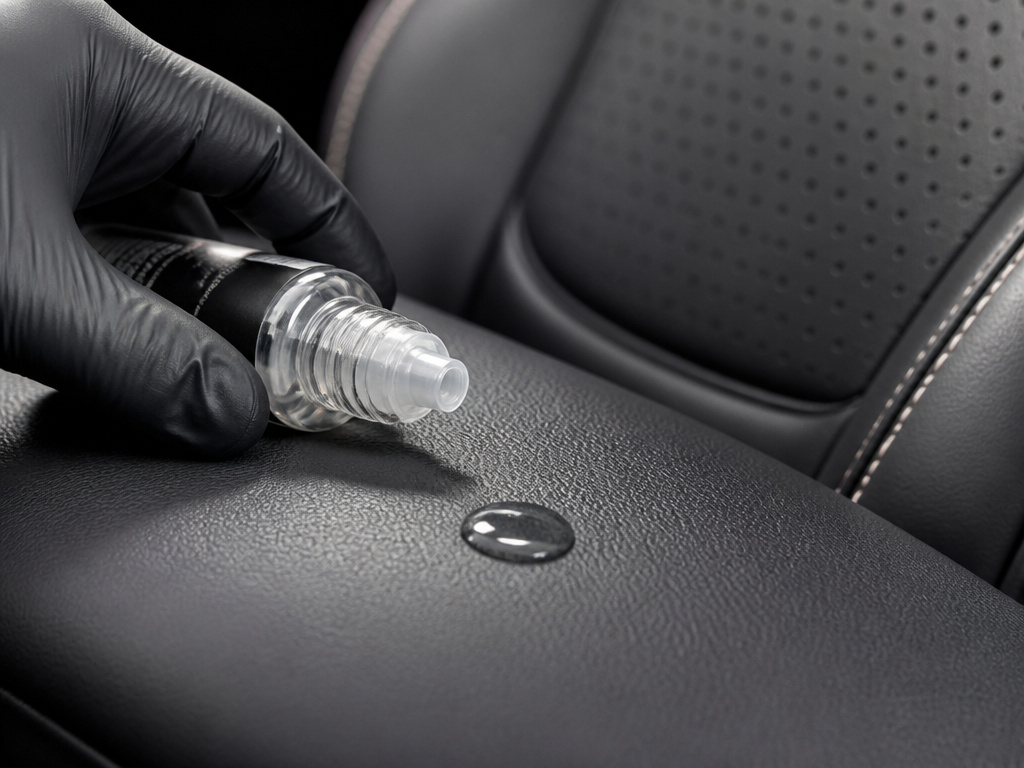 Here’s the thing most guides miss. The leather in your car wears a high-tech jacket.
Automotive leather is almost always finished with a polyurethane or acrylic coating. This coating is what gives it that consistent color, makes it resistant to blue-jean dye transfer and spilled coffee, and allows it to be easily wiped clean. The Nissan owner’s manual states it clearly: “The finishes used in automotive upholstery are unique; very different to furniture, garment or shoe leathers.”
This changes everything about care. You’re not maintaining the leather fibers directly for the first few years; you’re maintaining this coating. Using a heavy oil-based conditioner meant for a saddle won’t penetrate the coating. It will just sit on top, attracting dust and eventually turning sticky.
Common mistake: Using a generic “leather conditioner” from an auto parts store. Many contain silicones that create a shiny, artificial layer that can degrade the coating over time and make seats slippery.
Your goal is to preserve the coating’s flexibility and UV resistance. That means gentle, pH-balanced cleaners and protectants designed for finished leathers. Brands like Colourlock or 303 Automotive Protectant formulate specifically for this. It’s less about “nourishing” the hide and more about protecting leather seats from the sun and abrasion.
How to Decode the Window Sticker
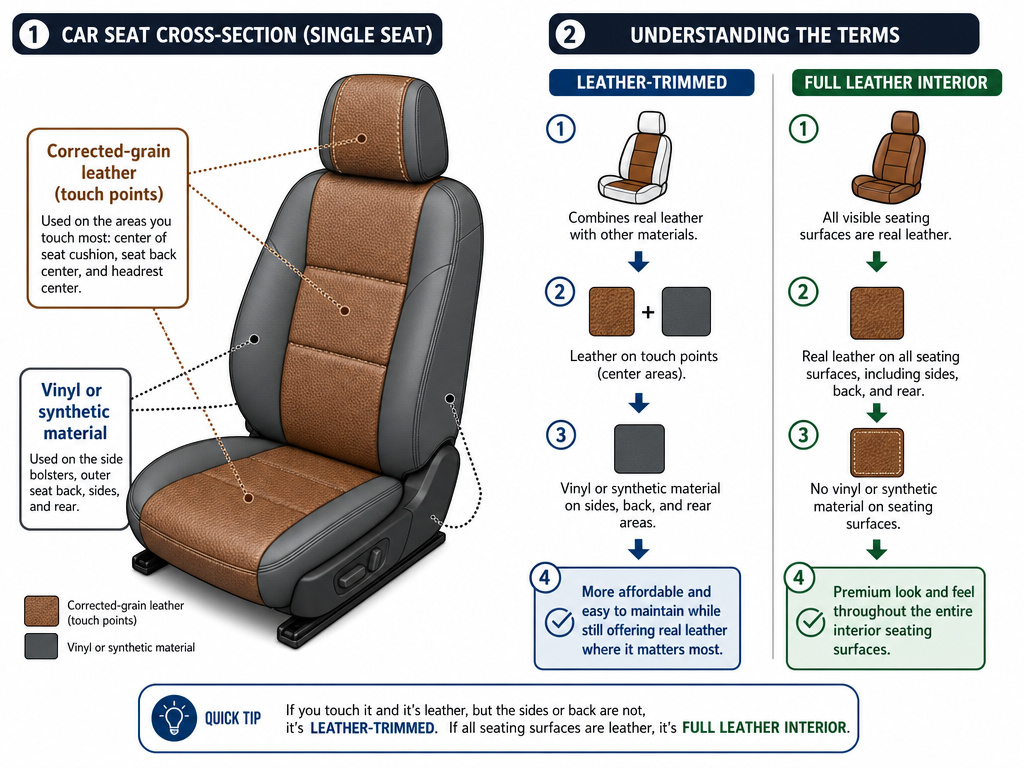 Car manufacturers use carefully chosen language. Knowing the code helps you understand what you’re paying for.
“Leather-trimmed seats” or “leather seating surfaces” typically means only the parts your body touches (seat center inserts, maybe the bolsters) are corrected-grain leather. The sides, back, and rear of the seat are vinyl or a lesser material. This is the most common setup.
“Premium leather seats” or “[brand name] leather” (like “Perforated Milano Leather”) usually indicates a higher-grade top-grain leather, often with more coverage. It may be semi-aniline dyed.
“Full leather interior” or “handcrafted leather” suggests near-total coverage with a high-grade leather, potentially including the dashboard, door uppers, and center console. This is a sign to look closer at the premium leather types on offer.
The Kia owner’s manual offers a moment of refreshing honesty: “Our car seats are upholstered with a combination of artificial and genuine leather… Since it is a natural substance, each part differs in thickness or density. Also, wrinkles could appear depending on the temperature and humidity.” That’s the truth more brands should admit.
The Long-Term Choice: Durability vs. Character
Your decision between leather and another material like cloth or modern synthetic suede concerns how you want the interior to age over a decade.
A high-quality coated leather is incredibly durable against stains and wear. It won’t develop a personal patina like a raw hide, but it will look “like new” for longer with simple wiping. The 2020 consumer study by Pangea found that 59% of buyers chose leather because they deemed it “easy to clean and maintain.”
A premium semi-aniline leather will develop a subtle sheen and softening with use. It feels richer but requires more thoughtful routine leather seat care to avoid drying and cracking, especially in sun-drenched climates.
Synthetic materials like BMW’s SensaTec or Mercedes’ MB-Tex offer consistent aesthetics, extreme durability, and often better vegan credentials. The leather vs cloth seats debate now has a strong third contender.
I’ve seen the result of mismatched care. A friend used a vinyl protectant on his leather seats for years. The seats developed a permanent, slick gloss and started to crack along the bolsters long before they should have. The coating had been compromised. The repair cost more than a lifetime supply of the proper leather cleaner and conditioner.
Before You Go
Let’s be clear about this: if you want the most durable, low-maintenance surface, a high-quality synthetic might be the smarter buy. If you want the traditional feel and smell of leather, expect to care for it with products meant for its finished surface.
Look past the generic “genuine leather” tag. Ask what grade it is and what the coverage is. Check the owner’s manual for cleaning instructions, it often specifies the type of coating used.
One rule to remember: never let a stain sit. That automotive coating is a barrier, but it’s not magic. Clean spills quickly with a damp cloth. That simple habit does more to prevent leather cracking than any miracle product applied after the damage is done.
Frequently Asked Questions
Is “genuine leather” good quality for car seats?
In the leather industry, “genuine leather” is the official term for corrected-grain leather, the lowest grade that can still be called real leather. It’s sanded, embossed, and heavily coated. For car seats, this makes it durable, stain-resistant, and affordable, but it lacks the natural feel and aging character of higher grades like top-grain or full-grain.
What’s the difference between Nappa and regular leather?
Nappa is a type of processing that results in a softer, more supple leather, typically from full-grain or top-grain hides. “Regular” automotive leather is usually a coated corrected-grain. Nappa feels warmer and more natural but can be more susceptible to scratches and staining, requiring more careful leather seat maintenance.
Why do my new leather seats have wrinkles?
Small wrinkles or creases, especially in seat bolsters, are often a natural characteristic of the hide, caused by variations in fiber density. As the Kia manual notes, they can appear with changes in temperature and humidity. This is generally not a defect. However, large, loose wrinkles may indicate a poor installation or a reupholster with leather job that didn’t account for the material’s stretch.
Can I use furniture leather conditioner on my car seats?
No. Furniture conditioners are often designed for unfinished or lightly finished leathers. Automotive leather has a protective plastic coating. A furniture conditioner will not penetrate and can leave a greasy residue on top, attracting dirt and degrading the coating. Always use a cleaner and conditioner formulated for finished automotive leather.
How long should leather car seats last?
With proper care, the leather upholstery in a car can easily last 10-15 years or more. The primary enemies are UV radiation (which dries and fades the coating), abrasive dirt, and harsh chemicals. Using a UV protectant and cleaning with proper leather care products are the two most effective ways to maximize lifespan.
