
How to Care for a Leather Apron: Expert Tips for Longevity
This post contains affiliate links. As an Amazon Associate, we earn from qualifying purchases.
To care for a leather apron, follow three core actions: wipe it down after use, condition it every few months, and always hang it to store. Never machine wash it, avoid using harsh chemicals like saddle soap or detergents, and keep it away from direct heat sources for drying. The goal is to preserve the leather’s natural oils and structure, preventing it from drying out, cracking, or becoming misshapen.
That’s the short answer, but the details inside each step are what separate a decade-long apron from one that stiffens up in a year. Leather isn’t a fussy museum piece; it’s a durable, working material that responds predictably to its environment. Get the environment wrong, and the material fails on a schedule.
What follows is a breakdown of the daily wipe-down, the monthly conditioning ritual, and the storage habits that actually work. We’ll also cover what to do when your apron gets soaked or stained, and why the humidity in your workshop matters more than you think.
Key Takeaways
- Never, ever machine wash a leather apron or soak it completely. Water swells and distorts the fibers, and agitation breaks them down.
- Condition with a natural-based leather conditioner every 1-3 months, not with silicone sprays or furniture polish. These clog the pores and create a sticky film.
- Always hang your apron on a broad hook after use. Folding it creates permanent creases that weaken the leather over time.
- For aprons with a factory waterproof coating (like many from Chefscotton or Stalwart Crafts), avoid saddle soap and harsh solvents, they dissolve the coating.
- Store aprons in a stable environment. Aim for 40-60% relative humidity with less than a 5% daily swing to prevent the leather from cycling between swollen and brittle.
The Golden Rule: Wipe, Condition, Hang
This isn’t a complicated regimen. It’s a rhythm. Think of it like maintaining a maple or bamboo cutting board: you clean it after use, you oil it occasionally, and you store it properly. Miss one, and the material suffers.
A proper leather care routine for a working apron involves three non-negotiable actions: removing surface debris after each use, replenishing lost oils periodically, and storing the item in a way that maintains its shape and prevents environmental stress.
The wipe-down is damage prevention. Metal shavings, sawdust, flour, grease, if left sitting, they grind into the leather or attract moisture. A dry or slightly damp cloth takes 30 seconds. Condition is preventative medicine. Leather loses its natural oils through exposure and cleaning. A conditioner like Lexol or Bickmore replaces them, keeping the hide supple. Hanging is structural support. Leather has memory. Drape it over a hook, and it keeps its shape. Cram it into a drawer, and it learns a set of deep, weak creases.
Here’s the thing I learned the hard way: skipping the finish. In my first major belt project, I didn’t seal the edges. They frayed and absorbed grime almost immediately with wear. An apron edge doesn’t need sealing in the same way, but the principle holds. Neglecting the simple, periodic upkeep, the conditioning, is how you end up with a stiff, cracked panel across your chest. The damage is slow, so you don’t notice until it’s too late.
The Three-Step Daily Clean (and When to Go Deeper)
Your apron’s after-work routine depends entirely on what got on it. Dry debris gets one treatment; wet grease or food spills get another.
For Dry Dust & Debris (Woodshop, Metal Shavings):
- Take the apron off and give it a firm shake outside to dislodge the bulk of the material. You’ll hear the fine grit hitting the ground.
- Wipe the entire surface down with a dry, soft cloth (an old t-shirt works). Go with the grain of the leather.
- Hang it up. That’s it. No water, no soap. This is 90% of your cleaning.
For Wet Stains (Cooking Oil, Sauce, Coffee):
- Act quickly. Blot, don’t rub, any excess liquid with a clean, absorbent cloth.
- Dampen a second cloth with lukewarm water and a drop of mild, natural soap. Castile soap or even a basic shampoo works. Wring it out so it’s barely damp.
- Wipe the entire panel where the stain is, not just the spot. Spot cleaning leaves a water ring. Use gentle, circular motions.
- Wipe the area again with a cloth dampened with clean water to remove soap residue.
- Let it air-dry at room temperature, away from heaters or sun.
Where this goes sideways: Using saddle soap on a modern, coated apron. Brands like Chefscotton and Stalwart Crafts use a waterproof impregnated coating. Saddle soap dissolves this coating, leaving the leather underneath sticky and prone to cracking. Save the saddle soap for actual, filthy, uncoated saddles.
Conditioning: Not Optional, Not Frequent
Leather is skin. It dries out. Conditioning is how you put moisture and oils back into the fibers to prevent cracking and maintain flexibility. But more is not better.
Frequency: Every 1 to 3 months for a frequently used apron. If the leather looks dry, feels stiff, or has been thoroughly cleaned, it’s time.
Product: Use a natural-based leather conditioner or balm. Avoid anything with silicone, petroleum distillates, or that promises a “high-gloss seal.” You want the leather to breathe.
| Conditioner Type | Best For | What to Watch For |
|---|---|---|
| Natural Oil Balm (beeswax, lanolin, neatsfoot) | Traditional vegetable-tanned aprons; restores suppleness deeply. | Can darken leather slightly. Apply thin coats. |
| Light Cream Conditioner | Factory-finished or coated aprons; adds moisture without heavy waxes. | May not penetrate as deeply on very dry leather. |
| Spray “Protectants” | Avoid for aprons. Often silicone-based; sit on top and can attract dirt. | Creates a plastic-like film that cracks. |
How to Apply It:
- Ensure the apron is clean and dry.
- Apply a small amount of conditioner to a soft cloth.
- Rub it into the leather using circular motions, covering the entire surface evenly. Pay extra attention to stressed areas like the neck strap and waist tie knots.
- Let it soak in for 15-20 minutes.
- Buff off any excess with a clean, dry cloth. The apron should feel supple, not greasy.
This process is nearly identical to caring for a leather jacket or maintaining a leather coat, the goal is uniform absorption without a sticky residue.
Storage & Environment: The Hidden Factors
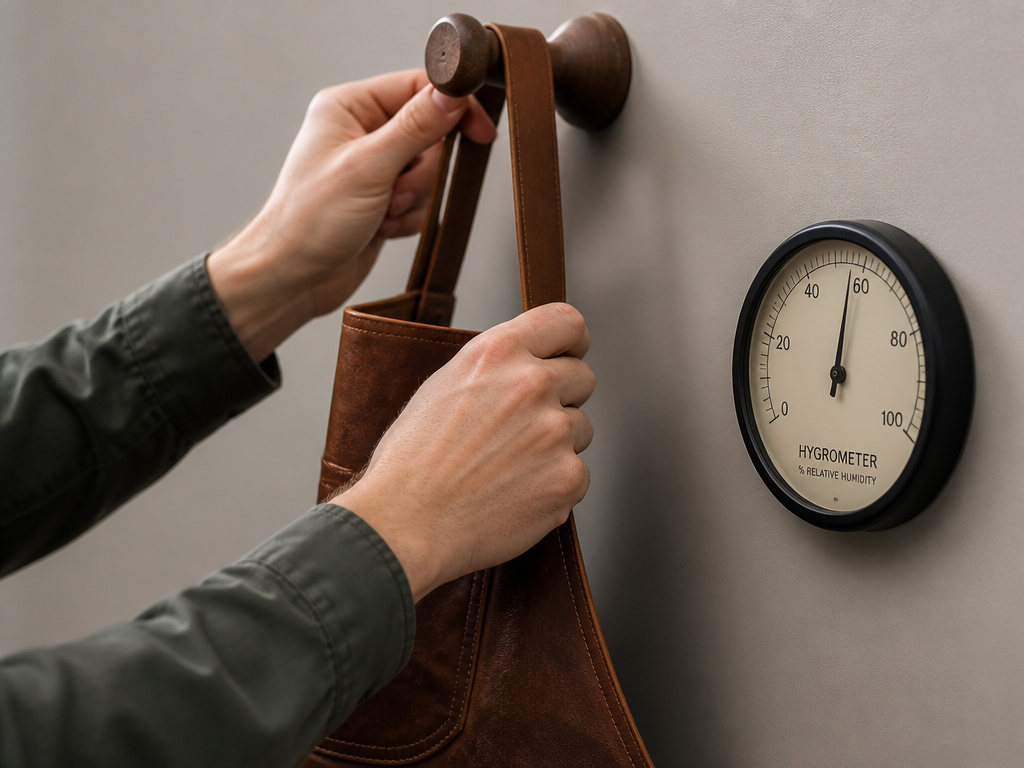 This is the part most guides gloss over. How and where you store your apron between uses determines its lifespan as much as cleaning does.
Hanging vs. Folding: Always hang. Use a sturdy, rounded hook or a Carhartt apron hanger. Folding, especially when the leather is warm from your body, sets permanent creases. These creases become stress points that crack first. If you must travel with it, roll it from the bottom up.
The Humidity Equation: Leather is hygroscopic, it absorbs and releases moisture from the air. This isn’t just theory; it’s the core of museum conservation. The National Park Service leather care guide specifies that relative humidity (RH) should be stabilized between 40% and 60%. The real killer is fluctuation: a swing of more than 5% RH within 24 hours causes the leather to constantly expand and contract, leading to fatigue and deformity.
Store your apron in a clean, covered, and ventilated space under normal temperature and humidity conditions.. Paraphrased from the Sealey SSP146.V2 apron instructions.
For a home workshop or kitchen, this means don’t hang it in a damp basement (above 65% RH invites mold) or next to a hot dryer vent (below 22% RH desiccates it). A closet or a wall in a climate-controlled room is ideal. This same principle of stable storage is critical for caring for leather furniture and protecting leather boots.
What Not to Do: The Quick Ruin Checklist
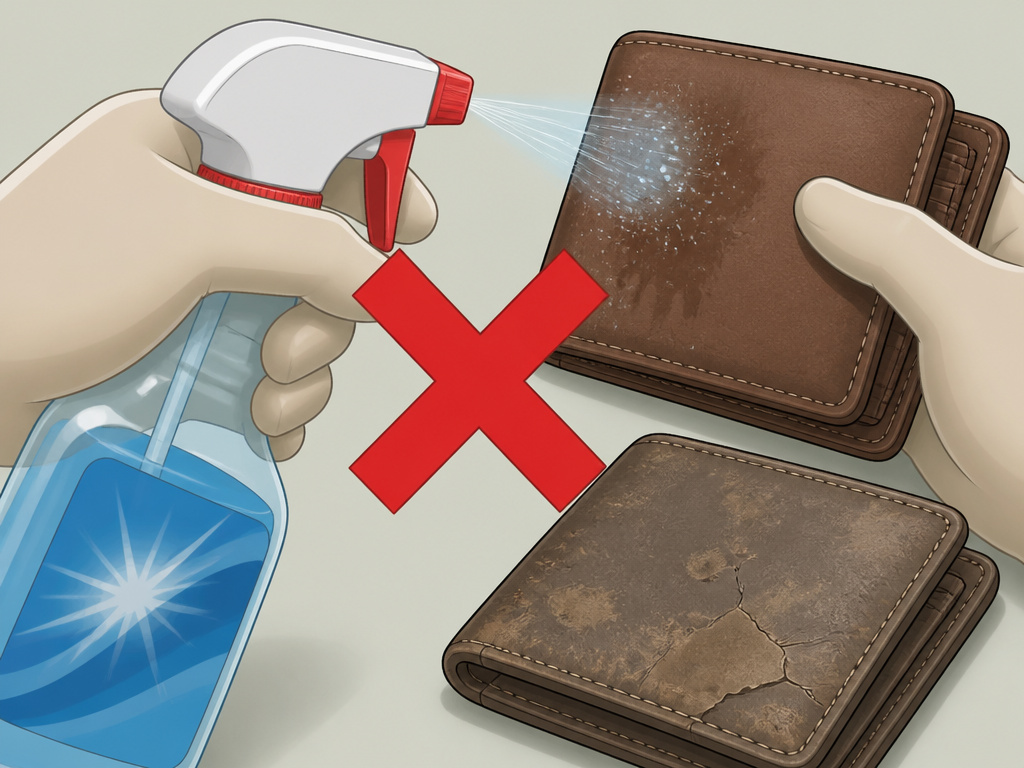 Sometimes, knowing what to avoid is more urgent than the step-by-step. These mistakes have immediate, negative consequences.
- Don’t use a washing machine. Agitation and full immersion stretch and weaken the leather fibers. The apron will come out stiff and misshapen.
- Don’t use heat to dry. No hair dryers, radiators, or sunbeams. Heat cooks the collagen fibers, making them brittle and prone to cracking. Air-dry at room temperature only.
- Don’t use harsh chemicals. This includes detergents, ammonia, bleach, furniture polish, and most generic “cleaners.” They strip the natural oils and can break down protective coatings.
- Don’t store it dirty. Acidic spills (tomato sauce, vinegar) or salt can chemically burn the leather if left sitting.
- Don’t ignore the straps. The neck loop and waist ties endure the most friction and stress. Make sure to clean and condition them as part of your routine.
These prohibitions form the foundation of general leather care and apply just as strictly to a leather tool belt or leather gloves.
Special Cases: Coated, Veg-Tan, and Soaked Aprons
Not all aprons are the same blank canvas. The leather type and any factory finishes change the care rules slightly.
Factory-Coated/Waxed Aprons (Chefscotton, Stalwart Crafts):
These have a waterproof layer impregnated into the leather. Stains sit on top, making them easier to wipe off. The trade-off is sensitivity. Avoid saddle soap and solvent-based cleaners, as they dissolve this coating. Stick to lukewarm water and a mild soap for cleaning, and use a light cream conditioner.
Vegetable-Tanned Leather Aprons (like the OFYR grill apron):
This leather is unfinished and will develop a dark patina with use and exposure. It’s more absorbent. You can use a richer conditioner like a natural oil balm. Expect it to darken over time, that’s the character showing through.
What if it gets soaked?
Maybe a bucket tips over, or you get caught in the rain. Don’t panic. Wipe off excess water, then stuff the apron lightly with crumpled paper (like newsprint) to help it hold its shape as it dries. Keep it in a well-ventilated, room-temperature area. Never apply heat. Once completely dry, condition it thoroughly, as water leaching out takes oils with it. The process mirrors the careful drying needed for a complete guide to leather shoe care after a downpour.
Frequently Asked Questions
Can I use mink oil on my leather apron?
You can, but with caution. Mink oil is a heavy conditioner that’s great for waterproofing but can darken leather significantly and may become rancid over time in warm environments. For a lighter-colored or kitchen apron, a dedicated leather balm is less drastic.
How do I remove small burn or spark marks?
Small spark marks are often a badge of honor on a welding or blacksmithing apron. Brush off any debris and condition the area. The mark will remain, but conditioning keeps the surrounding leather from drying out and cracking from the heat exposure. Don’t try to sand or scrub them out.
My apron has become stiff. Can I save it?
Possibly. Stiffness means the leather is dehydrated. Give it a very thorough conditioning. Apply a generous amount of conditioner, let it soak in for an hour, then buff. You may need to repeat this process 2-3 times over a week. The leather should gradually become more pliable. If it’s stiff from being heat-dried or chemically damaged, the fibers may be compromised beyond repair.
Is it okay to iron creases out of my apron?
Some manufacturer guides, like Chefscotton’s, say you can gently iron the backside of the leather on a low heat setting with a cloth barrier. This is a last resort for deep-set folds. It’s far better to avoid creases by hanging the apron properly in the first place. Test on an inconspicuous area first.
How often should I replace my leather apron?
Well-cared-for leather apron doesn’t have an expiration date. Look for signs of failure: deep cracks that go through the thickness of the leather, broken stitching at major stress points, or dry rot (a crumbly texture). With proper cleaning a leather tool belt and conditioning, an apron from a brand like Duluth Trading or Carhartt should last for decades of regular use.
Before You Go
The single biggest mistake is treating leather care as a once-a-year chore. It’s a brief, integrated habit. Wipe it down when you put your tools away. Condition it when the calendar flips to a new season. Hang it on the same hook every night.
If you take one action from this guide, make it the humidity check. Storing your apron, and your other leather goods, in a stable 40-60% RH environment does more passive good than any conditioner. That’s the museum-conservation insight most DIYers never hear, and it’s the difference between leather that ages and leather that just gets old.
For everything else, from selecting quality leather conditioners to the specifics of belt care, the principles are consistent. The material is tough. It just needs a predictable routine.
