
8 Best Leather Hunting Boots of 2026
This post contains affiliate links. As an Amazon Associate, we earn from qualifying purchases.
This post contains affiliate links. As an Amazon Associate, we earn from qualifying purchases.
The Irish Setter Elk Tracker 12″ Boot stands out as the overall best choice for serious hunters who need reliable warmth, waterproofing, and long-term durability, while the Irish Setter Wingshooter 7″ offers a solid, agile option for lighter use. For budget-conscious buyers, the HUNTRITE Insulated Waterproof Hunting Boot provides basic protection at a lower price.
Hunters know a bad boot can turn a promising trip into misery before the first shot is fired. Cold, wet feet or twisted ankles on rough ground aren’t just uncomfortable, they can end a hunt early or worse. This guide cuts through the marketing to focus on what matters: real-world performance, leather quality, and smart design choices based on specs and owner feedback. I looked closely at construction, insulation needs, and long-term value to find boots that deliver where it counts.
Top 7 Leather Hunting Boots in the Market
The Best Leather Hunting Boots, Reviewed
Irish Setter Elk Tracker 12″ Boot

Strengths
- GORE-TEX waterproofing
- 1000G Thinsulate insulation
- Steel shank for support
Trade-offs
- Heavy for long distances
- Longer break-in period
- Expensive upfront
This is the complete package for serious cold-weather hunting. The combination of GORE-TEX and 1000G Thinsulate is brutally effective, owners in northern zones report staying warm even during still sits in single-digit temperatures. The 12-inch shaft adds critical protection against snow and brush, and the steel shank provides real support when trudging through uneven, frozen ground.
On top of that, it’s built to last: Goodyear Welt construction means you can resole it, and the full-grain leather will age beautifully. Compared to others in the lineup, this one sacrifices some agility for protection and warmth, but that’s exactly the trade-off you want in extreme conditions.
Video review
Irish Setter Elk Tracker 10″ Boot

Strengths
- Resoleable Goodyear Welt
- UltraDry waterproofing
- Memory foam footbed
Trade-offs
- Not insulated
- No steel shank
- Moderate ankle support
Irish Setter has a reputation for blending heritage construction with modern performance, and this 10-inch model proves it. The Goodyear Welt resoleable platform is a major win for longevity, this is the kind of boot you can rebuild, not replace. The UltraDry waterproofing works well in damp brush and stream crossings, and the memory foam footbed delivers real comfort over miles.
ScentBan technology gets mentioned often in owner feedback, it doesn’t eliminate odor completely, but it noticeably slows buildup. It’s not insulated, so I wouldn’t pick it for sub-freezing temps. Still, for early to mid-season hunts in wet terrain, it’s a strong performer.
Video review
Thorogood 1957 Flyway Moc Toe Boot

Strengths
- Goodyear Storm Welt construction
- Made in USA
- Removable shock-absorbing footbed
Trade-offs
- No heavy insulation
- Heavier than lightweight options
- Higher initial break-in
Knowing how boots are made, I appreciate what Thorogood does here, American craftsmanship with Goodyear Storm Welt construction means these boots are built to last and can be resoled multiple times. The full-grain leather ages well, developing a rich patina over years of field use. The dual-density footbed is seriously comfortable, and owners praise its shock absorption during long hikes.
It’s not the warmest for extreme cold, lacking heavy insulation, but excels in wet woods and variable fall conditions. Compared to imported boots at similar prices, the build quality stands out. If you value domestic production and long-term care, this one earns respect.
Product photos


Irish Setter Wingshooter 9″ Boot
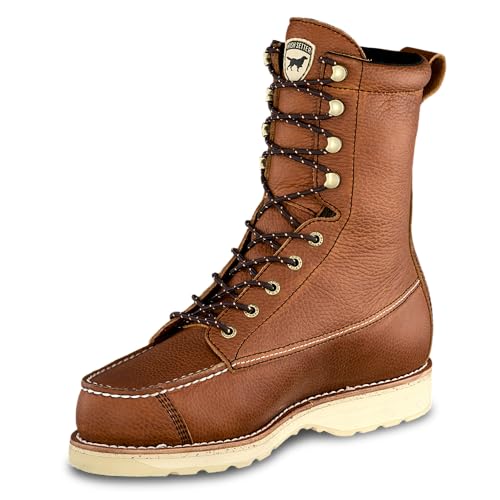
Strengths
- Lightweight Prairie outsole
- Goodyear Welt construction
- Full-grain leather
Trade-offs
- Not insulated
- Lower shaft height
- Less support in rough terrain
If you’re chasing pheasants or grouse through open fields and thick cover, this boot was made for that rhythm. The Prairie outsole sheds mud and debris better than aggressive lugs, giving you quieter movement and cleaner transitions. At 9 inches, it offers just enough ankle support without restricting mobility, a key detail for upland hunters covering miles in a day.
The full-grain leather breaks in smoother than many in this class, and owners consistently say it feels lighter on the foot than it looks. It’s not for deep snow or icy bogs, but in dry to moderately damp conditions, it’s one of the most balanced choices for active hunting.
Product photos


Irish Setter Wingshooter 7″ Boot

Strengths
- Very lightweight
- Steel shank support
- Goodyear Welt resoleable
Trade-offs
- Low shaft height
- Not for wet conditions
- Minimal insulation
Sometimes less is more, and this 7-inch boot proves it. It’s the lightest in the Irish Setter hunting line, yet still packs Goodyear Welt durability and a steel shank for support. The Prairie outsole gives excellent traction without grabbing every twig and stone, making it ideal for fast-moving hunts where silence matters.
I’d recommend this to anyone who values speed and comfort over deep protection. It’s not going to keep snow out, but for dry upland seasons or early-fall deer hunts, it strikes a near-perfect balance. Owners love how quickly it breaks in and how little fatigue they feel after full days.
Product photos


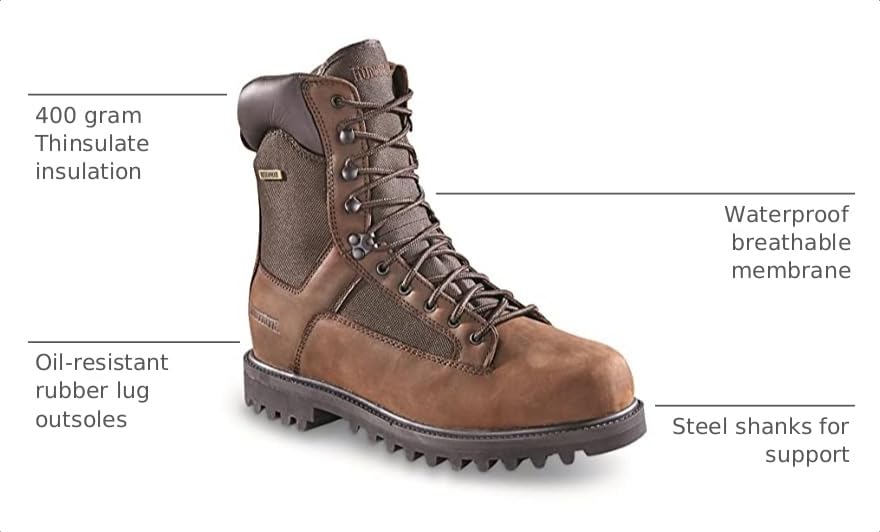
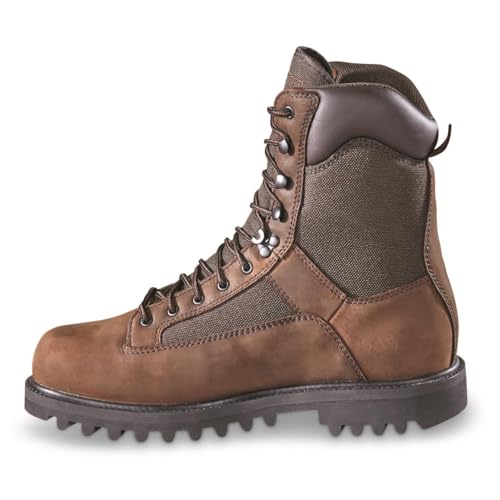
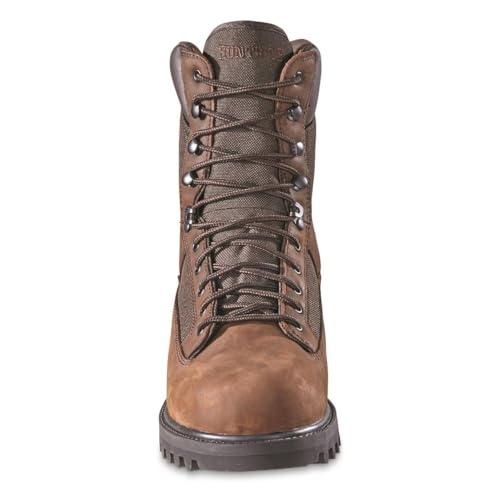
HUNTRITE Insulated Waterproof Hunting Boot

Strengths
- Affordable price
- 400G insulation
- Breathable waterproof membrane
Trade-offs
- Nylon-reinforced upper less durable
- Shorter lifespan
- Basic construction
At this price, you’re not getting premium craftsmanship, but you are getting surprising functionality. The 400-gram Thinsulate keeps feet warm in moderate cold, and the waterproof breathable membrane actually performs better than expected for an entry-level boot. The leather and nylon upper combo helps keep weight down while maintaining flexibility.
That said, this isn’t a boot built for years of hard hunting. Reviewers note stitching issues over time and a sole that wears faster on rocky ground. It won’t match the durability of full-grain leather or Goodyear welted boots. But as a starter boot or for light seasonal use, it makes sense.
Product photos


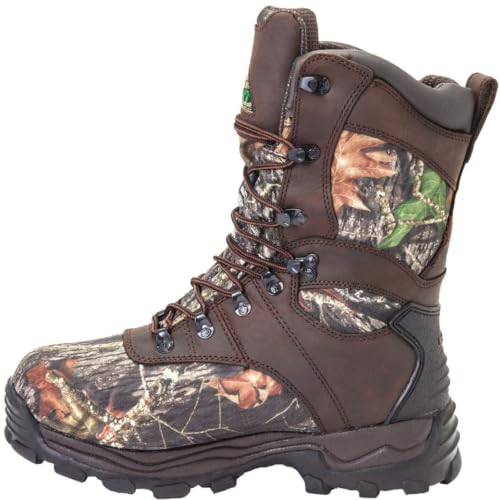
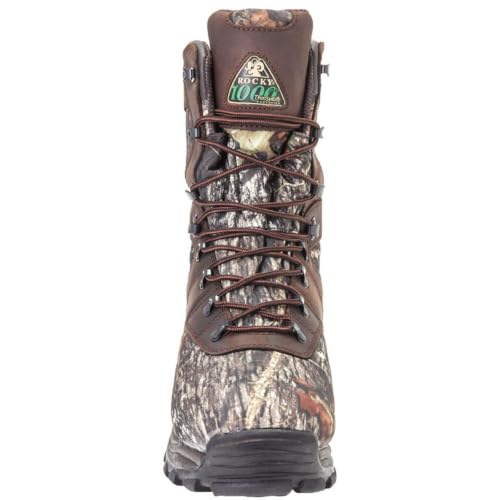
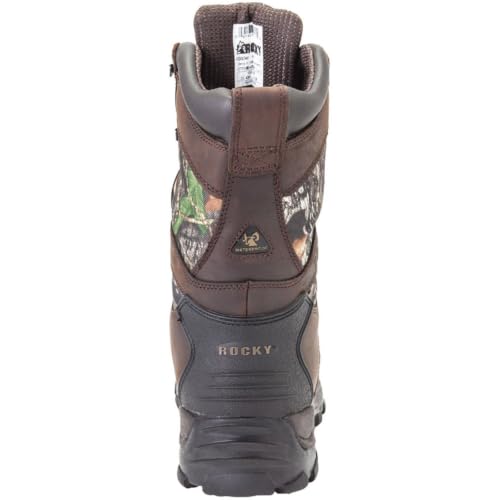
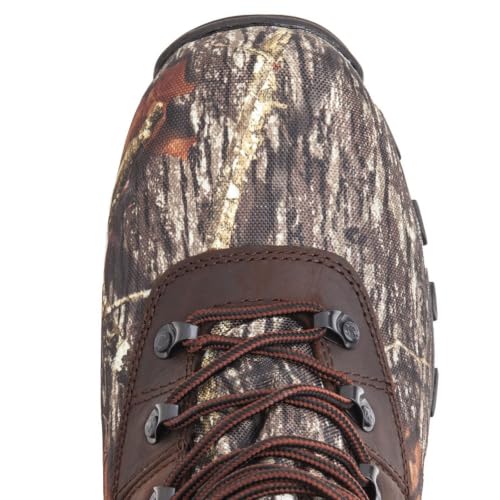
ROCKY Sport Utility 1000G Boot
Strengths
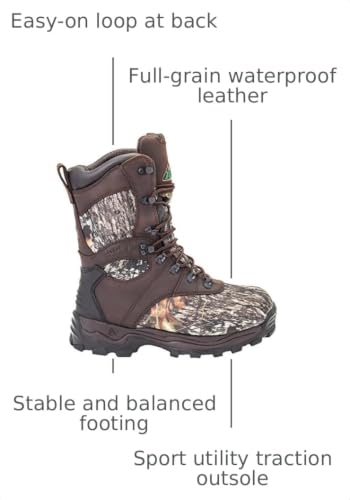
- Full-grain waterproof leather
- 1000G insulation
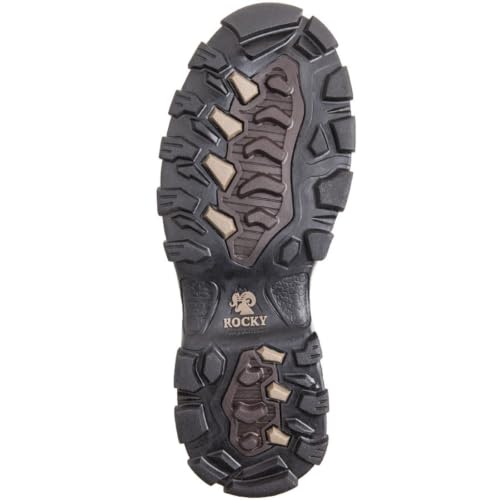
- Durable outsole
Trade-offs
- Not resoleable
- Stiff break-in
- Limited breathability
This boot hits a sweet spot for hunters who want solid performance without stretching the budget. The full-grain waterproof leather is a strong starting point, and the 1000G insulation means it can handle serious cold, more than enough for late-season treks. On paper, it’s built like a workhorse, with a sport-utility outsole that delivers reliable grip in mixed terrain.
Owners consistently report it holds up well under heavy use, though some note the break-in period can be stiff. Compared to pricier Goodyear-welted boots, it lacks resoleability, which limits long-term value. But for the price, it’s a capable, no-frills option that gets the job done.
Product photos
How We Picked These leather hunting boots
My approach at LeatherGenesis.com is always rooted in understanding materials and construction. Rather than a hands-on lab test, this evaluation of leather hunting boots is a research-led comparison of published specifications, features, and, crucially, owner and expert reviews. I weighed information from manufacturers alongside feedback from hunters to assess real-world performance. This involved analyzing construction methods, leather quality claims, and reported durability.
For hunting boots, three factors stood out as most important: waterproof integrity, support and traction for varied terrain, and the quality of the leather itself. A boot’s ability to keep feet dry and comfortable through extended wear is paramount, as is its ability to provide stable footing on uneven ground. Finally, the longevity of a leather boot depends heavily on the quality of the hide and the tanning process, influencing both performance and value.
Specifications reliably indicate insulation levels (like the Thinsulate ratings) and construction details (Goodyear Welt vs. others). However, feedback from owners provided vital insight into how well those specs translate to real-world comfort, durability, and fit. I also considered reputation; brands with a long history of quality leather work, like those featured in our guide to favorite leather boots, naturally carried more weight in my assessment. And while focused on men’s boots, understanding the broader market of women’s leather boots informs a general assessment of quality.
What To Look For In leather hunting boots
Choosing the right hunting boot is about far more than just waterproofing. A poorly chosen boot can ruin a hunt, or worse, lead to injury.
A quality hunting boot balances durable construction with features specific to the terrain and climate. Look for full-grain leather uppers, proven waterproof membranes like Gore-Tex or proprietary equivalents, aggressive outsoles for traction, and supportive midsoles. Consider insulation weight based on typical hunting conditions, and prioritize a boot that allows for resoleability to maximize its lifespan.
Leather Quality & Construction
The leather itself is paramount. Full-grain leather is the gold standard for hunting boots; it’s the strongest, most abrasion-resistant, and develops a beautiful patina over time. While split-grain leather (often paired with polyurethane coatings, as seen in the Danner Vital) offers a lower price point, it won’t last as long or mold to your foot like full-grain. Beyond the leather grade, pay close attention to how the upper is constructed. A Goodyear Welt – found on several models here – is a robust method allowing for repeated resoling, extending the boot’s life significantly.
Insulation & Waterproofing – Matching Boot to Environment
Don’t over-insulate. A 1000g Thinsulate boot (like the Irish Setter Elk Tracker) is fantastic for frigid conditions, but will be sweltering during early season or in milder climates. Consider the types of hunting you do. Upland game hunting benefits from lighter, more flexible boots, while stand hunting in cold weather demands maximum insulation. Waterproofing is also key, and while many brands boast their own proprietary membranes (UltraDry from Irish Setter, for example), Gore-Tex remains the industry benchmark. I’ve always found a combination of a durable water repellent (DWR) treatment on the leather and a waterproof membrane offers the best protection.
- A lighter boot (under 7” in height) like the Irish Setter Wingshooter 7” is ideal for faster-paced hunts where agility is crucial.
- A mid-weight boot (8-10”) like the Irish Setter Elk Tracker provides a good balance of support and flexibility for varied terrain.
- A heavier, fully insulated boot (10″+) is best reserved for prolonged exposure to extreme cold, and should be paired with appropriate socks. It’s better to be slightly cool and dry than warm and sweaty.
Sole & Support – Terrain & Long-Term Comfort
The outsole is where the boot meets the ground, and its design dictates traction and stability. Aggressive lug patterns, like those found on the Irish Setter and Thorogood models, are essential for navigating muddy or rocky terrain. A steel shank provides torsional rigidity, preventing your foot from twisting on uneven surfaces. Furthermore, consider the midsole. Quality boots will use EVA or polyurethane midsoles for cushioning and shock absorption. If you’re looking to explore other options for foot comfort, you might consider checking out a quality leather hiking boot list for more insights.
A boot that fits well now will likely still fit well after a full day in the field. Don’t buy a boot hoping it will “break in” to the correct size; start with a proper fit.
And don’t underestimate the importance of a good insole. Many factory insoles are minimal. Upgrading to a supportive aftermarket insole can dramatically improve comfort and reduce fatigue, especially if you also consider comfortable leather walking boots for everyday use.
Leather Hunting Boots Compared
Here’s a comparison of key specifications for several leather hunting boots.
| Product Title | Height (in) | Waterproofing | Insulation (g) | Sole Type | Shank | Resoleable |
|---|---|---|---|---|---|---|
| Irish Setter Elk Tracker 12″ Boot | 12 | GORE-TEX | 1000 | Bulls-Eye Air Bob | Steel | Yes |
| Irish Setter Elk Tracker 10″ Boot | 10 | UltraDry | N/A | Bulls-Eye Air Bob | Steel | Yes |
| Thorogood 1957 Flyway Moc Toe Boot | 8 | Waterproof | N/A | N/A | Composite | Yes |
| Irish Setter Wingshooter 9″ Boot | 9 | UltraDry | N/A | Prairie | Steel | Yes |
| Irish Setter Wingshooter 7″ Boot | 7 | UltraDry | N/A | Prairie | Steel | Yes |
| HUNTRITE Insulated Waterproof Hunting Boot | 8.5 | Waterproof Membrane | 400 | Rubber | N/A | N/A |
| Danner Vital 8″ Waterproof Boot | 8 | Danner Dry | N/A | Multi-directional Lug | N/A | N/A |
| ROCKY Sport Utility 1000G Boot | 10 | Full-Grain Leather | 1000 | Sport-Utility Traction | N/A | N/A |
Frequently Asked Questions
What leather type offers the best balance of durability and cost for hunting boots?
Full-grain leather provides the best durability, but it’s also the most expensive. For a balance, consider boots with a top-grain leather upper paired with strategic split-grain panels; this reduces cost while still offering good abrasion resistance, though it won’t develop a patina like full-grain.
How important is the waterproofing membrane compared to a DWR treatment on the leather?
A waterproof membrane like Gore-Tex is crucial for consistently wet conditions, but it’s most effective when combined with a durable water repellent (DWR) treatment applied to the leather itself. The DWR acts as the first line of defense, preventing the leather from becoming saturated and maximizing the membrane’s performance.
Are boots with non-resoleable soles truly a waste of money?
While frustrating, boots with directly attached soles aren’t necessarily a waste. However, knowing the sole is a wear item means you’ll eventually replace the entire boot when it fails. Consider them a long-term investment, but factor in the cost of eventual replacement versus a resolable boot.
What’s the best way to determine the correct insulation weight for my needs?
Assess your typical hunting environment and activity level. If you primarily hunt in consistently cold temperatures and remain stationary for extended periods, a higher insulation weight (800g or 1000g) is appropriate. For more active hunts in milder conditions, lighter or uninsulated boots are preferable; you can always add socks for extra warmth.
What other footwear should I consider if I want options for different terrains and activities?
If you’re looking for versatility beyond the hunting field, exploring options like the best leather hiking shoes can provide a more lightweight and agile alternative for day hikes and less demanding outdoor pursuits.
The Bottom Line
Buying leather hunting boots often comes down to balancing upfront cost with long-term value. While you can find serviceable options at lower price points, the Irish Setter Elk Tracker 12″ Boot stands out as the strongest overall choice for serious hunters, offering a combination of full-grain leather, Gore-Tex waterproofing, and a resolable construction that promises years of reliable performance. It’s an investment, certainly, but one that should pay dividends in comfort, durability, and peace of mind.
For those on a tighter budget, the HUNTRITE Insulated Waterproof Hunting Boot provides a decent level of protection and functionality. If you prioritize versatility and lighter weight for upland game, the Irish Setter Wingshooter 7” Boot is an excellent option. And for those needing something that can transition from the field to occasional work, exploring options among the best leather work boots might be worthwhile.
Ultimately, the best boot isn’t about the highest specs or the biggest name. It’s about finding the right fit, prioritizing full-grain leather when possible, and committing to proper care with products like the best leather conditioner for boots. A well-maintained boot, even a modestly priced one, will always outperform a neglected, high-end model.
