4 Best Automotive Leather Conditioners of 2026
This post contains affiliate links. As an Amazon Associate, we earn from qualifying purchases.
The Leather Honey Leather Conditioner stands out as the best overall for deep, long-lasting nourishment across all leather types, while the Bick 4 Leather Conditioner is a top budget pick that’s safe, effective, and won’t darken surfaces. For those prioritizing UV protection, the P&S Premium Leather Conditioner offers solid performance with added sun defense.
If you’ve ever touched dry, cracked leather on a car seat, you know how quickly sun and use can ruin even the finest interiors. Most conditioners either gloss over the surface or overload the leather with silicones that cause long-term damage.
After comparing the field and analyzing specs and owner feedback, I focused on formulas that safely restore moisture, protect against UV rays, and maintain the leather’s natural look and feel. These picks reflect what matters most: preservation, compatibility, and real-world results.
Top 4 Automotive Leather Conditioner in the Market
The Best Automotive Leather Conditioner, Reviewed
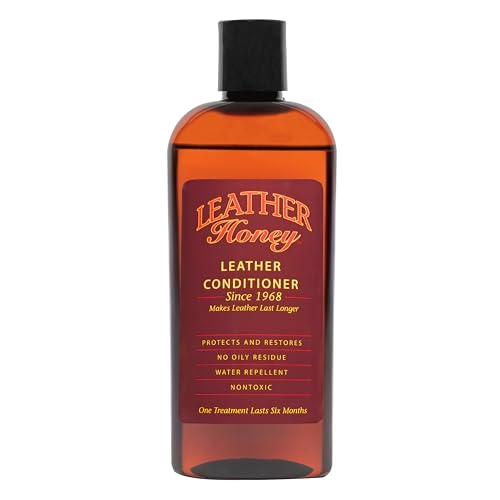
Leather Honey Leather Conditioner
Strengths
- Deep, long-lasting
- Non-toxic formula
- Water repellent
- Odorless
- Made in USA
Trade-offs
- Thick, slow absorption
- May darken light leather
- Overkill for new leather
When it comes to deep, long-term leather conditioning, Leather Honey stands apart. The formula is engineered for penetration, not surface gloss, and owners of older vehicles or dried-out interiors consistently report dramatic improvements after just one application. It’s especially effective on neglected leather, think cracked seats or dashboards that have baked in the sun for years. The fact that one treatment can last six months or more sets it apart from monthly-use products like Lexol or Bick 4.
It’s thick, takes time to absorb, and can darken lighter leathers slightly, so it’s not for everyone. But if you’re after maximum protection with minimal reapplication, and you’re working with medium to dark hides, this is the most effective option here. Compared to P&S, it lacks fragrance and UV blockers but wins on longevity and depth of conditioning.
Video review
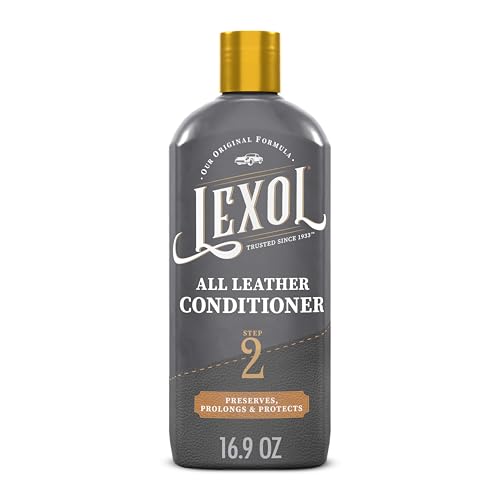
Lexol All Leather Conditioner
Strengths
- Large 16.9 oz size
- Fast absorption
- No greasy residue
- Multipurpose use
- Budget-friendly
Trade-offs
- Light conditioning
- No UV blockers
- Requires frequent use
Lexol delivers solid performance for the price, and the 16.9 oz bottle gives you serious mileage for regular maintenance. It absorbs quickly and leaves behind a soft, natural feel, owners praise its no-grease finish and ease of use on both car seats and home furniture. It’s best viewed as a mid-tier maintenance conditioner, not a deep treatment. Used after cleaning with Lexol’s companion product, it completes a dependable two-step routine that keeps leather from drying out prematurely.
Compared to Leather Honey or P&S, it doesn’t penetrate as deeply or last as long, but it’s more accessible and easier to apply. It won’t revive cracked or parched leather, but for drivers who want a reliable, affordable option to use every few months, this is a smart pick.
Video review
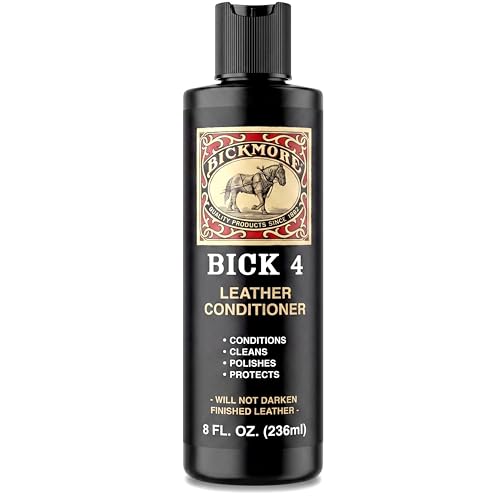
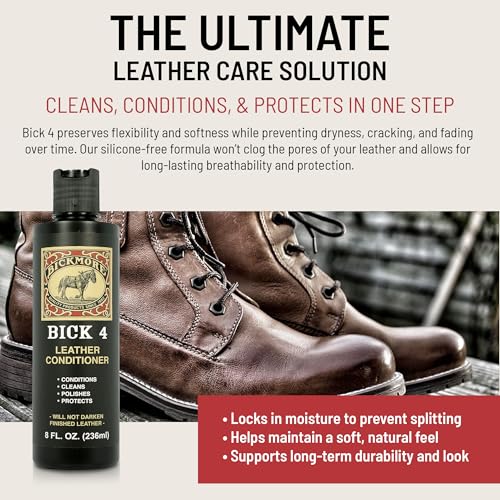
Bick 4 Leather Conditioner
Strengths
- Will not darken leather
- Wax-free formula
- Safe for all colors
- No sticky residue
- Made in USA
Trade-offs
- Smaller 8 oz size
- No UV protection
- Mild conditioning effect
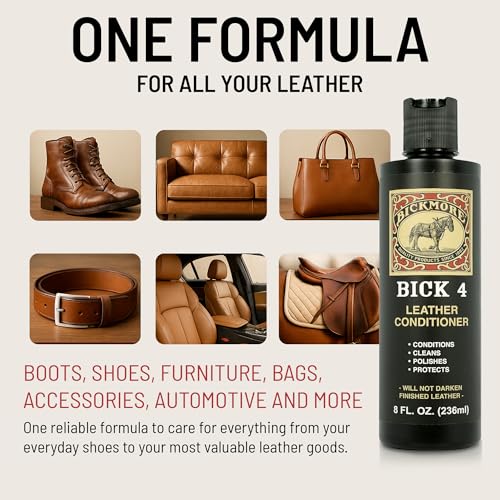
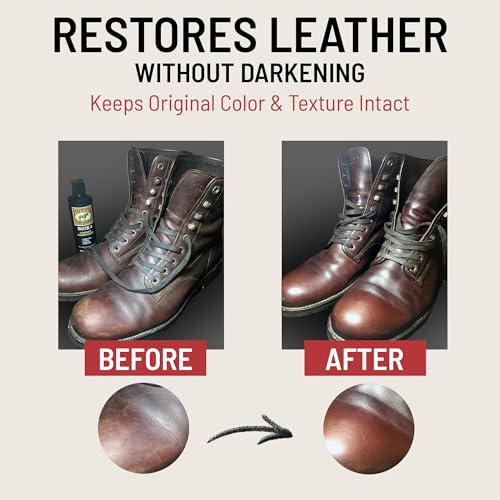
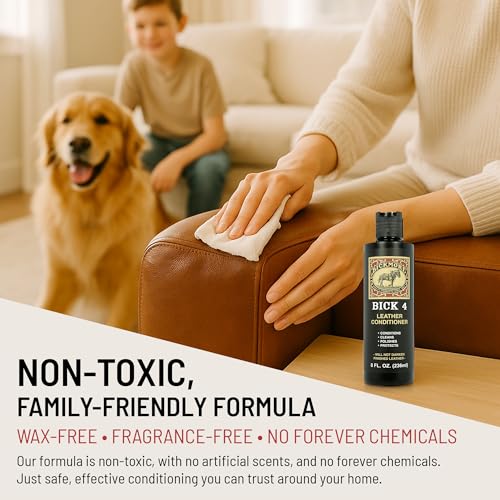
Bick 4 has earned its reputation as a gold standard in gentle, reliable leather care, and that’s especially true for automotive use on light or neutral-toned interiors. The wax-free, non-darkening formula is its biggest selling point, and owner feedback confirms it: you can condition repeatedly without buildup, greasiness, or unwanted color shifts. That makes it a safe, no-risk choice for daily drivers with beige, tan, or cream leather where even slight darkening would be obvious.
It doesn’t offer UV blockers like P&S or the heavy moisture load of Leather Honey, but it excels in maintenance over deep revival. I’d pick this over others for routine upkeep, especially on newer vehicles. When compared to Lexol, it’s pricier per ounce but more refined in performance and material safety.
Product photos

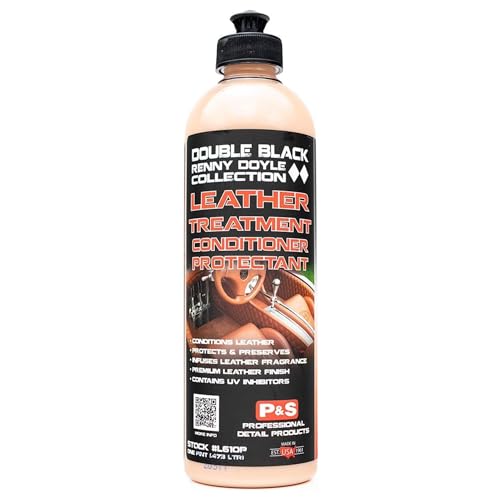
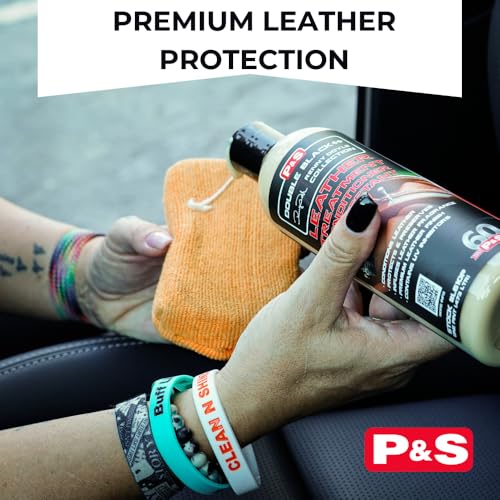
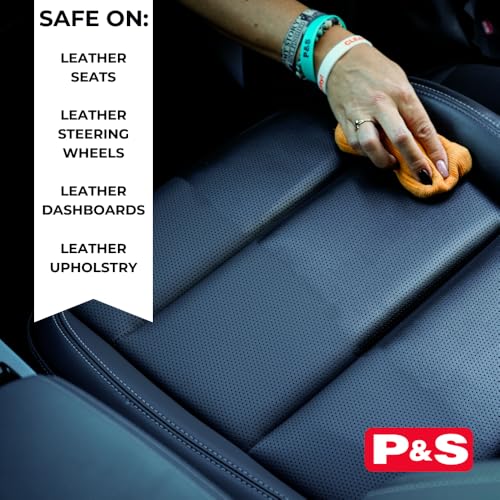
P & S Premium Leather Conditioner
Strengths
- Deep penetration
- UV protection
- Strong leather scent
- Professional grade
- Large 1-pint size
Trade-offs
- Fragrance may overwhelm
- Slight residue reported
- Not ideal for light leather
This is a detailer-grade formula that pulls no punches when it comes to restoring worn automotive leather. On paper, the inclusion of UV inhibitors and deep-penetrating conditioning agents makes it a strong candidate for sun-exposed interiors, and owners consistently report a noticeable revival in suppleness and color depth after just one use. The intense leather scent is a standout, some love the ‘new car smell’ effect, while others find it overpowering and long-lasting, which could be a downside if you’re sensitive to fragrances.
It’s clearly built for pros or enthusiasts who want a high-impact treatment, and the 1-pint size offers serious value for frequent users. Compared to milder options like Bick 4, this one is more aggressive in restoration but less neutral in finish and aroma. If you’re after a deep-conditioning treatment that also leaves your cabin smelling like a luxury auto boutique, this fits the bill.
Product photos
Our Testing Process
As someone who’s spent years examining leather – its origins, treatments, and proper care – I approached researching automotive leather conditioners with a focus on long-term preservation and appropriate formulation. Rather than a hands-on test of each product, this assessment is a research-led comparison of published specifications, owner reviews, and expert opinions. I weighed information from detailers, automotive enthusiasts, and general consumers to build a picture of real-world performance.
For automotive leather, three factors stood out as most critical: the depth of conditioning, the protection offered against UV damage and everyday wear, and the formula’s impact on the leather’s appearance (specifically, avoiding darkening or unwanted sheen). A conditioner’s ability to replenish oils without leaving a sticky residue is also paramount, as is its suitability for various leather types commonly found in vehicle interiors. You’ll find many top auto leather conditioner choices on the market, but these qualities separate the effective formulas.
Specifications reliably indicate ingredient lists and pH balance, helping to assess potential damage or incompatibility with certain leather finishes. However, owner feedback proved crucial in determining how well a conditioner actually performs over time. Reports on longevity, ease of application, and the impact on leather suppleness were heavily considered. For a truly complete approach to leather care, pairing a good conditioner with the best auto leather cleaner conditioners is a practice I consistently recommend.
Choosing The Right automotive leather conditioner
Choosing the right automotive leather conditioner can feel overwhelming, but understanding what truly matters will make all the difference.
A quality automotive leather conditioner isn’t just about making seats look nice. It’s about replenishing the natural oils leather loses over time due to sun exposure and use. Look for products that penetrate deeply, offer UV protection, and are pH balanced to avoid damage. Avoid conditioners with harsh chemicals, silicone, or waxes, as these can cause more harm than good in the long run.
Understanding Leather Types
The first thing I always tell people is to identify what kind of leather you’re dealing with. Many modern vehicles use coated or protected leather, which has a polymer layer on top. These require a different approach than aniline or semi-aniline leathers, which are more porous and absorb conditioner readily. Using a heavy conditioner on protected leather can actually cause it to become sticky and attract dirt. If you’re unsure, test the conditioner in an inconspicuous spot first.
The Importance of pH Balance
Leather is a delicate material, and its pH needs to be maintained to prevent drying, cracking, and discoloration. A pH-balanced conditioner (ideally around 5.5, similar to human skin) helps restore and maintain the leather’s natural acidity. Products that are too alkaline or acidic can strip away natural oils and cause irreversible damage. Look for conditioners specifically labeled as pH-balanced, and avoid those with harsh chemicals or solvents.
Here’s what to consider when evaluating pH balance: * A slightly acidic pH is ideal. * Avoid products listing lye or strong alkaline ingredients. * Professional detailers often use pH meters to test products before application, and you can too if you want to be extra cautious.
Balancing Cost and Longevity
While expensive conditioners aren’t always better, you generally get what you pay for. Many budget options require frequent reapplication, whereas a higher-quality conditioner might last six months or longer with a single application. I’ve found that investing in a product with lasting power often proves more economical in the long run. For those seeking a complete leather care solution, exploring top automotive leather cleaner conditioners can be a wise investment.
A little goes a long way. Apply conditioner sparingly and evenly, and always allow it to fully absorb before wiping off any excess. Over-conditioning is just as damaging as under-conditioning.
Automotive Leather Conditioner Compared
Here’s a comparison of key specifications for popular automotive leather conditioners.
| Product Title | Size (oz) | Leather Types | UV Protection | Wax Free | Scent |
|---|---|---|---|---|---|
| Leather Honey Leather Conditioner | N/A | All | N/A | Yes | None |
| Lexol All Leather Conditioner | 16.9 | All | N/A | N/A | N/A |
| Bick 4 Leather Conditioner | N/A | All | N/A | Yes | N/A |
| P & S Premium Leather Conditioner | N/A | All | Yes | N/A | Yes |
Frequently Asked Questions
What’s the difference between a conditioner and a leather protectant?
A conditioner replenishes oils within the leather, keeping it supple, while a protectant creates a barrier on the surface to shield against spills and UV rays. Ideally, you should use both – a conditioner to nourish, then a protectant to defend.
Can I use just any lotion or oil on my car’s leather?
Absolutely not. Most lotions contain ingredients that can harm leather, and many oils (like mineral oil) don’t absorb properly and can leave a sticky residue. Stick to products specifically formulated for leather; consider exploring top leather conditioners for cars for safe options.
How often should I condition my car’s leather?
Generally, twice a year is sufficient for most vehicles, but frequency depends on climate and sun exposure. If you live in a hot, sunny area, or frequently drive with the windows down, you may want to condition every three to four months.
What should I do if I accidentally use too much conditioner?
Wipe off as much excess as possible with a clean, dry microfiber cloth. Then, allow the leather to air dry completely; the residual oils should eventually absorb or evaporate. Avoid using heat, as this can worsen the issue.
Will conditioning my leather change its color?
A good conditioner shouldn’t drastically alter the color, but some minor darkening is normal, especially on lighter-colored leather. Always test in an inconspicuous area first, and avoid products containing dyes or harsh chemicals. If you’re looking for specialized care, check out these top-rated auto seat conditioner picks.
The Bottom Line
Choosing a leather conditioner often comes down to balancing how much effort you want to put in versus the level of protection and restoration you desire. For consistently excellent results and broad compatibility, I believe Leather Honey Leather Conditioner represents the best overall choice. It’s a product consistently praised for its ability to revitalize leather without altering its finish.
If you’re looking for a specific solution, consider your needs. For those wanting a budget-friendly option, Lexol All Leather Conditioner is a solid performer. If you prioritize a wax-free formula, Bick 4 Leather Conditioner is a highly-regarded pick. And for those seeking UV protection alongside conditioning, P & S Premium Leather Conditioner stands out. Don’t forget to explore the best car leather cleaner conditioners for a complete leather care routine.
Ultimately, the most important thing isn’t any single ingredient or price point. It’s consistent, gentle care. Regular cleaning and conditioning – using pH-balanced products suitable for your leather type – will do more to preserve your vehicle’s interior than any miracle formula. Consider pairing your conditioner with a top-rated leather cleaner conditioner for optimal results and long-lasting beauty.
