
8 Best Leather Dyes for Furniture 2026
This post contains affiliate links. As an Amazon Associate, we earn from qualifying purchases.
This post contains affiliate links. As an Amazon Associate, we earn from qualifying purchases.
The Furniture Clinic Leather Balm stands out as the best overall choice for restoring leather furniture, delivering reliable color and deep conditioning. For a budget-friendly option that still performs well on minor wear, the FAVIRZCE Brown Leather Balm is a solid pick. If you’re aiming for a rich, dark finish with strong scratch coverage, the WERBME Dark Brown Leather Balm offers excellent value in a larger kit.
Most people don’t realize how much the wrong dye can compromise both the look and lifespan of their leather furniture. A poor match, surface-level color, or overly stiff finish can do more harm than good, especially when dealing with aniline or worn leather.
This guide cuts through the noise by focusing on formulas proven to penetrate, last, and blend naturally, based on leather type, damage level, and real user outcomes. I researched each product on performance factors that matter: color accuracy, ease of application, durability, and compatibility across common furniture leathers.
Top 8 Leather Dye For Furniture in the Market
The Best Leather Dye For Furniture, Reviewed
Furniture Clinic Leather Recoloring Balm

Strengths
- Trusted brand seal
- Smooth natural finish
- Fills minor cracks
Trade-offs
- Higher price point
- Not for major structural damage
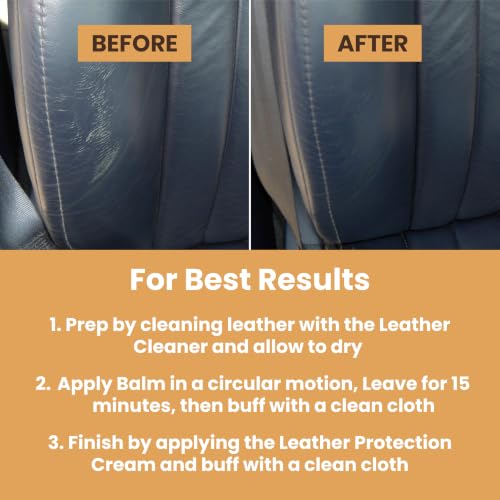
If you’re looking for a balanced blend of performance, ease, and credibility, this is the one I’d lean toward. Backed by the Good Housekeeping Seal, it carries more trust than most in this category, and owners confirm it delivers professional-looking results without requiring skill. The formula fills fine scratches well and bonds cleanly to worn areas, which matters because nobody wants a patchy, painted-over look. Its circular application method really does make a difference in blending.
Compared to budget options like FAVIRZCE or WERBME, this balm doesn’t just mask damage, it integrates with the leather’s surface. It won’t rebuild severely cracked material, but for 90% of living room couches suffering from sun fade and pet claws, it’s more than capable. The price reflects its reliability, and while cheaper picks exist, they often require extra steps or additional sealants. This one works cleanly out of the tube.
Video review
FORTIVO Dark Brown Leather Balm

Strengths
- Dark brown finish
- Scratch filling
- UV protection
Trade-offs
- Color variation risk
- Multiple coats needed
- Not for light leather
This balm delivers a straightforward fix for dark brown leather that’s seen better days. On paper, it checks the boxes: color restoration, scratch filling, UV protection, and oil replenishment. Owners consistently report it handles surface-level fading and light scuffs well, especially on darker pieces where minor mismatches are less obvious. The need for multiple coats isn’t a flaw, it’s expected with any recoloring balm, and the results tend to look more natural when built up gradually.
Where it falls short is precision. Like most all-in-one repair balms, it can go on unevenly if not buffed carefully, and the final shade varies depending on the base leather. It’s not a full dye replacement for heavily damaged or light-colored furniture. Compared to Fiebing’s alcohol-based option, this is more of a cosmetic touch-up than a deep color overhaul.
Video review
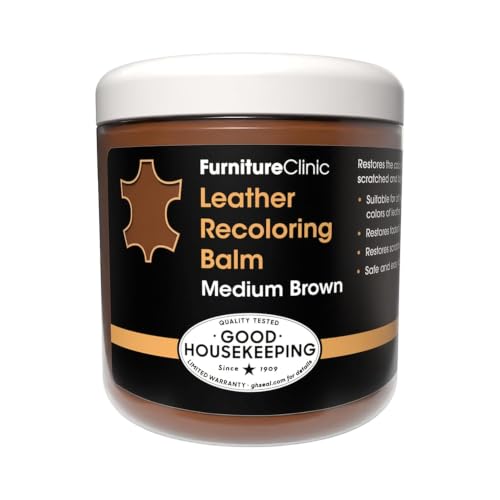
Furniture Clinic Medium Brown Balm
Strengths
- Accurate medium tone
- Natural appearance
- Proven reliability
Trade-offs
- Same price as others
- Not for heavy damage
- Slight learning curve
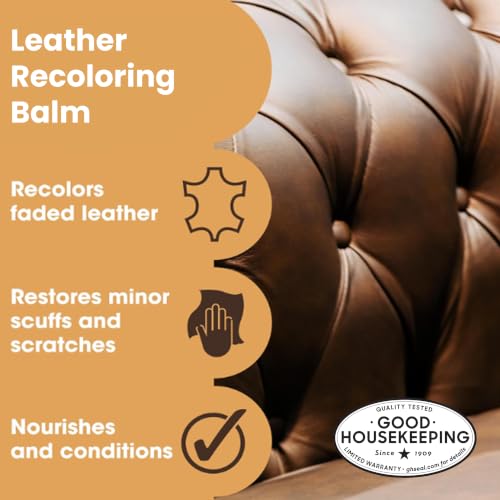
This is essentially the medium brown counterpart to their dark brown version, and it inherits the same strengths: reliable adhesion, natural finish, and Good Housekeeping approval. The medium brown shade opens it up to a wider range of furniture, especially common mid-tone sofas that dominate modern homes. Owners find it blends smoothly when feathered at the edges, and it handles sun fade better than pigment-heavy paints.
The formula is identical to the dark version, so expectations should be the same, minor scratch filling, no structural repair, and best results on intact top grain. If your couch was originally medium brown and has dulled over time, this is likely the closest match you’ll get without respraying. Compared to FORTIVO, it feels more consistent in texture and less prone to streaking. For this shade range, it’s my preferred pick.
Product photos

Furniture Clinic Repair Paint

Strengths
- 16 color options
- Self-sealing finish
- Multiple application methods
Trade-offs
- No crack filling
- Requires surface prep
- Thinner consistency
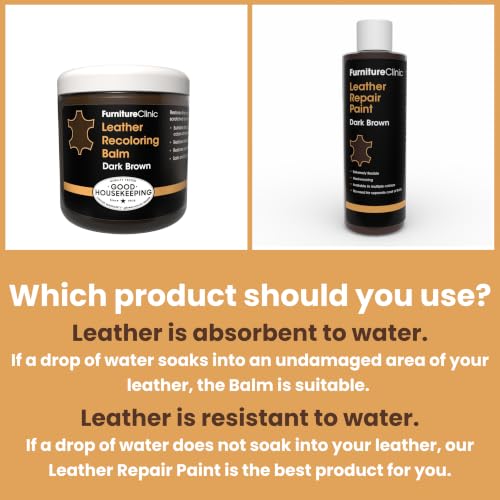
What sets this apart is the customization potential. With 16 colors available, including this medium brown, it’s the pick for anyone considering a full color shift, not just restoration. The ability to brush, sponge, or spray gives flexibility that most competitors lack. Reviewers note it adheres well even when layering over old finishes, and the self-sealing formula eliminates the need for a separate topcoat, which simplifies the process.
It’s thinner than a balm, so it won’t fill deep cracks, but it excels at uniform coverage. When compared to FORTIVO or drtulz, this is less about instant magic and more about intentional transformation. If you’ve got a beige couch you’d rather be medium brown, this is your tool. Just remember: proper cleaning and testing are essential. But for the right project, it’s the smarter buy.
Product photos


Fiebing’s Alcohol-Based Leather Dye

Strengths
- Deep penetration
- Permanent bond
- Professional standard
Trade-offs
- Requires prep work
- Can blotch if misapplied
- Not beginner-safe
This is the real deal when it comes to actual leather dye, not just surface paint. Fiebing’s has been a staple in workshops for decades, and for good reason: it penetrates deeply, bonds permanently, and doesn’t sit on top like a balm. That makes it ideal for projects where longevity matters, like re-dyeing a worn armrest or matching repairs before applying a topcoat. The alcohol base means it dries fast and pulls evenly into the hide, though it demands careful handling due to its staining power.
Owners warn it can darken unevenly on greasy or sealed leather unless properly prepped, so it’s not beginner-friendly. But if you’re serious about restoration and don’t mind doing prep work, this gives far more control than any all-in-one balm. Compared to Furniture Clinic’s balm, this isn’t about convenience, it’s about permanence. My recommendation? Use this when you’re committed to a full refresh, not a quick cover-up.
Product photos
FAVIRZCE Brown Leather Balm
Strengths
- Lowest cost
- Safe for homes
- Works on synthetics
Trade-offs
- Risk of sticky residue
- Less blendable
- Inconsistent coverage
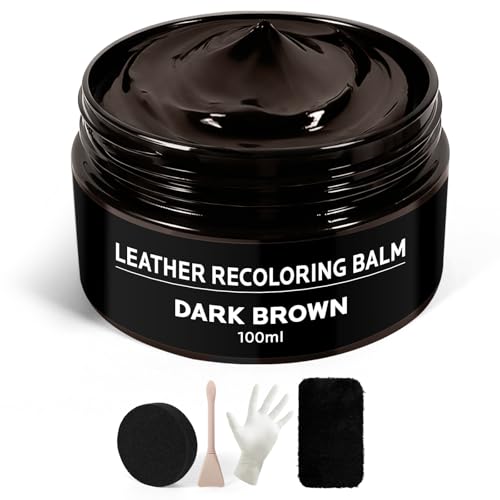
At nearly half the price of premium brands, this balm punches above its weight for basic touch-ups. It’s marketed as universal, working on genuine, bonded, and faux leather, and owners confirm it sticks well across types. The odorless, non-toxic formula is a win for households with kids or pets, and the quick dry time means you can use the couch again fast. It’s not going to rebuild leather, but for masking cat scratches or evening out faded armrests, it gets the job done.
Still, the trade-off is control. Some users report slight tackiness if over-applied, and blending large areas takes patience. Compared to Furniture Clinic, it’s less predictable. But if you’re on a tight budget and need something functional, not flawless, this is the smarter buy. Just don’t expect pro-level invisibility.
Product photos

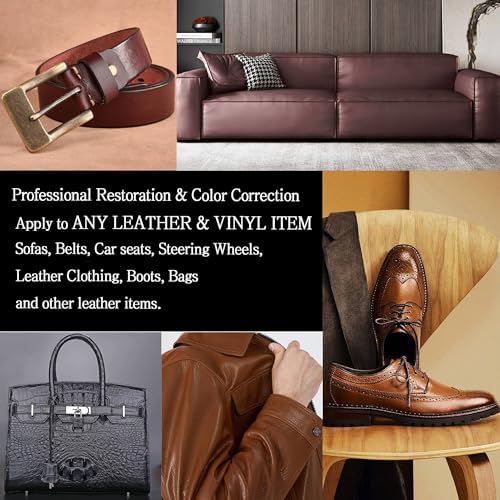
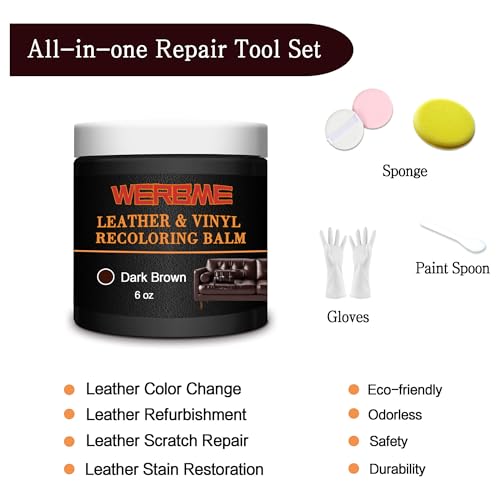
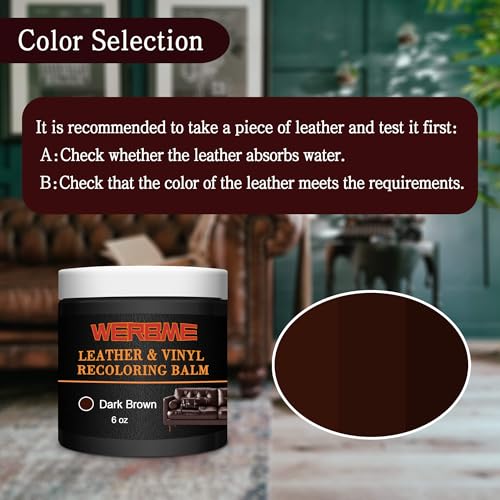
WERBME Dark Brown Leather Balm

Strengths
- Large capacity options
- Fast drying
- Universal compatibility
Trade-offs
- Flat finish
- May appear waxy
- Less durable long-term
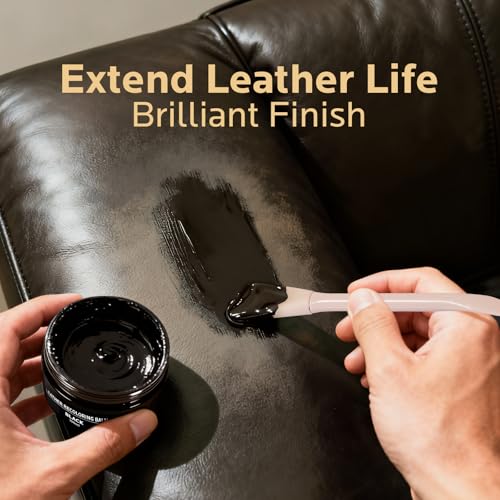
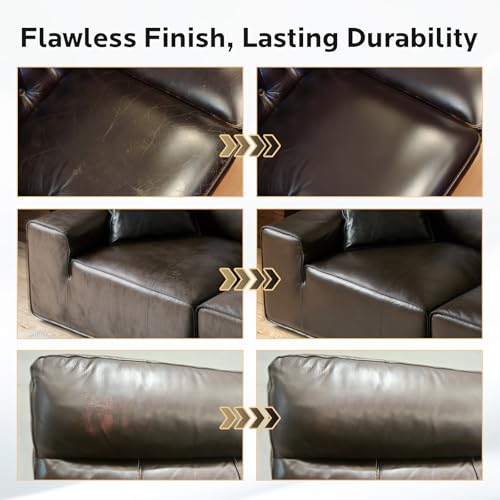
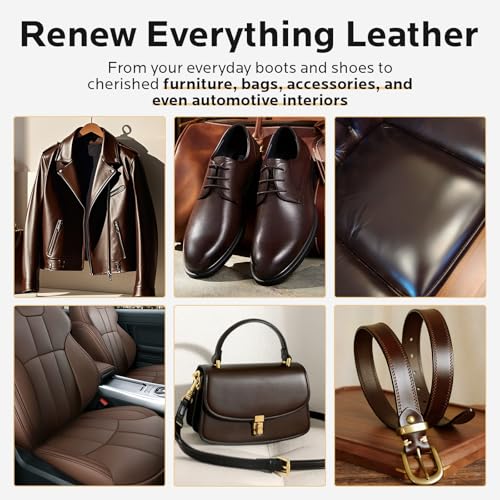
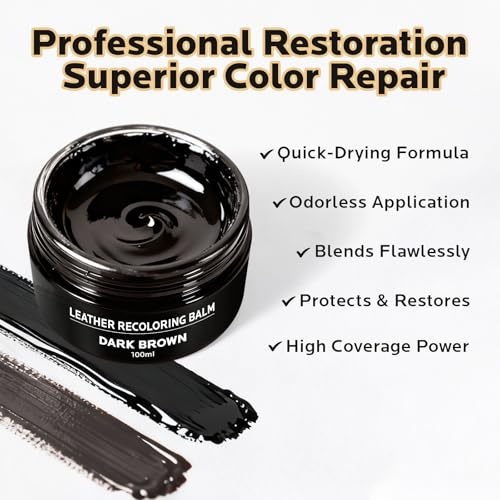
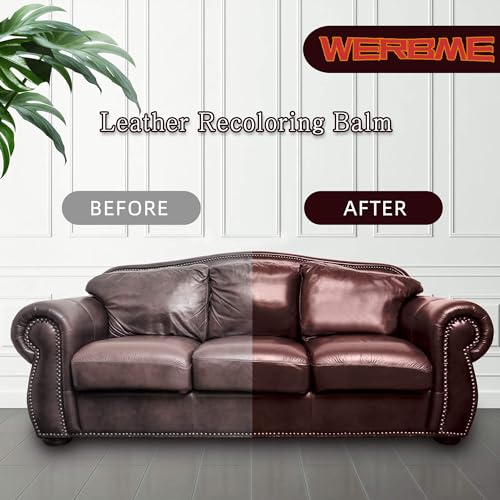
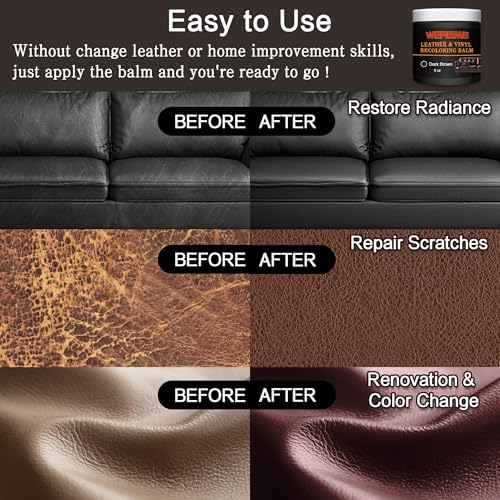
This stands out mostly for its value pack sizing, you get more product for the same low price, which helps if you’re tackling a full sofa or car interior. The formula is similar to FAVIRZCE: water-based, odorless, and compatible with both leather and vinyl. Owners say it covers scratches and fading decently, and the fast dry time with a hairdryer is a practical perk. The colorfast claim holds up in feedback, no major rubbing off once cured.
But volume doesn’t fix formulation limits. It’s still a surface-level treatment, and like other budget picks, it can look flat or waxy if applied too thick. Compared to Furniture Clinic, it lacks depth and richness. Still, for renters or those doing temporary fixes, having extra balm on hand makes sense. Just keep expectations realistic.
Product photos
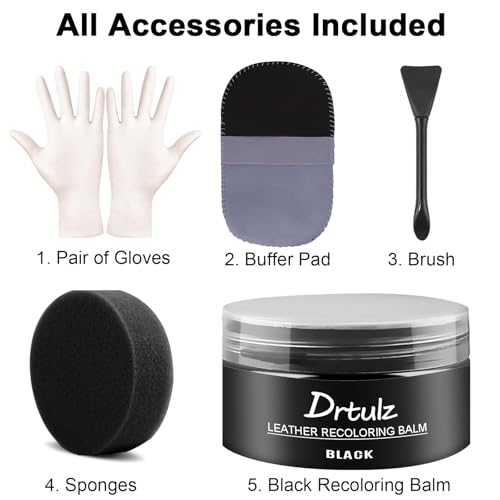
drtulz Black Leather Balm
Strengths
- Works on vinyl
- Odor-free formula
- Fast drying
Trade-offs
- Black only
- Not for textured leather
- Limited color range
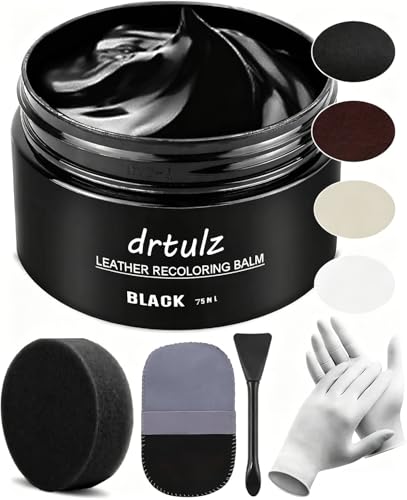
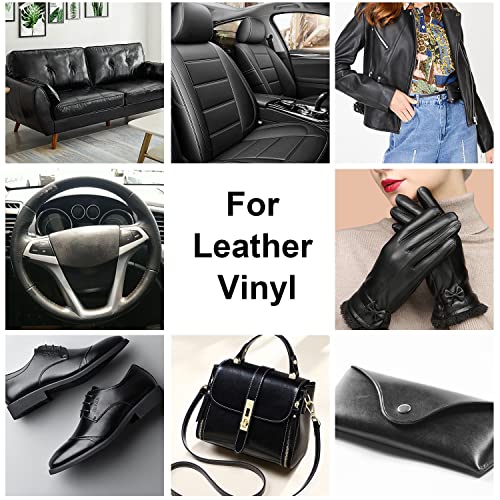
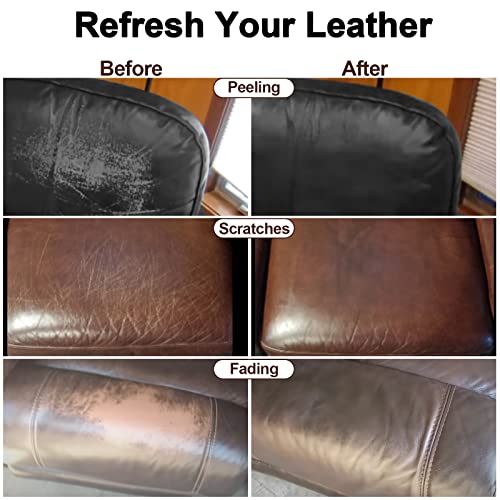
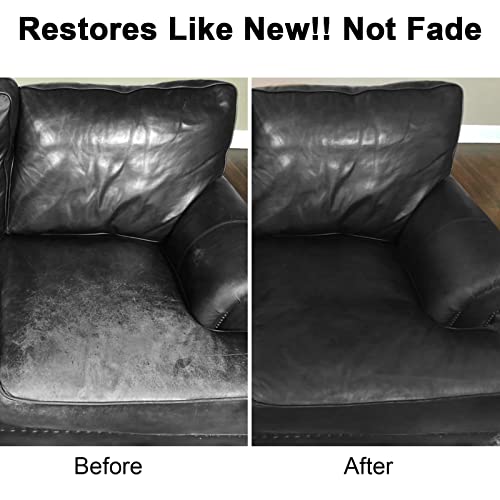
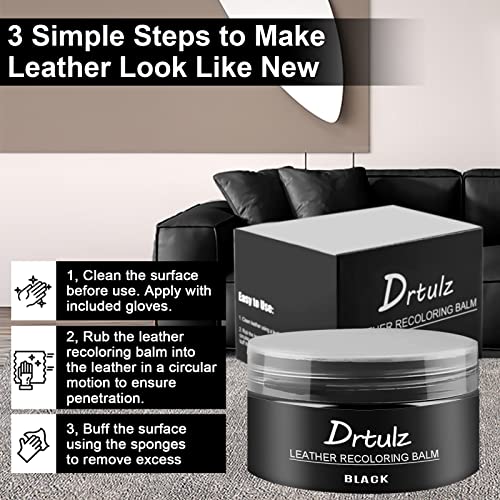
I appreciate that this product clearly targets both leather and vinyl, a big deal because many dyes fail on synthetic surfaces. The odor-free claim holds up in owner feedback, which matters for indoor use, especially around kids or pets. It dries fast and stays put, which is rare; a lot of vinyl-compatible formulas rub off on clothes, but reviewers say this one doesn’t. It also conditions slightly, thanks to the natural oils, so it’s not purely cosmetic.
That said, being black-only limits its appeal. And while it works on smooth leather, it’s not suitable for nubuck or suede. Compared to FAVIRZCE, it feels a bit more refined, but lacks color variety. If you’re dealing with black vinyl car seats or a scuffed office chair, this is solid. But for anything beyond black, look elsewhere.
Product photos
How We Chose These leather dye for furniture
As someone who’s spent years studying leather – its nuances, its care, and the products designed for it – I approached evaluating leather dyes for furniture with a focus on real-world applicability. Rather than a hands-on lab test, this was a research-led comparison of published specifications and, crucially, extensive owner and expert reviews. I compared features across numerous products, weighting factors based on what leather enthusiasts consistently prioritize.
For leather dye, the ability to achieve a natural-looking and durable finish are paramount. I gave significant weight to formulas that penetrate the leather well, avoiding a plastic-like coating, and those that offer UV protection to prevent future fading. Color accuracy and the ease of blending to match existing shades were also key. Understanding these aspects often requires going beyond specs and considering feedback from those who’ve actually used the products.
Specifications reliably indicate dye composition (alcohol vs. water-based, for example) and available colors. However, owner reviews and established reputations provided insight into how easily a dye applies, its true color fidelity, and its long-term performance. I also looked for products recommended in professional detailing circles, and considered whether a product offered versatility – for example, if it could be used on a variety of leather types. You can find more information on maintaining your leather furniture with our best couch conditioners. Regular conditioning complements any dye restoration.
Choosing The Right leather dye for furniture
Choosing the right leather dye for furniture requires a bit more thought than simply matching the color. We want a product that not only restores vibrancy but also penetrates and protects the leather itself.
A quality leather dye should offer more than just surface-level color. Look for formulas that penetrate the leather fibers, restoring oils and flexibility alongside color. Consider the type of leather (aniline, semi-aniline, pigmented) as this impacts dye absorption and the desired finish. Prioritize dyes formulated for furniture – automotive or garment dyes may lack the durability needed for high-use items. Assess the dye’s drying time, flexibility after application, and resistance to cracking or fading.
Understanding Leather Types & Dye Compatibility
The first step is identifying your leather type. Aniline leather, being the most natural, absorbs dye readily but is also the most susceptible to damage. Pigmented leather, with a protective coating, requires dyes specifically designed to adhere to that finish. Using the wrong type can lead to uneven coloring or a sticky, unpleasant result. I often recommend starting with a test patch in an inconspicuous area to gauge absorption and color accuracy before committing to a full application.
Assessing the Level of Damage & Desired Finish
Are you simply refreshing faded color, or tackling significant scratches and cracks? Balms and creams (like Furniture Clinic Leather Recoloring Balm and FAVIRZCE Brown Leather Balm) are excellent for minor wear and color restoration. For deeper damage or a complete color change, a dedicated leather paint (Furniture Clinic Repair Paint) offers greater opacity and coverage. Think about the sheen you’re aiming for – some dyes create a matte finish, while others offer a satin or glossy look. If you’re unsure, it’s better to start with a matte finish and add a separate leather finish later.
Balancing Cost, Coverage, and Convenience
While budget-friendly options (like WERBME Dark Brown Leather Balm) can be tempting, remember that quality often translates to longevity and ease of use. A larger kit might seem expensive upfront, but it can offer better value if you have multiple pieces of furniture to restore. Consider the application method – some dyes require brushes, sponges, or even sprayers. If you’re new to leather restoration, a balm with a simple rub-on application is a great place to start. For maintaining the leather after dyeing, I always recommend checking out the best furniture conditioners to keep it supple and protected.
A little dye goes a long way. Always apply in thin, even coats and allow each coat to dry completely before applying the next. Rushing the process can lead to uneven coloration and a less-than-professional finish.
And don’t forget regular cleaning. Maintaining your leather with the top leather cleaner picks will extend the life of the dye and keep your furniture looking its best for years to come.
Leather Dye for Furniture Compared
Here’s a comparison of key specifications for popular leather dyes designed for furniture restoration.
| Product Title | Best For | Leather Type | Color Options | Drying Time | Key Features |
|---|---|---|---|---|---|
| Furniture Clinic Leather Balm | Best Overall | All Leather | N/A | N/A | Recolor, restore, scratch repair |
| FORTIVO Dark Brown Leather Balm | Dark Brown Finish | Leather, Vinyl | Dark Brown | N/A | Scratch remover, color restorer |
| Furniture Clinic Medium Brown Balm | Medium Brown Finish | All Leather | N/A | N/A | Recolor, restore, scratch repair |
| Furniture Clinic Repair Paint | Color Customization | All Leather | 16 | Minutes | Brush, sponge, or spray application |
| Fiebing’s Alcohol-Based Leather Dye | Penetrating Dye | All Leather | N/A | N/A | Penetrating, alcohol-based |
| FAVIRZCE Brown Leather Balm | Best Budget Friendly | Leather, Vinyl, Faux | Brown | N/A | Revive, restore, scratch repair |
| WERBME Dark Brown Leather Balm | Best Value Pack | Leather, Vinyl | Dark Brown | 10-20 mins | Repairs wear, scratches, and cracks |
| drtulz Black Leather Balm | Vinyl & Leather | Leather, Vinyl | Black | 10-20 mins | Recoloring, scratch repair, waterproof |
Frequently Asked Questions
What’s the difference between leather dye and leather paint?
Leather paint creates a surface coating, while dye penetrates the leather fibers for a more natural and flexible finish. Dye is generally preferred for restoring color to the entire piece, while paint excels at covering specific damage or achieving a complete color change.
Can I dye synthetic leather (vinyl or faux leather)?
Yes, many balms and some dyes are formulated for use on vinyl and faux leather, though the results won’t be identical to dyeing genuine leather. Look for products specifically stating compatibility with these materials, as standard leather dye may not adhere properly.
How can I prevent the dye from being uneven?
Preparation is key; thoroughly clean the leather and remove any existing finishes before applying dye. Apply thin, even coats and allow each coat to dry fully before adding another, and consider a test patch first to ensure proper absorption.
Will dyeing my furniture make it more susceptible to cracking?
Not if done correctly. A quality dye will actually restore some flexibility to the leather. However, using the wrong type of dye or applying it improperly can make the leather stiff and prone to cracking. Following the manufacturer’s instructions and conditioning afterwards is vital. For further care, check out our best cleaner conditioners.
What’s the best way to match the existing color of my furniture?
Color matching can be tricky. Many dyes allow for blending, so start with a lighter shade and gradually add color until you achieve a close match. Always test the color in an inconspicuous area first; professional leather repair services can also offer custom color mixing for a perfect match, and often recommend following a leather furniture cleaning guide before starting.
The Bottom Line
Ultimately, choosing a leather dye for furniture comes down to balancing the level of restoration you need with the amount of effort you’re willing to put in. While a complete color change or extensive damage repair might require a product like Furniture Clinic Repair Paint, for most situations, Furniture Clinic Leather Balm offers the best overall combination of ease of use, color accuracy, and long-term durability – it’s a solid choice for refreshing and protecting your investment.
If you’re on a tighter budget, or specifically need a dark brown shade, the FAVIRZCE Brown Leather Balm is a fantastic option. For those needing a value pack to tackle multiple pieces, the WERBME Dark Brown Leather Balm provides good coverage and addresses common wear issues. And for maintaining your vehicle’s interior, be sure to check out our best car seat cleaners to keep your leather looking its best.
Remember, the “best” dye isn’t about a single specification or a flashy feature. It’s about understanding your leather type, preparing the surface properly, and prioritizing a product that will nourish and protect the material for years to come. Don’t underestimate the power of regular cleaning with the top sofa cleaner products to preserve any dye job and keep your furniture looking its best.
