
7 Best Leather Lifting Belts of 2026
This post contains affiliate links. As an Amazon Associate, we earn from qualifying purchases.
This post contains affiliate links. As an Amazon Associate, we earn from qualifying purchases.
The strongest options are the RDX Cowhide Leather Weight Lifting Belt for overall support and durability, and the Dark Iron Fitness Leather Weightlifting Belt as a solid budget-friendly choice. Both use thick cowhide and secure buckle systems built for serious lifting.
Most lifters don’t realize how much a poorly made belt can compromise their form and safety. Too many belts use thin leather or flimsy hardware that fails under real loads. After researching dozens of models, reading owner feedback, and analyzing construction details, I focused on belts that deliver reliable support through quality materials and smart design. This guide covers only leather belts that meet strict standards for thickness, stitching, and fit, so you can trust what’s holding you up when the weight gets heavy.
Top 7 Leather Lifting Belts in the Market
The Best Leather Lifting Belts, Reviewed
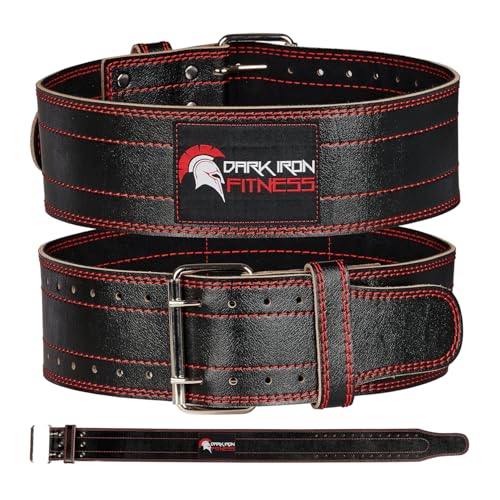
Dark Iron Fitness Leather Weightlifting Belt
Strengths
- Double-stitched reinforcement
- Precise 12-hole adjustability
- Wide size range
Trade-offs
- Heavier than some
- No lever option
This is the complete package, and it shows in nearly every owner review. The 100% genuine leather, double-stitched seams, and 12 precise adjustment holes make it one of the most refined belts in the lineup. The 4-inch width gives full core engagement, and the double-prong buckle stays locked even during max-effort lifts. What sets it apart is how well it balances rigidity and comfort: it’s stiff where it needs to be, but contours to the body over time instead of fighting it.
Compared to others, it outperforms in durability and fit range, accommodating everything from petite lifters to large-framed powerlifters. The red-stitching black version looks sharp, and the leather ages well with care. While it’s not the lightest or fastest to adjust, it’s the one I’d recommend as the best overall pick for serious lifters who want one belt to last years. The price reflects its tier, but the long-term value is clear.
Video review
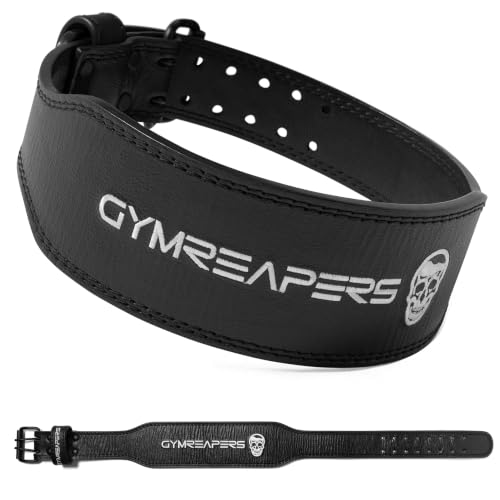
Gymreapers Leather Weightlifting Belt 4″
Strengths
- Lightweight design
- Slim profile
- Multiple adjustment holes
Trade-offs
- Less rigid support
- Break-in period needed
Gymreapers built this belt with comfort as the priority, and it shows. At just 1.5 pounds and with a lightweight metal buckle, it avoids the bulk that plagues many 4-inch leather belts. The fit is form-conforming, and owners consistently praise how little it interferes during movement, which is rare in this category. If you’ve ever had a belt dig into your hips or shift during a set, this one feels like a fix.
It’s not the stiffest belt available, so pure powerlifters chasing PRs might want something denser. But for CrossFitters, functional fitness athletes, or anyone doing varied rep schemes, the balance of support and mobility is excellent. Compared to the Jaffick or Fitgriff models, it’s lighter and more agile, though perhaps not quite as rugged over 5+ years of heavy use. Still, my recommendation for most gym regulars leans here, it’s the smarter buy for long-term wearability.
Video review
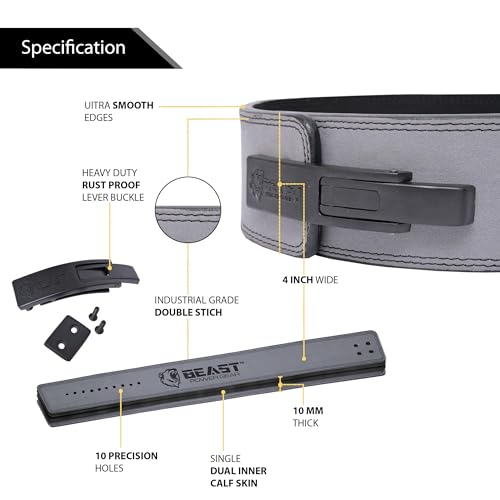
Lever Weight Lifting Belt Men

Strengths
- Lever buckle for speed
- 10mm thickness
- Suede lining
Trade-offs
- Limited fit adjustments
- Hard to resize later
The lever buckle is the star here, it locks in fast and stays put, which is a standout for lifters doing frequent heavy sets or working in time-crunched sessions. The 10mm thickness suggests serious rigidity, and combined with the 4-inch width, it creates a stable brace for maximal lifts. The suede lining adds comfort against the skin, and owners report minimal break-in time compared to traditional prong belts.
But that lever system demands precise sizing. Get it wrong, and you can’t fine-tune the fit like with a prong. Once set, it’s secure, but not flexible. Compared to the Dark Iron or Gymreapers models, it trades adjustability for speed and rigidity. For competitive powerlifters or those doing frequent testing days, that’s a worthy trade. For general fitness use, it might be overkill.
Product photos

RDX Cowhide Leather Weight Lifting Belt

Strengths
- 7mm thick leather
- 6-inch back option
- 10 adjustment holes
Trade-offs
- Bulky profile
- Leather quality inconsistent
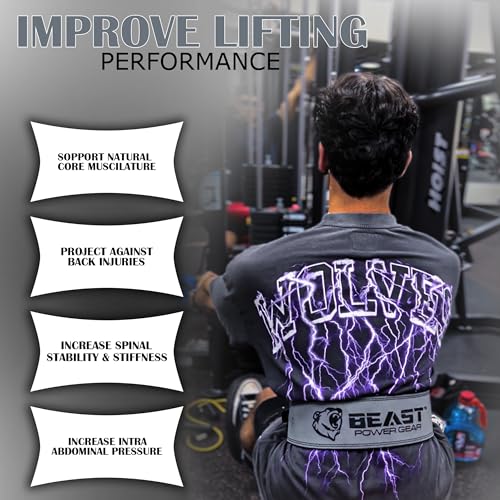
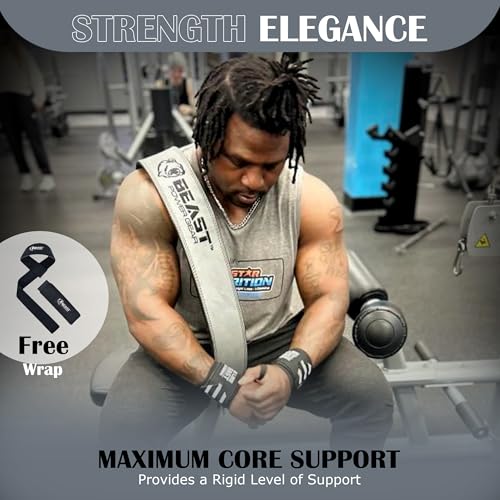
RDX goes all-in on affordability without completely cutting corners. At under $30, this belt offers genuine cowhide leather and a generous 7mm thickness, thicker than most competitors, which should mean more resistance to compression under load. The 6-inch back panel option is a standout feature, giving elite-level lumbar coverage that’s rare at this price. Owners report it holds up well during high-volume training, and the suede interior helps prevent chafing, even during longer sessions.
The roller buckle is a smart inclusion, offering reliable clasp security and smooth adjustment. Still, the leather isn’t as refined as higher-end brands, and long-term shaping may be uneven. Compared to the Dark Iron or Gymreapers belts, it’s bulkier and less refined in fit, but for the price, it’s hard to beat for raw support. If you’re on a tight budget but still want real leather and serious coverage, this is the pick.
Product photos


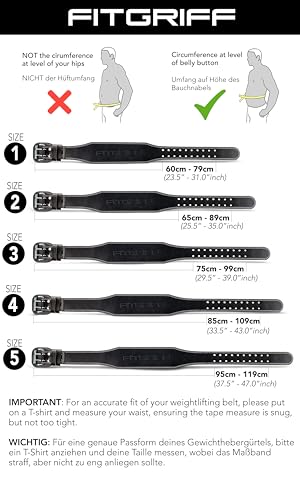
Fitgriff Classic 100% Leather Lifting Belt

Strengths
- 100% genuine leather
- Triple-layer 5mm build
- Double prong buckle
Trade-offs
- No lever option
- Sizing runs tight
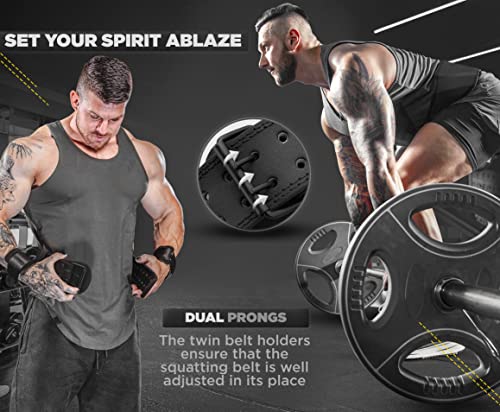
This belt stands out for its clean, old-school aesthetic and solid build using 100% cowhide. On paper, the 5mm triple-layer construction suggests durability without sacrificing flexibility, which is a win for lifters who want structure but not stiffness. Owners consistently report it breaks in well over time, conforming to the body rather than fighting it, a hallmark of quality leather goods. Compared to thinner or synthetic belts, this one delivers reliable support during heavy squats and deadlifts.
The double prong buckle adds security, though it doesn’t match the speed of a lever system. Still, for those who value craftsmanship and a timeless look, this hits a sweet spot between function and form. Among mid-priced leather belts, it’s built like it should last, and the attention to detail in stitching and edge finishing aligns with what I’d expect from a well-made leather fitness accessory.
Product photos



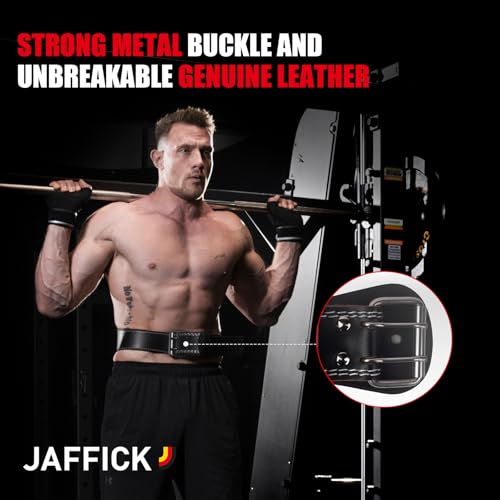
Jaffick Double-Sided Leather Lifting Belt

Strengths
- Suede-lined comfort
- Double-sided leather
- Strong stitching
Trade-offs
- Less rigidity for heavy lifts
- Buckle can snag
At this price, Jaffick delivers a surprising amount of value. The double-sided leather and suede lining stand out, the inner padding is something you’d expect on pricier models, and reviewers note it reduces skin irritation during long sessions. The belt’s width and thickness are competitive, offering solid lumbar support without being overly rigid right out of the box. It’s not the stiffest belt on the market, which makes it a smart pick for lifters still building up to max-load lifts or those using it across varied training styles.
Compared to more expensive belts like Dark Iron or Gymreapers, it trades some structural heft for comfort and versatility. The reinforced stitching holds up well under regular use, according to owner feedback, though it may not endure decade-long abuse like the top-tier options. Still, for daily gym-goers who want dependable support without overspending, this punches above its weight.
Product photos


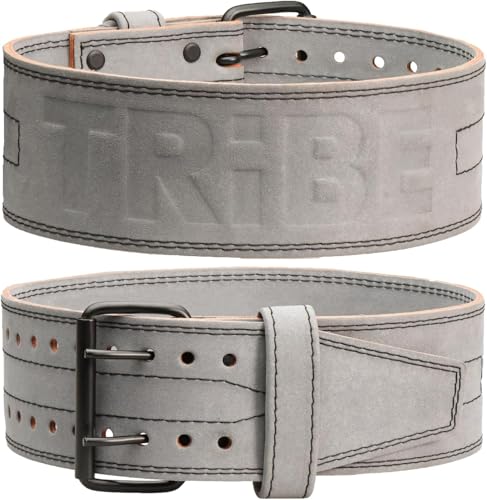
TRIBE 5mm Genuine Leather Lifting Belt
Strengths
- Wide 10cm support
- 5mm thick leather
- Sturdy 2-prong buckle
Trade-offs
- Minimal padding
- Stiff out of box
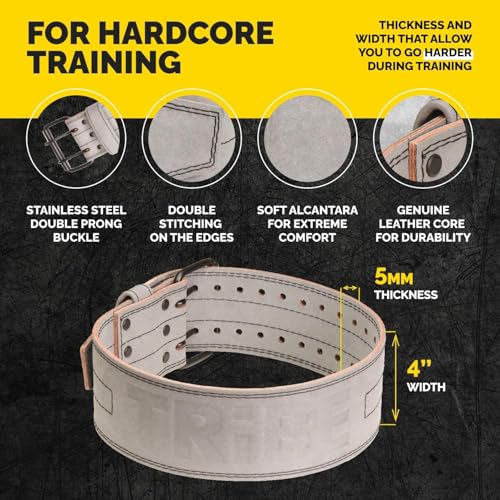
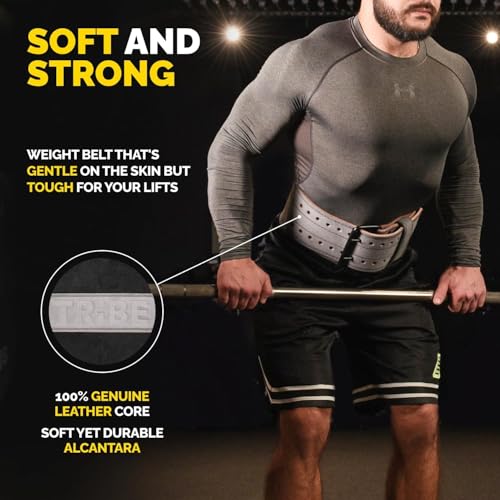
This belt is built for one thing: heavy lifting. The 10cm (nearly 4-inch) width and 5mm thickness give it serious structural integrity, and the two-layer genuine leather construction keeps it durable without being unyielding. Reviewers note it provides strong feedback during lifts, helping brace the core effectively, a key factor when loading the bar close to your limits. The 2-prong buckle is secure, though not as fast as a lever, and the debossed logo adds a subtle touch of identity without overdesign.
It doesn’t have the plush lining of the Jaffick or the ultra-light feel of the Gymreapers, but that’s not the point. This is a no-nonsense belt for people who care more about performance than padding. Compared to others in the $35 range, it’s among the stiffest and most supportive, making it a standout for serious lifters on a budget.
Product photos

How We Chose These leather lifting belts
As someone who has spent years studying leather and its applications at LeatherGenesis.com, I approached evaluating these lifting belts by focusing on the core elements that define quality and performance. Rather than a hands-on lab test, this is a research-led comparison of published specifications, owner reviews from multiple sources, and expert opinions within the strength training community. I weighed each belt against criteria including leather quality, construction durability, support features, and overall value.
For leather lifting belts, the most critical factors are the grade of leather used, the robustness of the buckle system, and the overall width and thickness for effective spinal support. A belt’s ability to maintain its shape and provide consistent support over time directly impacts safety and performance. I prioritized belts utilizing full-grain or top-grain leather, as these are inherently stronger and more durable than split-grain options. Finding information on the leather sourcing and tanning process was also a key consideration, as it speaks to the overall quality. You can find more information on choosing quality leather in our guide to the best belts for men.
Specifications reliably indicate leather thickness and buckle material, but owner feedback was crucial for assessing real-world comfort, durability, and fit. I paid close attention to recurring complaints about sizing inaccuracies or buckle failures. Reputation also played a role; brands consistently praised by serious lifters for their craftsmanship and quality materials were given higher consideration. For those also looking for everyday wear, our braided belt recommendations can be a helpful resource.
How To Choose The leather lifting belts
Finding the right weightlifting belt is about more than just strapping something around your waist. It’s a piece of equipment that directly impacts your form, stability, and potential for injury.
A quality weightlifting belt should be constructed from genuine leather – typically steerhide or cowhide – at least 7mm thick. It needs to provide substantial support without overly restricting movement. Look for double or even triple stitching, a secure buckle system, and a width of 4 inches for most lifters, though powerlifters might benefit from a wider 6-inch belt. Proper sizing is absolutely crucial for effective support.
Leather Quality & Construction
As I’ve discussed extensively on LeatherGenesis.com, leather isn’t a one-size-fits-all material. For weightlifting belts, you want a dense, durable leather that will hold its shape and withstand repeated stress. Steerhide is generally considered superior to cowhide due to its tighter grain and increased strength, but a well-made cowhide belt can still be excellent. Avoid anything marketed as “genuine leather” without specifying the animal source; it’s often a lower grade. Pay close attention to the stitching. Double-row stitching is a good sign, and a third row is even better, indicating a belt built to last through years of heavy use.
Width and Thickness Considerations
The width and thickness of a belt work together to determine the level of support. A 4-inch width is standard and works well for most lifters. It provides a good balance between support and mobility. Thicker belts (5mm or greater) offer more rigidity and are favored by those lifting extremely heavy weights. However, a super-thick belt can also limit your range of motion, so consider your lifting style and experience level. For example, those new to belt use might find a 4-inch, 7-9mm belt a good starting point, while seasoned powerlifters might prefer a 6-inch, 10-13mm option. If you’re looking for options outside the gym, you might also want to consider the best rated leather belts for everyday wear.
Buckle System & Fit
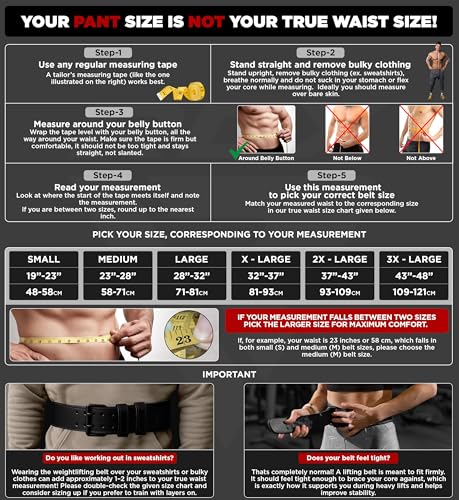
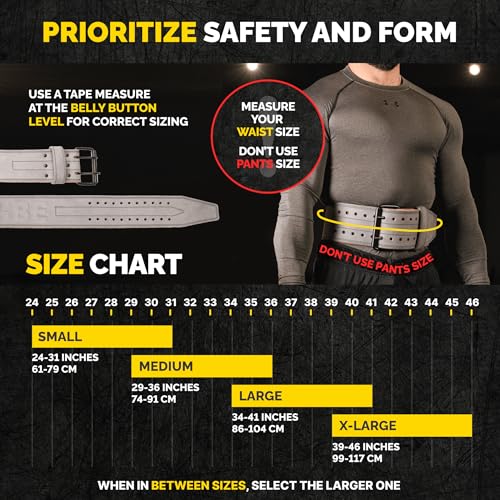
The buckle system is where many belts fall short. A simple single-prong buckle is often insufficient for heavy lifts, as it can slip under pressure. A double-prong buckle offers significantly more security. Lever buckles are popular for their quick adjustability, but make sure the lever is robust and locks securely. Getting the right fit is paramount. Don’t use your pant size! Measure your natural waist at your belly button with a flexible tape measure.
- If you’re between sizes, generally size up rather than down. A belt that’s too tight can restrict breathing and movement.
- A belt should fit snugly, but not painfully. You should be able to comfortably flex and breathe while wearing it.
- Most belts have 10-12 adjustment holes. Ensure there are enough holes to fine-tune the fit to your specific waist size, allowing for adjustments as your body composition changes.
A properly fitted belt should feel like an extension of your core, providing support without constricting your movement. Don’t rely on a belt to “fix” poor form; it’s a tool to enhance good technique, not compensate for flaws.
For situations where you need a belt that looks as good as it performs, exploring options within the top formal belts for men category can provide stylish alternatives.
Leather Lifting Belts Compared
Here’s a comparison of key specifications for several leather lifting belts to help you make an informed decision.
| Product Title | Leather Type | Width (in) | Thickness (mm) | Buckle Type | Sizing Range (Waist) |
|---|---|---|---|---|---|
| Dark Iron Fitness Leather Weightlifting Belt | Genuine | 4 | N/A | Double-Prong | 22-49 |
| Gymreapers Leather Weightlifting Belt 4″ | Reinforced Leather | 4 | N/A | Lightweight Metal | N/A |
| Lever Weight Lifting Belt Men | Premium | 4 | 10 | Lever | N/A |
| RDX Cowhide Leather Weight Lifting Belt | Cowhide | 4/6 | 7 | Roller/Twin-Prong | 19-48 |
| Fitgriff Classic 100% Leather Lifting Belt | Cowhide | N/A | 5 | Double-Prong | N/A |
| Jaffick Double-Sided Leather Lifting Belt | Leather | N/A | N/A | N/A | 21-47.5 |
| TRIBE 5mm Genuine Leather Lifting Belt | Genuine | 100 | 5 | Double-Prong | N/A |
Frequently Asked Questions
What leather type is best for a lifting belt?
Full-grain steerhide is the gold standard, offering superior density and durability to cowhide. While quality cowhide belts can perform well, steerhide’s tighter grain resists stretching and cracking over time, making it a worthwhile investment.
How tight should a lifting belt actually be?
A lifting belt should be snug, but not constricting; you need to be able to breathe and move comfortably. It’s better to err on the side of slightly looser than too tight, as overly compressing your abdomen can actually reduce intra-abdominal pressure.
Can a lifting belt replace good form?
Absolutely not. A belt is a tool to support proper lifting technique, not correct flaws in it. Focusing on mastering correct form is essential for preventing injuries, and a belt won’t compensate for a lack of foundational strength or technique.
What’s the difference between a 4-inch and 6-inch belt, and who needs which?
A 4-inch belt is standard for most lifters, providing a good balance of support and mobility. Powerlifters and those lifting extremely heavy weights often prefer the increased stability of a 6-inch belt, but it can restrict range of motion for some.
Where can I find more information about leather care and quality?
If you’re interested in learning more about leather types, tanning processes, and proper care, you’ll find a wealth of information in our best men’s leather belts guide. Understanding leather quality ensures you’re getting a durable and long-lasting product.
The Bottom Line
Choosing a leather lifting belt always involves a trade-off between immediate cost and long-term durability. While many options exist, the Dark Iron Fitness Leather Weightlifting Belt strikes the best balance of quality construction, secure buckle design, and reasonable price, making it our top overall recommendation. It provides a solid foundation for serious lifters without breaking the bank.
For those on a tighter budget, the RDX Cowhide Leather Weight Lifting Belt represents excellent value. If versatility is key – perhaps you want a belt suitable for both powerlifting and general gym use – the Lever Weight Lifting Belt Men with its quick-adjust lever buckle is a strong choice. And for those interested in learning more about the materials themselves, our best leather types for belts guide provides in-depth information.
Ultimately, the specs on a belt are less critical than understanding what you need from it. Focus on getting the right fit, prioritizing full-grain or top-grain leather, and selecting a buckle system that inspires confidence. A well-chosen belt supports good form and enhances performance, but it’s your technique and dedication that will truly drive your results – and if you’re inspired to make your own, you can start with one of the starter leatherworking kits available.
