9 Best Leather Restorers of 2026
This post contains affiliate links. As an Amazon Associate, we earn from qualifying purchases.
The best overall leather restorer is Leather Honey Conditioner, thanks to its deep conditioning and long-term protection. For heavy-duty use, Obenauf’s Heavy Duty LP stands out with UV resistance and durability, while Bick 4 is ideal for light maintenance without darkening the leather.
Most people don’t realize that not all leather restorers actually restore, many just mask damage. After years of studying leather chemistry and care, I’ve learned that the right product depends on your leather’s type, finish, and condition. This guide cuts through the noise, focusing on what truly matters: replenishing oils, preventing future damage, and matching the product to your needs.
I researched each restorer based on ingredient quality, real-world performance from owner feedback, and how well it preserves leather over time. The picks here reflect a balance of effectiveness, safety for different leather types, and honest results, no gimmicks, no plastic coatings.
Top 9 Leather Restorer in the Market
The Best Leather Restorer, Reviewed
Leather Honey Conditioner

Strengths
- Long-lasting hydration
- Deep penetration
- Non-toxic formulation
Trade-offs
- Slow absorption time
- Messy application
- No color correction
When it comes to pure conditioning power, Leather Honey is hard to beat. The formula dives deep into the fibers, delivering moisture that lasts, owners regularly mention protection lasting six months or more. That kind of staying power makes it my top recommendation for prevention-focused care, especially on frequently used items like car seats or sofas exposed to daily wear.
It’s thick and takes time to absorb, so patience is key. And while it won’t fix scratches or faded color, it excels at what it’s meant to do: stop leather from drying out in the first place. Compared to lighter sprays, this is a heavyweight treatment. If you value long-term preservation over speed, this is the smarter buy.
Video review
Obenauf’s Heavy Duty LP

Strengths
- Exceptional water resistance
- Breathable natural formula
- Long-term fiber protection
Trade-offs
- Significant darkening
- Thick, waxy feel
- Strong initial application
Obenauf’s LP is in a class of its own when it comes to extreme protection. Born from wildland firefighting needs, this beeswax and propolis blend forms a breathable barrier that repels water, acid, salt, and heat, all while feeding the leather over time. It’s the kind of product you reach for when your boots face mud, snow, or chemical exposure daily.
It darkens leather noticeably and feels waxy at first, so it’s not subtle. But that’s the trade-off: maximum defense. Unlike silicone-heavy sealants, it doesn’t suffocate the leather. For heavy-duty applications, I’d pick this over almost any other conditioner, just keep it away from light-colored or finished furniture.
Video review
Leather CPR Cleaner & Conditioner

Strengths
- Cleans and conditions
- No buffing required
- Safe on fine finishes
Trade-offs
- Minimal color enhancement
- Not for deep restoration
- Can streak on vertical surfaces
Leather CPR stands out as a true one-step solution that actually works across a wide range of items, from car seats to jackets and boots. Its water-based formula lifts grime while restoring moisture, which reviewers say brings back softness without leaving a greasy film. That’s rare: many cleaners either strip oils or over-condition, but this one strikes a balance that keeps leather supple and clean in a single pass.
It doesn’t recolor or deeply penetrate like heavier treatments, so don’t expect miracles on severely dried-out hides. But for routine upkeep or reviving mildly tired leather, it’s efficient and reliable. I’d pick this over more specialized products for anyone who wants simplicity without sacrificing performance across multiple leather goods.
Product photos


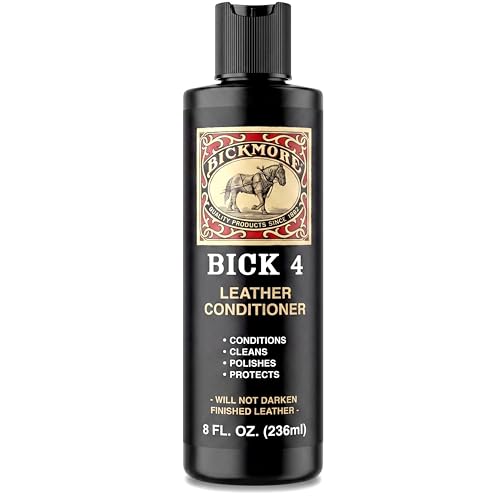
Bick 4 Conditioner & Cleaner
Strengths
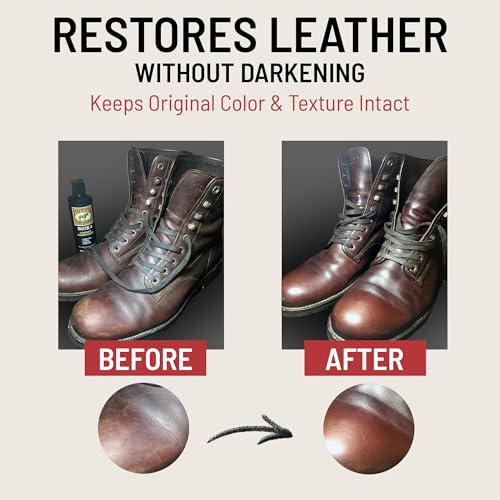
- Will not darken leather
- Wax-free formula
- Preserves breathability
Trade-offs
- Light cleaning only
- Minimal hydration boost
- Multiple applications needed
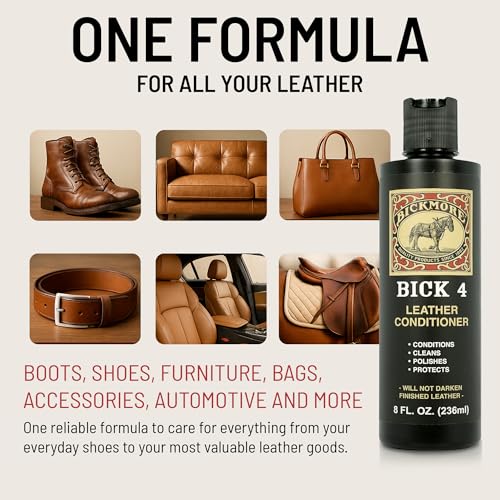
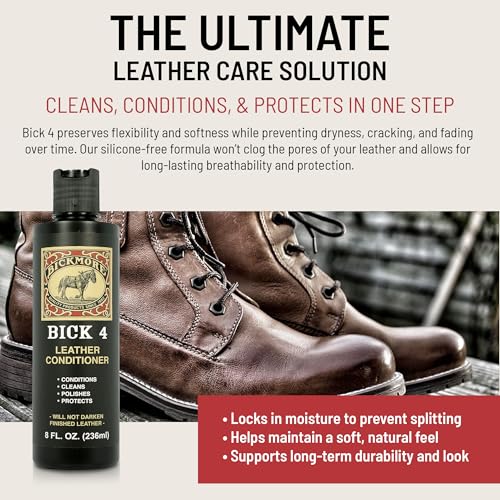
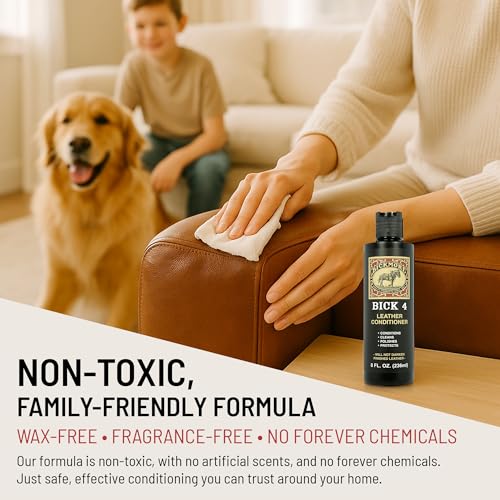
For light maintenance on prized leather items, Bick 4 is quietly excellent. Its biggest strength? It cleans and conditions without altering the leather’s original color, a major win for users with light tan boots or neutral furniture. The wax-free formula means pores stay open, so the leather keeps breathing, which prevents stiffness over time.
It won’t revive cracked or parched hides, and heavy grime may require multiple passes. But as a monthly upkeep product, it’s unmatched for preserving newness. Compared to deeper treatments, this is the equivalent of regular brushing versus a full wash, essential for maintenance, not rescue. My recommendation for daily drivers and valued but not distressed pieces.
Product photos

Bickmore Bick LP 8 oz
Strengths
- Extreme environment protection
- Replenishes natural oils
- Extends leather lifespan
Trade-offs
- Slight darkening effect
- Heavier texture
- Strong initial odor
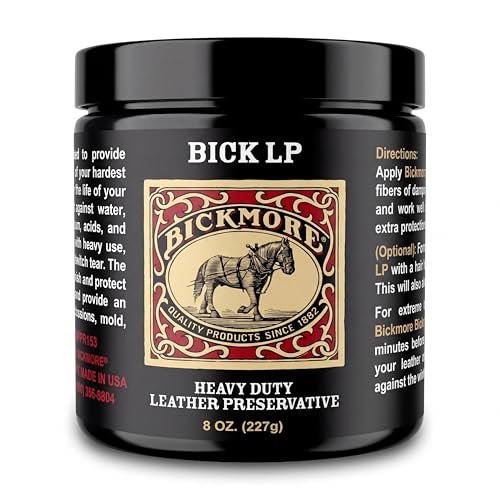
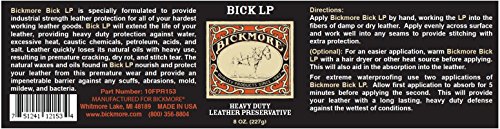
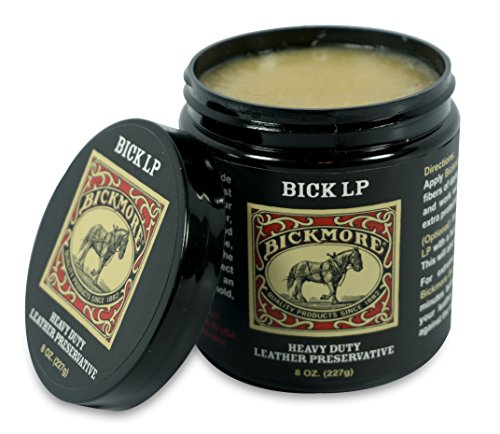
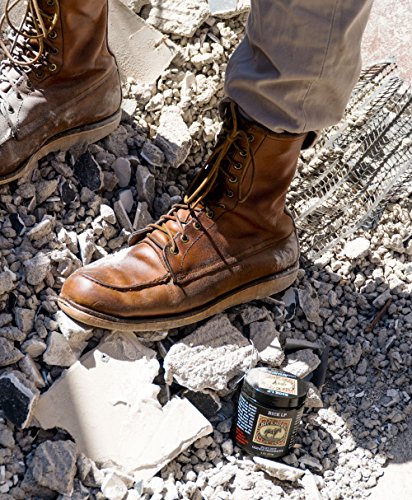
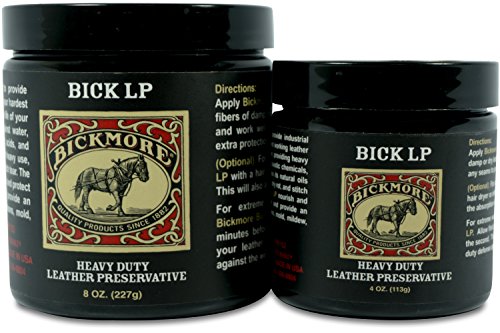
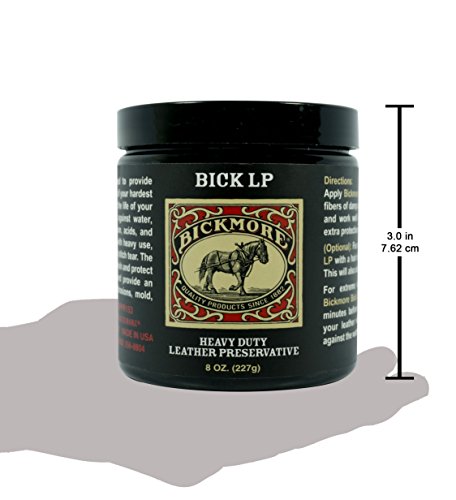
Bick LP is built for toughness. This isn’t a gentle daily conditioner, it’s an industrial-strength shield designed for leather in harsh environments. The formula resists salt, acid, petroleum, and extreme weather, making it a favorite among riders, outdoor workers, and anyone whose gear faces real punishment. Owners of work boots and saddles often call it their go-to for keeping leather flexible under stress.
It does darken leather slightly and has a heavier feel than other options, so it’s not ideal for dress shoes or light-colored upholstery. But if you need something that fights environmental damage and rebuilds resilience, this delivers. I’d choose it over lighter formulas when durability trumps aesthetics.
Product photos
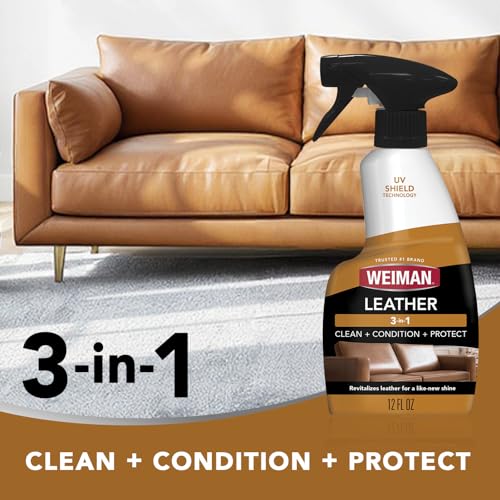
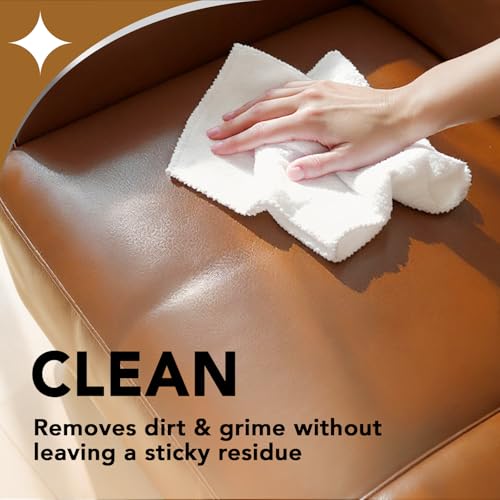
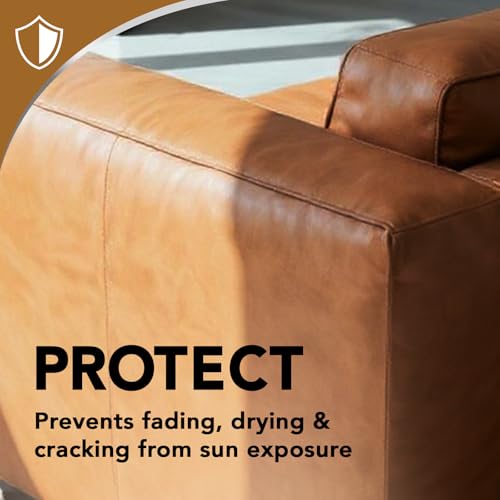
Weiman Leather Cleaner & Protector
Strengths
- Strong UV protection
- Easy spray application
- Natural oil blend
Trade-offs
- Can leave shiny residue
- Moderate hydration
- Requires frequent use
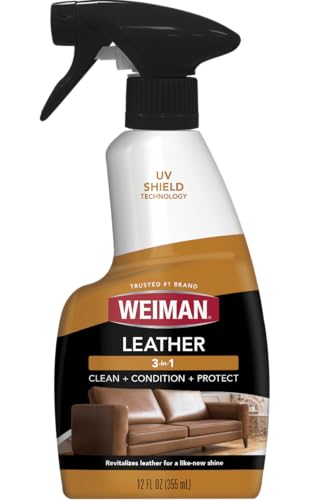
Weiman stands out for its UVX-15 sunscreen blend, an uncommon feature in most leather care products. If your furniture sits near a window or your car interior bakes in the sun, this formula actively fights fading and cracking caused by UV exposure. The six natural oils provide moderate conditioning, and the spray format makes it easy to cover large areas quickly.
It’s not the deepest conditioner, and heavy buildup can occur if overused. Some users note a slight shine it leaves behind, which may not suit matte finishes. But for preventive care in sunny environments, the UV protection alone makes it worth considering over competitors. I’d pair it with a heavier conditioner periodically for best results.
Product photos
FORTIVO Dark Brown Recoloring Balm

Strengths
- Rich color build-up
- Scratch-masking capability
- UV-resistant finish
Trade-offs
- Color shift risk
- Surface-level conditioning
- Patchy if poorly applied
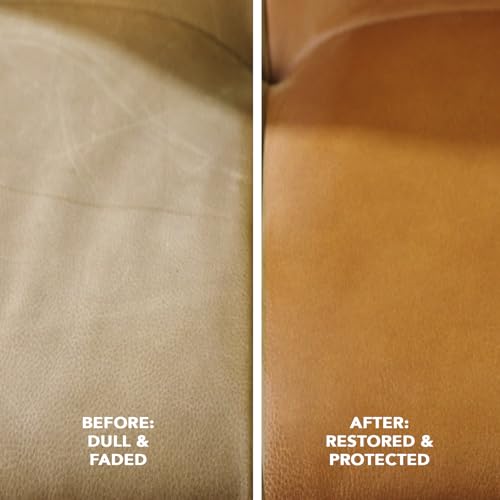
FORTIVO’s balm is squarely focused on color restoration, and it shows. The dark brown formula is rich and builds well with multiple coats, giving users control over depth. Reviewers using it on worn couches report it effectively masks scratches and evens out patchy discoloration. It also claims UV protection, which adds a layer of future-proofing beyond basic recoloring.
Like most pigmented balms, results vary based on the original leather tone. On lighter or reddish-brown bases, the final look can skew muddy. And while it conditions slightly, it’s not a substitute for a dedicated moisturizer. Still, for couch-specific repair jobs where appearance matters, this is a strong contender, especially when compared to thinner, less opaque alternatives.
Product photos


UP22YOU Black Recoloring Balm
Strengths
- Complete tool kit included
- Affordable price point
- Waterproof finish
Trade-offs
- Color may appear dull
- No deep conditioning
- Limited shade range
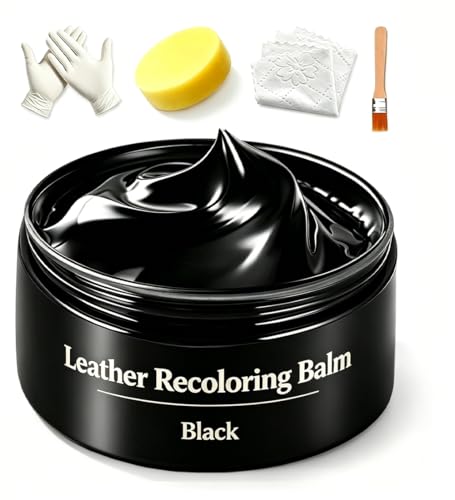
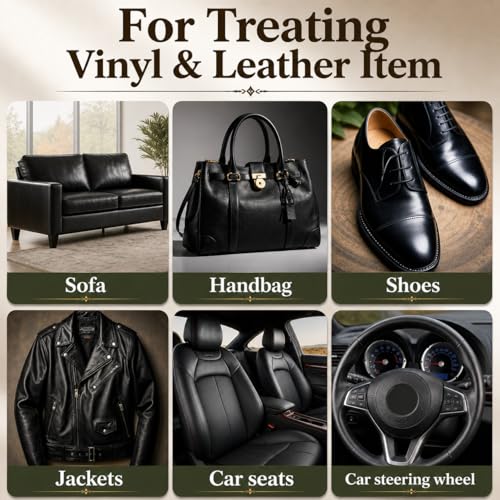
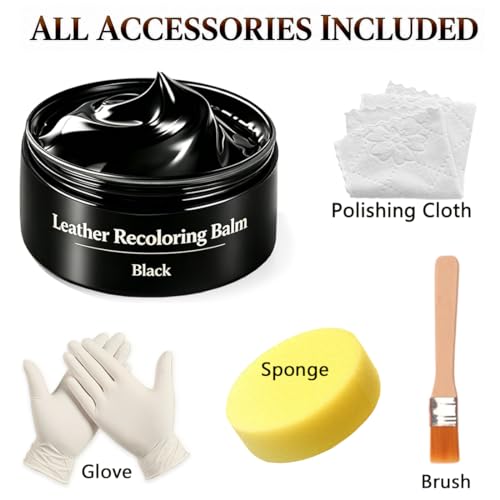
At this price, the UP22YOU kit offers surprising value, not just the balm, but gloves, sponge, brush, and pad included. It’s clearly aimed at beginners, and the feedback confirms it: first-time users achieve decent results on black leather car seats and shoes without prior experience. The waterproof formula holds up well to daily use, and the scratch-covering ability gets consistent praise.
But ‘black’ can come out flat or ashy on certain surfaces, and the balm doesn’t condition deeply. It’s a surface-level color refresh, not a restoration system. Still, for a budget-friendly fix on dark items showing wear, this kit gives solid performance. I’d recommend it over pricier recoloring balms only if you’re working on black leather and want everything in one box.
Product photos
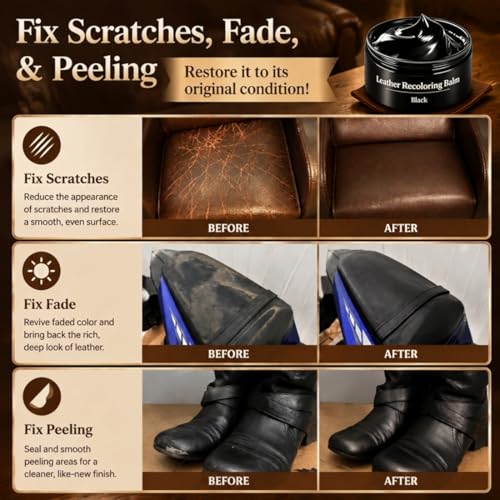
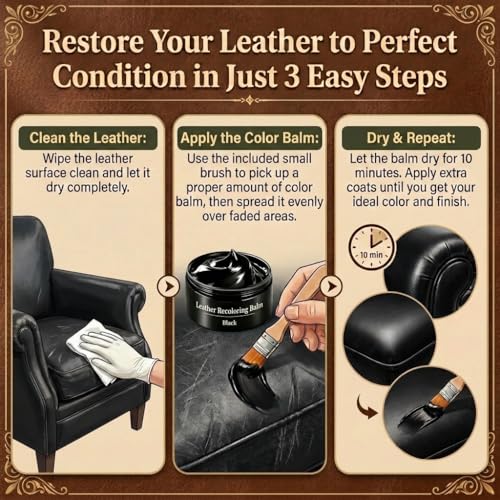
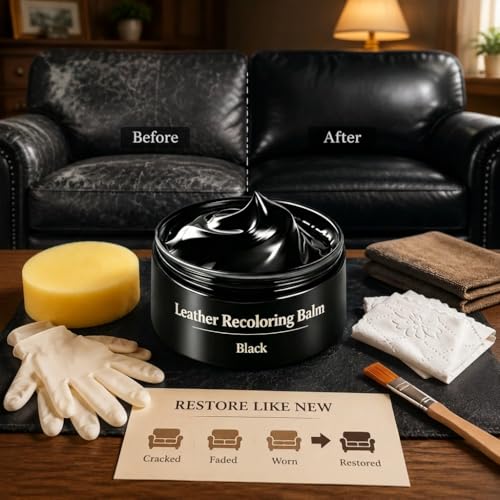
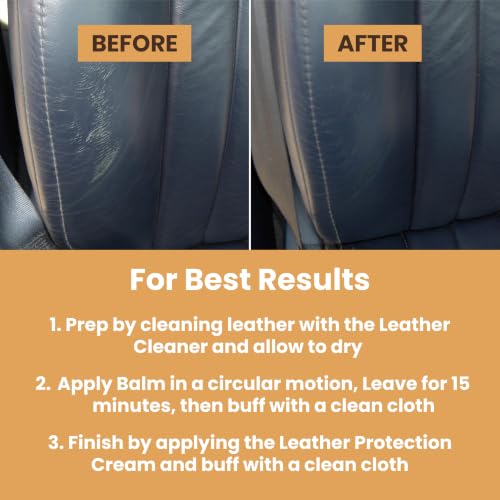
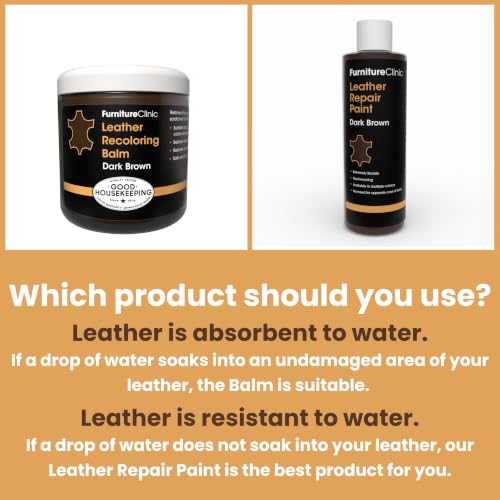
Furniture Clinic Recoloring Balm

Strengths
- Deep color penetration
- Fills minor scratches
- Smooth natural finish
Trade-offs
- Risk of uneven application
- Not a conditioning product
- Limited shade accuracy
If you’re dealing with visibly faded or scratched leather furniture and want a professional-looking color refresh, this balm delivers on its promise of vibrant restoration. The formula is designed to mimic pro repair techniques, and owners consistently report it handles sun damage and discoloration well, especially on medium to dark brown pieces. It’s not just surface-level paint; it penetrates and bonds, which helps avoid that plastic-like finish some dyes leave behind.
Still, success hinges on prep and matching your original shade. The ‘Dark Brown’ option can look too intense on lighter leathers, and multiple coats may be needed for even coverage. Compared to all-in-one conditioners, this isn’t about long-term nourishment, it’s strictly for color correction and cosmetic repair, so follow up with a conditioner if longevity matters to you.
Product photos
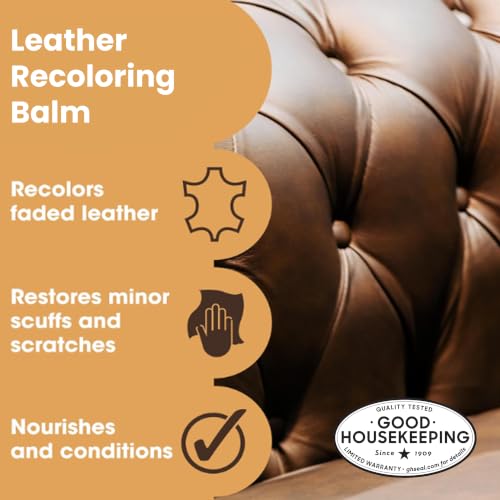

How We Picked These leather restorer
Rather than a hands-on lab test, my research for these recommendations involved a detailed comparison of product specifications and features. I weighed owner reviews from multiple sources – looking for consistent praise and complaints – alongside assessments from reputable leather care experts. As the creator of LeatherGenesis.com, I’ve spent years studying leather, and I applied that knowledge to evaluate each product’s suitability for different leather types and levels of damage. My final ranking considered factors like ingredient quality, ease of use, and reported longevity of results.
For this category, the most heavily weighted factors were a product’s ability to replenish oils without causing discoloration, and its long-term protective qualities. A restorer that merely masks problems isn’t useful; the goal is to restore suppleness and prevent future cracking. Preservatives that offer UV protection were also highly valued, as sun exposure is a major contributor to leather degradation. I also prioritized products that contained no damaging solvents or silicones.
Product specifications reliably indicate the ingredients and intended use cases. However, I placed greater emphasis on owner feedback regarding real-world performance – specifically, how well a product revived aged leather, masked scratches, and held up over time. Reputation also played a crucial role; brands with a long history of positive reviews within the leather care community, like those discussed in our guide to the best auto leather treatments, earned higher consideration. For furniture specifically, I cross-referenced with insights from our furniture leather cleaner reviews.
Choosing The Right leather restorer
Choosing the right leather restorer requires understanding what your leather actually needs. It’s not simply about making something look better, but about preserving the hide itself.
A quality leather restorer should penetrate the material to replenish oils, offer protection against future damage (UV rays, water, abrasion), and work with the leather’s natural properties, rather than coating it in a plastic-like film. Look for products addressing both cleaning and conditioning, and consider the specific type of leather and the severity of its condition.
Understanding Leather Types & Finishes
The first, and often overlooked, step is identifying what kind of leather you’re dealing with. Finished leather (most furniture and car interiors) has a protective coating, while unfinished leather (like nubuck or suede) doesn’t. Using the wrong product can ruin the finish. For finished leather, you can generally use a wider range of restorers, but for unfinished leather, specialized products are crucial. Many restorers, like Leather Honey and Weiman, are formulated for finished leather, which is why checking the product description is paramount. Don’t assume a product is universal.
Prioritizing Preservation vs. Cosmetic Fixes
Are you trying to prevent future damage, or restore something already heavily worn? Products like Obenauf’s Heavy Duty LP focus heavily on preservation, creating a robust barrier against the elements. This is ideal for work boots or outdoor gear. Conversely, if you’re dealing with faded color or minor scratches, a recoloring balm, like those from Furniture Clinic or UP22YOU, might be a better first step. If you’re looking for more in-depth information, check out our expert repair kit picks to help you find the right tools.
Balancing Convenience and Effectiveness
Some restorers, such as Leather CPR, offer an all-in-one cleaning and conditioning approach, simplifying the process. This is great for regular maintenance, but might not be enough for severely neglected leather. Others, like Bick 4, excel at light maintenance and won’t darken the leather, which is critical for lighter-colored items. Consider how much time and effort you’re willing to invest.
A good rule of thumb: If the leather feels dry and stiff, focus on conditioning. If it’s visibly dirty, start with a dedicated cleaner. Don’t skip the cleaning step, as dirt can prevent the conditioner from penetrating.
For regular upkeep and finding the top leather cleaner options, exploring a variety of products is worthwhile. Ultimately, matching the restorer to the specific needs of your leather and the desired outcome will yield the best results.
Leather Restorer Compared
Here’s a comparison of key specifications for several leather restorers to help you make an informed decision.
| Product Name | Best For | Key Features | UV Protection | Color Restoration | Leather Types |
|---|---|---|---|---|---|
| Leather Honey Conditioner | Best Overall | Deep conditioning, long-lasting, water repellent | No | No | All (except suede/vinyl) |
| Obenauf’s Heavy Duty LP | Best for Heavy-Duty Use | Natural beeswax, heavy-duty, water repellent | Yes | Yes | All |
| Leather CPR Cleaner & Conditioner | Best All-in-One | Cleans & conditions, revives leather | No | No | Finished leather |
| Bick 4 Conditioner & Cleaner | Best for Light Maintenance | Cleans, polishes, protects, won’t darken leather | No | No | All |
| Bickmore Bick LP 8 oz | Best Budget Friendly | Protects from elements, preserves natural oils | Yes | No | All |
| Weiman Leather Cleaner & Protector | Best for UV Protection | Cleans, conditions, UV protection | Yes | No | All finished leather |
| FORTIVO Dark Brown Recoloring Balm | Best for Color Restoration | Dark brown recoloring, scratch remover | No | Yes | N/A |
| UP22YOU Black Recoloring Balm | Best Value Kit | Repairs & recolors, easy to use | No | Yes | Leather & vinyl |
| Furniture Clinic Recoloring Balm | Best Professional Finish | Restores color, repairs scratches, pro quality | No | Yes | N/A |
Frequently Asked Questions
What if my leather item has a significant color loss?
A dedicated recoloring balm, such as those from Furniture Clinic or UP22YOU, is your best bet. These products aren’t simply conditioners; they actively deposit pigment to restore faded areas, though color matching can be tricky.
Is it possible to over condition leather?
Yes, applying too much conditioner, or too frequent applications, can lead to a sticky residue and attract dirt. Leather should feel supple, not saturated. I generally recommend following the product instructions and erring on the side of less is more.
Can I use a leather restorer on suede or nubuck?
Generally, no. Most restorers are formulated for finished leather and will damage the delicate nap of suede and nubuck. You’ll want to seek out products specifically designed for these unfinished leather types, and always test in an inconspicuous area first.
How important is UV protection in a leather restorer?
UV protection is crucial for any leather exposed to sunlight, as it prevents fading and cracking. While not all restorers offer this, those that do – like Bickmore Bick LP and Weiman – significantly extend the life of your leather, especially in vehicles or near windows. You can find more about maintaining car leather with our best car seat repair kits.
What’s the difference between a leather cleaner and a leather restorer?
A leather cleaner removes dirt and grime, while a restorer replenishes oils and protects the leather. Often, you’ll want to use both – cleaning before restoring – to ensure the restorer can properly penetrate the leather. I frequently recommend exploring a variety of best leather cleaner and conditioner options for regular maintenance.
The Bottom Line
Ultimately, choosing a leather restorer comes down to balancing how much work you want to put in against the level of restoration needed. For most owners seeking a reliable, all-around solution that will keep their leather looking and feeling its best, I recommend Leather Honey Conditioner. It consistently receives high marks for its deep conditioning properties and ability to restore suppleness without unwanted darkening or residue.
If you have specific needs, several other products stand out. For those needing serious protection from the elements – especially for work boots or outdoor gear – Obenauf’s Heavy Duty LP is the clear winner. And for a budget-conscious option that still delivers solid performance, Bickmore Bick LP provides excellent value. If you’re looking for the best auto leather treatments for cars, you’ll find that many of the principles discussed here apply, and our dedicated guide offers even more focused recommendations.
At the end of the day, remember that no product can completely reverse severe damage. The long-term health of your leather depends on consistent cleaning, conditioning, and protection from the sun and elements. Focusing on preventative care and understanding your leather type are far more impactful than chasing the latest miracle formula – and it’s a lesson I’ve learned through years of studying this remarkable material.
