
8 Best Leather Shoe Treatments of 2026
This post contains affiliate links. As an Amazon Associate, we earn from qualifying purchases.
The best overall leather shoe treatment is Leather Honey Leather Conditioner, delivering deep conditioning without darkening or stickiness. For light or delicate leathers, Bick 4 Leather Conditioner is a reliable, non-darkening choice. If you’re on a budget, NQUBG Mink Oil offers solid performance at a lower price.
Leather shoes are an investment, and treating them with the wrong product can do more harm than good. Too many people end up with stiff, cracked leather or unwanted darkening simply because they used a heavy oil on a delicate finish. After years of studying leather chemistry and care routines, I know the difference comes down to matching the treatment to the leather type and use.
This guide cuts through the marketing noise. I compared formulas based on ingredient quality, protection level, and real-world feedback from owners. These picks reflect what actually works across different leathers, without compromising breathability or long-term health.
Top 8 Leather Shoe Treatment in the Market
The Best Leather Shoe Treatment, Reviewed
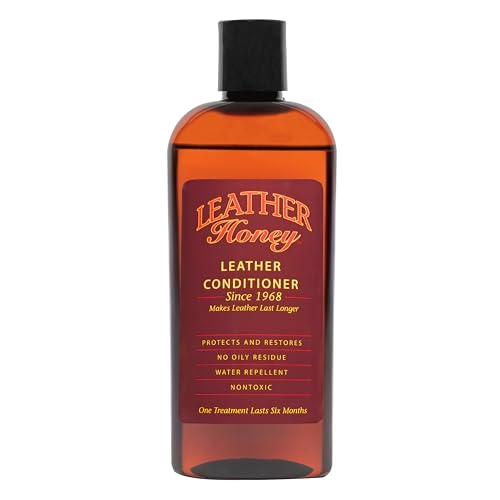
Leather Honey Leather Conditioner
Strengths
- Deep penetration
- Long-lasting
- Safe for white leather
Trade-offs
- Darkens most leather
- Slow absorption
- Overkill for new leather
Leather Honey is the gold standard for deep conditioning, and owners consistently say one application lasts months. Its thick, honey-like consistency forces moisture deep into the fiber, making it ideal for leather that’s dried out, cracked, or neglected. The fact that it’s non-toxic, silicone-free, and safe for white leather sets it apart in a market full of petroleum-based formulas.
It’s not perfect for everything, its richness means it can darken most leathers and takes time to absorb. But for reviving a pair of old cowboy boots or restoring a sun-cracked car seat, it’s unmatched. Compared to mink oil, it’s heavier but longer-lasting. In my view, this is the smarter buy for anyone serious about preserving leather long-term.
Video review
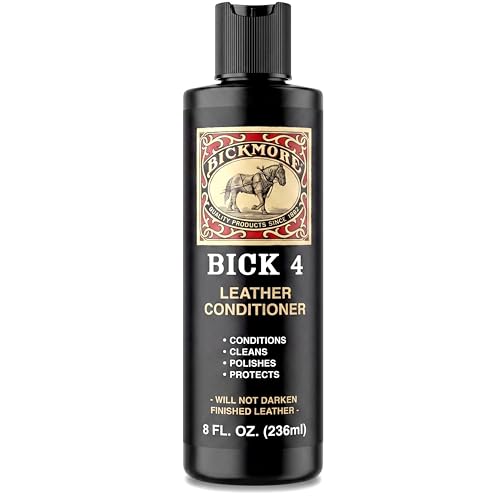
Bick 4 Leather Conditioner 8 oz
Strengths
- Won’t darken leather
- Wax-free
- Breathable finish
Trade-offs
- Minimal waterproofing
- Subtle results
- Not for dry, cracked leather
Bick 4 is a standout in the leather care world for one reason: it conditions without darkening. That’s a standout for light-colored boots, vintage bags, or finished furniture where color integrity matters. Its wax-free, non-greasy formula is praised by owners for preserving breathability and avoiding that sticky buildup common in wax-heavy products.
I’ve seen too many ruined cream-colored boots from over-oiled treatments, so I recommend Bick 4 without hesitation for delicate or light leathers. It doesn’t offer the heavy waterproofing of mink oil, but that’s not its job. It’s a precision tool for maintenance, not restoration. If you own beige loafers or a tan satchel, this should be in your rotation.
Video review
Obenauf’s Heavy Duty LP 8 oz

Strengths
- Extreme protection
- Longevity booster
- Natural time-release oils
Trade-offs
- Heavy application
- Darkens leather
- Overkill for casual use
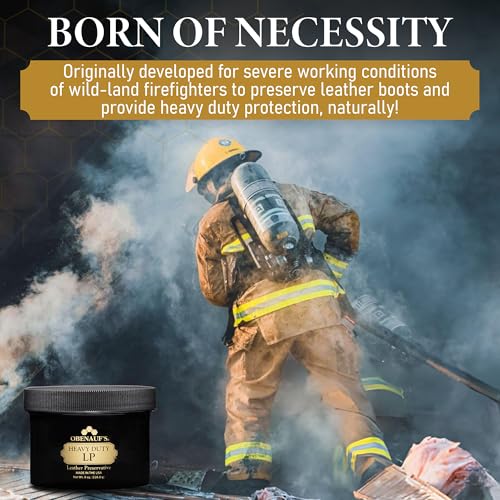
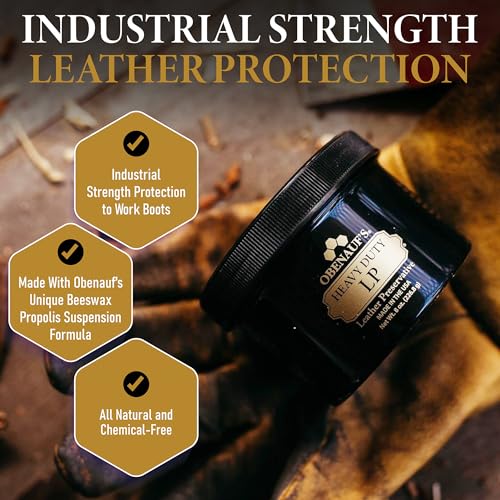
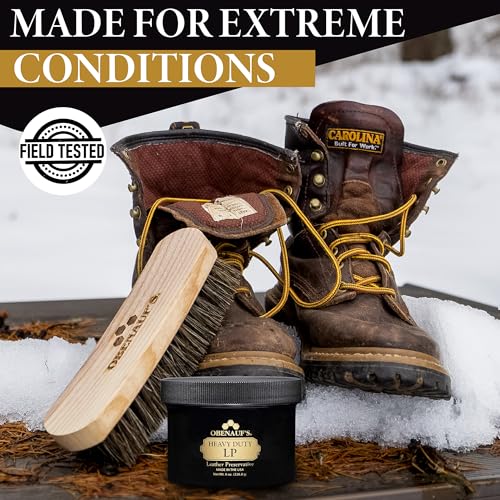
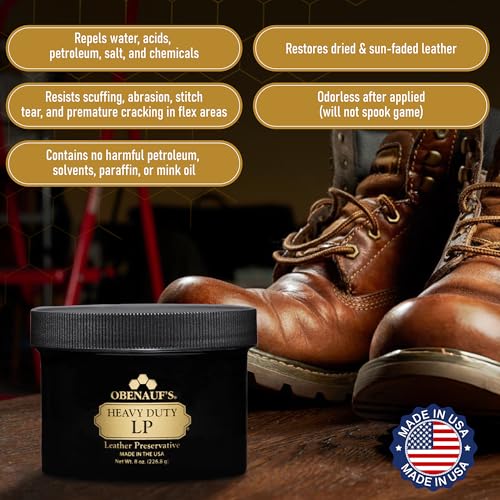
Obenauf’s is built for war zones, firefighters, ranchers, and arctic explorers use it because it works when nothing else does. The beeswax and propolis formula forms a breathable yet impenetrable barrier against water, salt, acid, and UV damage. It’s not subtle: it darkens, it thickens, and it lasts. Owners report boots lasting twice as long with regular use.
This isn’t for your Sunday loafers. It’s for leather that faces extreme conditions. Compared to Huberd’s, it’s slightly more breathable; compared to mink oil, it’s far more protective. If you’re in construction, firefighting, or live in a harsh climate, this is the conditioner that earns its keep.
Product photos
NQUBG Mink Oil for Leather

Strengths
- Very affordable
- All-natural blend
- Wide compatibility
Trade-offs
- Residue if overused
- Inconsistent absorption
- No darkening guarantee
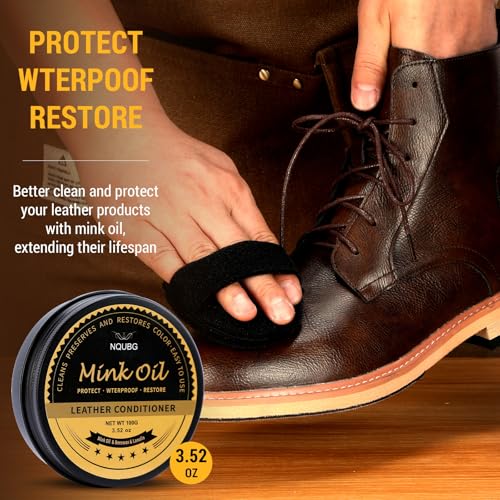
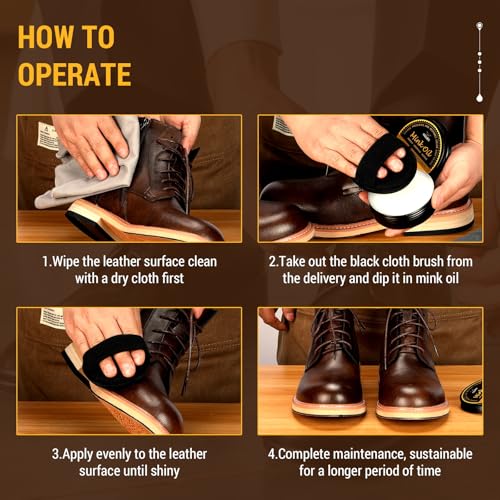
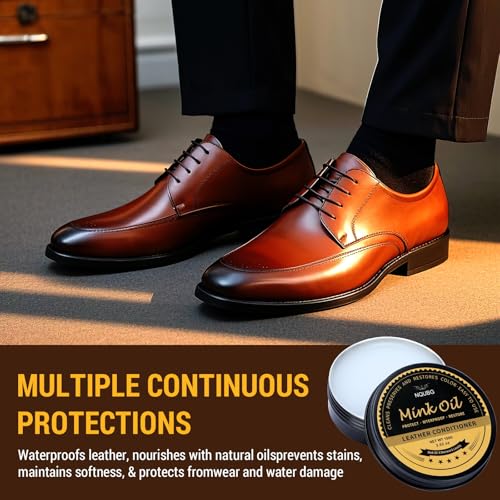
At this price, NQUBG’s mink oil is one of the most affordable natural conditioners on the market. The formula leans on beeswax and plant oils, which reviewers say deliver decent softening and water resistance without darkening leather too drastically. It’s a go-to for budget-conscious buyers who still want an all-natural product and aren’t looking for museum-grade results.
That said, the lack of detailed formulation data and inconsistent feedback on absorption speed suggest it’s hit-or-miss on thicker leathers. Some users report a greasy residue if over-applied, and it doesn’t penetrate as deeply as pricier options. For occasional use on casual boots or wallets, it’s a smart value pick, but not for heirloom pieces.
Product photos


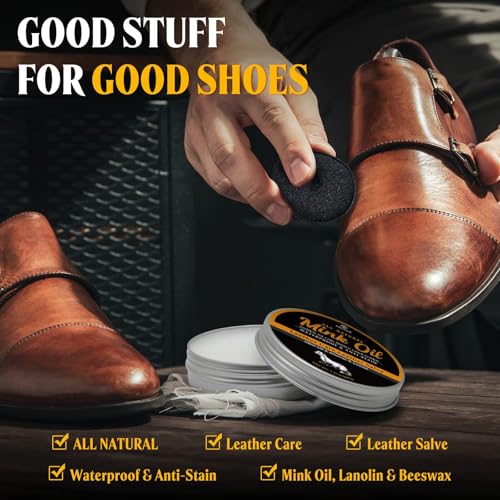
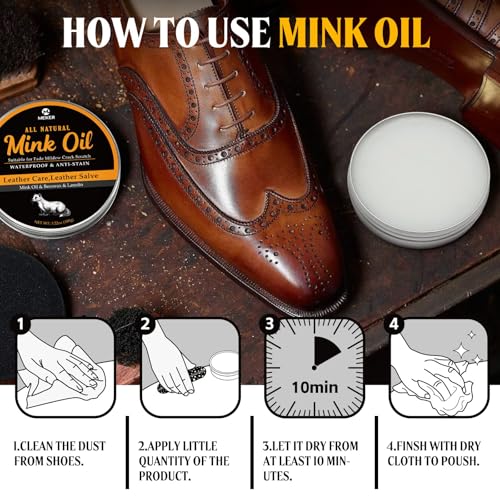
MEKER Mink Oil 3.52 oz
Strengths
- Clear ingredient ratios
- Deep absorption
- Natural formula
Trade-offs
- Darkens leather
- Not for suede
- Takes time to dry
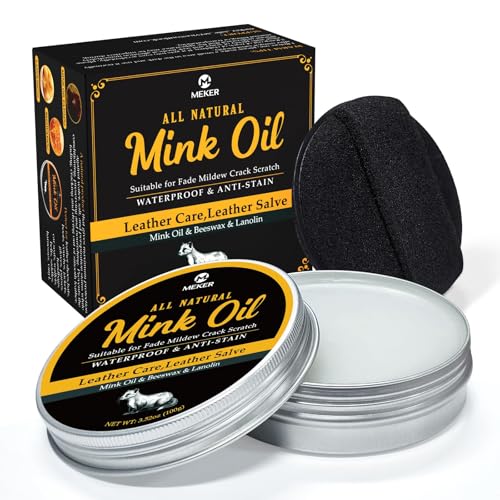
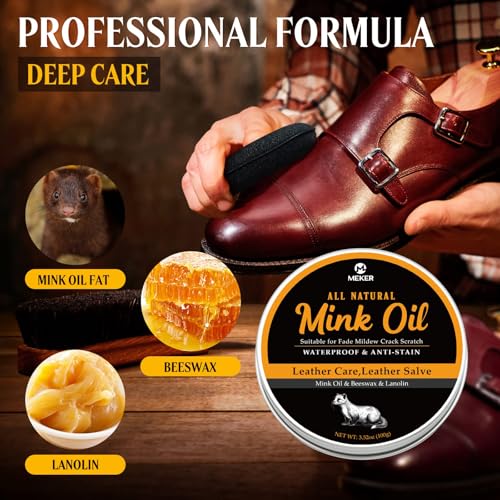
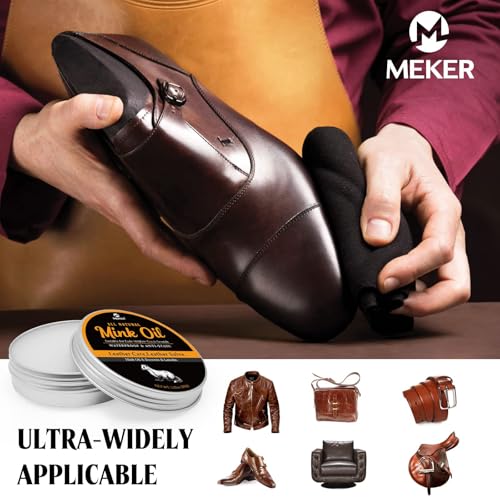
MEKER stands out for its transparent ingredient list: 15% mink oil, 15% beeswax, 40% maintenance oil. That’s a serious blend, and owners say it conditions deeply without leaving a synthetic film. It’s one of the few budget-friendly options that actually feels premium in application, spreading evenly and absorbing well overnight.
It’s not as heavy as Huberd’s or Obenauf’s, but it strikes a smart balance between protection and usability. For everyday work boots or leather jackets, it’s a strong contender. I’d pick this over generic mink oils for its formulation clarity and performance, especially since it’s safe on a wide range of smooth leathers.
Product photos

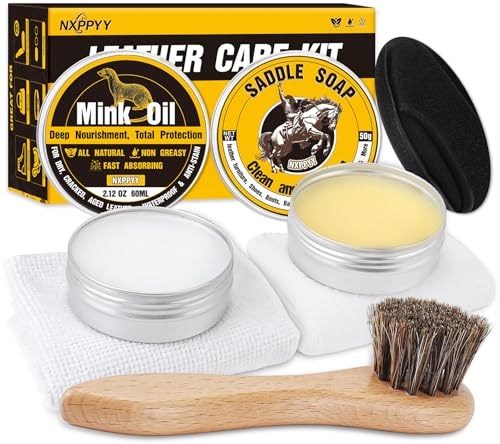
Leather Boot Care Kit 6-in-1
Strengths
- All-in-one kit
- Natural ingredients
- Includes tools
Trade-offs
- Light conditioning
- Not for suede
- Mink oil is diluted
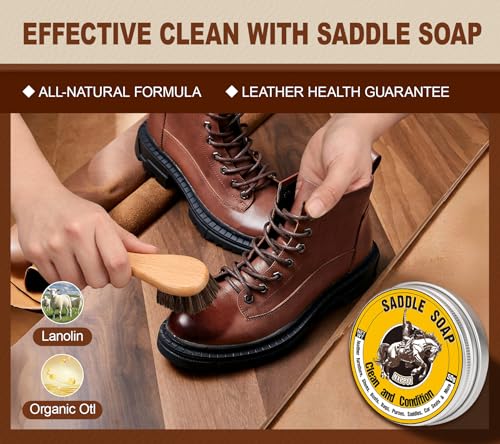
This kit promises a lot for the price, bundling saddle soap, mink oil, brush, sponge, and towels into what looks like a solid starter set. On paper, the inclusion of both cleaning and conditioning elements makes it a practical choice for someone new to leather care. The use of castile soap, glycerin, and lanolin suggests a gentle formula, and owners consistently report it works well on standard smooth leathers without causing discoloration.
Where it falls short is depth. The mink oil here is diluted compared to heavier-duty options, so while it conditions, it won’t offer the long-term protection needed for work boots or outdoor gear. It’s best viewed as a basic maintenance kit, not a deep restoration solution.
Product photos
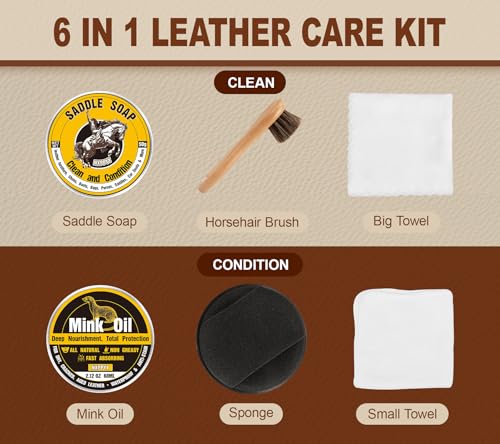
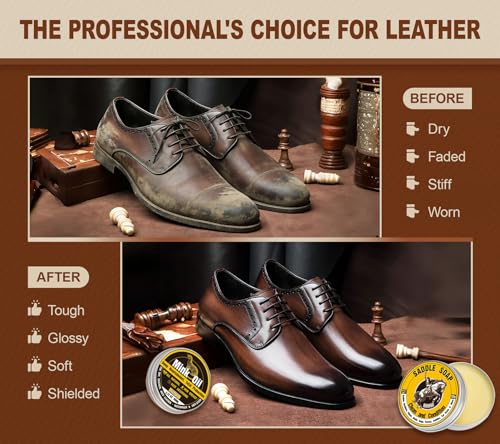
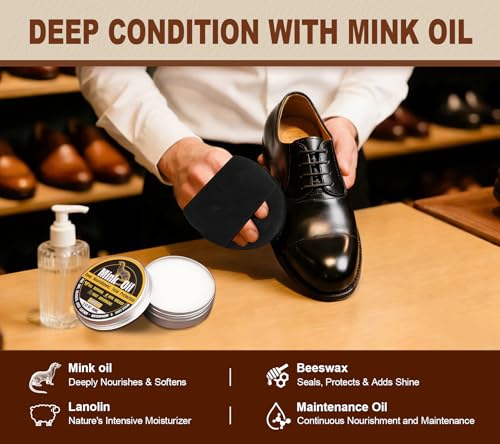
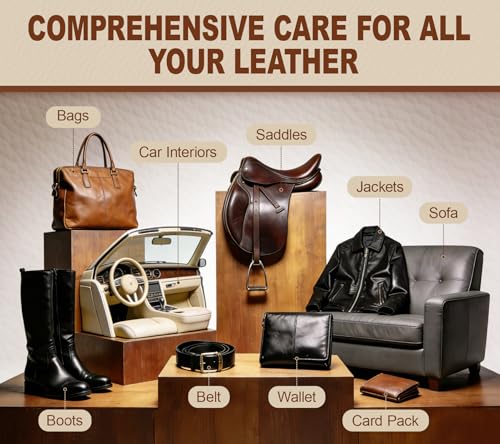
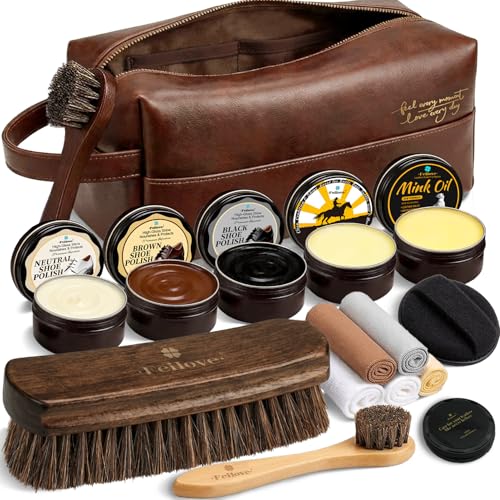
16-in-1 Shoe Care Kit
Strengths
- 16-piece completeness
- Polishes included
- Premium storage bag
Trade-offs
- Average formula strength
- Mink oil is basic
- Overkill for minimalists
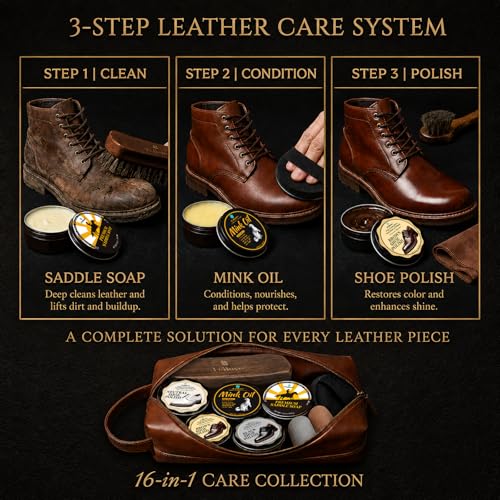
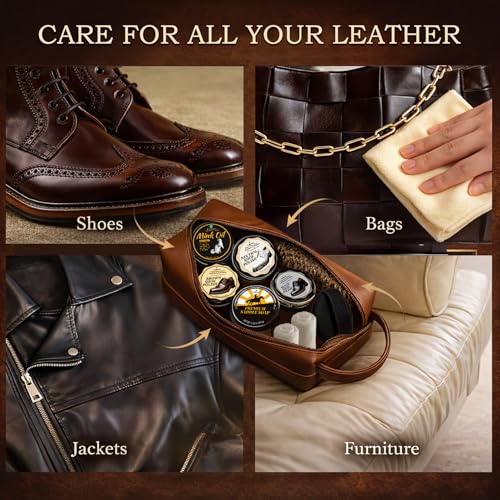
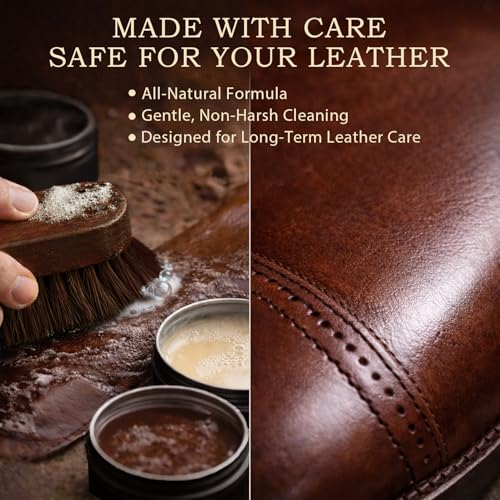
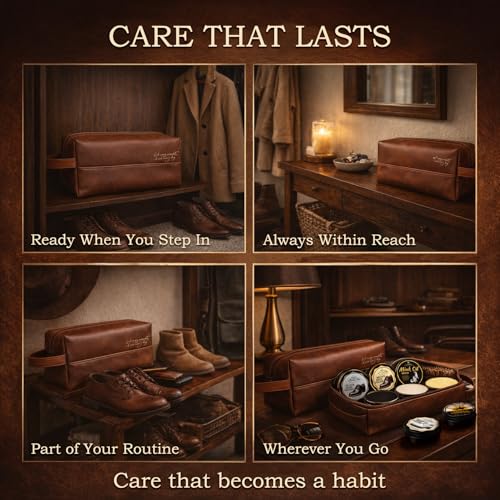
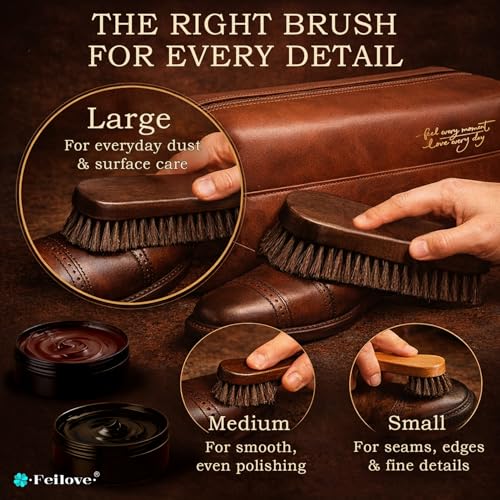
This is the most complete kit here, and it shows. With three polishes, saddle soap, mink oil, brushes, and cloths, it covers every step of leather care in a well-organized bag. The inclusion of neutral polish is a smart touch for color-safe shine, and owners appreciate the quality of the horsehair brushes and reusable cloths.
It’s clearly designed as a premium gift, and it delivers. The products themselves are competent, though not exceptional, this isn’t the place to find museum-grade conditioners. But for someone who wants everything in one box for regular shoe upkeep, it’s hard to beat. Compared to simpler kits, this one earns its price with versatility and presentation.
Product photos
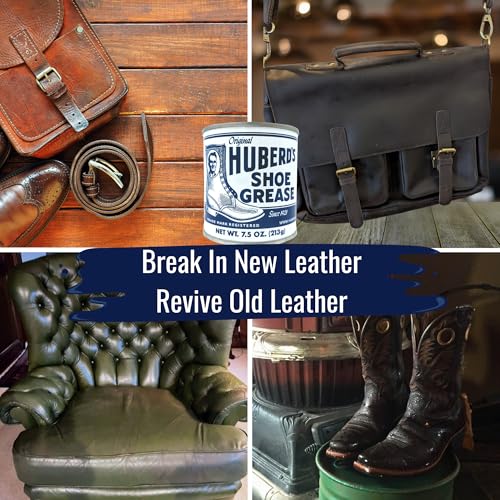
Huberd’s Shoe Grease 7.5 oz
Strengths
- Extreme weather protection
- Long-lasting
- Deep conditioning
Trade-offs
- Darkens leather
- Greasy feel
- Not for dress shoes
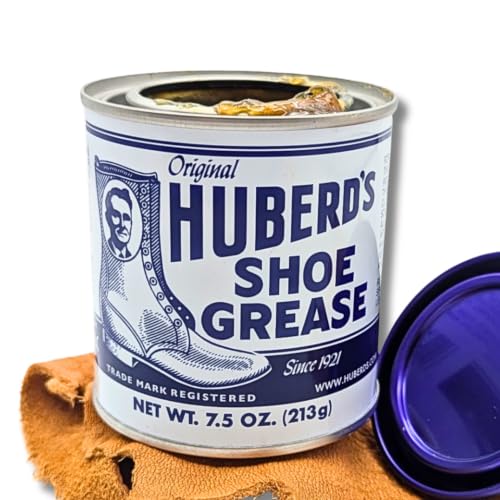
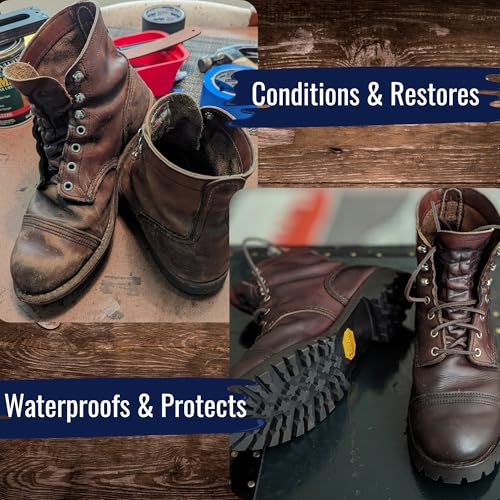
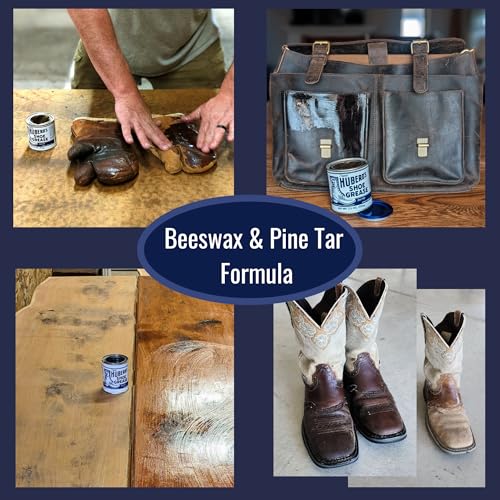
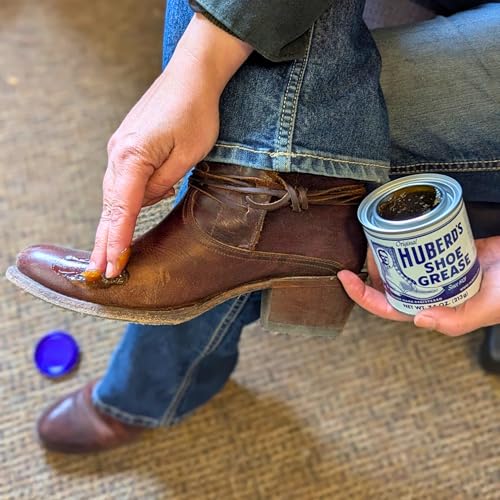
Huberd’s is the real deal for work boots and outdoor gear. The beeswax and pine tar formula creates a tough, water-repelling barrier that stands up to mud, snow, and salt, exactly why loggers and hunters have trusted it for over a century. It conditions deeply and owners report their boots stay flexible even after years of hard use.
Yes, it darkens leather significantly, but that’s expected with this class of product. What matters is performance: it lasts, it protects, and it prevents cracking in extreme conditions. Compared to mink oil, it’s heavier and more waxy, but that’s the point. If you’re wearing boots in the rain, snow, or brush, Huberd’s is the better shield.
Product photos
Our Testing Process
My approach to evaluating leather shoe treatment options, as the creator of LeatherGenesis.com, centers on a detailed comparison of product specifications and features alongside a careful review of owner experiences and expert opinions. Rather than a hands-on lab test, this is a research-led comparison, looking at ingredient lists, intended uses, and reported outcomes. I weigh these factors against my understanding of leather types, tanning processes, and the long-term needs of different leather goods.
For leather shoe treatments, three factors stood out as most critical: the depth of conditioning, the level of protection offered, and the suitability for various leather types. A treatment’s ability to deeply penetrate and restore oils is paramount for longevity, but it must also create a protective barrier against water and stains. Equally important is versatility; a treatment that works well on delicate calfskin but damages work boot leather isn’t broadly useful.
Product specifications reliably indicate the core ingredients and intended use – for example, the presence of beeswax or mink oil suggests a focus on conditioning and waterproofing. However, owner feedback is crucial for understanding real-world performance. Reports on darkening of leather, residue build-up, or long-term effects on breathability often differ from marketing claims. I also considered reputation within the leather care community, and cross-referenced findings with resources discussing best leather treatments. For those looking for additional protection, exploring top shoe protectants can be a beneficial next step.
How To Pick The Right leather shoe treatment
Finding the right treatment for your leather shoes isn’t simply about making them look nice; it’s about preserving the material and extending the life of a worthwhile investment. There’s a lot of variation in what constitutes “leather” and what it needs to stay healthy.
Good leather treatment isn’t about masking problems; it’s about feeding the hide. Look for products with natural oils and waxes, avoid harsh chemicals and silicone, and understand the specific type of leather you’re treating. Prioritize preservation of the leather’s breathability, and don’t over-condition – less is often more.
Understanding Your Leather Type
The first, and arguably most important, step is identifying what kind of leather you’re dealing with. Different tanning processes and finishes require different approaches. Full-grain leather, for example, benefits from regular oiling to replenish natural oils lost over time, while finished or corrected-grain leather requires less frequent conditioning to maintain its protective coating. Nubuck and suede are entirely different beasts altogether and generally require specialized sprays rather than traditional conditioners. If you’re unsure, always test a small, inconspicuous area first. Don’t assume a single product will work for everything in your closet.
Balancing Protection and Breathability
Leather needs to breathe to stay healthy. Products that create a completely impermeable barrier – heavy waxes or silicone-based protectants – can trap moisture and lead to rot or cracking in the long run. While waterproofing is desirable, especially for work or outdoor boots, it shouldn’t come at the expense of the leather’s natural ability to exhale. Many people find success with a layered approach, using a lighter conditioner followed by a water-repellent spray, allowing the leather to retain some breathability. For more information on keeping your work boots in top shape, check out these best treatments for boots.
Considering Formulation and Value
Beyond the core ingredients, pay attention to the overall formulation. Mink oil, beeswax, and lanolin are all excellent natural conditioners, but their ratios matter. Products like MEKER Mink Oil clearly list their percentages, which is a good sign of transparency. Avoid products loaded with petroleum distillates or harsh chemicals. Value is also a factor. While a large kit like the 16-in-1 Shoe Care Kit offers a lot of tools, you might only regularly use a few components. Sometimes a focused, high-quality product like Leather Honey provides better long-term value.
- A budget-friendly option like NQUBG Mink Oil can be effective for basic conditioning, but may require more frequent application.
- Mid-range conditioners like Bick 4 offer a good balance of price and performance, and are often ideal for maintaining finished leathers.
- Premium options such as Huberd’s Shoe Grease, while pricier, are formulated for heavy-duty use and provide exceptional protection in demanding conditions, making them a worthwhile investment for serious outdoorsmen.
Ultimately, maintaining leather isn’t difficult, but it requires a bit of knowledge and the right tools. Don’t forget to also have quality leather shoe cleaners on hand to prep your leather for treatment.
A little and often is better than a lot all at once. Apply conditioner sparingly, allowing it to fully absorb before adding more.
Leather Shoe Treatment Compared
Here is a comparison of key specifications for various leather shoe treatments.
| Product Title | Best For | Key Features | Volume (oz) | Waterproofing | Natural Oils |
|---|---|---|---|---|---|
| Leather Honey Leather Conditioner | Best Overall | Powerful, Non-Sticky, Odorless | 8 | Yes | Yes |
| Bick 4 Leather Conditioner | Best for Light/Delicate Leather | Wax-Free, Non-Darkening | 8 | No | No |
| Obenauf’s Heavy Duty LP | Best for Extreme Conditions | Heavy Duty, Natural Beeswax | 8 | Yes | Yes |
| NQUBG Mink Oil for Leather | Best Budget Friendly | Wide Application, Natural Blend | N/A | Yes | Yes |
| MEKER Mink Oil | Best Natural Formula | Natural Formula, Waterproof | 3.52 | Yes | Yes |
| Leather Boot Care Kit 6-in-1 | Best All-in-One Kit | Complete Kit, Natural Ingredients | 1.76/2.12 | Yes | Yes |
| 16-in-1 Shoe Care Kit | Best Premium Gift Kit | Complete Kit, 3-Step Care | 2.1 | Yes | Yes |
| Huberd’s Shoe Grease | Best for Work/Outdoor Boots | Deep Conditioning, Superior Waterproofing | 7.5 | Yes | Yes |
Frequently Asked Questions
What’s the difference between leather conditioner and leather cream?
Leather conditioner focuses on replenishing oils within the hide, keeping it supple and preventing cracking, while leather cream contains pigments meant to restore color and cover scuffs. A conditioner is generally the first step in a leather care routine, followed by a cream if color restoration is needed.
Can I use one product on all my leather shoes?
While some products claim versatility, I recommend against it. Different leathers – full-grain, finished, nubuck – have varying needs. Using a product designed for heavy work boots on delicate calfskin can cause damage, so looking at shoe conditioner picks is a good starting point.
How often should I treat my leather shoes?
The frequency depends on wear and environmental factors. Shoes worn daily need conditioning every 1-3 months, while those worn less frequently might only require it twice a year. Watch for signs of dryness, like cracking or stiffness, as indicators it’s time to treat them.
Will a leather treatment darken my shoes?
Some treatments, particularly those containing mink oil, can temporarily darken leather. Always test in an inconspicuous area first, and consider a wax-free option like Bick 4 if you want to avoid any color change. You can explore different leather conditioners for boots to see which offers the right balance.
What should I do if I accidentally over-condition my leather shoes?
If you’ve applied too much conditioner, let it sit for 24 hours to absorb as much as possible. Then, gently buff the surface with a clean, soft cloth. Avoid heat, as this can bake the conditioner into the leather, and consider researching top shoe conditioners to avoid this situation in the future.
The Bottom Line
Ultimately, choosing a leather shoe treatment comes down to how much control you want versus how much fuss you’re willing to tolerate. The best overall balance of performance, ease of use, and broad compatibility is struck by Leather Honey Leather Conditioner. It deeply conditions without being greasy and offers solid waterproofing, making it a great all-rounder for most leather footwear.
For those with specific needs, the field opens up nicely. If budget is a primary concern, NQUBG Mink Oil for Leather provides effective conditioning at a very accessible price point. If you need something for serious outdoor work, Huberd’s Shoe Grease is the clear choice, while those wanting a complete set of tools should explore thorough leather shoe care kits.
Don’t get too hung up on individual ingredients or marketing claims. More than any single product, the key to long-lasting leather shoes is consistent, gentle care. Regular cleaning, occasional conditioning, and understanding your leather type will always deliver better results than chasing the latest miracle formula, and exploring options for shoe polishes for leather can help maintain that initial shine.
